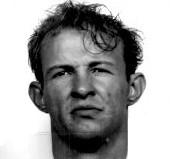
Clarence Lackey
Murderer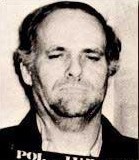 Ervil LeBaron
Murderer · USA · 1972
Ervil Morrell LeBaron (1925 to August 16, 1981) was the leader of a polygamous…
35 victims
Ervil LeBaron
Murderer · USA · 1972
Ervil Morrell LeBaron (1925 to August 16, 1981) was the leader of a polygamous…
35 victims
 Brian Kevin Rosenfeld
Murderer · USA · 1985
Brian Kevin Rosenfeld Brian Kevin Rosenfeld was sentenced to three concurrent l…
23 victims
Brian Kevin Rosenfeld
Murderer · USA · 1985
Brian Kevin Rosenfeld Brian Kevin Rosenfeld was sentenced to three concurrent l…
23 victims
 Marvin Gray
Murderer · USA · 1975
Marvin Gray was convicted killer who claimed responsibility for 23 slayings and…
23 victims
Marvin Gray
Murderer · USA · 1975
Marvin Gray was convicted killer who claimed responsibility for 23 slayings and…
23 victims
 Yahweh ben Yahweh
Murderer · USA · 1980
Yahweh ben Yahweh was born and legally named Hulon Mitchell Jr. (October 27, 19…
23 victims
Yahweh ben Yahweh
Murderer · USA · 1980
Yahweh ben Yahweh was born and legally named Hulon Mitchell Jr. (October 27, 19…
23 victims
 Dr. Robert George Clements
Murderer · 1920
Robert George Clements committed suicide in 1947 before he was caught by the po…
4 victims
Dr. Robert George Clements
Murderer · 1920
Robert George Clements committed suicide in 1947 before he was caught by the po…
4 victims
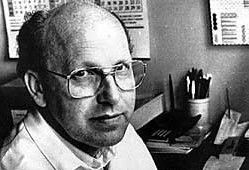 Arnfinn Nessett
Serial killer · Norway · 1980
Arnfinn Nesset was born October 25, 1936, in Norway. He was a Norwegian nurse a…
22 victims
Arnfinn Nessett
Serial killer · Norway · 1980
Arnfinn Nesset was born October 25, 1936, in Norway. He was a Norwegian nurse a…
22 victims
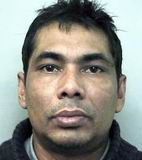 Shahidul Ahmed
Murderer · United Kingdom · 2000
Shahidul Ahmed, 41, from Bletchley, was convicted of the murder of Rachel Manni…
1 victim
Shahidul Ahmed
Murderer · United Kingdom · 2000
Shahidul Ahmed, 41, from Bletchley, was convicted of the murder of Rachel Manni…
1 victim
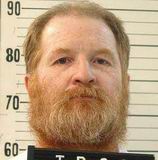 Harold Wayne Nichols
Murderer · USA · 1988
Defendant: Harold Wayne Nichols Victim: Karen Pulley (age 21) Place: Chattanoog…
1 victim
Harold Wayne Nichols
Murderer · USA · 1988
Defendant: Harold Wayne Nichols Victim: Karen Pulley (age 21) Place: Chattanoog…
1 victim
- Gender
- male
- Country
- USA
- Location
- Tom Green County, Texas, USA
- Date of birth
- August 3, 1954
- Age at first offence
- 23
- Characteristics
- rape, robbery
- Victim profile
- Toni Diane Kumph (female, 20)
- Method of murder
- St abbing with knife
- Date(s) of murder
- July 31, 1977
- Years active
- 1977
- Date of arrest
- —
- Status
-
Executed
Executed by lethal injection in Texas on May 20, 1997
Case record: Clarence Lackey (#591)
Background
Clarence Allen Lackey (#591) was a Texas death row inmate who was executed by lethal injection in Texas on May 20, 1997.
Lackey was convicted in the abduction and slashing death of Diane Kumph, 20, in Lubbock. Kumph was raped and beaten, and her throat was slashed by Lackey. Lackey also burglarized her apartment.
Lackey was convicted in 1983, after the Texas Court of Criminal Appeals reversed his conviction. He was tried and convicted a second time in 1983.
Lackey was the first Lubbock inmate to be executed in more than 40 years and the first to die by lethal injection.
Lackey was the state's 120th execution since Texas resumed capital punishment in the early 1980s. The county's last execution was Walter Whitaker Jr., 23, who died in September 1954 in Huntsville's electric chair.
Lackey was released five months earlier from a state prison where he had been serving time for a 1974 burglary with intent to commit rape.
Lackey had also been questioned for another rape a few weeks before Kumph was killed. The victim in that assault did not press charges.
The offence
Lackey beat, kidnapped, and murdered Diane Kumph on July 31, 1977. Kumph was dragged out of her Avenue W apartment.
Lackey was arrested on his 23rd birthday in an Amarillo motel for the slaying of Kumph.
Detective Randy Ward, who drove Lackey back from Amarillo, said in an earlier interview that Lackey admitted killing Kumph, a stranger. Ward said Lackey apparently became angry because Kumph hit him as she was being raped. The statement was not evidence in Lackey's trials.
A Texas jury found Clarence Lackey guilty of capital murder in 1983.
Investigation
Detective Randy Ward drove Lackey back from Amarillo after his arrest and said Lackey admitted killing Kumph.
Arrest
Lackey was arrested on his 23rd birthday in an Amarillo motel for the slaying of Diane Kumph.
Trial
In 1983, a Texas jury found Lackey guilty of capital murder.
During the punishment phase of Lackey's trial, the jury answered affirmatively the special issues submitted under the former Tex.Code Crim.Proc.Ann. art. 37.071(b), requiring the trial court to impose a death sentence.
At the punishment phase, Lackey requested an instruction regarding mitigating evidence, which was denied.
Lackey called Dr. Herbert Modlin, a psychiatrist and expert witness, to testify during the punishment phase.
Dr. Modlin described Lackey as a “periodic drinker”—a person who did not need daily drinks, but when he did drink, he often drank too much causing him to blackout.
Dr. Modlin attributed Lackey's crime to an alcohol-induced blackout that caused Lackey to lose contact with reality and rendered him capable of engaging in automatic behavior.
Lackey adduced additional evidence that his drinking problem was treatable, that he was a good candidate for treatment, and that diagnostic and treatment facilities were available to him in prison.
Dr. Modlin concluded, in his expert opinion, that Lackey was not likely to pose a future threat to society.
At the sentencing hearing, Lackey's mother told the jury that during his childhood she and Lackey were physically abused by his father.
With regard to Lackey's low intelligence, both Lackey's mother and Dr. Modlin testified that Lackey did poorly in school.
Dr. Modlin testified that Lackey's IQ was below normal.
Lackey's trial counsel argued to the jury that the evidence of Lackey's low intelligence and history of childhood abuse was not offered to excuse Lackey's crime, but rather to show that he would not be a future danger to society.
An instruction given pursuant to section 8.04 of the Texas Penal Code was read to the jury:
You are instructed that under our law neither intoxication nor temporary insanity of mind caused by intoxication shall constitute any defense to the commission of crime. Evidence of temporary insanity caused by intoxication may be considered in mitigation of the penalty attached to the offense. By the term "intoxication" as used in this Charge is meant that at the time of the conduct charged, the defendant, as a result of voluntary intoxication, either did not know that his conduct was wrong or was incapable of conforming his conduct to the requirements of the law which he has found to have violated. Now, if you find from the evidence that the defendant, Clarence Allen Lackey, at the time of the commission of the offense for which he is on trial was laboring under temporary insanity as above defined, produced by voluntary intoxication as defined, that you may take such temporary insanity into consideration in mitigation of the penalty which you attach to the offense for which you have found him guilty.
The former Texas capital sentencing statute required the court to sentence the defendant to death if the jury returned affirmative findings on each of the following issues:
(1) whether the conduct of the defendant that caused the death of the deceased was committed deliberately.and with the reasonable expectation that the death of the deceased or another would result; (2) whether there is a probability that the defendant would commit criminal acts of violence that would constitute a continuing threat to society; and (3) if raised by the evidence, whether the conduct of the defendant in killing the deceased was unreasonable in response to the provocation, if any, by the deceased.
The first two issues were submitted to the jury at the punishment phase of Lackey's trial.
Sentencing
Lackey was sentenced to death by the trial court after the jury answered affirmatively to the special issues.
Lackey was executed for '77 slaying by lethal injection.
Appeals
The Texas Court of Criminal Appeals affirmed Lackey's conviction and sentence in 1989: Lackey v. State, 819 S.W.2d 111 (Tex.Crim.App.1989).
Following that affirmance, Lackey sought a writ of habeas corpus in state court, which was denied.
Lackey then filed a federal habeas petition and request for a stay of execution. The district court granted the stay, and after briefing and an evidentiary hearing denied relief. The appeal followed.
In 1994, the United States Court of Appeals for the Fifth Circuit considered Lackey’s appeal from the denial of his petition for writ of habeas corpus. The Fifth Circuit affirmed the district court’s denial.
In 1994, rehearing and suggestion for rehearing en banc were denied.
In 1995, the Supreme Court of the United States denied Lackey’s petition for a writ of certiorari: “The petition for a writ of certiorari is denied.”
In 1995, the Fifth Circuit addressed an appeal and motion to vacate a stay imposed by the district court on Lackey’s execution. The Fifth Circuit vacated the stay.
Outcome
The United States Court of Appeals for the Fifth Circuit affirmed the denial of Lackey’s habeas corpus petition. The stay of execution issued by the district court was vacated.
In the sentencing proceedings discussed in the Fifth Circuit decision, the district court denied relief and the Fifth Circuit affirmed.
Execution and last statements
Lackey’s execution occurred by lethal injection in Texas on May 20, 1997.
Lackey delivered a last statement:
“I would like to thank my Lord Jesus Christ for keeping me strong all these years. I would also like to thank my mother for standing by me all these years. I would also like to thank my pen pals, Joe and Camille Tilling and JoAnn for helping me stay strong all these years. I also thank my two lawyers, Rita and Brent, for fighting to keep me alive. I love you, Mom - Clarence Allen Lackey”
Lackey thanked several friends before telling Warden Morris Jones, “I'm through, warden.”
Lackey was visited at 8:30 a.m. by his mother and an uncle. On Monday, he also received a 45-minute visit from Sister Helen Prejean.
At about 3:30 p.m., Lackey received his last meal: t-bone steak, a large salad, french fries and chocolate ice cream.
Lackey’s request for a pack of Camel cigarettes was denied because of prison tobacco policy.
Lackey requested husband and wife ministers Jack and Irene Wilcox as witnesses, and they were among the witnesses he requested to be present.
Shortly before the execution drugs began flowing into both of Lackey’s arms, Lackey said, “I'm through, warden.” After the drugs began flowing, Lackey said, “I love you, Mom,” shortly before he softly grunted.
A signal object was placed on the ledge indicating that a lethal dosage of potassium chloride and sodium thiopental had been completed.
Lackey was pronounced dead at 6:17 p.m. and a physician closed Lackey's eyes.
Aftermath
The execution drew about 10 protesters who gathered behind banners outside the prison and were kept by guards behind a strand of yellow tape.
Protesters chanted, “Gray shirts, you can't hide,” and “We charge you with homicide!”
Lackey executed on May 20, 1997, after clemency petition considerations described as including “Clemency petition Date of Execution: May 20, 1997.”
Spotted an error, or have more information about this case?