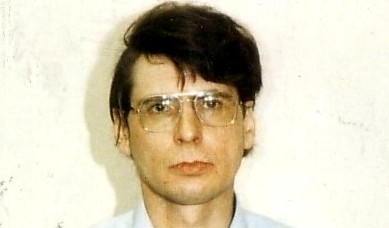
Dennis Nilsen
Serial killer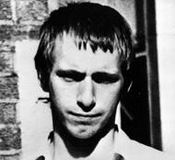 Bruce Lee
Serial killer · United Kingdom · 1973
Bruce Lee was born Peter George Dinsdale in 1960. He later changed his name to…
26 victims
Bruce Lee
Serial killer · United Kingdom · 1973
Bruce Lee was born Peter George Dinsdale in 1960. He later changed his name to…
26 victims
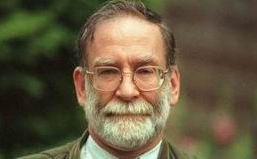 Dr. Harold Shipman
Serial killer · United Kingdom · 1974
Harold Fredrick Shipman was an English doctor who was convicted as a serial kil…
15 victims
Dr. Harold Shipman
Serial killer · United Kingdom · 1974
Harold Fredrick Shipman was an English doctor who was convicted as a serial kil…
15 victims
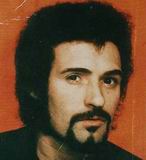 Peter Sutcliffe
Serial killer · United Kingdom · 1975
Peter William Sutcliffe (born 2 June 1946) was an English serial killer dubbed…
13 victims
Peter Sutcliffe
Serial killer · United Kingdom · 1975
Peter William Sutcliffe (born 2 June 1946) was an English serial killer dubbed…
13 victims
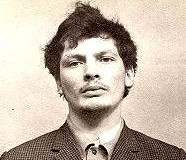 Patrick David Mackay
Serial killer · United Kingdom · 1973
Patrick David Mackay was born on September 25, 1952, in England. He was the son…
11 victims
Patrick David Mackay
Serial killer · United Kingdom · 1973
Patrick David Mackay was born on September 25, 1952, in England. He was the son…
11 victims
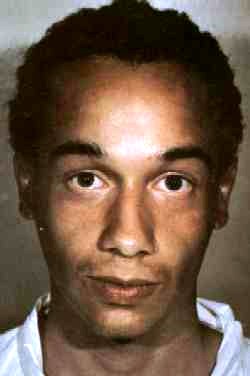 Kenneth Erskine
Serial killer · United Kingdom · 1987
Kenneth Erskine (born 1962) was an English serial killer known as the “Stockwel…
7 victims
Kenneth Erskine
Serial killer · United Kingdom · 1987
Kenneth Erskine (born 1962) was an English serial killer known as the “Stockwel…
7 victims
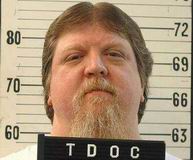 Jonathan Wesley Stephenson
Murderer · USA · 1989
Jonathan Wesley Stephenson was convicted of hiring a hit man to kill his wife,…
1 victim
Jonathan Wesley Stephenson
Murderer · USA · 1989
Jonathan Wesley Stephenson was convicted of hiring a hit man to kill his wife,…
1 victim
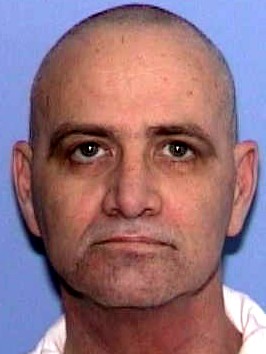 John Steven Gardner
Murderer · USA · 1983
John Steven Gardner was accused of causing the death of Tammy Dawn Gardner, 41,…
2 victims
John Steven Gardner
Murderer · USA · 1983
John Steven Gardner was accused of causing the death of Tammy Dawn Gardner, 41,…
2 victims
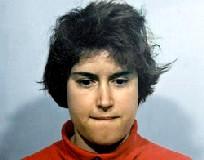 Laurie Dann
Murderer · USA · 1988
Laurie Dann (also referred to as Laurie Wasserman; née Wasserman; born c. 1958;…
1 victim
Laurie Dann
Murderer · USA · 1988
Laurie Dann (also referred to as Laurie Wasserman; née Wasserman; born c. 1958;…
1 victim
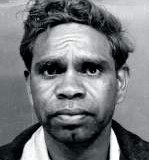 Rupert Maxwell Stuart
Murderer? · Australia · 1958
Rupert Maxwell Stuart, also known as Rupert (“Max”) Stuart (c. 1932 - ), was an…
1 victim
Rupert Maxwell Stuart
Murderer? · Australia · 1958
Rupert Maxwell Stuart, also known as Rupert (“Max”) Stuart (c. 1932 - ), was an…
1 victim
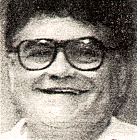 Gian Luigi Ferri
Mass murderer · USA · 1993
Gian Luigi Ferri was identified as a 55-year-old businessman and real estate sp…
8 victims
Gian Luigi Ferri
Mass murderer · USA · 1993
Gian Luigi Ferri was identified as a 55-year-old businessman and real estate sp…
8 victims
- Gender
- male
- Country
- United Kingdom
- Location
- London, England, United Kingdom
- Date of birth
- November 23, 1945
- Age at first offence
- 33
- Characteristics
- homosexual, necrophilia, dismemberment
- Victim profile
- Students or homeless men whom he picked up in bars
- Method of murder
- Ligature strangulation
- Date(s) of murder
- 1978 - 1983
- Years active
- 1978–1983
- Date of arrest
- February 9, 1983
- Status
-
Life imprisonment
Sentenced to life imprisonment on 4 November 1983
Case record: Dennis Andrew Nilsen
Background
Dennis Andrew Nilsen was born on November 23, 1945. He lived in London. He was also known as the Muswell Hill Murderer and the Kindly Killer. He was a British serial killer who killed at least fifteen men and boys in gruesome circumstances between 1978 and 1983. He retained corpses for sex acts.
Nilsen was born in Fraserburgh, Scotland. His father was a Norwegian soldier named Olav Magnus Nilsen. His mother was Betty Whyte. His father showed little interest in the family, spending the majority of time away and finally deserting them when Dennis was just 6 years old. His parents divorced when he was four years old. His mother remarried and sent him to his grandparents, and after a couple of years he was sent back to his mother again.
Nilsen claimed the first traumatic event to shape his life came when his beloved grandfather died. Nilsen’s strict Catholic mother insisted that he view the body before burial. Halloween Day 1951 was described as the day when Nilsen’s grandfather, Andrew Whyte, was found dead in his fishing boat. Andrew Whyte was 62 years old when he was found dead. Nilsen, who was 6 years old at the time, was not told that his grandfather had died and was told his grandfather was “sleeping”. Nilsen was shown his grandfather lying in his coffin, and he said it became his most vivid memory from childhood. Nilsen was traumatised to finally realise after waiting months that his grandfather was not returning.
Nilsen developed a fondness for animals that he carried throughout his life. He kept pigeons, and he was devastated when a vandal slaughtered them for no reason. He inherited an obsession with the sea from his grandfather, Andrew Whyte, and spent hours along the shore or writing about it at home.
Nilsen remained sexually uninitiated at school, though he felt urges at times. He became infatuated with the son of a local minister. Another fantasy figure was described as a character in a French grammar book, Pierre Duvan.
Nilsen’s schooling was described as unremarkable. He opted to join the army at age 15. His first three years in the army were spent undergoing training at the Depot, Aldershot Barracks, in Southern England. This time was described as unusually happy for Nilsen, and he thrived on the hard work, discipline and comradeship of army life. He revelled in the feeling that he was no longer an outsider, while an undercurrent that he was sexually attracted to some of his comrades flowed always. He fought his feelings of guilt and took comfort in the reassuring idea that he was probably bisexual.
Nilsen’s chosen trade in the army was that of the catering corps. In it, he learned the art of butchery, which he used later. He was popular with other soldiers and was introduced to the pastime described as heavy use of alcohol. He had many sexual encounters with men, as well as with “a Bavarian prostitute” and a young Arab boy.
Nilsen’s fascination with seeing himself as a corpse began to grow while serving in the middle east. He covered himself with talc, blue his lips, and masturbated while staring at his own image. The overlap of love and death was described as beginning in his mind. Towards the end of his army career, he received a posting to the Shetland Islands and fell in love with an 18-year-old private. His feelings were unreturned, and Nilsen kept his guilt to himself. He was devastated that the love was not returned, and on his last night in the Shetlands he burned hundreds of movie films that the pair had made together. This move surprised colleagues.
Nilsen’s army career was described as lasting 11 years and 3 months. He left the army because he became disillusioned with the Army’s participation in Northern Ireland and left bitter about the politics. He demobbed and returned to Fraserburgh for about 5 weeks, then returned to the household he grew up in. His mother, Betty, had remarried and lived with her second husband, Adam Scott. While he was there, Nilsen had a furious row with his brother over the subject of homosexuality, and the brothers never spoke again.
In 1961, Nilsen enlisted in the British Army and became a cook in Aden, Cyprus and Berlin. He left the army in 1972.
After leaving the army, Nilsen served briefly as a police officer. From the mid 1970s, Nilsen worked as a civil servant in a jobcentre. He was involved in a series of superficial, transitory relationships with men. These relationships did not assuage feelings of profound isolation and loneliness. He was described as seeking “somebody ‘who wouldn’t leave’; that is, a corpse.”
At the time of the trial and arrest narrative, Nilsen was described as being held at HMP Full Sutton maximum security prison in the East Riding of Yorkshire. During his time in prison he brought judicial review proceedings over Whitemoor Prison’s decision not to allow him access to gay pornography. The application was refused by the single judge at the permission stage. He did not establish any arguable case that a breach of human rights had occurred, or that prison’s rules were discriminatory. He also failed to receive any greater access to such materials as a result. In 2003, he brought a further Judicial Review over a decision not to allow him to publish his autobiography, titled The History of a Drowning Boy.
In 1993, he was given permission to give a televised interview from prison.
The offence
Nilsen killed at least fifteen men and boys between 1978 and 1983. The victims were described as students or homeless men whom he picked up in bars and brought to his house either for sex or just for company.
Nilsen strangled and drowned his victims during the night. He woke up with little memory of what he had done. He used butchery skills learned in the army to help dispose of the bodies. He had access to a large garden and was able to burn many of the remains in a bonfire. After moving to an upstairs flat, disposal became difficult and he stored suitcases full of human organs in his wardrobe, and plastic bags with human remains under the floorboards. Neighbours began to notice the smell.
Nilsen attempted to dispose of bodies by flushing them down the toilet. This blocked the sewerage of his house in Muswell Hill (23 Cranley Gardens), north London. His actions resulted in the drain being packed with a flesh-like substance. Upon closer inspection, small bones and what looked like chicken flesh were found in a pipe leading off from the drain and were later discovered to be of human origin. The first identification of remains by police was described as being alerted by dismembered remains in the drain outside Nilsen’s home.
After murdering Howlett, the first body to be dismembered, body parts were hidden around the house or flushed down the toilet. After murders continued, Allen’s body was left in the bath and then dismembered after three days. The remains were disposed of by various methods including hiding and flushing down the toilet, and there was dismemberment of at least some victims.
Nilsen faced allegations and convictions relating to murder and attempted murder. At trial, he was convicted of six murders and two attempted murders. His defence was diminished responsibility as a defense, seeking a verdict of guilty to manslaughter.
Victims and murders (enumerated in the case record)
- Murder 1 — December 30, 1978: Nilsen’s first murder took place on December 30, 1978. Nilsen claimed to have met his first victim in a gay bar. He strangled the victim with a necktie until he was unconscious and then drowned him in a bucket of water. In January 12, 2006, it was announced that the victim had been identified as Stephen Dean Holmes. Holmes was born on March 22, 1964 and was therefore 14 at the time. It was stated that Holmes had been on his way home from a pop concert.
- Attempt between first and second murders: Between the first and second murders, Nilsen attempted to murder a student from Hong Kong he had met in the West End. Although questioned by police, the student decided not to prosecute, and Nilsen was released without charge.
- Murder 2 — December 3, 1979: The second victim was Canadian student Kenneth Ockendon. During their sexual intercourse, Nilsen strangled him. Ockendon was one of the few murder victims who was reported as a missing person. The murder was on December 3, 1979.
- Murder 3: Martyn Duffey was a sixteen-year-old homeless boy from Birkenhead. In May 1980, he accepted Nilsen’s invitation to come over to his place. Duffey was strangled and subsequently drowned in the kitchen sink.
- Murder 4: Billy Sutherland was a male prostitute from Scotland. Nilsen could not remember how he murdered Sutherland; however, it was later revealed that the victim had been strangled by someone using their bare hands.
- Murder 5: The fifth victim was another male prostitute; however, this one was never identified. It was stated that he was probably from the Philippines or Thailand.
- Murder 6: Nilsen could recall very little about number 6. The account stated that he was a young Irish labourer that Nilsen had met in a bar.
- Murder 7: The seventh victim was described by Nilsen as a starving “hippy-type” he had found sleeping in a doorway in Charing Cross.
- Murder 8: Nilsen could recall nothing at all about his eighth victim.
- Murder 9 and Murder 10: Both were young Scottish men, picked up in pubs in Sotho.
- Murder 11: The eleventh victim was a skinhead Nilsen picked up at Piccadilly Circus who had a tattoo around his neck saying “cut here”. The victim had boasted to Nilsen about how tough he was and how he liked to fight. Once the victim was drunk, he proved no match for Nilsen. Nilsen hung his naked torso in his bedroom for 24 hours before he was buried under the floorboards.
- Between murders 6 and 11 — November 10, 1980: On November 10, 1980, a potential victim woke up while being strangled and was able to fend off his attacker. The potential victim called the police almost immediately after the attack, but no action was taken by the officers who, it is reported, considered the incident to be a domestic disagreement between two homosexual lovers.
- Murder 12 — September 18, 1981: The twelfth victim and the last before Nilsen moved home was Malcolm Barlow. He was murdered on September 18, 1981. Nilsen found him in a doorway not far from his own home, took him in, and called an ambulance for him. When Barlow was released the next day, he returned to Nilsen’s home to thank him and was pleased to be invited in for a meal and a few drinks. He was murdered later that night.
- After moving home in October 1981 — attempted murder involving a student in Soho: After moving to a new house in Muswell Hill in October 1981, Nilsen met a student in a bar in Soho and invited him back to his new home. The student awoke the next morning with little recollection of the previous evening’s events and later went to see his doctor because of some bruising that had appeared on his neck. The doctor revealed that it appeared as if the student had been strangled and advised him to go to the police. The student decided not to, being afraid of his sexual orientation being disclosed.
- After that attempted murder — further incident with a drag queen in Camden: Following this attempted murder, Nilsen met a drag queen in a pub in Camden. After passing out from strangulation, he came to while Nilsen was trying to drown him in a bath of cold water and managed to fight off his attacker.
- Murder 13 — December 1981: John Howlett was the first to be murdered in Nilsen’s Muswell Hill home in December 1981. Howlett was described as one of the few who was able to fight back. It was stated that Nilsen took a disliking to Howlett and was determined that Howlett should die. There was described to be a struggle in which at one point Howlett tried to strangle Nilsen back. Howlett was eventually drowned after his head was held under water for five minutes. Howlett’s was the first body to be dismembered, and the various body parts were either hidden around the house or flushed down the toilet.
- Murder 14: Graham Allen was another homeless man who met Nilsen in Shaftesbury Avenue. After murdering him, Nilsen left Allen’s body in the bath, unsure how to dispose of it. After three days, Allen was dismembered like Nilsen’s previous victim.
- Murder 15: Nilsen’s final victim was a drug addict called Stephen Sinclair. They met in Oxford Street and Sinclair managed to scrounge a hamburger off Nilsen, who then suggested that they go back to his place. After dropping into an alcohol and heroin fuelled stupor, Sinclair was strangled and his body dismembered. It was stated that it was Sinclair’s dismembered remains in the drain outside Nilsen’s home that first alerted police to Nilsen’s murders.
Investigation and arrest
Nilsen was eventually caught after his disposal of dismembered human entrails blocked his household drains. The drain cleaning company found that the drains were congested with human flesh and contacted the police.
When a company was called to unblock the sewer system, they first found the drain to be packed with a flesh-like substance. The drain inspector then called his supervisor to assess the situation; this assessment was not to take place until the next day, by which time the drain had been cleared. This aroused the suspicions of the drain inspector and his supervisor, who immediately called the police. Upon closer inspection, small bones and what looked like chicken flesh were found in a pipe leading off from the drain, later discovered to be of human origin.
Dennis Nilsen was arrested in 1983 on suspicion of multiple murders. He apologized to the police for not being able to tell them the exact number of people he had killed. When his house was searched, three heads were found in a cupboard. Thirteen more bodies were found in Nilsen’s former place of residence at Crinkleroot at 195 Melrose Avenue.
Nilsen’s memories of the events varied considerably. Some were remembered in minute detail while others were remembered only just enough to know they had happened. It was stated that he said he attempted to kill nine more men that were not listed above. It was further stated that he killed seven more unidentified men in Melrose Avenue.
Trial
Nilsen was brought to trial at the Old Bailey on 24 October 1983. He pleaded diminished responsibility as a defense to seek a verdict of guilty to manslaughter, but was convicted of six murders and two attempted murders. During trial, Nilsen was described as cold and distant and utterly unaffected by the fact that he had murdered fifteen people.
Sentencing
Nilsen was sentenced to life imprisonment on 4 November 1983. The trial judge set a minimum term at 25 years. The Home Secretary later imposed a whole life tariff, meaning he would never be released.
In 2006, he was denied any further requests for parole.
Appeals
After the Home Secretary was stripped of his powers to set minimum terms in November 2002, Nilsen could be freed on life licence in 2008 because of his original 25-year minimum sentence.
Outcome
Nilsen remained convicted and sentenced to life imprisonment as imposed on 4 November 1983. He was held in prison and later had access to legal processes regarding gay pornography and publishing his autobiography.
Imprisonment and later events
Nilsen was held at HMP Full Sutton maximum security prison in the East Riding of Yorkshire. During his time there, he brought judicial review proceedings over Whitemoor Prison’s decision not to allow him access to gay pornography; this was refused by the single judge at the permission stage. He did not establish an arguable case that a breach of human rights had occurred or that the prison’s rules were discriminatory. He failed to receive any greater access to such materials as a result.
Other details
Nilsen was referred to as the “British Jeffrey Dahmer.” A reference was made to a comparison due to similarities between crimes, sexuality and lifestyle.
Trivia attributed to the text included a made song about Nilsen called “You’re Dying to Be with Me”. It appeared on their album Murder Metal, which appeared in 2003.
The record included references to:
- J.H.H. Gaute and Robin Odell, The New Murderer's Who's Who (1996, Harrap Books, London)
- Brian Masters, Killing for Company (1985, London)
- John Lisners, House of Horrors (1983, London)
- Brian McConell and Douglas Bence, The Nilsen File (1983, London)
Spotted an error, or have more information about this case?