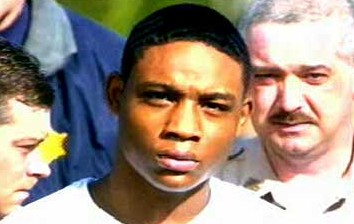
Devin Moore
Murderer Robert Martines Perez
Murderer · USA · 1994
Name: Robert Martines Perez · Other name used in proceedings: Robert Martinez P…
15 victims
Robert Martines Perez
Murderer · USA · 1994
Name: Robert Martines Perez · Other name used in proceedings: Robert Martinez P…
15 victims
 Billy Frank Vickers
Murderer · USA · 1993
Billy Frank Vickers Vickers was executed by lethal injection in Texas on Januar…
14 victims
Billy Frank Vickers
Murderer · USA · 1993
Billy Frank Vickers Vickers was executed by lethal injection in Texas on Januar…
14 victims
 Robert Glen Jones
Murderer · USA · 1996
Defendant: Robert Glenn Jones (ADC#070566) · Co-defendant: Scott Nordstrom (ADC…
7 victims
Robert Glen Jones
Murderer · USA · 1996
Defendant: Robert Glenn Jones (ADC#070566) · Co-defendant: Scott Nordstrom (ADC…
7 victims
 Leslie Irvin
Serial killer · USA · 1954
Name: Leslie Irvin (also known as “Mad Dog” Irvin) Lifespan: 1924–1983 Status:…
6 victims
Leslie Irvin
Serial killer · USA · 1954
Name: Leslie Irvin (also known as “Mad Dog” Irvin) Lifespan: 1924–1983 Status:…
6 victims
 Harold Wayne Nichols
Murderer · USA · 1988
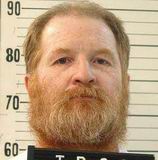
Defendant: Harold Wayne Nichols Victim: Karen Pulley (age 21) Place: Chattanoog…
1 victim
Harold Wayne Nichols
Murderer · USA · 1988
Defendant: Harold Wayne Nichols Victim: Karen Pulley (age 21) Place: Chattanoog…
1 victim
 Barton Kirkham
Murderer · USA · 1956
Barton Kay Kirkham (December 1936 – June 7, 1958) was a deserter of the United…
2 victims
Barton Kirkham
Murderer · USA · 1956
Barton Kay Kirkham (December 1936 – June 7, 1958) was a deserter of the United…
2 victims
 Donna Roberts
Murderer · USA · 2001
Donna Roberts was convicted as an accomplice to murder and was sentenced to dea…
1 victim
Donna Roberts
Murderer · USA · 2001
Donna Roberts was convicted as an accomplice to murder and was sentenced to dea…
1 victim
 Raffi Kodikian
Murderer · USA · 1999
Raffi Kodikian Raffi Kodikian and David Coughlin were best friends since colleg…
1 victim
Raffi Kodikian
Murderer · USA · 1999
Raffi Kodikian Raffi Kodikian and David Coughlin were best friends since colleg…
1 victim
- Gender
- male
- Country
- USA
- Location
- Fayette, Alabama, USA
- Date of birth
- May 15, 1985
- Age at first offence
- 18
- Characteristics
- —
- Victim profile
- Officer Arnold Strickland, Officer James Crump, and Ace Mealer, the 911 dispatcher
- Method of murder
- Shooting (.45 caliber pistol)
- Date(s) of murder
- June 7, 2003
- Years active
- 2003
- Date of arrest
- Same day
- Status
-
Sentenced to death
Sentenced to death on October 9, 2005
Case record: Devin Moore
Background
Devin Moore (born 1985) was a teenager from Alabama. He sparked controversy over the video game Grand Theft Auto: Vice City.
Moore was reported as having recently graduated from high school and as having enlisted in the air force, with him due to leave for service at the end of the summer. He was also described as having no criminal history and as being cooperative as he was booked inside the Fayette police station. It was also stated that he had never been in trouble before.
Moore’s father, Kenneth Moore (48), said after the hearing that there had been trouble disciplining Moore for years and that Moore deserved to be charged with capital murder. Kenneth Moore stated:
"You live by the sword you die by it, that's the Bible,"
"God works in mysterious ways."
Moore’s upbringing was described as profoundly troubled, with Moore bouncing back and forth between a broken home and a handful of foster families. Moore’s defence attorney, Jim Standridge, contended that Moore had been suffering from Post Traumatic Stress Disorder at the time of the crimes and argued that Moore had been emotionally and physically abused by his father as a child.
Moore was also described as a teenager who played Grand Theft Auto frequently, including being shown as having played the game for months. In March 2005, the controversy involving his relation to Grand Theft Auto was revealed during an episode of 60 Minutes in which a student demonstrated the game and explained that a mission depicted conduct matching what Moore did: escaping a police station, killing officers, and escaping in a police cruiser. The mission described included entering a police precinct, stealing a uniform, freeing a convict from jail, escaping by shooting police, and fleeing in a squad car.
The offence
Moore was charged with three counts of murder for allegedly shooting two police officers and a dispatcher, then fleeing in a cruiser, as they tried to book him for car theft. The incident occurred in Fayette, Alabama, and Moore was said to have been brought into the police station on suspicion of stealing a car.
Moore was reported as lunging at Officer Arnold Strickland, grabbing a .40 caliber Glock automatic and shooting Strickland twice, with one shot hitting Strickland’s head. Officer James Crump responded to the shots and met Moore in the hallway. Moore fired three shots into Crump, including one hitting Crump’s head. Moore then continued down the hallway toward the door of the emergency dispatcher, where he turned and fired five shots into Ace Mealer, the 911 dispatcher, including one shot in the head.
Moore was reported as leaving the station by stealing a police cruiser. The events were described as taking less than a minute and resulting in three men dead.
The victims were named as:
- Ace Mealer, a 911 dispatcher (40)
- James Crump, a police officer (40)
- Arnold Strickland, a police officer (mid-50s)
Investigation, arrest, and statements
Moore was captured nearly four hours later in Mississippi, described as about 12 miles west of the Alabama line.
After being recaptured, Moore was reported to have said:
"Life is a video game. Everybody's got to die sometime."
According to the Associated Press, when Moore was at the police station he said:
"Life is a video game. You've got to die sometime."
Another statement attributed to Moore after capture was:
"Life is like a video game. Everybody’s got to die sometime."
It was also stated that once in custody Moore quickly confessed and told detectives that he shot the men because he did not want to go to jail.
Moore was reported to have grabbed the gun of one of the officers after being booked. A public defender for Moore had not yet been assigned at the time of the June 9, 2003 hearing.
Timeline
- June 7, 2003 — Moore was brought into the Fayette police station on suspicion of stealing a car; Moore allegedly shot Officer Arnold Strickland, Officer James Crump, and dispatcher Ace Mealer, then fled in a police cruiser.
- June 9, 2003 — Devin Moore was charged with three counts of murder; he was captured nearly four hours later in Mississippi and was held without bond, facing a possible death penalty.
- March 6, 2005 — The 60 Minutes episode about the controversy involving Moore and Grand Theft Auto was aired.
- August 29, 2005 — Civil litigation coverage referenced the murder of three men in Fayette, Alabama, and recapped events of June 7, 2003, as well as the subsequent controversy.
- March 29, 2006 — The Alabama Supreme Court upheld Judge Moore’s ruling against the dismissal of the case.
- February 16, 2006 — Jack Thompson sent a letter to the Alabama Bar accusing Judge Moore of breaking bar rules.
- February 22, 2006 — Jack Thompson announced he had filed a lawsuit against the Alabama Bar.
- October 9, 2007 — Jack Thompson filed a lawsuit against the Alabama Bar in the U.S. District Court for the Southern District of Florida.
- November 18, 2005 — Judge James Moore revoked Jack Thompson’s Pro Hac Vice admission.
- November 1, 2005 — Jack Thompson sent an email to various websites commenting on the opening day of the civil trial.
- November 4, 2005 — Blank Rome submitted a motion to have Thompson removed from the case.
- November 7, 2005 — Jack Thompson withdrew from the case.
- November 9, 2005 — Warren Spector responded to comments attributed to Jack Thompson, stating:
"Take two or three things, from different contexts, mash them together and you can mislead people pretty dramatically."
- December 13, 2005 — Jack Thompson announced he would assist plaintiffs’ counsel during discovery and in the courtroom at trial in 2006.
Trial and sentencing
Moore faced trial in 2005 and pleaded not guilty. The trial judge barred the defence from introducing evidence to the jury that Grand Theft Auto incited Moore’s shooting spree.
Jim Standridge contended that Moore’s Post Traumatic Stress Disorder and childhood abuse were factors at the time of the crimes.
In August 2005, Moore was convicted as charged. On October 9, 2005, he was sentenced to death by lethal injection.
Appeals
Jim Standridge appealed the case.
Civil proceedings involving Grand Theft Auto
Families of Moore’s victims took legal action against Sony, Take-Two Interactive, Wal-Mart, and GameStop for their part in the manufacturing and selling of Grand Theft Auto: Vice City. Jack Thompson represented the families in the suit as an out-of-state attorney on pro hac vice status.
Judge James Moore’s actions regarding Thompson
On November 18, 2005, Judge James Moore revoked Thompson’s Pro Hac Vice license and effectively removed him from the case. The judge stated:
"Mr. Thompson's actions before this Court suggest that he is unable to conduct himself in a manner befitting practice in this state."
Judge Moore referenced Strickland v. Sony as focusing on whether violent video games played a role in teenager Devin Moore’s first-degree murder/shooting of three police officers.
Thompson sent a letter to Alabama’s Judicial Inquiry Commission questioning Judge Moore’s ethics and accused Judge Moore of violating the first 3 Alabama Canons of Judicial Ethics. Thompson also claimed the judge had "absolutely no authority" in preventing him from withdrawing from the case, and therefore the court’s decision to kick him off the case was a "legal nullity". Thompson accused the court of punishing him for "aggressively telling the truth" while it "looked the other way when Blank Rome elegantly told those lies." Judge Moore referred the matter to the Alabama State Bar for "appropriate action," stating:
Thompson claimed that:
"We had heard going into this civil case, before it was even filed, that a particular Western Alabama lawyer had to be part of our litigation team or Judge Moore would not give us a fair hearing. This lawyer himself claims, openly, that 'Judge Moore will not allow you to survive summary judgment if I am not on the case.' For too long we have heard swirling around this Judge allegations of improper influence." (sic)
Thompson alluded to a “fixer” as a local lawyer named Clatus Junkin. The details included that Junkin denied influence over judges or that he had made such a comment, and he was described as stating he was "not that dumb [...] or foolish enough to imply that [he] could [influence Judge Moore]."
After being thrown off the case, Thompson requested that Judge Moore recuse himself from the case. Moore ignored the request, stating:
"I can’t consider it because he’s no longer practicing in the state of Alabama. If some other lawyer in the case asks me to recuse myself, I’ll consider it in court."
It was also stated that Judge Moore noted Thompson had issued 7 different communications between the start of the case and the day the Pro Hac Vice status was revoked.
Thompson’s communications and withdrawals
On Tuesday, November 1, 2005, Thompson sent an email to various websites commenting on the opening day of the civil trial. In it, Thompson compared Sony and Take-Two Interactive’s sale of Grand Theft Auto to Imperial Japan’s attack on Pearl Harbor during World War II. Thompson also compared the distribution of violent games to the distribution of pornography.
On Friday, November 4, 2005, Blank Rome submitted a motion to have Thompson removed from the case, stating Thompson would "turn the courtroom into a circus."
On November 7, 2005, Thompson withdrew from the case, stating:
"It was my idea [to leave the case]." He also stated he was quick to mention that the case would probably do well with or without his presence. Thompson claimed he received no pressure to withdraw, and the decision followed scrutiny from Judge James Moore.
Just before leaving the case, Thompson filed a motion with the court, quoting noted designer Warren Spector (Deus Ex, Thief) as being critical of Rockstar’s actions, taken from a speech Spector gave at the Montreal International Game Summit. Thompson implied Spector could be served a subpoena to testify, despite jurisdiction issues described regarding Spector’s place of residence.
On December 13, 2005, Thompson announced that he would be "assisting plaintiffs’ counsel during the discovery process and in the courtroom at trial" when the civil trial began in 2006. Thompson also claimed he "will likely be a witness in the case" and stated he had "warned, in writing," Take-Two and Rockstar Games "that murders such as those in Alabama would occur by teens who had rehearsed the murders on their virtual reality killing simulators." It was also stated that Judge Moore forbade Thompson from "[communicating] with the court or the judge" or he would be held in contempt of court, and that order was appealed without a stated outcome.
Letters to the Alabama Bar and follow-up lawsuit
On February 16, 2006, Thompson sent a letter to the Alabama Bar accusing Judge Moore of breaking bar rules by publicly disclosing that he had filed a complaint about Thompson with the Alabama Bar. Thompson accused Judge Moore of denying Devin Moore a fair trial and claimed the FBI was investigating the Florida Bar’s "disciplinary process".
Thompson gave the Alabama Bar until "five o’clock p.m., Eastern time, February 17, 2006" to drop the complaint, or he would file a "federal lawsuit in the United States District Court in the Southern District of Florida on Monday, February 20, 2006."
Thompson followed up on February 22, 2006 with another letter announcing he had filed a lawsuit against the Alabama Bar for investigating a complaint " which in fact was not even filed" in "violation of its own Bar Rules." It was stated the Alabama Bar had not been served notice with any complaint from Thompson, and no Florida court had acknowledged a civil suit being filed.
Dismissal appeal denied
On March 29, 2006, the Alabama Supreme Court upheld Judge Moore’s ruling against the dismissal of the case.
It was also stated that Blank-Rome, representing the defendants, had attempted to have the suit dismissed during the pre-trial, arguing the defendants had a right under the 1st Amendment to sell mature games to minors and that at the time of sale there was no law preventing such a sale. Thompson called the ruling "exciting," stating:
"no one has ever before survived a motion to dismiss."
Thomspon’s later federal lawsuit
On October 9, 2007, Thompson filed a lawsuit against the Alabama Bar with the U.S. It was stated the case was assigned to the same judge who had previously presided over attempts by Thompson to sue the Florida Bar, which were voluntarily withdrawn. Thompson claimed his rights of "speech, petition, and religion" were violated when his Pro Hac Vice status was revoked.
Other civil lawsuit participants and allegations
The families of Moore’s victims sued Sony, Take-Two Interactive, Wal-Mart, and GameStop. Both Wal-Mart and GameStop were described as saying they voluntarily card teenagers to keep violent games from underage kids. It was also stated that several states were considering laws that would ban the sale of violent games to those under 17.
Take-Two Interactive and Sony declined to talk to 60 Minutes on camera and referred to Doug Lowenstein, who represented the video game industry. Lowenstein was described as not named in the lawsuit. Lowenstein stated:
"It's not my job to defend individual titles,"
"My job is to defend the right of people in this industry to create the products that they want to create. That's free expression." He also stated: "Look, I have great respect for the law enforcement officers of this country.... I don't think video games inspire people to commit crimes,"
"If people have a criminal mind, it's not because they're getting their ideas from the video games. There's something much more deeply wrong with the individual. And it's not the game that's the problem."
A police officer quoted in the material said:
'Our job is dangerous enough as it is without having our kids growing up playing those games and having the preconceived notions of "let's kill an officer." It's almost like putting a target on us.' A host question to Lowenstein followed in the material: "Can you see his point?"
Paul Smith, a First Amendment lawyer representing video game companies, was quoted saying:
"What you have in almost every generation is the new medium that comes along. And it's subject of almost a hysterical attack," and: "If you went back to the 1950s, it's hard to believe now, but comic books were blamed for juvenile delinquency. And I think what you really have here is very much the same phenomenon playing itself out again with a new medium." He also said: "If you start saying that we're going to sue people because one individual out there read their book or played their game and decided to become a criminal, there is no stopping point,"
"It's a huge new swath of censorship that will be imposed on the media."
Attorney Jack Thompson was quoted multiple times, including claiming:
"What we're saying is that Devin Moore was, in effect, trained to do what he did. He was given a murder simulator," and: "He bought it as a minor. He played it hundreds of hours, which is primarily a cop-killing game. It's our theory, which we think we can prove to a jury in Alabama, that, but for the video-game training, he would not have done what he did." He also stated: "The video game industry gave him a cranial menu that popped up in the blink of an eye, in that police station," and: "And that menu offered him the split-second decision to kill the officers, shoot them in the head, flee in a police car, just as the game itself trained them to do." Thompson further stated: "There's plenty of blame to go around. The fact is we think Devin Moore is responsible for what he did," and: "But we think that the adults who created these games and in effect programmed Devon Moore and assisted him to kill are responsible at least civilly."
Nicholas Hamner, a law student at the University of Alabama, demonstrated the game for 60 Minutes and said:
"I've now got the entire police force after me. So you have to eliminate all resistance."
David Walsh, a child psychologist, was quoted on teenage brain development, including:
"It does. And that's largely because the teenage brain is different from the adult brain. The impulse control center of the brain, the part of the brain that enables us to think ahead, consider consequences, manage urges -- that's the part of the brain right behind our forehead called the prefrontal cortex,"
"That's under construction during the teenage years. In fact, the wiring of that is not completed until the early 20s." Walsh also stated: "You've got probably millions of kids out there playing violent games like Grand Theft Auto and other violent games, who never hurt a fly,"
"So what does that do to your theory?" and: "You know, not every kid that plays a violent video game is gonna turn to violence. And that's because they don't have all of those other risk factors going on,"
"It's a combination of risk factors, which come together in a tragic outcome."
Aftermath and related statements by victims’ family
Arnold Strickland had been a police officer for 25 years when he was murdered. His brother Steve Strickland, described as a Methodist minister, said he wanted the video game industry to pay and stated:
"Why does it have to come to a point to where somebody's life has to be taken before they realize that these games have repercussions to them? Why does it have to be to where my brother's not here anymore," and: "There's not a day that goes by that I don't think about him."
Notes on repetition in the material
The record included overlapping descriptions of the same shooting events, multiple versions of Moore’s quotes about video games, and repeated recaps of the civil case and related controversies, which were consolidated so each distinct fact appeared once in the case record.
Spotted an error, or have more information about this case?