Grant Charboneau
Murderer Brian Kevin Rosenfeld
Murderer · USA · 1985
Brian Kevin Rosenfeld Brian Kevin Rosenfeld was sentenced to three concurrent l…
23 victims
Brian Kevin Rosenfeld
Murderer · USA · 1985
Brian Kevin Rosenfeld Brian Kevin Rosenfeld was sentenced to three concurrent l…
23 victims
 Russell Ellwood
Murderer · USA · 1991
Russell Ellwood was a former taxi driver. Authorities suspected him of killing…
20 victims
Russell Ellwood
Murderer · USA · 1991
Russell Ellwood was a former taxi driver. Authorities suspected him of killing…
20 victims
 Robert Martines Perez
Murderer · USA · 1994
Name: Robert Martines Perez · Other name used in proceedings: Robert Martinez P…
15 victims
Robert Martines Perez
Murderer · USA · 1994
Name: Robert Martines Perez · Other name used in proceedings: Robert Martinez P…
15 victims
 Billy Frank Vickers
Murderer · USA · 1993
Billy Frank Vickers Vickers was executed by lethal injection in Texas on Januar…
14 victims
Billy Frank Vickers
Murderer · USA · 1993
Billy Frank Vickers Vickers was executed by lethal injection in Texas on Januar…
14 victims
 Cesar Roberto Fierro
Murderer · USA · 1979
Name: Cesar Roberto Fierro Court: United States Court of Appeals, Fifth Circuit…
1 victim
Cesar Roberto Fierro
Murderer · USA · 1979
Name: Cesar Roberto Fierro Court: United States Court of Appeals, Fifth Circuit…
1 victim
 Raymond Gunn
Murderer · USA · 1930
January 11, 1904 — Raymond Gunn was born in Maryville. · September 1925 — Gunn…
1 victim
Raymond Gunn
Murderer · USA · 1930
January 11, 1904 — Raymond Gunn was born in Maryville. · September 1925 — Gunn…
1 victim
 Saeed Hanaei
Serial killer · Iran · 2000
Saeed Hanaei Saeed Hanaei was found guilty and was hanged at dawn in Mashhad Pr…
19 victims
Saeed Hanaei
Serial killer · Iran · 2000
Saeed Hanaei Saeed Hanaei was found guilty and was hanged at dawn in Mashhad Pr…
19 victims
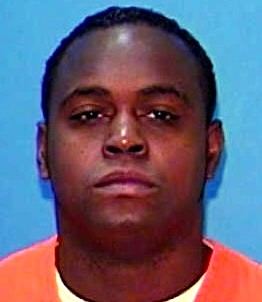 Wydell Evans
Murderer · USA · 1998
Wydell Evans was born on 05/19/70. He was indicted in the Eighteenth Judicial C…
1 victim
Wydell Evans
Murderer · USA · 1998
Wydell Evans was born on 05/19/70. He was indicted in the Eighteenth Judicial C…
1 victim
 Alice Njoki
Murderer · Kenya · 2009
Alice Njoki was 27 years old at the time of the sentencing. She had been marrie…
1 victim
Alice Njoki
Murderer · Kenya · 2009
Alice Njoki was 27 years old at the time of the sentencing. She had been marrie…
1 victim
- Gender
- male
- Country
- USA
- Location
- Multnomah County, Oregon, USA
- Date of birth
- November 28, 1971
- Age at first offence
- 21
- Characteristics
- murder for hire, gang
- Victim profile
- H is father, double-amputee Hal Charboneau, 45 / Misty Largo, 19, a street kid / Michael Leon Stanton, 15
- Method of murder
- St abbing with knife
- Date(s) of murder
- May 1/July 26-28, 1992
- Years active
- 1992
- Date of arrest
- —
- Status
-
Life imprisonment
Sentenced to death in 1994; overturned in 1996; resentenced to life in prison without parole
Case record: Grant Steven Charboneau
Background
Grant Steven Charboneau was a Portlander who lived with his mother but hung around Portland street kids. His street name was “Thantos,” a variation on “Thanatos,” the Greek god of death. His best friend was Gregory Paul Wilson, a transient who went by the street name “Whisper” because of his raspy voice. Charboneau and Wilson impressed younger street youths by pretending to be undercover military operatives: Charboneau called himself “X.O.” for executive officer, while Wilson referred to himself as “C.O.” for commanding officer.
Charboneau’s estranged father was Hal Charboneau, a double amputee who owned a house in St. Johns. In early 1992, Charboneau persuaded two followers to kill his father so that he could inherit the house.
Charboneau’s estranged father was killed after the followers broke into the house. Public records said two runaways from Vancouver, Wash.—Stanton and Joel Michael Seaquist (16)—stabbed Hal Charboneau to death and stole his rare coin collection. Portland police began investigating the killing as a botched robbery. Charboneau moved into the house approximately one month after the killing and began letting family members visit or stay there, including Stanton and Michelle Woodall (19), an Arizona runaway who went by the name Misty Largo.
By late July, Charboneau heard that Woodall was telling other street kids that he and Wilson were not soldiers. Angered by the betrayal, he ordered family members to take her by force from the Marquam Bridge camp and brought her to the house. Woodall was bound to a wheelchair, tortured, and finally strangled on July 26 by several family members, including Wilson, Marvin Al-Tai-Juan Smith (24), and Angela Marie Kincaid (16). At Charboneau’s direction, Wilson mutilated Woodall’s corpse and stuffed it into a culvert off Northwest St. Helens Road.
Worried that Stanton would reveal the two murders, Charboneau ordered him killed. Nelson and Michael L. Tinnin (19) tracked him down at the Marquam Bridge camp and attacked him on July 28. After the attack, court records said Nelson pulled a knife on Stanton and said: “Tell them Highlander sent you,” then stabbed Stanton to death. Stanton’s body was taken to the Rivergate industrial area in North Portland, where it was buried in a shallow grave. A group of street kids later walked into Central Precinct in early August and told police what they knew. Homicide detectives located the bodies of Woodall and Stanton, and police arrested seven people for the crimes. They were charged with offenses ranging from murder to witness tampering.
The earlier murders were prosecuted as crimes by the family, with Nelson being sentenced to only 10 years in prison for his murder conviction because he provided evidence against some of the other defendants.
After Nelson’s release from prison, probation officials said Nelson stayed in transitional housing for a few weeks but failed to find work and began living in local homeless shelters, and that it was not unusual for paroled criminals to be homeless. Probation officers said Nelson fully complied with the terms of his probation, including checking in weekly with his parole officer, and a parole supervisor, Steve Liday, said: “We had no reason to believe there were any problems.”
The offence
The case involved the alleged leader of a Portland street kids “family” charged with killing 22-year-old woman last month, and the conviction described involved murders connected to the street family. The evidence presented to the jury set forth a homicide of a homeless teenager, Misty Largo.
The victim, Misty Largo, was a homeless teenager who had been living in Portland for 6 to 12 months at the time of her death. On July 25, 1992, the defendant, along with Greg Wilson and two other men, drove to an area under the Marquam Bridge where Largo then was living. The defendant and Wilson were concerned that Largo was spreading rumors about Wilson’s having stabbed someone. The group found Largo and escorted her back to their vehicle at knifepoint. They drove to defendant’s house, and defendant took Largo into the house at knifepoint. Many people were there. Largo was taken into a back room.
Wilson instructed several of the people present to hit Largo in the face, and they did. Largo was kept in the back room, where she was repeatedly interrogated and slapped.
The next day, defendant and Wilson left the house and told others in the house to make sure that Largo did not leave. When defendant and Wilson returned later that day, Largo was interrogated and slapped for several hours. Then she was taken again to the back room. At some point that evening, Wilson, in defendant’s presence, decided that he would kill Largo. Largo was tied to a wheelchair.
Wilson and defendant first tried to kill Largo by poisoning her with a glass of water in which they had dissolved a nitroglycerin pill. When that act failed to kill Largo, defendant found a plastic bag and placed it over Largo’s head. After about five minutes, Largo was still breathing. Defendant then located a piece of speaker wire and wrapped it around Largo’s neck. Defendant and Wilson took turns choking Largo with the speaker wire for five to ten minutes. Still not convinced that Largo was dead, Wilson hit Largo on the sternum and throat. She “gurgled and choked and stopped breathing.”
After Largo died, defendant said that he would dispose of her body. Defendant and Michael Leon Stanton, another man at the defendant’s house, left with the body. Defendant later said that he had hit Largo twice in the head with a splitting maul and that he and Stanto[n] had stabbed her in the heart.
Investigation
A court record evidence statement set forth the jury evidence. Police investigation earlier included discovery of bodies of Woodall and Stanton. Word of the murders spread quickly among Portland’s street kids, and some walked into Central Precinct in early August to tell police what they knew.
Arrest
Court records said police arrested seven people for the crimes related to the Woodall and Stanton murders after bodies were located.
For the later Williams case discussed in the narrative, a district attorney’s office charged 12 members of the street family with crimes related to Williams’ death, including kidnapping, assaulting and murdering Williams. The narrative named those charged with aggravated murder and those charged with assault, kidnapping and coercion. The narrative also said a warrant affidavit released in the case described a young woman telling police that Williams “had angered the family by spreading lies to family members and that the family, under the direction of Nelson, was going to punish her.” The affidavit said family members attacked Williams under the west end of the Marquam Bridge, led her across the Willamette River on the Steel Bridge where she was stabbed to death, and set on fire with lighter fluid.
During the later case, law enforcement searched for Carl Richard Alsup along the Oregon coast over the weekend but had not captured him by press time. Frink thought that all the alleged participants in the killing had been identified, and said a Multnomah County grand jury would continue hearing evidence before issuing formal indictments.
Trial
The evidence presented to the jury was set forth in the district court’s opinion. The trial evidence described the defendant’s involvement with Greg Wilson and others in taking Misty Largo at knifepoint to defendant’s house, repeated interrogation and slapping, poisoning attempt with a nitroglycerin pill dissolved in water, placing a plastic bag over Largo’s head, choking with speaker wire, and other actions that resulted in her death.
Sentencing
Grant Charboneau was sentenced to death in 1994.
Appeals
The death sentence was overturned in 1996.
Outcome
After the death sentence was overturned, Charboneau was resentenced to life in prison without parole.
Aftermath
According to court records, after serving more than 10 years for Woodall’s murder and his release from prison March 24, Nelson returned to Portland and became leader of the Thantos street family. Probation officials said Nelson stayed in transitional housing for a few weeks but failed to find work and then lived in local homeless shelters. They said he fully complied with probation terms, including checking in weekly with his parole officer.
Although Williams primarily lived with her Gladstone family, she was considered a member of the Thantos family because she hung out with the family when she stayed downtown. The narrative said the family turned on Williams last month because members believed she had violated their unwritten rules.
A district attorney’s office charged 12 members of the family with kidnapping, assaulting and murdering Williams, naming the murder charges and the assault/kidnapping/coercion charges. Those charged with murder were Carl Richard Alsup (17), Danielle Marie Cox (18), and Jimmy Aaron Stewart (18). The others charged with assault, kidnapping and coercion were Nelson; Cassie Jean Hale (20); Cordell Dennison (19); Heidi Lee Keller (20); Sarah La’dona Caster (17); Steven Scott Pearce (20); Joshua Ryan Brown-Lenon (18); Crystal Ann Grace (19); and Crystal Elliot (16). The narrative said all but Alsup had been arrested and arraigned.
Other details
A senior Multnomah County deputy district attorney, Norm Frink, said the similarities between the killings were remarkable and credited his help prosecuting earlier family members. Brian Schmautz, a Portland police spokesman, said the investigation of the Williams death led police into the underground world of Portland street families, and said many homeless youths and adults still used mystical-sounding street names such as “Death Knight” and “Shadow Cat,” and still punished and even killed members for breaking unwritten rules.
Spotted an error, or have more information about this case?