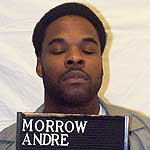
Andre Morrow
Murderer Brian Kevin Rosenfeld
Murderer · USA · 1985
Brian Kevin Rosenfeld Brian Kevin Rosenfeld was sentenced to three concurrent l…
23 victims
Brian Kevin Rosenfeld
Murderer · USA · 1985
Brian Kevin Rosenfeld Brian Kevin Rosenfeld was sentenced to three concurrent l…
23 victims
 Russell Ellwood
Murderer · USA · 1991
Russell Ellwood was a former taxi driver. Authorities suspected him of killing…
20 victims
Russell Ellwood
Murderer · USA · 1991
Russell Ellwood was a former taxi driver. Authorities suspected him of killing…
20 victims
 Robert Martines Perez
Murderer · USA · 1994
Name: Robert Martines Perez · Other name used in proceedings: Robert Martinez P…
15 victims
Robert Martines Perez
Murderer · USA · 1994
Name: Robert Martines Perez · Other name used in proceedings: Robert Martinez P…
15 victims
 Billy Frank Vickers
Murderer · USA · 1993
Billy Frank Vickers Vickers was executed by lethal injection in Texas on Januar…
14 victims
Billy Frank Vickers
Murderer · USA · 1993
Billy Frank Vickers Vickers was executed by lethal injection in Texas on Januar…
14 victims
 Byron Smith
Murderer · USA · 2012
Byron Smith, 65, was involved in the killings of two teenage intruders in his h…
2 victims
Byron Smith
Murderer · USA · 2012
Byron Smith, 65, was involved in the killings of two teenage intruders in his h…
2 victims
 Jean Lee
Murderer · Australia · 1949
Jean Lee (10 December 1919 – 19 February 1951) was an Australian woman executed…
1 victim
Jean Lee
Murderer · Australia · 1949
Jean Lee (10 December 1919 – 19 February 1951) was an Australian woman executed…
1 victim
 Amber Hill
Homicide · USA · 2007
Amber Hill was a 23-year-old Cleveland woman who drowned her two young daughter…
2 victims
Amber Hill
Homicide · USA · 2007
Amber Hill was a 23-year-old Cleveland woman who drowned her two young daughter…
2 victims
 Seito Sakakibara
Homicide · Japan · 1997
Seito Sakakibara (酒鬼薔薇 聖斗, Sakakibara Seito) was the alias of a then-14-year-ol…
2 victims
Seito Sakakibara
Homicide · Japan · 1997
Seito Sakakibara (酒鬼薔薇 聖斗, Sakakibara Seito) was the alias of a then-14-year-ol…
2 victims
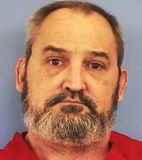 Bennie Joe Stevens
Mass murderer · USA · 1998
Defendant: Bennie Joe Stevens Name used in proceedings: Benny Joe Stevens (“Ste…
4 victims
Bennie Joe Stevens
Mass murderer · USA · 1998
Defendant: Bennie Joe Stevens Name used in proceedings: Benny Joe Stevens (“Ste…
4 victims
- Gender
- male
- Country
- USA
- Location
- St. Louis County, Missouri, USA
- Date of birth
- 1970
- Age at first offence
- 24
- Characteristics
- drugs, crime spree, robbery
- Victim profile
- Roamel Abercrombie, 18 / John Koprowski
- Method of murder
- Shooting
- Date(s) of murder
- April 11-13, 1994
- Years active
- 1994
- Date of arrest
- —
- Status
-
Life imprisonment
Sentenced to death in 1995; commuted to life without parole by Missouri Supreme Court on October 28, 2003
Case overview
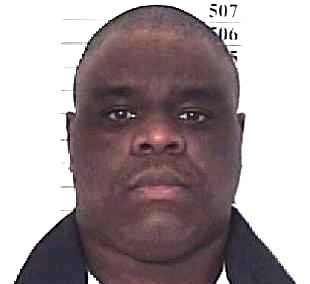
State of Missouri v. Andre D. Morrow (968 S.W. 2d 100; Mo. banc 1998) involved a three-day drug binge and crime spree in April 1994, followed by a robbery and first degree murder conviction and a death sentence that was later commuted.
Parties and case identifiers
- Defendant/Appellant: Andre D. Morrow
- Supreme Court case style: State of Missouri, Respondent, v. Andre D. Morrow, Appellant
- Case number: 79112
- Handdown date: 04/21/98
- Appeal from: Circuit Court of St. Louis County, Hon. James R. Hartenbach
- Counsel for Appellant: Henry B. Robertson
- Counsel for Respondent: Breck K. Burgess
Timeline
- April 10, 1994 — Andre Morrow was introduced to Richard Gooch; Morrow smoked cocaine with Gooch for much of the afternoon.
- Early hours of April 11, 1994 — Morrow stole Lisa Smith’s Chevy Nova from an Amoco gas station.
- April 11, 1994 (early hours/after the theft) — Morrow stole Yn Ye Kuo’s purse by driving close to her and grabbing her purse.
- Later that morning (April 11, 1994) — Morrow returned to Gooch’s with Kuo’s purse and about $500, gave Gooch $40, and continued smoking cocaine.
- The following afternoon (April 12, 1994) — Morrow and his friend Mario Page abandoned Smith’s car and stole Robert Herod’s Fiero.
- Later that afternoon (April 12, 1994) — Morrow and Page purchased a .38 caliber pistol and saw eighteen year old Roamel Abercrombie.
- After the March Abercrombie assault and shooting (April 12, 1994) — Morrow murdered Roamel Abercrombie by shooting him in the back of the head.
- Belleville, Illinois (after the Abercrombie murder) — Morrow left Herod’s car and stole Fred Maston’s Oldsmobile Cutlass.
- That night (after the Cutlass theft) — Morrow robbed Marsha Timm after sticking a gun in the side of her abdomen.
- Sometime after midnight (April 13, 1994) — Page stole Pornfiro Pinchay’s Toronado from a parking space near Pinchay’s home.
- About 4:00 a.m. (April 13, 1994) — Morrow and Page left Gooch’s in Pinchay’s car.
- About 4:00 a.m. (April 13, 1994) — Morrow and Page attempted to steal a 1989 Camero belonging to the wife of Brad Rosenthal and abandoned the plan after realizing Rosenthal was watching them.
- After the Camero plan was abandoned (April 13, 1994) — Morrow and Page attempted to steal a truck at a Mobil station and abandoned the plan after the owner returned.
- YMCA parking lot, Brentwood (April 13, 1994) — Morrow and Page came upon John Koprowski and Morrow demanded his keys.
- YMCA parking lot (April 13, 1994) — Morrow shot Koprowski once in the head; Koprowski bled to death.
- After the Koprowski shooting (April 13, 1994) — Morrow drove in Koprowski’s jeep downtown St. Louis, robbed Sandra Merriman, and returned to Gooch’s later that morning.
- January of '94 (referenced in penalty closing argument) — Evidence was presented to the jury that Morrow had just gotten out of jail in January of 1994.
- 1995 — Morrow was sentenced to death.
- October 28, 2003 — Missouri Supreme Court commuted the sentence to life without parole.
- May 26, 1998 — Opinion modified by Court’s own motion; substitution did not constitute a new opinion.
Background
On April 10, 1994, twenty-four year old Andre Morrow was introduced to Richard Gooch. Gooch’s apartment in St. Louis was described as a safe place where people could smoke cocaine in “quietness and peacefulness.” Morrow took advantage of this atmosphere and smoked cocaine with Gooch for much of the afternoon. Eventually, Morrow left Gooch’s “to go get some money.”
During a three day crime spree in April 1994, the evidence included multiple thefts and robberies, followed by two murders, including the charged murder of John Koprowski.
The offence
Theft and robbery sequence
In the early hours of April 11, 1994, Morrow went to an Amoco gas station and stole Lisa Smith’s Chevy Nova, while Smith paid for her gasoline. Morrow returned to Gooch’s with Smith’s car and a black purse. Informing Gooch he was going to get more money, Morrow left and traveled to Northwest Plaza. Still in Smith’s car, Morrow drove close to Yn Ye Kuo, who was walking towards the restaurant where she worked, and asked: “Where’s the Sears?” Morrow then grabbed her purse and drove away. Morrow returned to Gooch’s later that morning with Kuo’s purse and about $500. He told Gooch: “Pops, when I go for it-when I go get it, I get it.” He then gave Gooch $40. Gooch and Morrow passed the remainder of the day smoking cocaine.
The following afternoon, Morrow and his friend Mario Page abandoned Smith’s car and stole Robert Herod’s Fiero from in front of Herod’s apartment. Later that afternoon, Morrow and Page purchased a .38 caliber pistol and traveled to the corner of Cora and Maragaretta in the City of St. Louis. They saw eighteen year old Roamel Abercrombie, who was walking to a nearby store to purchase some orange juice and carrying one dollar. Morrow got out of the car, approached Abercrombie, and said: “Give me all your shit, Give me all you got. If you want I’ll shoot your ass.” Morrow fired a shot into the air, scattering people. Morrow marched Abercrombie to a nearby vacant lot and demanded his money. Abercrombie gave Morrow his dollar. Morrow took Abercrombie farther into the lot and murdered him, shooting him in the back of the head. Morrow told Page they needed to get out of town.
They drove to Belleville, Illinois, where they left Herod’s car and stole Fred Maston’s Oldsmobile Cutlass. They later returned to Gooch’s with more cocaine. Morrow explained to Gooch that he had gotten into a misunderstanding with regards to a drug deal and he had to “put the little guy to sleep.”
That night, Morrow went to a Shell station and approached Marsha Timm while she was pumping gasoline. Morrow stuck a gun in the side of her abdomen and said: “Give me you're [sic] handbag or I'll shoot.” After initially refusing, Timm relented and let Morrow take her purse.
Sometime after midnight, Page stole Pornfiro Pinchay’s Toronado from a parking space near Pinchay’s home. At about 4:00 a.m., Morrow and Page left Gooch’s apartment in Pinchay’s car. Morrow and Page attempted to steal a 1989 Camero belonging to the wife of Brad Rosenthal; they abandoned the plan after realizing Rosenthal was watching them from his living room window. They later found a truck they wanted to steal at a Mobil station, but the plan was abandoned when the owner returned to the truck.
While searching for another vehicle, Page and Morrow continued at the YMCA parking lot in Brentwood, where they came upon John Koprowski and his new Jeep Grand Cherokee. Morrow approached Koprowski and demanded his keys. Page also approached to take Koprowski’s wallet. Koprowski responded: “I'm not gong to let you do this” and grabbed Morrow’s gun. He attempted to fight off Morrow and Page, who were both biting him. Morrow regained control of the gun and grabbed Koprowski’s keys from the ground. Koprowski remained on the ground. As Morrow stood above Koprowski, he shouted “Get up, you son of a bitch” and then shot Koprowski once in the head. The bullet entered Koprowski’s head just above the tip of his nose and traveled through his body until it came to rest between his ribs in his back. Morrow and Page jumped into Koprowski’s jeep and, before leaving, observed that Koprowski was still alive, staggering through the lot.
William Lindenmayer heard the gunshot and drove into the YMCA’s parking lot. He saw Koprowski stagger away from the Toronado, then collapse. Lindenmayer placed his jacket over Koprowski and then went into the YMCA for help. An ambulance arrived and took Koprowski to St. Mary's Hospital. Koprowski bled to death from the gunshot wound.
After the shooting, Morrow drove to downtown St. Louis in Koprowski’s jeep and found Sandra Merriman at the Southwestern Bell building. Merriman was using the building’s revolving door to go to work when it suddenly stopped moving. Merriman turned to see Morrow with his hand on her purse. Morrow said: “Give me that, motherfucker.” Morrow pulled Merriman backwards, took her purse, and left in Koprowski’s jeep.
Morrow returned to Gooch’s later that morning. Page sold their gun for drugs at a nearby apartment. Morrow became irritated with Page because he was unsatisfied with the quality and quantity of the cocaine Page had purchased. Page then left to burn Koprowski’s jeep. Morrow grew concerned after seeing news reports covering Koprowski’s murder. He discussed with Gooch his need to get out of town, considered going to Kansas City to rob a bank, and talked of putting Page “to sleep” before leaving. Gooch feared for his own safety. Gooch left Morrow at his apartment and went to the police. Morrow confessed to all the aforementioned crimes.
Investigation and evidence
The court described multiple evidentiary rulings that arose from trial evidence and testimony.
Uncharged crimes evidence
Morrow maintained that the trial court erred by admitting evidence of uncharged crimes of stealing, robbery, and murder, including the robbery and murder of Roamel Abercrombie, the theft of Fred Maston’s Oldsmobile, the theft of Pornfiro Pinchay’s Toronado, the robbery of Marsha Timm, and the robbery of Sandra Merriman. The appellate court found this evidence admissible to present a complete and coherent picture of the charged crimes and to rebut Morrow’s contention that he lacked the ability to deliberate.
Fingerprint cards and alias
Morrow contended that the trial court erred when it admitted Morow’s 1987 fingerprint cards. The fingerprint cards matched prints lifted from Brad Rosenthal’s wife’s Camero. The cards were dated “1987” and showed Morrow used an alias, “Eric Stubbs.” The argument was that the cards were prejudicial evidence of an unrelated offense. The appellate court held that fingerprint cards, in and of themselves, did not constitute evidence of a prior crime, and that use of an alias did not constitute clear evidence associating Morrow with other crimes when the fingerprint cards did not mention crimes.
A police officer introduced the fingerprint cards and testified that as an “intake officer” he would obtain the subject’s name for the fingerprint card off the “booking sheet.”
Hearsay and lineup reaction evidence
Officer Campbell testified that he told Morrow that “Mario Page had implicated him in the shooting of Roamel Abercrombie.” Morrow argued that this was impermissible hearsay and prejudicial. The appellate court found neither prejudice nor abuse of discretion.
Morrow also challenged Officer Campbell’s testimony about reactions at a police lineup. Campbell testified that Charles “began to cry and shake” when Morrow stepped forward at the lineup, and that Yn Ye Kuo backed away from the window, became weak kneed, and appeared to be fainting when she observed Morrow. The appellate court concluded neither Charles nor Yn Ye Kuo made an identification and that the testimony did not create prejudice; Morrow had already confessed to murdering Abercrombie and the Kuo robbery.
Witness testimony about fear and guilt
Morrow challenged Ms. Browning’s testimony regarding her fear and guilt. Ms. Browning testified that she was at the YMCA parking lot, witnessed much of the exchange between Morrow and Koprowski, returned to her car, drove around the building hoping to frighten away Morrow, later witnessed Morrow shoot Koprowski, hid behind her car because she was afraid of being shot, and felt guilty for not doing more. The appellate court found the testimony relevant and not prejudicial.
Presentence report
Morrow challenged the trial court’s admission of a presentence report. The state read portions during cross-examination of Dr. Cuneo. The document contained reports from Morrow’s probation and parole officers indicating inability to conform to the law since age thirteen. The appellate court found the record demonstrated Dr. Cuneo had seen and relied upon the report for certain factual information, and the trial court did not err in overruling the foundation objections.
The appellate court also addressed that the trial court overruled Morrow’s only objections to foundation, while unpreserved arguments were not reviewed for plain error.
Arrest
Morrow confessed to the crimes, and Gooch left Morrow at his apartment and went to the police.
Trial
Charges
At trial in St. Louis County, Morrow was charged with:
- Robbery and murder of John Koprowski
- Stealing of Lisa Smith’s car
- Stealing of Robert Herod’s car
- Forcible stealing of Yn Ye Kuo’s purse
- Two attendant counts of armed criminal action
Defense theory
Morrow’s defense at trial was that his cocaine addiction, coupled with a “mental or emotional disturbance,” rendered him unable to deliberate and therefore unable to form the specific intent necessary for a charge of murder in the first degree, referencing:
- sec. 565.020, describing first degree murder as knowingly causing death “after deliberation on the matter.”
Verdict
The jury convicted Morrow of:
- First degree murder
- All other charges brought in the case.
Sentencing
Trial court sentence
The trial court sentenced Morrow:
- To death for Koprowski’s murder.
- To a total of 170 years plus life for the other offenses.
The court also found Morrow to be a class X offender, based on fourteen prior convictions.
The sentence details described were:
- Fifty years each on two counts of armed criminal action
- Twenty years each on two counts of stealing a motor vehicle
- Thirty years for robbery in the second degree
Guilty pleas referenced in footnote
A footnote described that in the city of St. Louis, Morrow pled guilty to first degree murder and armed criminal action for the murder of Roamel Abercrombie, receiving life without parole on the murder charge and life for armed criminal action, and that on the day he pled guilty the City of St. Louis dismissed charges regarding the Timm and Merriman robberies.
Appeals
Standard and points alleged
On direct appeal, the appellate court reviewed for prejudice, not mere error, and used review standards including review of evidence admission and preservation requirements. Morrow alleged multiple instances of trial court error, including:
- Admission of evidence of uncharged crimes
- Misjoinder and refusal to sever counts V–VII
- Jury instruction permitting other crimes evidence for motive and intent
- Voir dire restrictions affecting ability to question prospective jurors about mitigating evidence and differences between first and second degree murder
- Admission of fingerprint cards
- Admission of hearsay statement by Mario Page via officer testimony
- Admission of testimony regarding fear felt by witnesses
- Overruling Batson challenges for two black venirewomen
- Allowing victim impact-related testimony of Abercrombie’s mother and a photograph of Abercrombie
- Admission of victim impact testimony of Pamela Koprowski
- Admission of presentence report and cross-examination of Dr. Cuneo
- Submission of five statutory aggravating circumstances
- Constitutionality of the statutory and instructional scheme regarding mitigating evidence
- Overruling objections to the state’s penalty phase closing argument
- Passion and prejudice, insufficiency of aggravating circumstances, and disproportionality
Court en banc holdings and reasoning
The appellate court held that:
- Evidence of uncharged crimes was admissible to present a complete and coherent picture and to rebut the claim that Morrow lacked ability to deliberate.
- Charged offenses were properly joined due to connections in time, manner, and dependence and relationship.
- The evidence relating to each crime was simple and distinct and not confusing; Morrow admitted involvement.
- Other crimes evidence was relevant to issues of intent and motive.
- Morrow’s objection about questioning prospective jurors on mitigating evidence in light of another murder charge was not preserved; he was allowed during general voir dire to inquire how evidence of another murder charge would affect consideration of second degree murder.
- Fingerprint cards and use of an alias did not constitute evidence of prior crime in and of themselves; the cards did not mention any crimes.
- Officer Campbell testimony regarding Page’s statement did not prejudice Morrow because Morrow admitted the Abercrombie murder.
- There was no prejudice from admitting testimony about non-verbal reactions at a police lineup.
- There was neither abuse of discretion nor prejudice in admitting Ms. Browning’s testimony about fear and guilt.
- The trial court did not clearly err in overruling Batson challenges, including findings that hesitation and body language were a legitimate basis for peremptory strikes and that the prosecutor’s concerns about a venirewoman’s husband being a juvenile officer were race-neutral, with Morrow failing to present similarly situated non-blacks not struck.
- The trial court did not abuse discretion in allowing Abercrombie’s mother to rebut a drug-deal characterization and did not abuse discretion in admitting a photograph for identity purposes; discrepancy in age was not great enough to render admission an abuse of discretion; the jury was aware of size and age.
- The constitutionality of the victim impact statute was upheld; no manifest injustice or miscarriage of justice occurred regarding the rhetorical and inflammatory objection to Pamela Koprowski’s victim impact testimony, which was not preserved.
- The trial court did not err in overruling foundation objections to the presentence report, and unpreserved arguments did not show manifest injustice or miscarriage of justice.
- The court rejected arguments about multiplicative aggravators and found overwhelming uncontested evidence that Morrow was perpetrating a robbery when he murdered Koprowski, so it affirmed without addressing additional aggravators.
- The death penalty statute scheme argument preventing consideration of mitigating evidence was rejected.
- No abuse of discretion occurred in overruling objections to various remarks in the state’s penalty phase closing argument.
- There was no evidence of arbitrary influences; evidence supported robbery-murder; sufficient evidence supported all four statutory aggravating circumstances; the sentence was neither excessive nor disproportionate.
- The judgment was affirmed; all concurred.
Outcome
The appellate court affirmed the trial judgment, and the legal status was later commuted by the Missouri Supreme Court to life without parole on October 28, 2003.
Aftermath
A substitution in the opinion occurred by the Court’s own motion on May 26, 1998, and the substitution did not constitute a new opinion.
Spotted an error, or have more information about this case?