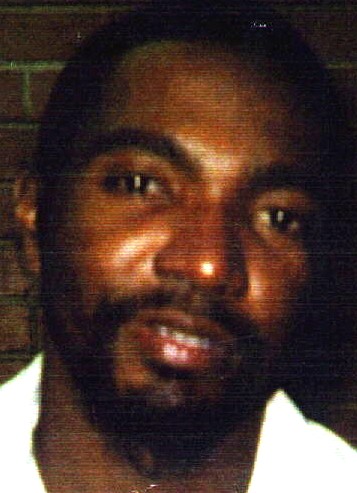
Stacey Lamont Lawton
Murderer Brian Kevin Rosenfeld
Murderer · USA · 1985
Brian Kevin Rosenfeld Brian Kevin Rosenfeld was sentenced to three concurrent l…
23 victims
Brian Kevin Rosenfeld
Murderer · USA · 1985
Brian Kevin Rosenfeld Brian Kevin Rosenfeld was sentenced to three concurrent l…
23 victims
 Russell Ellwood
Murderer · USA · 1991
Russell Ellwood was a former taxi driver. Authorities suspected him of killing…
20 victims
Russell Ellwood
Murderer · USA · 1991
Russell Ellwood was a former taxi driver. Authorities suspected him of killing…
20 victims
 Robert Martines Perez
Murderer · USA · 1994
Name: Robert Martines Perez · Other name used in proceedings: Robert Martinez P…
15 victims
Robert Martines Perez
Murderer · USA · 1994
Name: Robert Martines Perez · Other name used in proceedings: Robert Martinez P…
15 victims
 Billy Frank Vickers
Murderer · USA · 1993
Billy Frank Vickers Vickers was executed by lethal injection in Texas on Januar…
14 victims
Billy Frank Vickers
Murderer · USA · 1993
Billy Frank Vickers Vickers was executed by lethal injection in Texas on Januar…
14 victims
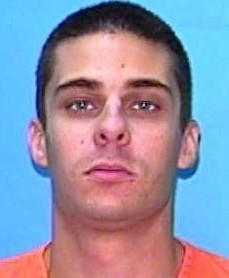 Jason Looney
Murderer · USA · 1997
Jason Looney was sentenced to death on February 18, 2000. His case was heard in…
2 victims
Jason Looney
Murderer · USA · 1997
Jason Looney was sentenced to death on February 18, 2000. His case was heard in…
2 victims
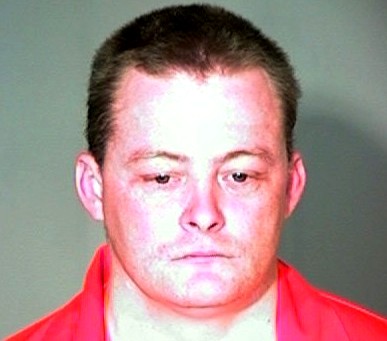 John Edward Sansing
Murderer · USA · 1998
John Edward Sansing was convicted in Superior Court (Maricopa) of first-degree…
1 victim
John Edward Sansing
Murderer · USA · 1998
John Edward Sansing was convicted in Superior Court (Maricopa) of first-degree…
1 victim
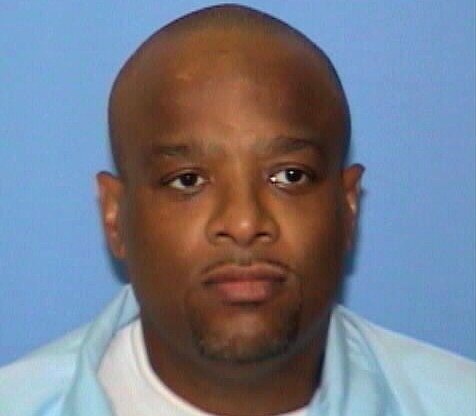 Ronald Macon
Serial killer · USA · 1999
Ronald Macon was convicted of three murders and one criminal sexual assault in…
3 victims
Ronald Macon
Serial killer · USA · 1999
Ronald Macon was convicted of three murders and one criminal sexual assault in…
3 victims
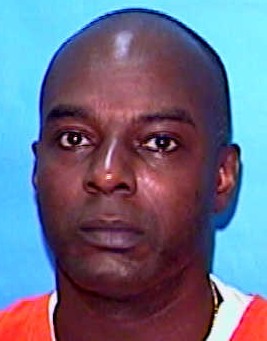 Clarence James Jones
Murderer · USA · 1988
Clarence James Jones Clarence Jones was a known escapee from a Maryland prison…
1 victim
Clarence James Jones
Murderer · USA · 1988
Clarence James Jones Clarence Jones was a known escapee from a Maryland prison…
1 victim
- Gender
- male
- Country
- USA
- Location
- Smith County, Texas, USA
- Date of birth
- J uly 10, 1969
- Age at first offence
- 23
- Characteristics
- robbery, drug dealer, armed robbery
- Victim profile
- Dennis L. Price (male, 44)
- Method of murder
- Shooting
- Date(s) of murder
- December 24, 1992
- Years active
- 1992
- Date of arrest
- Same day
- Status
-
Executed
Executed by lethal injection in Texas on November 14, 2000
Case overview
Stacey Lamont Lawton was executed by lethal injection in Texas on November 14, 2000. He was convicted and sentenced to death for murdering Dennis Price, a 47-year-old man, during a burglary spree on Christmas Eve 1992 in Smith County. Lawton was 31 at the time of his execution and 23 at the time of the offense.
Timeline
- December 23, 1992 — Lawton, Karlos Fields, and Carlos Black were burglarizing several vehicles in Smith County as part of a two-day crime spree.
- Early morning of December 24, 1992 — Lawton and co-defendant Carlos Black approached Dennis Price’s truck and began to burglarize it.
- Christmas Eve 1992 — Dennis Price was shot in the chest with a shotgun when he confronted Lawton and his accomplices outside his home; Price died shortly afterwards.
- February 1993 — A grand jury indicted Lawton for the capital offense of murder with a firearm, in the course of committing and attempting to commit the offense of robbery.
- 1994 — Accomplice Karlos Ranard Fields received a life prison term.
- December 6, 1995 — Texas Court of Criminal Appeals affirmed Lawton’s conviction and sentence.
- May 15, 1995 — U.S. Supreme Court denied certiorari review.
- April 23, 1997 — Lawton filed an application for habeas corpus relief in the state trial court.
- January 14, 1998 — Court of Criminal Appeals denied Lawton’s habeas application.
- January 20, 1998 — Lawton filed a federal petition for writ of habeas corpus in the United States District Court for the Eastern District of Texas, Tyler Division.
- January 26, 1999 — District Court denied habeas relief.
- March 22, 1999 — District Court once again denied relief after granting rehearing.
- May 24, 1999 — District Court granted Lawton permission to appeal.
- March 1, 2000 — United States Court of Appeals for the Fifth Circuit affirmed the lower court’s denial of relief.
- September 26, 2000 — U.S. Supreme Court denied a writ of certiorari.
- November 14, 2000 — Execution by lethal injection in Texas occurred after 6 p.m. on Tuesday, Nov. 14, 2000; Lawton was pronounced dead at 6:22 p.m. CST.
The offence
Lawton and two co-defendants, Karlos Fields and Carlos Black, were involved in a two-day crime spree in the neighborhood of Dennis Price and around Smith County. They broke into and stole property from numerous cars in Price’s neighborhood and around the County.
In the pre-dawn hours of Christmas Eve, Dennis Price was awakened by his daughter, who informed him that his truck was being burglarized. Price ran into his front yard and was shot in the chest by Lawton using a shotgun that Lawton had stolen in an earlier burglary. Price died shortly thereafter as a result of the injuries sustained and died on the way to a hospital. Lawton and Black ran back to the stolen truck they were in and fled the scene.
A witness described the stolen truck that fled from the crime scene, and a DPS trooper later caught the group and arrested them. Lawton and his two accomplices fled in two stolen pickups, later abandoned them, and stole a third pickup.
The 911 tapes recorded Jennifer Price crying, “Oh my God! They shot my dad!”
People and relationships
- Stacey Lamont Lawton — defendant; convicted and sentenced to death for the shotgun slaying of Dennis Price.
- Dennis Price — victim; 47-year-old man; also described as 44-year-old in some materials; manager of the city of Tyler’s data processing center.
- Jennifer Price — Dennis Price’s daughter; heard noises outside their home, alerted her father, called 911, and was on the line with a dispatcher; she tried to give CPR.
- Karlos Ranard Fields — co-defendant; identified Lawton as the triggerman at trial; received a life sentence in 1994.
- Carlos Black — co-defendant; burglarized vehicles with Fields and Lawton.
- Karlos Fields — referred to as cousin by Lawton when speaking to police; open agreement by Fields and Black not to tell on each other, only Lawton, if something happened.
- Silton Joseph “Buck” Footenot (Fontenot) — investigator appointed to assist Lawton’s defense as an investigator.
- William Wright — lead trial counsel in the underlying action.
- Donald Killingsworth — co-counsel in the underlying action; testified at the state habeas evidentiary hearing.
- Audrey Lorraine Rogers — Lawton’s mother; testified at the state habeas evidentiary hearing.
- Sheryl Rogers — Lawton’s sister; testified that if called to testify she would have said she loved her brother and that he did not have a reputation as a bully.
- Therese Grady — another of Lawton’s sisters; testified that Wright spoke to her outside in the hallway and that she was not contacted prior to trial; she would have said she loved her brother and that he did not have a reputation as a bully.
- Dr. Terry Landrum — psychologist whose testimony was considered regarding future dangerousness.
- Dr. Jerry Landrum — referenced in habeas testimony as one of the psychologists contacted.
- Dr. Patrick Lawrence — clinical psychologist referenced in habeas claims regarding testimony about prison classification systems.
- Gary L. Johnson — named respondent in the U.S. Court of Appeals for the Fifth Circuit matter.
- Michael Graczyk — author of a quoted news piece.
- John Cornyn — Texas Attorney General referenced in a media advisory.
- George W. Bush — Governor to whom Lawton requested clemency.
- Dobbs — quoted in relation to belief that Lawton shot the death shots.
Investigation, pursuit, and arrest
Police chased Lawton and his co-defendant as they fled from the crime scene. A witness who saw Lawton and his co-defendants flee the neighborhood gave police a description of the stolen truck they were in. A witness described the stolen truck that fled from the crime scene and a DPS trooper later caught the group and arrested them following a high-speed chase.
Lawton told police that Karlos Fields and Carlos Black were cousins. Lawton said that as they discussed carrying out the crime spree, Fields and Black openly agreed to not tell on each other, only Lawton, if something happened.
The murder weapon was stolen in an earlier burglary.
Several witnesses testified that the cars driven by Lawton and his co-defendants were at the scenes of various burglaries that night. One witness testified that one of Lawton’s co-defendants had pointed a shotgun at her window earlier in the evening.
Witness testimony at trial established that Lawton stood guard while Fields and Black burglarized the vehicles using a stolen shotgun. Witnesses testified that Lawton stood at a distance from the vehicles being burglarized and pointed the shotgun at the windows and doors of houses near which vehicles were parked. Lawton told Black and Fields that he would “bust on” (shoot) anyone who attempted to interfere in the burglary spree.
Trial
In February 1993, a grand jury indicted Lawton for the capital offense of murder with a firearm, in the course of committing and attempting to commit the offense of robbery. Lawton was found guilty by the jury.
The next day the jury found that Lawton constituted a continuing threat to society and that Lawton intended to kill his victim. The jury failed to find any mitigating circumstances. The trial court then sentenced Lawton to death.
At trial, accomplice Karlos Ranard Fields testified and identified Lawton as the triggerman. The jury trial and sentencing proceedings included evidence presented during the punishment phase of Lawton’s prior convictions for criminal trespass and delivery of a controlled substance.
Sentencing
The trial court sentenced Lawton to death based on the jury’s findings that Lawton constituted a continuing threat to society, that Lawton intended to kill his victim, and that no mitigating circumstances were found.
A statement from the victim’s daughter was among the evidence referenced in later appellate discussion.
Appeals
U.S. Court of Appeals for the Fifth Circuit
Lawton filed a federal petition for writ of habeas corpus in January 1998 in the United States District Court for the Eastern District of Texas, Tyler Division. The petition alleged ineffective assistance of counsel and six other claims. Following a motion by the state for summary judgment, the district court denied Lawton’s petition for habeas corpus relief.
In May 1998, the district court granted Lawton a certificate of appealability on all issues raised in his application. On appeal to the Fifth Circuit, Lawton briefed only his ineffective assistance of counsel claim and his jury instruction claim, and the other issues for which a certificate of appealability was granted were treated as abandoned.
The Fifth Circuit affirmed the district court’s denial of habeas relief on March 1, 2000. The court found that Lawton did not receive ineffective assistance of counsel during the punishment phase of his trial and that the trial court’s failure to instruct the jury on possible parole eligibility did not violate Lawton’s constitutional rights. The court therefore affirmed the judgment denying habeas relief.
Ineffective assistance of counsel at punishment phase
Lawton claimed his trial counsel failed to provide effective assistance at the punishment phase because counsel failed to conduct a meaningful investigation of Lawton’s background to present mitigating evidence to the jury. The appellate decision described testimony from the state habeas evidentiary hearings, including testimony from William Wright, Silton Joseph “Buck” Footenot (Fontenot), and Lawton’s mother, Audrey Lorraine Rogers.
The appellate discussion included that at the evidentiary hearings, there was extensive testimony, and that the court had to review the record to assess the ineffective assistance claim.
William Wright testified that he contacted two psychologists and one psychiatrist for testimony about future dangerousness. Wright hoped Dr. Terry Landrum would testify that Lawton posed no future danger, that predictions of future dangerousness are not reliable, and to provide testimony about the prison classification system. Wright stated that after he allowed Dr. Landrum to conduct a psychological evaluation of Lawton he believed that if he called Dr. Landrum to testify it would open the door to information about Lawton’s previous incarcerations. Wright testified that during a previous incarceration Lawton had been disciplined for delivery of a controlled substance while in the Smith County Jail, and therefore he made a strategic decision not to call Dr. Landrum. Wright testified that although he did not use Dr. Landrum as a witness, he consulted with Dr. Landrum regarding the state’s expert on future dangerousness, and used the information from Dr. Landrum in his cross examination of the state’s expert. Wright stated he talked to Dr. Landrum about whether another expert would be helpful, and Dr. Landrum said it would not help.
Wright testified he got Lawton’s records from the penitentiary and asked Lawton for names of people to contact to testify at the punishment phase. Wright testified he asked his investigator, Silton Joseph “Buck” Footenot, to contact everyone on Lawton’s list. Wright stated that Fontenot told him he contacted everyone.
Wright testified that Fontenot told him Lawton’s mother said Lawton had been spoiled by his great-grandmother as a child, and that she did not know a teacher or preacher who would testify on Lawton’s behalf because Lawton refused to go to church.
Wright also testified he spoke with Lawton’s sisters outside the courtroom, and they told him Lawton had a good childhood and was spoiled by his great-grandmother, and therefore they could not testify to any hardship in his childhood. The sisters also told Wright they loved their brother and that he did not have a reputation for violence. Wright was not directly asked whether he made a strategic decision not to call the sisters to testify. Wright recalled that Lawton’s great-grandmother who raised him died a week prior to the trial.
Fontenot testified that he was appointed by the court to assist Lawton’s defense as an investigator. On direct examination, Fontenot stated that he remembered talking to some witnesses on Lawton’s behalf but did not remember who, when, or where he talked to these witnesses. In his official court billing, Fontenot recorded four hours for witness interview on three different dates.
Audrey Lorraine Rogers testified she was contacted by Fontenot and asked if she knew anyone in the neighborhood willing to testify on Lawton’s behalf. Rogers testified this conversation lasted approximately three minutes and that she was never contacted by Fontenot or Wright again. Rogers testified she attempted to contact Fontenot at his office, but he was not in, and she never attempted to call him again. Rogers testified she was never asked by the defense team about Lawton’s childhood, hardships, or anything else about his early life. Rogers testified Lawton’s birth father was convicted for armed robbery and was in the penitentiary until Lawton was nineteen. Rogers testified Lawton’s step father once beat him severely with a shoe and that she was also physically abused by Lawton’s step father. Rogers testified Lawton had a loving relationship with his girlfriend and her three children, and that Lawton did not have a reputation for violence or being a bully. On cross examination, Rogers conceded Lawton had not been routinely abused by his step father and that he was primarily raised by his great-grandmother who provided him with a “nice life.”
The Fifth Circuit cited that failure to present mitigating evidence is not per se ineffective assistance and that counsel may be found not ineffective if legitimately concerned that mitigating testimony would open the door to more damaging evidence under cross-examination. The appellate court determined Wright’s decisions were strategic and did not constitute deficient performance. The court also found Lawton failed to show prejudice.
Jury instruction on parole eligibility
Lawton argued the trial court failed to instruct the jury that a life sentence would result in incarceration for thirty-five years. The Fifth Circuit found the claim without merit. The appellate decision described that due process does not require the court to instruct on parole eligibility in Texas because Texas did not statutorily provide for life imprisonment without parole, and that Fifth Circuit precedent interpreted Simmons to apply only when the defendant is legally ineligible for parole, which was never the situation for Texas inmates sentenced to life in prison.
Prior criminal history
At trial, the State presented evidence during the punishment phase of Lawton’s prior convictions for criminal trespass and delivery of a controlled substance.
Lawton had a prior conviction for delivery of cocaine. He served less than eight months of a 10-year prison sentence in 1990-91 before being paroled.
Lawton’s execution media information described his serving only seven months of a 10-year term for delivery of cocaine when he and two others went on their crime spree.
Other details
Confession/denial and last statement
Lawton repeatedly proclaimed his innocence. In his final statement he said:
“I am saying, I want y'all to keep your heads up, hold on and stay strong for everybody. I mean ah, I don't want y'all to look at me like I am a killer or something man, cause I ain't no killer. I mean, I didn't, I didn't kill your father. I mean, I know how it look, but I didn't do it. You know what I am saying? You were out there with me, Tommy. I mean, you know man. (mumbled) You know I always did want to say something to y'all. Right? I can't say that I done it because I didn't do it. I've got love for everybody. I am a Christian now. I'm saying I want everybody to keep thier heads up and stay strong. I'm going to stay strong. I'll be seeing you, this is my last breath. Ricky, keep your head up baby. All y'all, Doreen, Melodee. I mean, I know y'all don't come down here. I just really don't know what y'all want me to say. I mean, I know, ah, I mean, I'm sorry anybody, ah, anybody got killed that night. It wasn't supposed to happen, but I didn't do it. I really didn't do it. I don't want y'all to go through life thinking that I did. You know what I am saying? I love everybody and I want y'all to stay strong. Right? It would take me an hour or a long time, man, but, ah, man, I don't want to hold y'all up, man, like that, ah. Y'all just keep your head up and stay strong, man. Give my love to everybody. I love y'all. Texas Attorney General MEDIA ADVISORY Stacey Lamont Lawton Scheduled To Be Executed (AUSTIN) Texas Attorney General John Cornyn offers the following information on Stacey Lamont Lawton who is scheduled to be executed after 6 p.m. on Tuesday, Nov. 14th, 2000.”
Lawton also stated in a death row interview, “We were looking for a truck to steal and couldn't find one,” and “As far as shooting the man, I didn't do it. ... I got no business being here.”
At execution, Lawton addressed Jennifer Price:
“I didn't kill your father. I mean, I know how it look [sic], but I didn't do it.”
During the execution process, as drugs began taking effect, Lawton faintly gasped twice.
Lawton was pronounced dead seven minutes later, after he was described as being pronounced dead at 6:22 p.m. CST.
Clemency and postponement due to filing deadline
Lawton was supposed to die six weeks before the execution date but a judge decided he should have more time to appeal to Gov. George W. Bush for clemency because his attorney missed a filing deadline by one day. The Texas Board of Pardons and Paroles subsequently rejected his request that it recommend the governor grant him clemency.
With his execution set for 3 October, the state district judge postponed it on that day because his attorneys had missed filing an appeal deadline by one day. The U.S. Supreme Court denied Lawton’s appeal in late September.
Witness testimony on who shot Dennis Price
Accomplice Karlos Ranard Fields testified that Lawton was the man who gunned down Dennis Price. Fields also testified that prior to the group carrying out the crime spree, Lawton told the group he would shoot anyone who came out of a house, interfering with a burglary.
Lawton said in his defense that Karlos Fields was the gunman. In the context of the dispute, “We don't have any question he was the one who shot the death shots,” Dobbs said.
High-level procedural identifiers mentioned
The U.S. Court of Appeals for the Fifth Circuit matter included:
- No. 99-40512 — “STACY LAMONT LAWTON, Petitioner-Appellant, versus GARY L. JOHNSON, Director, Texas Department of Criminal Justice, Institutional Division, Respondent-Appellee.”
- Appeal from the United States District Court for the Eastern District of Texas (6:98-CV-41).
Appellate abandonment note
In the Fifth Circuit proceeding, it was stated that the petitioner briefed only his ineffective assistance of counsel claim and his jury instruction claim, and the other issues for which a certificate of appealability was granted were abandoned. Donald Killingsworth and additional sister testimony were described in relation to the evidentiary hearing record.
Spotted an error, or have more information about this case?