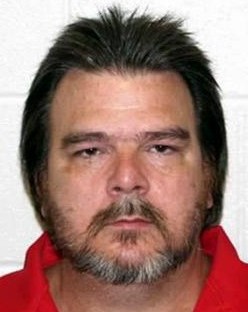
Bobby Glen Wilcher
Murderer Ervil LeBaron
Murderer · USA · 1972
Ervil Morrell LeBaron (1925 to August 16, 1981) was the leader of a polygamous…
35 victims
Ervil LeBaron
Murderer · USA · 1972
Ervil Morrell LeBaron (1925 to August 16, 1981) was the leader of a polygamous…
35 victims
 Brian Kevin Rosenfeld
Murderer · USA · 1985
Brian Kevin Rosenfeld Brian Kevin Rosenfeld was sentenced to three concurrent l…
23 victims
Brian Kevin Rosenfeld
Murderer · USA · 1985
Brian Kevin Rosenfeld Brian Kevin Rosenfeld was sentenced to three concurrent l…
23 victims
 Marvin Gray
Murderer · USA · 1975
Marvin Gray was convicted killer who claimed responsibility for 23 slayings and…
23 victims
Marvin Gray
Murderer · USA · 1975
Marvin Gray was convicted killer who claimed responsibility for 23 slayings and…
23 victims
 Yahweh ben Yahweh
Murderer · USA · 1980
Yahweh ben Yahweh was born and legally named Hulon Mitchell Jr. (October 27, 19…
23 victims
Yahweh ben Yahweh
Murderer · USA · 1980
Yahweh ben Yahweh was born and legally named Hulon Mitchell Jr. (October 27, 19…
23 victims
 Russell Ellwood
Murderer · USA · 1991
Russell Ellwood was a former taxi driver. Authorities suspected him of killing…
20 victims
Russell Ellwood
Murderer · USA · 1991
Russell Ellwood was a former taxi driver. Authorities suspected him of killing…
20 victims
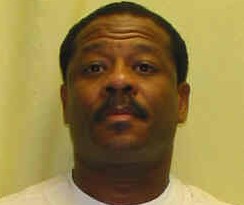 Jerome Henderson
Murderer · USA · 1985
Jerome Henderson was sentenced to death on August 5, 1985. The clemency report…
1 victim
Jerome Henderson
Murderer · USA · 1985
Jerome Henderson was sentenced to death on August 5, 1985. The clemency report…
1 victim
 Seiji Katagiri
Mass murderer · Japan · 1982
Seiji Katagiri (片桐 清二 Katagiri Seiji) served as Captain of Japan Airlines Fligh…
24 victims
Seiji Katagiri
Mass murderer · Japan · 1982
Seiji Katagiri (片桐 清二 Katagiri Seiji) served as Captain of Japan Airlines Fligh…
24 victims
 Juan Roa Sierra
Murderer · Colombia · 1948
Juan Roa Sierra was a Colombian who assassinated Liberal leader and presidentia…
1 victim
Juan Roa Sierra
Murderer · Colombia · 1948
Juan Roa Sierra was a Colombian who assassinated Liberal leader and presidentia…
1 victim
 Jordan Linn Graham
Murderer · USA · 2013
Jordan Linn Graham was 22 years old and married to Cody Johnson, who was 25. Gr…
1 victim
Jordan Linn Graham
Murderer · USA · 2013
Jordan Linn Graham was 22 years old and married to Cody Johnson, who was 25. Gr…
1 victim
 Frederick Cowan
Spree killer · USA · 1977
Frederick William Cowan, also known as “Reinhard,” conducted a shooting spree a…
6 victims
Frederick Cowan
Spree killer · USA · 1977
Frederick William Cowan, also known as “Reinhard,” conducted a shooting spree a…
6 victims
 Jayanandan
Serial killer · India · 2003
Jayanandan, also known as “Ripper” Jayanandan, was a serial killer from Trichur…
7 victims
Jayanandan
Serial killer · India · 2003
Jayanandan, also known as “Ripper” Jayanandan, was a serial killer from Trichur…
7 victims
- Gender
- male
- Country
- USA
- Location
- Scott County, Mississippi, USA
- Date of birth
- November 15, 1962
- Age at first offence
- 20
- Characteristics
- robbery
- Victim profile
- Katie Belle Moore, 47, and Velma Odell Noblin, 52
- Method of murder
- St abbing with knife 46 times
- Date(s) of murder
- March 5, 1982
- Years active
- 1982
- Date of arrest
- Next day
- Status
-
Executed
Executed by lethal injection in Mississippi on October 18, 2006
Case overview
Bobby Glen Wilcher was executed by lethal injection in Mississippi on October 18, 2006. He was convicted of capital murder and sentenced to death for the killings of Katie Belle Moore and Velma Odell Noblin in Scott County.
The offence
Wilcher met Katie Belle Moore and Velma Odell Noblin at a Scott County bar and, at closing time, persuaded them to take him home. Under this pretext, he directed the women down a deserted service road in the Bienville National Forest, where he robbed and brutally murdered them by stabbing them a total of 46 times.
In a separate recitation of facts, Wilcher persuaded the women to drive him to his parents’ home and then diverted them down an isolated road. In a remote spot he stabbed them to death so he could take their jewelry. Authorities said each woman had been stabbed and slashed more than 20 times.
Investigation
After the murders, Wilcher was stopped for speeding by the Forest Police Department between 1:00 and 2:00 a.m. He was alone and was driving victim Noblin’s car. The victims’ purses and one victim’s brassiere were on the back seat. Wilcher was covered in blood, and he had a bloody knife in his back pocket with flesh on the blade. Wilcher explained his condition by telling the policeman that he had cut his thumb while skinning a possum.
The officer followed Wilcher to the hospital, where Wilcher’s wound was cleaned and covered with a band-aid. Another officer was called to the hospital to observe Wilcher, the knife, the car, the purses, and the brassiere. The officers left the hospital on an emergency call. Wilcher went home.
The next morning, Wilcher abandoned Noblin’s car at an apartment complex. He also threw the victims’ purses and some of the victims’ clothing in a ditch. He was arrested later that day.
The victims’ jewelry was subsequently found in Wilcher’s bedroom.
Arrest
Wilcher was arrested later that day after the victims were discovered missing and authorities were alerted by the families of Moore and Noblin. Later in the day of the arrest, authorities arrested him for the murders of Moore and Noblin and held him without bail.
A further account described that, during the early morning hours after the murders, Wilcher was stopped for speeding while driving a car belonging to one of the victims. The officer observed two women’s purses on the front seat and a black bra on the back seat. Wilcher told the officer he was hurrying to the hospital for treatment of a cut finger and requested that the officer escort him. He was covered with blood, was taken to the hospital, gave the officers a blood-covered knife, and his thumb was treated with a band-aid and he was released.
Later the same morning, Wilcher was arrested by Forest police and charged with larceny of a pistol, and authorities later alerted by the families of Moore and Noblin reported the women missing.
Another account described that around 10:00 o’clock in the morning of Saturday, March 6, 1982, Bobby Easterling made an affidavit charging that Bobby Wilcher did unlawfully “take and carry away 1-.38 cal. Colt with Guard over the Hammer”. Justice court judge Robert G. Wilkerson issued a warrant for Wilcher’s arrest on a charge of “Larceny” and delivered it to deputy sheriff Mike Bennett, who arrested Wilcher around 3:00 p.m. En route to the jail, Wilcher asked Bennett what “larceny was”, and Bennett told him he did not know. When Wilcher was brought to jail, Bennett handed him a copy of the warrant. Almost simultaneously, two girls and a boy reported seeing two bodies, and Bennett took Wilcher to the location of the bodies.
Confessions and physical evidence
Wilcher’s confessions were introduced into evidence along with the purses and a brassiere recovered as tangible objects. A hearing was held outside the presence of the jury to address the validity and competency of the confessions. Officers Warren and Kelly testified that the statements were made after complete Miranda warnings, with no threat and no promise of reward or leniency. Wilcher testified that he repeatedly demanded an attorney beginning with the first day he was arrested, which officers denied. Wilcher testified that the sheriff told him that if he would cooperate, he could see his family every Tuesday night, and Kelly recalled the sheriff saying Wilcher could see his parents on Tuesday night if he would cooperate.
A decision described that after Wilcher was arrested and taken to the sheriff’s office, he was given Miranda warnings, read on a form and signed by him at 7:19 p.m., and he declined to make any statement. Wilcher requested to see his parents; officers took him to the Gene Wilcher home where he talked with his parents briefly and then returned him to the sheriff’s office. Wilcher was then presented with another Miranda warning read and signed by him at 9:14 p.m., after which he gave a statement written by Sheriff Warren and signed by Wilcher admitting killing both victims with a knife. Another Miranda warning was given at 10:22 p.m., signed by Wilcher, but Wilcher declined to make any further statement.
A separate recitation described that Wilcher signed waivers of Miranda rights on March 6 at 7:19 p.m. and again at 9:14 p.m., gave a first statement, then was advised again at 10:20 p.m. and declined to make a further statement. On March 9 he signed a waiver but did not make a statement, and on March 11 at 12:52 p.m. he was advised of his rights, waived them, and made his second statement.
Wilcher’s second statement included the details that he tricked the women into driving down a deserted road and stabbed them to death so that he could take their jewelry.
Trial
Noblin murder trial (capital murder)
In a first trial for the murder of Velma Odell Noblin, Wilcher pleaded not guilty and testified on July 29, 1982, that he did not kill Noblin and that a fourth person named Gene Milton killed the women while Wilcher was passed out in the backseat after drinking and taking drugs at the nightclub. Wilcher testified that he awoke to find Milton standing at the intersection over Noblin’s body. Wilcher said he took the knife from Milton and drove him to a gas station where he let Milton out. When asked by prosecutors why he never mentioned Milton before, Wilcher said he was scared of Milton seeking revenge on him. Wilcher later confessed in the Salter interview that Milton was not with him.
On July 30, 1982, after just an hour of deliberation, a jury found Wilcher guilty of capital murder in the slaying of Noblin. On July 31, 1982, the jury sentenced Wilcher to die by the death chamber.
In a detailed opinion, the sentencing jury found aggravating circumstances:
- The capital offense was committed while the defendant was engaged in the commission of or an attempt to commit the crime of robbery or kidnapping.
- The capital offense was especially heinous, atrocious, or cruel.
The opinion stated that the jury found these aggravating circumstances outweighed any mitigating circumstances.
Moore murder trial (capital murder)
Wilcher’s trial for the murder of Katie Belle Moore began in Harrison County, Mississippi, on Sept. 13, 1982. He was found guilty and sentenced to death.
A resentencing recitation stated that, in the second trial, the sentencing jury found the same aggravating circumstances as were found in the Noblin trial: murder during the commission of or attempt to commit robbery or kidnapping and an offense that was especially heinous, atrocious or cruel.
A later federal habeas recitation similarly stated that the jury found the same aggravating circumstances in Wilcher’s second conviction and death sentence.
Sentencing
Wilcher received death sentences for the capital murders of Katie Belle Moore and Velma Odell Noblin in Scott County.
A Mississippi Supreme Court decision set an execution date and described affirmance as to sentence, stating that Wednesday, April 11, 1984, was set as the date for execution of the sentence and infliction of the death penalty in the manner provided by law.
After sentencing was vacated, the Mississippi Supreme Court denied a rehearing on March 17, 1994, leading to resentencing in June 1994, where in two separate trials Wilcher was once again sentenced to death for the murders of Moore and Noblin.
Appeals
Direct appeals
Wilcher appealed the Noblin conviction, and the Mississippi Supreme Court affirmed the conviction and sentence on February 15, 1984, with a modified opinion and denial of a petition for rehearing on April 25, 1984. The execution date previously set was April 11, 1984, and the Supreme Court stayed the execution on March 14, 1984, to allow appeal before the U.S. Supreme Court. On March 4, 1985, the U.S. Supreme Court refused to hear the appeal, allowing the death sentence to stand. In that direct appeal decision, the court affirmed the guilt phase and the sentencing phase.
Wilcher appealed the Moore conviction, and the Mississippi Supreme Court affirmed on July 11, 1984. Certiorari was denied.
Post-conviction collateral relief
Wilcher filed motions to vacate or set aside judgment and sentence in the Mississippi Supreme Court, which denied the requested relief. Wilcher also filed petitions for writ of habeas corpus in federal court, and the district court consolidated and denied relief on June 19, 1990.
Federal habeas
A federal habeas decision described that, following affirmance of murder convictions and death sentences and related denials, Wilcher filed a petition for writ of habeas corpus, and the district court denied the petition. The Court of Appeals stated that it affirmed the district court’s denial on all claims except a claim that the jury relied on an unconstitutionally vague aggravating factor. The Court of Appeals vacated the dismissal as to that claim and remanded with instructions to issue the writ unless Mississippi initiated appropriate proceedings within a reasonable time under Clemons v. Mississippi.
The same decision discussed that one aggravating circumstance used in imposing Wilcher’s sentence was “unconstitutionally vague” and that it concluded that one of the aggravating circumstances used in imposing his sentence was unconstitutionally vague, vacating dismissal and remanding for issuance of the writ unless the State initiated appropriate proceedings in state courts.
State post-conviction after remand and later proceedings
A procedural history included multiple post-conviction proceedings on direct appeal after remand and in later years, including citations to:
- Wilcher v. State, 479 So.2d 710 (Miss. 1985) (PCR)
- Wilcher v. State, 635 So.2d 789 (Miss. 1993) (PCR After Remand)
- Wilcher v. State, 863 So.2d 719 (Miss. 2003) (PCR)
- Wilcher v. State, 863 So.2d 776 (Miss. 2003) (PCR)
A statement described that on Oct. 2, 2003, the state Supreme Court ruled Wilcher was not warranted any more post-conviction appeals, while legal avenues still existed.
United States Supreme Court and execution stays
A scheduled execution in July was halted by a U.S. Supreme Court stay request, described as resulting in a reprieve about 30 minutes before a scheduled execution on July 11. Wilcher later gave up his federal appeals in June but attempted to have them reinstated.
A later execution date was set, and on October 18, 2006, the U.S. Supreme Court refused to consider an emergency stay request about 90 minutes before the scheduled 6 p.m. execution.
Outcome
Wilcher was executed by lethal injection in Mississippi on October 18, 2006. He was pronounced dead at 6:42 p.m. at the state penitentiary at Parchman.
A press account described that the execution ended a legal saga that involved 24 years of appeals on death row in the capital murders of Katie Belle Moore and Velma Odell Noblin in Scott County. Another press account stated that he was pronounced dead at 6:42 p.m.
Execution day details
Visits and telephone calls
A scheduled briefing described that the Mississippi Department of Corrections briefed members of the news media on October 18, 2006, of Wilcher’s activities from 2:00 p.m. to approximately 4:30 p.m., including telephone calls and visits.
It stated that on Wednesday, October 18, 2006, Wilcher made telephone calls to Lindy Wells (friend) and Cliff Johnson (attorney).
It also stated that visits took place, including approved visits with attorneys, spiritual advisor and friends from 1:00 p.m. until 4:00 p.m., and that Wilcher was currently visiting with Lindy Lou Wells (friend), Cliff Johnson (attorney), and Angela Parnell (paralegal) at 2 p.m.
The approved telephone list included: Lindy Lou Wells (friend), Sister Patricia Tallent (friend), James H. Wilcher (half-brother), Randy Wilcher (nephew), Jan Wilcher (spouse of Randy), Cliff Johnson (attorney of record), Angela Parnell (paralegal), Van Williams (friend), Tomika Harris (friend), Charles Press, Debra Saba-Press (friends), Bill May (friend), Ken Rose (friend), Camille Evans (friend), Robert Brooks (friend), Kendra Lee-Lindsey (friend), Jane Hicks (friend), Iva Nell Wilcher (sister-in-law), Danny Wilcher (brother), Penny Easterling (sister), Craig Trueblood (spiritual advisor), and Joseph Stan Wilson (spiritual advisor).
Meal, shower, and spiritual observance
A scheduled briefing described that Wilcher ate his last meal at approximately 12:45 p.m. and took a shower at 4:15 p.m. It stated that he requested no sedative and had chosen not to participate in communion. Another account described that he asked for and received a Valium shortly before the execution began, reversing the earlier decision to go without one.
It listed his last meal request as: Two dozen jumbo fried shrimp with tarter sauce and ketchup, two large orders of fried onion rings and french fries, one raw regular onion, six pieces of garlic bread, two 32 oz. cold Cokes, two 32 oz. strawberry milkshakes.
An execution account stated that the barbiturates and paralyzing agents were pumped into Wilcher’s tattooed left arm at 6:31 p.m., and he was strapped to a gurney roughly shaped like a cross with nine wide, tan leather straps. Wilcher was dressed in a red prison jumpsuit and white socks.
Final words and statements
Wilcher declined to make a statement when offered a chance to make a final statement, saying: "I have none."
Another quote attributed to Mississippi Department of Corrections Commissioner Chris Epps stated: "It is our agency’s role to see that the order of the court is carried out with dignity and decorum. That has been done. Over the course of 24 years, state death row inmate Bobby Glenn Wilcher was afforded his day in court and in the finality, his conviction was upheld all the way to the U.S. Supreme Court. The cause of justice has championed over wrong."
Another quoted statement attributed to Chris Epps stated: "In this final chapter tonight, it is our fervent hope that the families of Ms. Moore and Ms. Noblin may now begin the process of healing. Our prayers go out to you as you continue life’s journey,"
An additional quote attributed to Commissioner Chris Epps stated: "crime doesn't pay."
Witnesses and individuals present
Execution witnesses included:
- Attorneys for the condemned: Angela Parnell (paralegal) and Cliff Johnson (attorney)
- At Wilcher’s request: no member of the condemned’s family
- Two members of each of the victims’ family:
- Noblin family: Billy Sessions (brother) and Stacey Boyd (granddaughter)
- Moore family: Tommy Moore (son) and Joe Rigby (nephew)
- Sheriffs: Harold Jones (Scott County Deputy Sheriff) and James Haywood (Sunflower County Sheriff)
- Governor’s witness: C. Daryl Neely (Policy Advisor)
- Members of the media listed by name.
A federal execution recitation described that Wilcher was asked in the death chamber if he wanted to make a statement, and he said, "I have none." It also described that the families of the victims were standing behind a glass in a viewing room.
Other details
A detail reported Wilcher’s final meal time was moved to allow him to spend more time with visitors. Another detail described that his body was released to Colonial Funeral Home, Forest, Mississippi.
A post-execution account stated that Wilcher talked by telephone to his mother, who was incarcerated in the Central Mississippi Correctional Facility on a drug conviction, and that his father had died.
A quoted dispute described that Lindy Lou Wells was on the jury that sentenced Wilcher to death in 1994 and that, after the execution, a dispute existed about whether Wells’s relationship included a conjugal visit request; it included quotes attributed to Commissioner Epps and to Wilcher’s attorney Cliff Johnson about the difference between a conjugal visit and a contact visit.
Wilcher’s identity and case name appeared in a decision list, including citations: Wilcher v. State, 448 So.2d 927 (Miss. 1984); Wilcher v. State, 455 So.2d 727 (Miss. 1984); Wilcher v. State, 479 So.2d 710 (Miss. 1985); Wilcher v. State, 635 So.2d 789 (Miss. 1993); Wilcher v. State, 697 So.2d 1123 (Miss. 1997); Wilcher v. State, 863 So.2d 719 (Miss. 2003); Wilcher v. State, 863 So.2d 776 (Miss. 2003); Wilcher v. Hargett, 978 F.2d 872 (5th Cir. Miss. 1992).
Spotted an error, or have more information about this case?