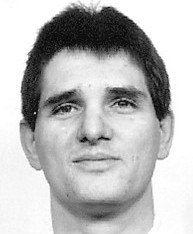
Michael Lee Lockhart
Serial killer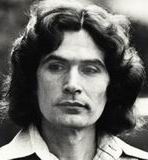 Rodney Alcala
Serial killer · USA · 1977
Rodney James Alcala (born August 23, 1943) was also known as Rodrigo Jacques Al…
100 victims
Rodney Alcala
Serial killer · USA · 1977
Rodney James Alcala (born August 23, 1943) was also known as Rodrigo Jacques Al…
100 victims
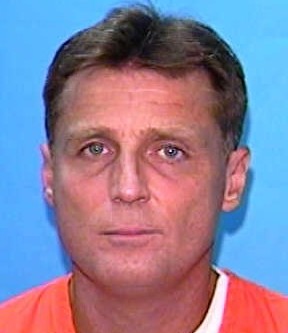 Glen Edward Rogers
Serial killer · USA · 1993
Glen Edward Rogers was a spree killer whose cross-country rampage in 1994-95 le…
70 victims
Glen Edward Rogers
Serial killer · USA · 1993
Glen Edward Rogers was a spree killer whose cross-country rampage in 1994-95 le…
70 victims
 Michael Swango
Serial killer · USA · 1981
Michael Swango (Joseph Michael Swango) was a physician and American serial kill…
60 victims
Michael Swango
Serial killer · USA · 1981
Michael Swango (Joseph Michael Swango) was a physician and American serial kill…
60 victims
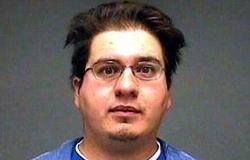 Efren Saldivar
Serial killer · USA · 1989
Efren Saldivar (born 30 September 1969) was an American serial killer who murde…
50 victims
Efren Saldivar
Serial killer · USA · 1989
Efren Saldivar (born 30 September 1969) was an American serial killer who murde…
50 victims
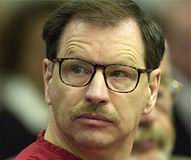 Gary Ridgway
Serial killer · USA · 1982
Gary Leon Ridgway Ridgway was born 18-February-1949 in Salt Lake City, UT. He w…
49 victims
Gary Ridgway
Serial killer · USA · 1982
Gary Leon Ridgway Ridgway was born 18-February-1949 in Salt Lake City, UT. He w…
49 victims
 Charles Cullen
Serial killer · USA · 1984
Charles Cullen (born February 22, 1960) was a former nurse and the most prolifi…
45 victims
Charles Cullen
Serial killer · USA · 1984
Charles Cullen (born February 22, 1960) was a former nurse and the most prolifi…
45 victims
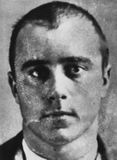 Richard Honeck
Murderer · USA · 1899
Richard Honeck (January 5, 1879—December 28, 1976) was an American murderer. In…
1 victim
Richard Honeck
Murderer · USA · 1899
Richard Honeck (January 5, 1879—December 28, 1976) was an American murderer. In…
1 victim
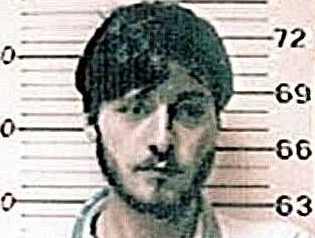 Jerry Scott Heidler
Mass murderer · USA · 1997
Jerry Scott Heidler (defendant) Heidler briefly lived with the Daniels family w…
4 victims
Jerry Scott Heidler
Mass murderer · USA · 1997
Jerry Scott Heidler (defendant) Heidler briefly lived with the Daniels family w…
4 victims
- Gender
- male
- Country
- USA
- Location
- Indiana/Texas/Florida/Tennessee , USA
- Date of birth
- September 30, 1960
- Age at first offence
- 27
- Characteristics
- rape, mutilation, evisceration, to avoid arrest
- Victim profile
- 5 young women and 1 man (police officer Paul Hulsey Jr.)
- Method of murder
- St abbing with knife - Shooting
- Date(s) of murder
- 1987 - 1988
- Years active
- 1987–1988
- Date of arrest
- March 22, 1988
- Status
-
Executed
Executed by lethal injection in Texas on December 9, 1997
Case overview
Michael Lee Lockhart was a Texas death row inmate. He sought a certificate of probable cause (CPC) or a certificate of appealability (COA) to challenge the district court’s dismissal of his habeas petition. The court denied the COA because Lockhart had not made a substantial showing of the denial of a constitutional right.
Timeline
- December 2, 1992 — The Texas Court of Criminal Appeals affirmed Lockhart’s conviction and sentence in Lockhart v. State, No. 70734 (Tex. Crim. App. Dec. 2, 1992).
- October 1993 — The United States Supreme Court denied Lockhart’s petition for writ of certiorari in Lockhart v. Texas, 114 S.Ct. 146 (1993).
- November 23, 1993 — The trial court scheduled Lockhart’s execution.
- Six days before his scheduled execution — Lockhart filed a pro se request for appointment of counsel and a motion for stay of execution; the trial court denied a stay.
- 1993 (Ex parte Lockhart decision) — The Texas Court of Criminal Appeals affirmed the trial court’s denial of a stay of execution.
- November 1993 — Lockhart filed in the U.S. District Court a pro se motion for appointment of counsel and a request for stay of execution.
- July 1996 — The district court granted the Director’s motion for summary judgment and denied habeas relief.
- August 1996 — The trial court scheduled Lockhart’s execution for September 10, 1996.
- September 10, 1996 — Lockhart’s execution was scheduled for this date.
- December 9, 1997 — Lockhart was executed by lethal injection in Texas.
Background
Lockhart was indicted in Jefferson County, Texas, for the capital murder of Police Officer Paul Hulsey, Jr., in Beaumont, Texas. Upon an agreed motion, venue was transferred to Bexar County, Texas.
Lockhart was tried before a jury upon a plea of not guilty. In October 1988, the jury found him guilty of capital murder. Following a separate punishment hearing, the same jury answered affirmatively the three special issues submitted pursuant to former Article 37.071(b) of the Texas Code of Criminal Procedure. The trial court then sentenced Lockhart to death.
Lockhart directly appealed his conviction and sentence to the Texas Court of Criminal Appeals. The court affirmed the conviction and sentence. Lockhart then petitioned the United States Supreme Court for writ of certiorari, which was denied.
The offence
On March 22, 1988, Beaumont Police Officer Paul Hulsey, Jr. saw Lockhart driving a red Corvette with a Florida license plate in Beaumont, Texas. Officer Hulsey saw that Lockhart’s passenger was a local drug dealer. When Lockhart saw the officer, he sped away. Officer Hulsey gave chase but was unable to catch him.
Later that evening, Officer Hulsey spotted Lockhart’s red Corvette in a motel parking lot and learned that he was in the motel. Officer Hulsey went to Lockhart’s motel room to arrest him, and Lockhart shot Officer Hulsey.
In Lockhart’s statement to police, when Officer Hulsey entered Lockhart’s room, Lockhart knew Hulsey did not have a backup and Lockhart planned to get his gun and “get the drop on” the officer. Hulsey apparently saw Lockhart’s gun, because Hulsey ordered Lockhart to put his hands on the wall. Lockhart responded, “Why?” and Hulsey said “you have a gun.”
Lockhart continued to argue with Hulsey. Hulsey then unholstered his gun and Lockhart complied with the demand to place his hands on the wall. Lockhart placed his hands on the wall next to a mirror enabling him to see Hulsey’s actions. When Hulsey walked up behind Lockhart and lowered his gun to put it in his holster, Lockhart turned and hit Hulsey in the face. A fight ensued, and Hulsey’s gun discharged.
Lockhart, who had managed to obtain his gun in the struggle, shot Hulsey and then, after a brief time, shot Hulsey again. Hulsey “begged” Lockhart not to shoot anymore. Lockhart grabbed his keys and money and left the room.
Investigation
Officer Hulsey pursued Lockhart after seeing him speed away, was unable to catch him, later located Lockhart’s Corvette in a motel parking lot, and went to Lockhart’s motel room to arrest him.
Arrest and escape attempt
During the trial, on August 18, 1988, Lockhart was taken to the courtroom after lunch and was uncuffed as usual. Lockhart bolted for the window in the third-floor courtroom and dove through it. Lockhart was captured shortly afterwards and taken to a local hospital to be treated for his injuries.
Trial
Lockhart’s trial began with a plea of not guilty. At the punishment hearing, the same jury answered affirmatively the three special issues under former Article 37.071(b) of the Texas Code of Criminal Procedure. The trial court sentenced Lockhart to death.
Lockhart raised claims in the district court and pursued selected challenges on appeal. Two claims he presented to the court were expressly rejected by the Texas Court of Criminal Appeals on direct appeal:
- The Texas Court of Criminal Appeals found no merit to Lockhart’s argument that he was denied a fair trial because the trial court impermissibly had him shackled and handcuffed during the trial.
- The Texas Court of Criminal Appeals also denied relief on Lockhart’s claim that the trial court erred by granting Lockhart’s request to leave the courtroom during part of the voir dire examination.
Habeas proceedings in the district court
Lockhart raised fifteen claims in the district court, but he only raised challenges in the court of appeals to the district court’s rejection of three claims.
In November 1993, after Lockhart filed a pro se motion for appointment of counsel and requested a stay of execution in the U.S. District Court, the district court granted a stay of execution and appointed counsel. Counsel then filed a habeas petition. The Director filed an answer and motion for summary judgment, and Lockhart responded to the Director’s motion.
In July 1996, the district court granted the Director’s motion for summary judgment and denied habeas relief.
The district court’s action was followed by scheduling: in August 1996, the trial court scheduled Lockhart’s execution for September 10, 1996. Lockhart filed a notice of appeal, an application for certificate of probable cause to appeal, and a motion to stay execution pending appeal. The appeals court stayed Lockhart’s execution pending the appeal.
Appeals
The appeals court addressed Lockhart’s COA request and considered three claims.
Claim 1: shackling and handcuffing in the jury’s presence
The appeals court held that restraining a disruptive defendant did not offend clearly established Supreme Court precedent. It referenced Illinois v. Allen, 397 U.S. 337, 343-44, 90 S.Ct. 1057, 1060-61, 25 L.Ed.2d 353 (1970), which had expressly held that visible restraints were appropriate under certain circumstances. The appeals court stated that the decision to restrain an obstreperous defendant with visible restraints lay within the trial judge’s discretion.
The appeals court concluded that the Texas Court of Criminal Appeals reasonably concluded that the trial court did not abuse its discretion in visibly restraining Lockhart, citing facts that Lockhart had previously attempted a daring escape by bolting and diving through a closed third story window; that the trial court had heard testimony that Lockhart had threatened to cause trouble for deputies who escorted him to and from court; and that Lockhart had reacted to a ruling during a pretrial hearing by standing up, yelling obscenities, and resisting officers’ efforts to control him and remove him from the courtroom.
The appeals court concluded Lockhart had failed to make a substantial showing of the denial of a constitutional right with respect to this claim.
Claim 2: leaving the courtroom during part of voir dire
The appeals court addressed Lockhart’s claim that the trial court impermissibly conducted voir dire outside his presence. It noted the trial court permitted Lockhart to leave the courtroom only after an insistent request by Lockhart to do so. It stated that the state court found Lockhart physically capable of remaining in the courtroom but had voluntarily waived his right to be present.
The appeals court stated that Lockhart did not point to clearly established Supreme Court precedent prohibiting defendants from voluntarily waiving presence during jury selection. It further concluded that the state court’s rejection was not an unreasonable application of the law to the facts and that Lockhart had failed to make a substantial showing of the denial of a constitutional right with respect to this claim.
Claim 3: ineffective assistance based on counsel’s alleged conflict
Lockhart asserted ineffective assistance of counsel because his counsel had a conflict of interest in representing Lockhart when his counsel’s law firm also represented the trial judge in an unrelated civil action. The appeals court noted this claim had never been presented to the state court and that the Director had waived the exhaustion requirement. It therefore held AEDPA’s altered standard of review for claims adjudicated on the merits by a state court had no application to this claim.
The district court had rejected this claim as a matter of law, and the appeals court said it reviewed the district court’s legal conclusions de novo.
Lockhart argued his counsel’s conflict resulted in ineffective assistance because counsel allegedly failed:
- to provide conflict-free representation,
- to seek disqualification of the trial judge,
- to advise Lockhart of the nature of defense counsel’s representation of the trial judge,
- or to withdraw from his representation.
Lockhart argued this created a per se conflict under Cuyler v. Sullivan, 446 U.S. 335, 100 S.Ct. 1708, 64 L.Ed.2d 333 (1980). The appeals court stated it had not read Cuyler this broadly. It cited Beets v. Scott, 65 F.3d 1258 (5th Cir. 1995) (en banc), cert. denied, --- U.S. ----, 116 S.Ct. 1547, 134 L.Ed.2d 650 (1996), stating that Cuyler was primarily reserved for counsel representing multiple clients with conflicting interests, and that other conflict-based ineffective assistance claims required the two prongs from Strickland v. Washington, 466 U.S. 668, 687, 104 S.Ct. 2052, 2064, 80 L.Ed.2d 674 (1984).
The appeals court stated that even assuming arguendo that continuing to represent Lockhart while the firm also represented the trial judge in an unrelated civil matter breached a duty, it did not establish a per se Sixth Amendment violation. To warrant federal habeas relief under Strickland, Lockhart had to demonstrate error by counsel below an objective standard of reasonableness and prejudice. The appeals court stated that to show prejudice, Lockhart had to show a reasonable probability that counsel’s error changed the result of the trial.
The appeals court agreed with the district court that Lockhart showed no basis for prejudice. It stated that Lockhart did not specify any decision by defense counsel affected by the firm’s representation of the trial judge on an unrelated matter, and it also stated Lockhart failed to cite legal authorities that could have supported a motion to disqualify the trial judge.
The appeals court concluded that Lockhart failed to allege facts from which a factfinder could infer prejudice from the relationship between the trial judge and Lockhart’s counsel’s law firm, and that the district court correctly rejected Lockhart’s ineffective assistance claims.
Governing standards and procedural discussion
The appeals court described that it had concluded in Drinkard v. Johnson, 97 F.3d 751 (5th Cir. 1996) that §§ 102 and 104 of the Anti-Terrorism and Effective Death Penalty Act (AEDPA) applied to pending habeas cases. It also cited Moore v. Johnson, 101 F.3d 1069, 1072-73 (5th Cir. 1996) regarding the retroactive effect of AEDPA.
The appeals court discussed § 104(3) (to be codified at 28 U.S.C. § 2254(d)), which stated that an application for a writ of habeas corpus on behalf of a person in custody pursuant to a state court judgment could not be granted with respect to any claim adjudicated on the merits in state court unless the adjudication:
- resulted in a decision contrary to, or involving an unreasonable application of, clearly established federal law as determined by the Supreme Court, or
- resulted in a decision based on an unreasonable determination of the facts in light of the evidence presented.
The appeals court stated that in Drinkard it had interpreted this section to permit federal court relief if the state court adjudication resulted in a decision based on an unreasonable determination of the facts, and that it treated subsection (d)(1) as governing review of questions of law and mixed questions of law and fact. It explained that legal error required determining that a state court’s decision rested on a legal determination contrary to clearly established federal law, and that for mixed questions of law and fact, relief required determining that the state court decision rested on an unreasonable application of clearly established federal law to the facts.
Outcome
The appeals court concluded that Lockhart had not made a substantial showing of the denial of a constitutional right. It denied the certificate of appealability and vacated the stay of execution entered earlier.
Other details
Lockhart was executed by lethal injection in Texas on December 9, 1997.
A portion of the Texas Court of Criminal Appeals opinion was published as Lockhart v. State, 847 S.W.2d 568 (Tex.Crim.App.1992).

Spotted an error, or have more information about this case?