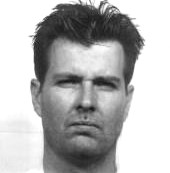
David Martin Long
Murderer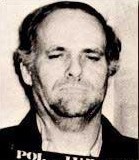 Ervil LeBaron
Murderer · USA · 1972
Ervil Morrell LeBaron (1925 to August 16, 1981) was the leader of a polygamous…
35 victims
Ervil LeBaron
Murderer · USA · 1972
Ervil Morrell LeBaron (1925 to August 16, 1981) was the leader of a polygamous…
35 victims
 Brian Kevin Rosenfeld
Murderer · USA · 1985
Brian Kevin Rosenfeld Brian Kevin Rosenfeld was sentenced to three concurrent l…
23 victims
Brian Kevin Rosenfeld
Murderer · USA · 1985
Brian Kevin Rosenfeld Brian Kevin Rosenfeld was sentenced to three concurrent l…
23 victims
 Marvin Gray
Murderer · USA · 1975
Marvin Gray was convicted killer who claimed responsibility for 23 slayings and…
23 victims
Marvin Gray
Murderer · USA · 1975
Marvin Gray was convicted killer who claimed responsibility for 23 slayings and…
23 victims
 Yahweh ben Yahweh
Murderer · USA · 1980
Yahweh ben Yahweh was born and legally named Hulon Mitchell Jr. (October 27, 19…
23 victims
Yahweh ben Yahweh
Murderer · USA · 1980
Yahweh ben Yahweh was born and legally named Hulon Mitchell Jr. (October 27, 19…
23 victims
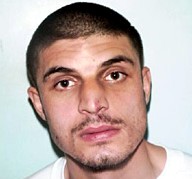 Daniel Gonzalez
Spree killer · United Kingdom · 2004
Daniel Gonzalez (1980 - 9 August 2007) was an offender who was sentenced to lif…
4 victims
Daniel Gonzalez
Spree killer · United Kingdom · 2004
Daniel Gonzalez (1980 - 9 August 2007) was an offender who was sentenced to lif…
4 victims
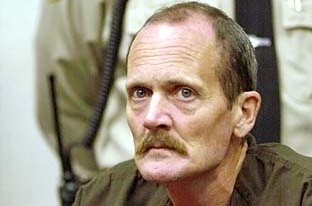 Curtis Dean Anderson
Murderer · USA · 1999
Curtis Dean Anderson was a former cab driver and was arrested in connection wit…
1 victim
Curtis Dean Anderson
Murderer · USA · 1999
Curtis Dean Anderson was a former cab driver and was arrested in connection wit…
1 victim
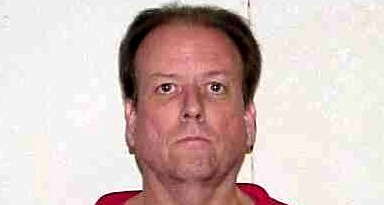 Leif Christian Halvorsen
Murderer · USA · 1983
Leif Christian Halvorsen was sentenced to death on September 15, 1983 in Fayett…
3 victims
Leif Christian Halvorsen
Murderer · USA · 1983
Leif Christian Halvorsen was sentenced to death on September 15, 1983 in Fayett…
3 victims
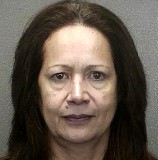 Narcy Novack
Murderer · USA · 2009
Narcy Novack (55 at conviction) · Cristobal Veliz (59 at conviction) Narcy Nova…
2 victims
Narcy Novack
Murderer · USA · 2009
Narcy Novack (55 at conviction) · Cristobal Veliz (59 at conviction) Narcy Nova…
2 victims
- Gender
- male
- Country
- USA
- Location
- California/Texas, USA
- Date of birth
- J uly 15, 1953
- Age at first offence
- 25
- Characteristics
- alcohol, drugs, history of mental illness, torture, rape?, spree killer, serial rapist
- Victim profile
- James Carnell (gas station attendant) / Bob Rogers (h is former boss) / Dalpha Jester, 64, her daughter Donna Jester, 38, and Laura Lee Owens , 22
- Method of murder
- Beating with a tire iron / Fire / Beating with a foot-long hatchet
- Date(s) of murder
- 1978 / 1983 / 1986
- Years active
- 1978–1986
- Date of arrest
- October 24, 1986
- Status
-
Executed
Executed by lethal injection in Texas on December 8, 1999
Case overview
David Martin Long was convicted of the capital offense of the intentional murders of Dalpha Jester, Donna Jester, and Laura Lee Owens, committed during the same criminal transaction on or about September 27, 1986. The trial court sentenced him to death by lethal injection following a separate punishment hearing. His conviction and sentence were affirmed on automatic appeal, and his further federal review was denied. He was executed by lethal injection in Texas on December 8, 1999.
Timeline
- September 19, 1986 — Donna met David Martin Long when she picked him up as he was hitchhiking.
- September 27, 1986 — The bodies of Dalpha Jester, Donna Jester, and Laura Lee Owens were discovered at their home in Lancaster, Texas.
- September 27, 1986 — Long fled in Donna’s car drinking MD 20/20 and was arrested in Buffalo for driving while intoxicated; he was later released.
- October 24, 1986 — Long was arrested on a felony warrant (from Dallas County) in Austin; he had also been arrested there for public intoxication, and he gave Austin police of a fictitious name.
- November 18, 1986 — A Dallas County grand jury indicted Long for the capital offense of the intentional murders of Dalpha Jester, Donna Jester, and Laura Lee Owens.
- February 7, 1987 — The jury found Long guilty as charged in the indictment.
- February 10, 1987 — After a separate punishment hearing, the jury answered affirmatively three special punishment issues; the trial court sentenced Long to death by lethal injection.
- December 4, 1991 — The Texas Court of Criminal Appeals affirmed Long’s conviction and sentence.
- February 5, 1992 — The Court of Criminal Appeals denied rehearing.
- June 29, 1992 — The United States Supreme Court denied Long’s petition for writ of certiorari.
- August 11, 1992 — The convicting court scheduled Long’s execution for September 17, 1992.
- September 15, 1992 — The United States District Court for the Northern District of Texas stayed Long’s execution, appointed counsel, and gave Long 100 days within which to file a federal habeas petition.
- April 23, 1993 — The district court dismissed the cause so Long could present his claims to the state courts before receiving review of the claims in federal court.
- July 12, 1993 — Long filed an application for state writ of habeas corpus.
- August 30, 1993 — The trial court recommended that relief be denied.
- March 3, 1994 — The Court of Criminal Appeals agreed and denied relief.
- October 3, 1994 — The Supreme Court denied Long’s petition for writ of certiorari.
- November 28, 1994 — The Supreme Court denied rehearing.
- February 1, 1996 — Long filed another federal habeas petition.
- July 9, 1998 — The district court denied relief.
- August 11, 1998 — The district court denied Long permission to appeal.
- July 15, 1999 — The United States Court of Appeals for the Fifth Circuit denied Long permission to appeal.
- August 10, 1999 — The Fifth Circuit denied Long’s petition for rehearing.
- December 7, 1999 — Texas Attorney General John Cornyn issued a media advisory stating Long was scheduled to be executed after 6 p.m. on Wednesday, December 8.
- December 8, 1999 — Long was executed by lethal injection in Texas.
The offence
On September 27, 1986, the bodies of Dalpha Jester, Donna Jester, and Laura Lee Owens were discovered at their home in Lancaster, Texas, by Donna’s boss. Laura’s body was found in the front yard, while Donna and Dalpha were found laying on the bed in the back bedroom of the house. All three died as a result of numerous chopping wounds to their heads and faces inflicted with a hatchet.
The murder weapon was found rinsed off and wrapped in a towel in a bathroom sink in the victims’ home.
Long initially slept outside in Donna’s car. Long developed an apparently loving and sexual relationship with Laura during that time. Long began to fear that Donna had dead bodies, possibly of other hitchhikers, buried in her backyard. Long testified that on the day of the murders, September 27, 1986, he experienced these fears and many unexplained emotions. He claimed he was also adversely affected by the filth and smell in the house.
According to the description of events given at trial, Long completed repairs on the house on September 27, 1986, and did not consume any alcohol until Donna and Laura arrived home from their jobs. When Donna and Laura went to the back bedroom to talk with Dalpha, Long thought they were conspiring against him. Long retrieved a hatchet. When Laura returned to the living area to watch television, Long told her to go outside because he needed to talk to her. Long then attacked Laura from behind with the hatchet.
Long proceeded into the back bedroom where he killed Donna and Dalpha, then returned to the front yard and repeatedly struck Laura with the hatchet. All three victims sustained defensive wounds to their hands and arms. Dalpha was particularly defenseless because she was 65 years old, partially blind, and needed a walker for mobility.
Long claimed he was having some sort of a “spiritual experience” related to “satanics” during the attacks. After cleaning off the ax, he fled in Donna’s car, drinking MD 20/20 all the while.
Long’s presented defence included an insanity defence.
Long’s confession about the murders
In his confession, Long stated:
"I'm a cold hearted son of a bitch and I killed them because they threatened my relationship with Laura Lee. I killed Dalpha Jester because she knew my name and I felt like she was living dead anyway."
He also described the murders as a “satanic experience.” Long also said he would kill again if he was not given a death sentence.
Long’s statements about provocation and attacks (as related during proceedings)
Long claimed the provocation for the slayings was the constant arguing among everyone in the household, saying, “They objected to my drinking,” and, “I just got tired of hearing all the bickering.” He told Laura Lee Owen he wanted to see her outside. As she walked down the front steps, Long swung a foot-long hatchet. He then walked back inside and used the weapon on Donna Jester and her bedridden, blind adoptive mother, Dalpha Jester. All three women were cut down from behind. It was described that Long left the hatchet wrapped in a towel in the sink and that all three victims were struck repeatedly on the head and neck. It was stated that Laura suffered 21 hatchet blows, including some to her hands.
Alternative narrative about a “spiritual” or religious basis
Long testified that he was engaged in a game between God and Satan that he did not want to be a part of anymore. He also said that unless a condition was organic, insane people were actually demon possessed. In addition, Long stated that perhaps he was possessed by demons, and when confronted with the fact that he had not mentioned demons during the first interview, Long dropped the subject.
Investigation
Police discovered the bodies at the victims’ home in Lancaster, Texas, on September 27, 1986. Through entries in a diary kept by Donna, police focused on David Martin Long as their prime suspect.
Long’s identity was revealed through fingerprint analysis after he gave Austin police a fictitious name.
Arrest and custody
Long fled after the murders, drinking MD 20/20, and was arrested in Buffalo for driving while intoxicated; he was later released.
Long was eventually arrested on a felony warrant (from Dallas County) on October 24, 1986, in Austin. He had also been arrested in Austin for public intoxication. He gave Austin police of fictitious name but his true identity was revealed through fingerprint analysis. Long was then taken back to Dallas County, where he confessed to the murders.
Trial
Indictment and plea
On November 18, 1986, a grand jury in Dallas County, Texas, indicted Long for the capital offense of the intentional murders of Dalpha Jester, Donna Jester, and Laura Lee Owens, committed during the same criminal transaction, on or about September 27, 1986.
Long entered a plea of not guilty to a jury and asserted an insanity defense.
Verdict
On February 7, 1987, the jury found Long guilty as charged in the indictment.
Punishment hearing and sentence
On February 10, 1987, after a separate punishment hearing, the jury answered affirmatively three special punishment issues. The trial court, Criminal District Court No. 2 of Dallas County, Texas, sentenced Long to death by lethal injection.
Long’s insanity defence was presented at trial. Long testified regarding a lengthy substance abuse history beginning with regularly consuming alcoholic beverages by the age of twelve and later including marijuana, heroin, cocaine, LSD, methamphetamine, and barbiturates. Long stated that he suffered head injuries from a bat, a beer bottle, and being hit by a car. He claimed he sought help for his alcoholism and drug abuse and was committed both voluntarily and involuntarily to several hospitals and institutions. Two or three days before he met Donna Jester, he was released from a voluntary alcohol treatment program at Serenity House in Little Rock.
Long’s religious beliefs were also described, including that unless a condition was organic, insane people were demon possessed. He also described a game between God and Satan that he did not want to be part of anymore.
Medical records indicated that Long had been previously diagnosed with “toxic psychosis superimposed residual schizophrenia,” which can result from drug or alcohol ingestion; “catatonic schizophrenia,” described as a severe condition manifested by almost total withdrawal from reality, borderline delusional thinking, and paranoid ideation.
Defence psychologist testimony
Dr. William Hester, a defence psychologist, testified that Long had an unstable childhood with over-discipline or physical abuse and sexual abuse by a family member. Hester diagnosed Long with an extreme antisocial personality disorder, described as coming under the former label of “psychopath.”
Hester opined that Long may have been operating under an alcoholic hallucination due to alcohol withdrawal at the time of the murders and that there was a reasonable probability Long committed the murders in a psychotic episode and did not know his conduct was wrong. Hester also stated that Long was “malingering” on one of the tests he administered.
Hester admitted he could not render an opinion whether Long was legally insane when he committed the murders. Hester also acknowledged a prior report statement:
"there was no evidence to support insanity obtained in any of my interactions or testing of the defendant."
State psychiatrist testimony
Dr. James Grigson, a psychiatrist called by the State, testified he had met Long, reviewed medical records of Long’s previous hospitalizations, and met with the defence expert. Grigson’s attempt to examine Long was described as not unsuccessful. Based on a hypothetical question encompassing facts in evidence, Grigson testified he would diagnose Long with a severe sociopathic personality disorder, stating that such a diagnosis coincided with Dr. Hester’s diagnosis and test results from Long’s previous hospitalizations.
Grigson testified that an antisocial personality disorder was not a disease or defect and that there was no evidence of organic damage in Long’s medical records. According to Grigson, Long was not insane or suffering from a disease or defect and understood the difference between right and wrong.
Grigson also testified that it was not unusual for an individual to exhibit behaviours fitting a wide range of diagnoses and that a sociopath sometimes manipulated doctors. He believed Long may have done this because later medical records revealed no evidence of schizophrenia and that “schizophrenia doesn't come and go.”
Brother and sister testimony about childhood and mental health
Long’s brother Gary testified that he was four years older than Long, and his sister Linda Dornhoff testified that she was seven years older than Long. They stated Long changed after their mother’s death when Long was ten years old. Gary and Linda testified that their father’s subsequent alcohol abuse and neglect of Long and their other brother Daniel resulted in the two boys being placed in various institutions and foster homes. By age twelve, Long was in reform school. They believed Long had serious mental problems and a long history of substance abuse.
Linda described that when their mother became sick, their father would go out drinking and leave the children alone. She also testified that following one such episode, their father brought a woman home from the bar and had sex with her in front of his children.
Sentencing
The trial court sentenced Long to death by lethal injection after the jury answered affirmatively three special punishment issues following the punishment hearing on February 10, 1987.
Because Long was sentenced to death, appeal to the Texas Court of Criminal Appeals was automatic.
Appeals and post-conviction proceedings
Direct appeal
The Court of Criminal Appeals affirmed Long’s conviction and sentence on December 4, 1991, and denied rehearing on February 5, 1992.
U.S. Supreme Court review and further proceedings
On June 29, 1992, the United States Supreme Court denied Long’s petition for writ of certiorari.
On August 11, 1992, the convicting court scheduled Long’s execution for September 17, 1992. The United States District Court for the Northern District of Texas, Dallas Division, stayed Long’s execution on September 15, 1992, appointed counsel, and gave Long 100 days within which to file a federal habeas petition. After Long filed his federal petition, the district court dismissed the cause on April 23, 1993, so that Long could present his claims to the state courts before receiving review of the claims in federal court.
On July 12, 1993, Long filed an application for state writ of habeas corpus with the convicting court. On August 30, 1993, the trial court recommended that relief be denied. On March 3, 1994, the Court of Criminal Appeals agreed and denied relief on the basis that the record supported the trial court’s findings of fact and conclusions of law.
The Supreme Court denied Long’s petition for writ of certiorari on October 3, 1994, and denied rehearing on November 28, 1994.
Subsequent federal habeas and appeal permissions
Long filed another federal habeas petition on February 1, 1996. The district court denied relief on July 9, 1998, and denied Long permission to appeal on August 11, 1998.
On July 15, 1999, the United States Court of Appeals for the Fifth Circuit similarly denied Long permission to appeal. The Fifth Circuit denied Long’s petition for rehearing on August 10, 1999.
Long then filed a petition for writ of certiorari to the Supreme Court, and the matter was pending before the Court at the time the narrative was prepared.
Prior criminal history (as presented at the punishment phase)
At the punishment phase, the State presented evidence that the triple murder was not Long’s first murder. After he gave his confession to the instant murders, Long confessed to having committed two additional murders.
First additional murder (California)
Long stated:
"In approximately 1978 I had been at a party to celebrate a wedding in San Bernadino, California. I was run off from this party for smoking marijuana. I was drunk. I decided to go to a bar. I went in a bar called Clyde's on the southeast corner of Waterman Ave. and I 10. I left the bar very intoxicated and jumped a median with my car which resulted in two tires being blown out. I went ahead and went to the Union 76 gas station on the northwest corner of Waterman and I 10. I had the flats repaired. I was already feeling angry about what happened at the party and the gas station attendant overcharged me for the tire repair. I went to the car and took out a tire iron from the back and followed the attendant into his parts room where I proceeded to beat him all over the head with the tire iron. I then took a broom and stuffed the handle of it down his throat to be sure he was dead. A car pulled up to get gas. I acted as the attendant and pumped the gas. The customer produced a credit card but I did not know how to work the machine so I told him we did not take credit cards after 10 o'clock and to come back tomorrow and pay. He left then I left. The only thing I took from the attendant was his key chain to make change for the customer. After I left, I threw the key chain in a field. I killed him because I was pissed about him over charging me."
His confession was corroborated by testimony of a San Bernadino police officer. The officer testified that on November 28, 1978, at 1:38 a.m., he received a call reporting that a man with blood on his hands was giving away free gasoline at a Shell gas station. The caller attempted to pay for gas with a credit card but the attendant would not accept it. The Shell station was located directly across the street from Clyde's Bar. Upon arrival, the officer discovered the body of James Carnell in a tool room. Carnell had suffered extensive head injuries and was lying in a large pool of blood. Blood and brain matter were spattered on the wall, and injuries were consistent with a beating from a tire iron. A broomstick with blood on the handle area was observed. Carnell’s key chain and keys were missing.
Second additional murder (Bay City, Texas)
Long stated:
"On 12/20/83 at about 9:00 p.m., I went over to see Bob Rogers at his trailer because he had not been to work earlier that day. He had sent me out earlier in the day when I went by to buy him a bottle of whiskey. I had noticed that he had several hundred dollars in his billfold, I, at the time, had been shooting heroin on a regular basis along with Preludin. Besides that, I had a grudge against him. He had fired me and made a small matter a big matter when I had driven a company vehicle to a girlfriend's house. Though he had rehired me, I still held a grudge against him. When I got to his trailer that night he passed out while sitting in a chair in the living room. I had not been there more than five minutes. Seeing him sitting there, I snapped and first I went outside and tried to light the underside of the trailer on fire with no success. I then went into the trailer and proceeded to pour whiskey around where he was sitting. I then lit the drapes on fire with a Bic lighter. Then I took the money, a few hundred dollars, out of his billfold. I left a twenty dollar bill in the billfold to make it not look like a robbery. The fire at the time was beginning to engulf the drapes and I went to drug connections [sic] house and shot a hundred dollars worth of Heroin. I killed him because I hated the son of a bitch."
The confession to this offence was corroborated by several witnesses. An undercover law enforcement officer, after hearing dispatch regarding a fire at a local trailer park, observed Long arrive at a drug house under surveillance. A neighbor of Rogers identified Long from a photographic lineup and in-court as the man who was seen running from Rogers’s trailer home immediately after the curtains in Rogers’s trailer were burning and the smoke alarm was heard. Another law enforcement officer stated that after he located Rogers’s badly burned body in the trailer, he found Rogers’s billfold containing one twenty-dollar bill.
Drugs and/or alcohol and suicide attempt context
Defence testimony at trial included alcohol use connected with the instant capital offence.
During the final days before execution, authorities found Long unconscious from a drug overdose. He was placed in intensive care on a ventilator in a Galveston hospital. His doctors’ assessment and legal arguments concerned whether he should remain hospitalized or be transported to the execution site.
Execution process and last statement
Texas Attorney General John Cornyn issued a media advisory on Tuesday, December 7, 1999 stating that David Martin Long was scheduled to be executed after 6 p.m. on Wednesday, December 8.
The death warrant issued by State District Judge Ed King specified Long be given lethal injection after 6 p.m. Wednesday. The narrative described that prison officials would proceed absent a court order.
Long’s last statement included:
Ah, just ah sorry ya'll. I think of tried everything I could to get in touch with ya'll to express how sorry I am. I, I never was right after that incident happened. I sent a letter to somebody, you know a letter outlining what I feel about everything. But anyway I just wanted, right after that apologize to you. I'm real sorry for it. I was raised by the California Youth Authority, I can't really pin point where it started, what happened but really believe that's just the bottom line, what happened to me was in California. I was in their reformatory schools and penitentiary, but ah they create monsters in there. That's it, I have nothing else to say. Thanks for coming Jack.
He was executed by lethal injection on December 8, 1999.
Other details
Long was described as 46 years old in the execution-day narrative and as “David Martin Long, 46, 99-12-08, Texas.”
At punishment-phase discussions and later accounts, the victims were described as:
- Donna Jester, 37 (also described as 38 in another account),
- Dalpha Lorene Jester, 64,
- Laura Lee Owens, 20.
Long was described as living at the home for only a week when he killed the women, and police found a diary kept by Donna Jester indicating she picked up Long as he was hitchhiking.
In the execution narrative, it was described that Long took short breaths as the drugs began taking effect, snorted and began gurgling, and prison officials said Long had vomited a charcoal solution administered at the hospital to neutralize the drugs he took in his suicide attempt.
A statement attributed to Texas Department of Criminal Justice spokesman Larry Fitzgerald was included:
"We are proceeding as if there is an execution."
And:
"Our orders here are to not stand down."
In the same narrative, it included a quoted statement by Ray Sullivan, the spokesman for Lt. Gov. Rick Perry:
"Mr. Long has been convicted of three murders."
And:
"The Texas Department of Criminal Justice determined that transporting him from Galveston to Huntsville is not life threatening."
And:
"He has received his court appeals and, barring any additional court actions, we expect the execution to go forward."
One of Long’s lawyers, John Blume, was quoted:
"It seems like a pretty sick process when you jerk a guy out of intensive care on a ventilator,"
And:
"What's the huge rush?"
Julius Whittier, described as a former assistant district attorney in Dallas County who prosecuted Long, was quoted:
"One thing consistently showing up was that David Martin Long would feign mental illness successfully enough to get doctors to prescribe drugs,"
And:
"Apparently he was getting off on them. He knew exactly what he was doing."
In the execution narrative, another quoted account attributed to Former Dallas assistant district attorney Andy Beach included:
If you give me a life sentence, some day they're going to put an 18-year-old crew-cut boy in my cell down there for auto theft and I'm going to go into one of my little snits and I'll kill him."
Long’s last-meeting statement about not wanting to die and fearing he would kill again was described as part of his sentencing-phase discussions; the line was:
"I don't want to die, but I don't see any other way. I'm afraid I will kill again."
Lancaster police Lt. Sam Turner was quoted:
"I've been a policeman 25 years. You see tragedy all the time,"
And:
"I'll probably remember this one forever."
John Read was quoted as saying:
"He threatened to kill me once."
And:
"He is the most dangerous . . . coldblooded killer I've seen."
The narrative described that Long wrote a letter to the half sister of victim Donna Jester, and quoted parts of that letter as:
"I was consumed by a revelation from God that what had happened was a manifestation of the dream I'd had 5 years before,"
"Consumed with guilt, self-loathing and utter despair I only knew one thing for sure. I deserved death and desired death."
And:
"God warned me in many ways and forms to leave Donna's house,"
And:
"but alcohol 'blinded him.'"
The victim’s half sister Janis was quoted:
"Why now?"
And:
"I was devastated. It totally reopened the wound like it happened yesterday. . . That was literally half of my family that he took."
Janis also said:
"She just gave and gave of herself,"
And:
"That's what got her killed."
The narrative included a quote attributed to Lt. Turner:
"He is a monster, and he will tell you he is a monster if he is truthful about it,"

Spotted an error, or have more information about this case?