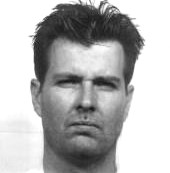
Michael Edward Long
Murderer Brian Kevin Rosenfeld
Murderer · USA · 1985
Brian Kevin Rosenfeld Brian Kevin Rosenfeld was sentenced to three concurrent l…
23 victims
Brian Kevin Rosenfeld
Murderer · USA · 1985
Brian Kevin Rosenfeld Brian Kevin Rosenfeld was sentenced to three concurrent l…
23 victims
 Yahweh ben Yahweh
Murderer · USA · 1980
Yahweh ben Yahweh was born and legally named Hulon Mitchell Jr. (October 27, 19…
23 victims
Yahweh ben Yahweh
Murderer · USA · 1980
Yahweh ben Yahweh was born and legally named Hulon Mitchell Jr. (October 27, 19…
23 victims
 Russell Ellwood
Murderer · USA · 1991
Russell Ellwood was a former taxi driver. Authorities suspected him of killing…
20 victims
Russell Ellwood
Murderer · USA · 1991
Russell Ellwood was a former taxi driver. Authorities suspected him of killing…
20 victims
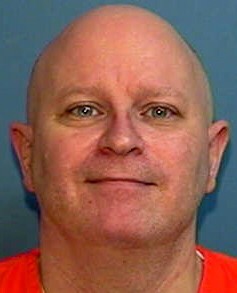 Newton Carlton Slawson
Mass murderer · USA · 1989
Newton Carlton Slawson Slawson was executed by lethal injection in Florida on M…
4 victims
Newton Carlton Slawson
Mass murderer · USA · 1989
Newton Carlton Slawson Slawson was executed by lethal injection in Florida on M…
4 victims
 Carlyle Harris
Murderer · USA · 1891
Carlyle Harris was executed by electrocution at Sing Sing Prison on May 7, 1893…
1 victim
Carlyle Harris
Murderer · USA · 1891
Carlyle Harris was executed by electrocution at Sing Sing Prison on May 7, 1893…
1 victim
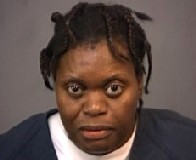 Margaret Ann Allen
Murderer · USA · 2005
Margaret Ann Allen was born 1/23/66 and was referred to as 45 years old and as…
1 victim
Margaret Ann Allen
Murderer · USA · 2005
Margaret Ann Allen was born 1/23/66 and was referred to as 45 years old and as…
1 victim
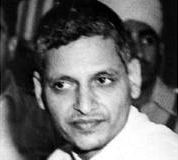 Nathuram Godse
Assassin · India · 1948
Nathuram Vinayak Godse (May 19, 1910 – November 15, 1949) was born at Baramati,…
1 victim
Nathuram Godse
Assassin · India · 1948
Nathuram Vinayak Godse (May 19, 1910 – November 15, 1949) was born at Baramati,…
1 victim
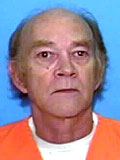 Terry Melvin Sims
Murderer · USA · 1977
Terry Melvin Sims was convicted and sentenced to death for the murder of George…
1 victim
Terry Melvin Sims
Murderer · USA · 1977
Terry Melvin Sims was convicted and sentenced to death for the murder of George…
1 victim
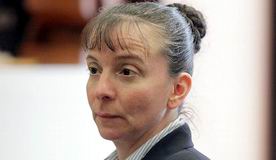 Tina Lunney
Murderer · USA · 2009
Tina Lunney was sentenced to 40 years in prison on August 13, 2013. · July 22,…
1 victim
Tina Lunney
Murderer · USA · 2009
Tina Lunney was sentenced to 40 years in prison on August 13, 2013. · July 22,…
1 victim
- Gender
- male
- Country
- USA
- Location
- Muskogee County, Oklahoma, USA
- Date of birth
- 1963
- Age at first offence
- 24
- Characteristics
- rape, alcohol, domestic violence
- Victim profile
- Sheryl Graber, 24 ( flower shop co-worker) and her son Andrew, 5
- Method of murder
- Shooting / St abbing with knife
- Date(s) of murder
- April 7, 1987
- Years active
- 1987
- Date of arrest
- —
- Status
-
Executed
Executed by lethal injection in Oklahoma on February 20, 1998
Case record: Michael Edward Long
The offence
Michael Edward Long was convicted for the April 7, 1987 killings of Sheryl Sandra Graber, 24, and her son Andrew Graber.
On April 7, 1987, Long went to the home of Sheryl Sandra Graber in Muskogee with the intention of demanding sex. Graber let Long into her house but rebuffed his sexual advances. Long stabbed her when she screamed. Graber opened the front door and yelled for help, attracting the attention of two neighbors, but Long pulled her back inside. Long shot Graber in the head and abdomen and stabbed her 31 times, including two instances of breaking off pieces of his knife blade in her body.
Long also shot, stabbed, and killed Graber’s 4-year-old son, Andrew Graber, because he witnessed his mother’s slaying. Long was apprehended nearby. He had parked his car two blocks away from Graber’s home.
Long said he killed the two when Ms. Graber rejected his sexual advances and screamed for help. In interviews, he also blamed depression, drug abuse, and alcohol for causing him to commit the crime.
Investigation
Long told interviewers about his actions during the killing. Two neighbors arrived while Graber was being assaulted, but Long pulled her back inside after she opened the front door and yelled for help.
Arrest
Long was apprehended nearby after the killings. His car had been parked two blocks away from Graber’s home.
Trial
Long’s attorney told the jury that Long believed women were inferior to men and subservient. The attorney also said Long had a paranoid thought process, believed people were out to get him, and had personality disorders. The attorney said Long was immature and had a poor self image. Others testified that Long was depressed.
Long’s attorney told the jury that the murder was committed in the heat of passion, without premeditation.
In the petition to waive his appeals, Long said he thought an appeal was pending in the Muskogee County District Court. He said he had discussed the issue three months earlier with his attorney from the Oklahoma Indigent Defense System, and that the attorney stated he would not assist in that process but would prefer to withdraw as counsel instead.
Sentencing
Long was sentenced to die for the two murders of Sheryl Sandra Graber and her son Andrew Graber.
Appeals
Long wrote a short, handwritten petition dated Feb. 17 and addressed to the Muskogee County District Court, stating: "I knowingly and intelligently waive any and all rights to appeal my sentence in this capital case and I do have the capacity to understand the choice between life and death."
Long asked to end his appeals and be put to death. Muskogee County District Judge Lyle Burris set a March 27 hearing to determine whether Michael Edward Long could waive his appeals. On Dec. 3, Muskogee County District Judge Lyle Burris obliged Long’s request to end his appeals.
Long wrote to the attorney asking him to withdraw as counsel. In a letter dated Feb. 4, Long wrote: "I am unaware of the current status, therefore I am myself petitioning this court."
Long asked for no additional appeals to delay his execution. He waived his appeals, and he said he did not want to delay his execution any longer.
Richard Dieter, executive director of the Death Penalty Information Center, said there had been other cases in which inmates waived their appeals, then changed their minds after an execution date was set. He mentioned a Georgia case in which the killer asked to resume his appeals on the eve of his 1994 execution. Dieter said the courts granted that wish, and the killer lived for two more years until his appeals ran out.
Judge Charles Chapel, who sat on the Oklahoma Court of Criminal Appeals, said that how the court would handle such a last-day request would depend on the issues Long raised.
Oklahoma Attorney General Drew Edmondson said recently that there was no legal way for Long to stop the execution. Long’s attorney, Jeremy Lowrey, disagreed, and attorneys from the Oklahoma Indigent Defense System had the paperwork ready to seek a stay if Long changed his mind.
Long would become the third Oklahoma inmate to be executed after waiving his appeals. The others were Thomas Grasso in 1995 and Scott Carpenter in 1997.
Long would become the eighth person executed in the country in 1998, and the 440th since the U.S. Supreme Court reinstated the death penalty in 1976.
In an interview, Long said he was a different man from the one who committed the murders. He said the change started 19 days after the slayings when a volunteer minister visited him in jail, and he professed a conversion to Christianity. Graber’s father doubted the killer’s sincerity.
Ken Rigler said: "He's got that jailhouse religion," in December after Long was deemed competent to abandon his appeals.
Long asked to waive his appeals previously and the process had involved hearings. The first time, in March 1997, the hearing was canceled when Long changed his mind and said he didn’t want "to take the easy way out." By October, Long changed his mind again, asked for an end to his appeals, and the appeals were ended.
Bob Ganstine, Oklahoma Indigent Defense System executive director, said if Long’s attorney didn’t file additional appeals, the deadline for filing would pass. The Attorney General’s Office could then ask the Court of Criminal Appeals to set an execution date. Ganstine said: "Obviously, the Scott Dawn Carpenter situation -- that may have planted a seed in somebody's mind." He also said: "It is not unusual for people sitting on death row to think about it."
Ganstine said the Indigent Defense System was drawing up a policy to handle inmates who wanted to waive remaining appeals and be put to death. He said: "If we have a client that is competent and wants to waive the appeals, we will not oppose the decision of a competent adult," and he said Thomas Grasso was another death row inmate who had said he wanted to die. Ganstine said Grasso was executed in 1995.
Execution and final statements
Long requested that additional appeals not delay his execution. A combination of lethal drugs was to be administered to Long after midnight.
Long was scheduled to be executed by lethal injection in Oklahoma. He was pronounced dead at 12:25 a.m.
In one of his final interviews, Long said: "I am ready to go to heaven. It is best for everybody."
Long also said: "I'm ready to get out of hell and go to heaven," in an interview the week before the execution.
In an interview, Long declared: "We bear no malice or ill will," and a statement from friends and relatives of the victims said: "We only seek to be able now to go on with our lives and deal with the everyday realities of life. Michael said he had found Christ and we hope this is true. It will help all of us deal with this event."
Long did not apologize for shooting and stabbing Sheryl Graber and her son.
Long said: "I went there (Graber's Muskogee home) to get it one way or another," and he said he killed the two when Ms. Graber rejected his sexual advances.
Long told the Muskogee Phoenix he did not apologize and he had asked that no additional appeals delay his execution.
Friends and relatives of the victims issued a statement just before the execution saying Long’s death would close a chapter of a painful event. The statement said the family sought to go on with their lives and deal with everyday realities of life.
Michael Edward Long had designated five witnesses for the execution, but prison spokeswoman Lee Mann would not identify them. Lowrey said he would be present. Some of the victims’ relatives also asked to watch the execution and would be in a separate room from reporters, law enforcement, prison officials, and Long’s chosen witnesses.
The prison spokeswoman Lee Mann said Long would have a fairly regular schedule, except he would have more visits from family and he would have access to the phone all day.
A Tulsa woman filed a complaint with the American Civil Liberties Union of Oklahoma because prison officials refused to let her be Long’s spiritual adviser in the hours before execution. Jan Skaggs said she had been involved in prison ministry for eight years and was ordained three weeks earlier in the Universal Life Church, although she said she was a member of a Baptist church in Florida. Skaggs said prison officials rejected her because "Southern Baptists don't ordain women." Skaggs said Wednesday she planned to be on hand to comfort Long’s mother and two sisters.
Other details
Sheryl Graber and her killer worked together at a Muskogee floral shop.
Long wrote letters to Anita and Ken Rigler saying he hoped they had forgiven him for killing their daughter and grandson.
Long’s statement included blame for the crime on depression, drug abuse, and alcohol. He professed a conversion to Christianity, and his sincerity was doubted by Graber’s father.
Long was described as 35 in relation to his execution, and as 34 in relation to the March 1997 hearing and related scheduling.
Long’s mother and two sisters were to be comforted by Jan Skaggs.
Long’s execution was referenced as the 10th Oklahoma killer to die by lethal injection since the state resumed executions in 1990.

Spotted an error, or have more information about this case?