
Richard Longworth
Murderer Brian Kevin Rosenfeld
Murderer · USA · 1985
Brian Kevin Rosenfeld Brian Kevin Rosenfeld was sentenced to three concurrent l…
23 victims
Brian Kevin Rosenfeld
Murderer · USA · 1985
Brian Kevin Rosenfeld Brian Kevin Rosenfeld was sentenced to three concurrent l…
23 victims
 Russell Ellwood
Murderer · USA · 1991
Russell Ellwood was a former taxi driver. Authorities suspected him of killing…
20 victims
Russell Ellwood
Murderer · USA · 1991
Russell Ellwood was a former taxi driver. Authorities suspected him of killing…
20 victims
 Robert Martines Perez
Murderer · USA · 1994
Name: Robert Martines Perez · Other name used in proceedings: Robert Martinez P…
15 victims
Robert Martines Perez
Murderer · USA · 1994
Name: Robert Martines Perez · Other name used in proceedings: Robert Martinez P…
15 victims
 Billy Frank Vickers
Murderer · USA · 1993
Billy Frank Vickers Vickers was executed by lethal injection in Texas on Januar…
14 victims
Billy Frank Vickers
Murderer · USA · 1993
Billy Frank Vickers Vickers was executed by lethal injection in Texas on Januar…
14 victims
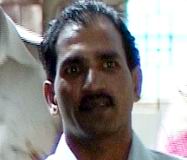 Mahanand Naik
Serial killer · India · 1994
Mahanand Naik was a three-wheel rickshaw driver from Ponda in the Indian state…
18 victims
Mahanand Naik
Serial killer · India · 1994
Mahanand Naik was a three-wheel rickshaw driver from Ponda in the Indian state…
18 victims
 Dion Smallwood
Murderer · USA · 1992
Dion Athanasius Smallwood was convicted of murdering Lois Frederick, 68, and th…
1 victim
Dion Smallwood
Murderer · USA · 1992
Dion Athanasius Smallwood was convicted of murdering Lois Frederick, 68, and th…
1 victim
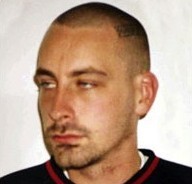 David James Harker
Murderer · United Kingdom · 1998
Defendant: David James Harker (age 24) Victim: Julie Paterson (age 32), mother…
1 victim
David James Harker
Murderer · United Kingdom · 1998
Defendant: David James Harker (age 24) Victim: Julie Paterson (age 32), mother…
1 victim
 Ricky Lee Grubbs
Murderer · USA · 1984
Ricky Lee Grubbs — defendant · Jerry Russell Thornton — victim (found dead insi…
1 victim
Ricky Lee Grubbs
Murderer · USA · 1984
Ricky Lee Grubbs — defendant · Jerry Russell Thornton — victim (found dead insi…
1 victim
- Gender
- male
- Country
- USA
- Location
- Spartanburg County, South Carolina, USA
- Date of birth
- January 19, 1968
- Age at first offence
- 23
- Characteristics
- robbery, kidnapping, armed robbery
- Victim profile
- Alexander George Hopps, 19, and James Todd Greene, 24
- Method of murder
- Shooting
- Date(s) of murder
- January 7, 1991
- Years active
- 1991
- Date of arrest
- Next day
- Status
-
Executed
Executed by lethal injection in South Carolina on April 15, 2005
Case record: Richard Longworth
Background
Richard Longworth (January 19, 1968 – April 15, 2005) was executed by the U.S. state of South Carolina by lethal injection. He was convicted of the murder of Alex Hopps and Todd Greene in Spartanburg, South Carolina. Longworth and his co-defendant David Rocheville decided to go to the WestGate Mall movie theater in Spartanburg where they had used to work and rob it. Longworth and Rocheville were former employees of the theatre owner.
Longworth had been a participant in the robbery and killings described in proceedings following affirmance of his convictions and death sentence. In later federal habeas proceedings, the procedural history included direct appeal, post-conviction relief, and multiple federal habeas petitions and appeals.
The offence
In the evening of January 7, 1991, Longworth and his friend David Rocheville, while driving around in their minivan, decided to rob the WestGate Mall Cinema in Spartanburg. After entering the theater, Longworth took his handgun from his shoulder holster and gave it to Rocheville, and they viewed a movie for a short time.
They proceeded into the lobby to implement their plan to rob the theater of money located in the ticket booth. When they encountered an usher, Alexander George Hopps, 19, walking down the hallway, Longworth knocked Hopps down, jumped on him, held his hand over Hopps’ mouth, and dragged him outside of the theater through the side exit. As Longworth pinned Hopps against a waist-high bar protecting the air conditioning unit, Rocheville shot Hopps in the left side of the head.
Longworth and Rocheville convinced Green, a theater manager, to let them back inside. They ordered Green at gunpoint to empty the safe and forced him into a van. After driving away from the theater, Longworth stopped and ordered Green to get out, walk five paces, get on his knees and face forward. Rocheville then shot Green in the head.
In Longworth’s interrogation statement prepared from Chief Deputy James Murray’s notes, Longworth described leaving home at approximately four o’clock p.m. to meet Rocheville at a television repair shop where Rocheville worked. After meeting him, they traveled to Rocheville’s home in Duncan, South Carolina where Rocheville cleaned up. They left in Longworth’s mini van, which was described as owned by Longworth’s father, toward the Continental Cafe located in the Hillcrest Mall in Spartanburg. Longworth stated that at the cafe he drank approximately six beers and three kamikazes. He stated they spoke to a bartender named Larry, last name unknown, who worked there and knew them. Longworth stated that after leaving the cafe, he and Rocheville drove around in the minivan for a short time, and eventually stopped at an unknown place between Hillcrest and West Gate where they purchased a twelve pack of beer. He stated they continued driving around while drinking beer, and decided to rob the West Gate Cinema. Longworth stated they arrived at the West Gate Theatre at an unknown time but that he knew it was before twelve o’clock midnight.
Longworth stated that when they entered the theatre, he remembered seeing James Greene, an employee, and waved to him. He stated Longworth and Rocheville walked around inside the theater for a short time and believed the two of them went inside where the movie Dances with Wolves was playing. Longworth stated that when they entered through the front door, there was no one in the ticket booth and they walked in without having to pay. He stated that after being seated for a short time, they decided it was time to rob the place. He stated that as they walked out toward the lobby, he saw the usher, Alex Hopps, standing near the end of a counter, went over to him, and they started walking down a hallway talking. He described his plan to take the usher outside and knock him unconscious. He described knocking the usher to the floor by sweeping his feet out from under him, jumping on him, and placing his hands over the usher’s mouth. He described that Rocheville had been given the gun that Longworth had carried into the theater in a shoulder holster hidden under his coat and was watching the activity.
Longworth stated that as he and the usher walked outside using a side exit, they were followed by Rocheville. He stated that once outside he grabbed the usher by the right arm and twisted it up behind his back, forced the usher to lean over a waist high bar, and then took his left hand pushing/pinning the usher on the bar. He described that Rocheville shot the usher in the left side of the head while Longworth held him. He stated the weapon used was a .44 magnum Ruger loaded with semi wad cutters, and that after the shooting Rocheville returned the weapon to him and he placed it in the shoulder holster. Longworth stated that he did not know the usher although it was pointed out to him that the usher had at one time worked for him at the Converse Theaters when Longworth was an assistant manager.
Longworth stated that after the shooting he and Rocheville walked around to the front of the theater to proceed with the robbery. He stated that when they arrived the doors were locked and that he saw James Greene and motioned to him to open the doors. He stated Greene complied. He stated that once inside, he drew the same gun on Greene and stated something to the effect that he was sorry but going to rob the theater, and requested Greene open the safe. He stated Greene became so nervous it took three tries to successfully open the safe. He stated he took several money bags from the safe and asked Greene if he had made the deposits; Greene responded yes and Longworth stated “don’t lie to me.” Longworth stated Greene said the deposits were in his personal car. Longworth stated the three of them walked to Greene’s vehicle parked at the side of the cinema, obtained the remaining money bags, and gave them all to Rocheville. He stated the three then got into the minivan, Greene seated in the passenger side, Rocheville in the back, and he was driving. He stated he gave the .44 magnum Ruger to Rocheville and stated “if he moves shoot him” referring to Greene. He stated they drove up highway number 176 toward Inman and turned right off number 176 onto an unknown road, drove a short distance, stopped the van, and then told Greene to get out, walk five paces, get down on his knees, and stare straight ahead. He stated Greene did as instructed and that Rocheville then shot Greene in the back of the head.
Longworth also described that he initially told James Greene he would not hurt him and was going to let him out in a field unharmed, and that Greene pleaded for them not to hurt him and assured them he would not identify them, wanting to live so he could see his girlfriend.
During the interrogation interview, Longworth described slamming his fist on the table and exclaiming: “my god we killed those kids for fifteen hundred dollars.” Longworth declined to sign the statement, stating he wanted an attorney to read it first. Chief Murray testified that he recalled Longworth saying that no one was supposed to be killed or intended that anyone get killed, and that when Longworth had taken Alex outside and put him over the bar, he observed Rocheville raising the gun up to Alex’s head and did nothing to stop him. Chief Murray testified Longworth did nothing to stop him and said he knew what was going to happen.
Investigation and arrest
Longworth and Rocheville were arrested the next day. In proceedings describing the investigation, Rocheville was arrested at 5:00 a.m. the next morning and led police to the body of James Greene, found in a shallow ditch on the side of a rural road several miles from the cinema. Longworth was arrested later that day.
Longworth consented to be interviewed after waiving his rights. Chief Murray prepared a statement from his notes, which was admitted at trial during Chief Murray’s testimony. Longworth declined to sign the statement, requesting an attorney to read it first.
Trial
Longworth and Rocheville each were indicted on two counts of murder, one count of kidnapping, and one count of armed robbery. Separate juries convicted them and sentenced them to death.
The trial judge was E. C. Burnett, III, J. Longworth was sentenced to death on September 10, 1991.
During trial testimony about Longworth’s statement, Chief Deputy Murray testified about what Longworth said during the interrogation, including testimony that Longworth observed Rocheville raising the gun toward Alex Hopps and did nothing to stop it, and that Longworth knew what was going to happen.
Longworth’s case included objections regarding whether testimony attributed to Longworth—that he knew what was going to happen—was included in Chief Murray’s notes. After the objection, the trial judge questioned Chief Murray and determined that such a statement was not included in Murray’s notes. The trial judge gave a curative instruction to the jury, which included the following instruction (verbatim):
You had heard testimony from the statement by Chief Murray that the defendant says I saw Rocheville with the gun, and I did nothing to stop it. That's part of the statement.
The solicitor went on to say did Longworth say I knew what, he knew what was going to happen. And Chief Murray says yes, he says he knew what was going to happen. And that's not true. And that's not in the statement. And I have conferred with Chief Murray here in this courtroom on the record. And that is his interpretation. That is not a statement by the defendant. I must ask you to disregard that, to wipe that comment from your mind. It is improper thing to be injected into this trial, and you disregard it entirely please. It is so important. The only statement made was I saw Rocheville, and I did nothing to stop him. And that's the end of it as best I can tell. Disregard anything further from Chief Murray on that point as I have outlined to you.
The jury received the instruction to disregard the improper comment attributed to Chief Murray’s interpretation and was directed that the only statement to be considered was that Longworth saw Rocheville with the gun and did nothing to stop him.
The South Carolina Supreme Court affirmed the convictions and sentence. The South Carolina Supreme Court held that the trial court’s curative instruction was clearly sufficient to ensure the jury did not attribute Chief Murray’s statement to Longworth.
Sentencing
Longworth was sentenced to death for the murders and kidnapping, plus twenty-five years for armed robbery. The sentencing date recorded was September 10, 1991.
Appeals
Longworth appealed his convictions and sentence. The Supreme Court of South Carolina affirmed.
In federal habeas proceedings, Longworth v. Ozmint included procedural holdings related to ineffective assistance of counsel claims and other claims. In one habeas decision, the petition was denied, and the stay of execution was lifted.
In Longworth v. Ozmint (2004), the district court denied the petition but granted a certificate of appealability with respect to specified grounds. The U.S. Court of Appeals for the Fourth Circuit later affirmed the district court’s denial.
In the U.S. Court of Appeals for the Fourth Circuit decision in 2004, the court concluded:
- kept counsel did not have a conflict of interest because counsel represented Longworth’s parents as well as Longworth;
- even if there were a conflict, Longworth did not show how actions by kept counsel compromised interests or prejudiced representation;
- the state post-conviction relief court acted reasonably in concluding deputy testimony was not false;
- the deputy’s mental impression that Longworth expressed remorse during post-arrest interrogation was not Brady material that had to be disclosed.
Separate from that, the habeas decisions discussed procedural default of ineffective assistance claims where they were not fully raised and adjudicated on appeal from post-conviction proceedings in a capital case.
Outcome
Richard Longworth was executed by lethal injection in South Carolina on April 15, 2005.
The execution occurred at Broad River Correctional Facility. Longworth was pronounced dead on April 15, 2005 at 6:14 p.m.
Longworth’s co-defendant David Rocheville had been executed in 1999.
Aftermath and final statement
Longworth’s final meal was a hamburger, french fries and chocolate milkshake.
In his final statement read by attorney David Belser, Longworth said he would not ask the families of Alex Hopps and Todd Green for forgiveness because he knew it would not be granted. Longworth said: “I am morally and legally responsible for what happened,” and said: “I hope they also know how deeply, truly sorry I am for what I have done. I hope my death brings them the peace they deserve.”
The final statement also included the following (verbatim):
“I hope my family knows how much I love them, and how ashamed I am that I have tarnished their name. For the last 14 years I have tried to live my life as cleanly and as honorably as I was raised.”
Caroline Short, Hopps’ sister, said after Longworth’s execution: “I would just like to say that two young men, two bright shining stars of South Carolina are no longer with us,” and “They had a future. It's hard to really say how much I love my brother ... He told me he loved me regularly.”
Mary Ann Green was Todd Greene’s only child’s mother, and she said: “I can't explain how hard it is to go along without him,” and that she was fighting back tears.
Alexander Hopps said: “We got justice today,” and “He was a great person,” “We miss him every day. We think about him every day. I hope he's up there smiling down on us.”
Margaret Abbott said before Longworth was put to death: “Execution is not a solution,” “It doesn't solve anything. It doesn't heal anybody. You've got victims on both sides.”
Other details
Longworth’s prison and identification details included:
- Inmate: Longworth, Richard
- Inmate #: 00004812
- SID#: SC00469256
- DOB: 01/19/68
- Race: Caucasian
- County of Conviction: Spartanburg
- Trial Judge: E. C. Burnett
- Date of Sentencing: 09/10/91
The legal citations included:
- State v. Longworth, 438 S.E.2d 219 (S.C. 1993) (Direct Appeal)
- Longworth v. Ozmint, 302 F.Supp.2d 535 (2003) (Habeas)
- Longworth v. Ozmint, 377 F.3d 437 (4th Cir. 2004) (Habeas)
The 4th Circuit and district court decisions addressed issues including ineffective assistance of counsel procedural default, alleged Brady violations, and conflict of interest claims based on joint representation of Longworth and Longworth’s parents.
Spotted an error, or have more information about this case?