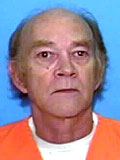
Terry Melvin Sims
Murderer Ervil LeBaron
Murderer · USA · 1972
Ervil Morrell LeBaron (1925 to August 16, 1981) was the leader of a polygamous…
35 victims
Ervil LeBaron
Murderer · USA · 1972
Ervil Morrell LeBaron (1925 to August 16, 1981) was the leader of a polygamous…
35 victims
 Brian Kevin Rosenfeld
Murderer · USA · 1985
Brian Kevin Rosenfeld Brian Kevin Rosenfeld was sentenced to three concurrent l…
23 victims
Brian Kevin Rosenfeld
Murderer · USA · 1985
Brian Kevin Rosenfeld Brian Kevin Rosenfeld was sentenced to three concurrent l…
23 victims
 Marvin Gray
Murderer · USA · 1975
Marvin Gray was convicted killer who claimed responsibility for 23 slayings and…
23 victims
Marvin Gray
Murderer · USA · 1975
Marvin Gray was convicted killer who claimed responsibility for 23 slayings and…
23 victims
 Yahweh ben Yahweh
Murderer · USA · 1980
Yahweh ben Yahweh was born and legally named Hulon Mitchell Jr. (October 27, 19…
23 victims
Yahweh ben Yahweh
Murderer · USA · 1980
Yahweh ben Yahweh was born and legally named Hulon Mitchell Jr. (October 27, 19…
23 victims
 Ronald Lee Hoke
Murderer · USA · 1985
Ronald Lee Hoke Sr. was executed by lethal injection in Virginia on December 16…
1 victim
Ronald Lee Hoke
Murderer · USA · 1985
Ronald Lee Hoke Sr. was executed by lethal injection in Virginia on December 16…
1 victim
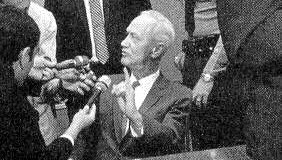 William Dale Archerd
Serial killer · USA · 1947
William Dale Archerd was born in 1912. He had a lifelong fascination with medic…
6 victims
William Dale Archerd
Serial killer · USA · 1947
William Dale Archerd was born in 1912. He had a lifelong fascination with medic…
6 victims
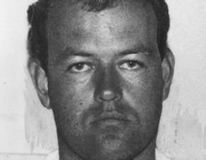 Colin Pitchfork
Murderer · United Kingdom · 1983
Colin Pitchfork was born in 1961 in Bristol, England. He was described as a loc…
2 victims
Colin Pitchfork
Murderer · United Kingdom · 1983
Colin Pitchfork was born in 1961 in Bristol, England. He was described as a loc…
2 victims
- Gender
- male
- Country
- USA
- Location
- Seminole County, Florida, USA
- Date of birth
- February 5, 1942
- Age at first offence
- 35
- Characteristics
- robbery, drug dealer
- Victim profile
- George Pfeill, 55 (retired New York City police officer)
- Method of murder
- Shooting
- Date(s) of murder
- December 29, 1977
- Years active
- 1977
- Date of arrest
- June 25, 1978
- Status
-
Executed
Executed by lethal injection in Florida on February 23, 2000
Case overview
Terry Melvin Sims was convicted and sentenced to death for the murder of George Pfeil, a retired New York City police officer who was working as a volunteer Seminole County Deputy Sheriff. Sims was executed by lethal injection in Florida on February 23, 2000.
The offence
On December 29, 1977, Pfeil was in uniform and on his way home when he entered a pharmacy on State Road 434 to pick up a prescription. Inside the pharmacy, Sims and Curtis Baldree were robbing the store while accomplices B.B. Halsell and Clarence Eugene Robinson waited in a getaway car. Pfeil exchanged gunfire with Sims and was shot twice. Pfeil died a short time later.
Sims was shot in the hip and managed to escape the scene along with his accomplices. One customer, William Guggenheim, testified that he tried to leave the store when he saw a man pointing a gun at the pharmacist; he was stopped and robbed by Sims who took his wallet. Guggenheim testified that he then saw Sims shoot a man who was entering through the front door. The verdict was for first-degree murder and robbery.
Sims was convicted of first-degree murder and robbery, and the jury recommended a sentence of death.
Investigation
B.B. Halsell and Curtis Baldree testified against Sims during his trial. Halsell and Baldree testified that Sims and Baldree armed themselves with pistols and entered the pharmacy while Halsell and Gene Robinson waited in a car a short distance away. Baldree testified that he went to the back of the store to rob the pharmacist while Sims stayed at the front of the pharmacy to watch the door. Baldree and Halsell testified that Sims bragged that he “killed a cop with one shot.”
Clarence Eugene Robinson was indicted in absentia for murder in the pharmacy shooting. Robinson remained at large until June 1983, when he surrendered after being charged with shooting two FBI agents in Volusia County.
Arrest and extradition
Sims was not arrested until June 1978, after an attempted armed robbery in California. Sims was apprehended on June 25, 1978, in California and was extradited to Florida.
Trial
At trial, evidence established that Sims and Curtis Baldree entered the pharmacy with guns drawn while B.B. Halsell and Eugene Robinson waited in a getaway car. The customers were ordered into the bathroom located in the rear.
Defence
The main theory of defense was mistaken identity. The defense attempted to discredit Baldree and Halsell based on their bad character, drug addiction, criminal records, and the plea arrangements between them and the state. The defense attacked the identification testimony of William Guggenheim as the product of a suggestive photographic line-up, and questioned Guggenheim’s testimony based on an earlier failure to choose Sims from a photographic line-up. The defense also presented evidence of Sims’ resemblance to another individual who was described as a frequent criminal associate of Baldree and Halsell.
Sentencing
During the sentencing phase, the state presented a certified copy of a 1971 Orange County conviction for assault with intent to rob. The defense presented witnesses who testified to Sims’ good character and difficult background circumstances. The jury recommended death.
Judge Tom Waddell, Jr. sentenced Terry Melvin Sims to death for the murder of George Pfeil on July 24, 1979. The Florida Supreme Court affirmed Sims’ judgment and sentence on November 3, 1983, and denied rehearing on January 19, 1984. The United States Supreme Court denied certiorari on June 11, 1984.
Appeals
Direct appeal
Sims raised numerous issues on direct appeal:
- whether he was denied his Sixth Amendment right to cross-examine a witness when the trial court curtailed defense counsel’s cross-examination of Baldree;
- whether the trial court erred in denying his motion for mistrial when a witness mentioned using Sims’ “mug shot” in a photographic display;
- whether the trial court erred in excluding from evidence documents corroborative of a defense witness’s testimony;
- whether the prosecutor made several improper comments during closing argument;
- whether the trial court erred by not granting an evidentiary hearing on whether exclusion of potential jurors unalterably opposed to the death penalty results in a jury predisposed toward conviction;
- whether Sims was improperly prevented from further questioning a juror in a post-trial hearing about whether jurors had considered Sims’ failure to testify;
- whether the trial court erred in allowing the jury to return verdicts on multiple and inconsistent counts of first-degree murder; and
- whether the trial court properly imposed a sentence of death.
The Florida Supreme Court found no merit to issues one, two, three, five, six, and seven. It found issue four to be procedurally barred because counsel failed to object at trial to the prosecutor’s alleged improper comments.
Regarding sentencing, the Florida Supreme Court determined that two aggravating circumstances were improperly “double-counted” and that the aggravating factor that the murder was heinous, atrocious, or cruel was improper, but harmless. Despite these errors, and in light of no mitigating circumstances, the court found that the death sentence was nonetheless appropriate. The court found three aggravating circumstances valid: that the capital felony was committed in the course of a robbery, that it was committed for the purpose of avoiding arrest, and that Sims had previously been convicted of life-threatening crimes.
Post-conviction and federal habeas
Sims filed a petition for habeas relief in the state court and later voluntarily dismissed that petition. He then filed a motion to vacate the judgment and sentence and a motion for collateral relief pursuant to Florida Rule of Criminal Procedure 3.850. After conducting an evidentiary hearing on Sims’ motions for post-conviction relief, the trial court denied relief, and the Florida Supreme Court affirmed the trial court’s judgment (602 So. 2d 1253).
Sims then filed a petition for writ of habeas corpus in the Florida Supreme Court. The Florida Supreme Court denied relief, finding all claims procedurally barred except for the ineffective assistance of appellate counsel claim, which it denied on the merits (622 So. 2d 980).
Sims filed a petition for writ of habeas corpus relief under 28 U.S.C. § 2254 in federal court. The district court denied relief as to Sims’ conviction and granted relief as to his death sentence. The United States Court of Appeals for the Eleventh Circuit affirmed the denial of habeas relief as to guilt-stage issues and reversed the grant of habeas relief on sentencing-stage issues, remanding with directions that the district court reinstate the death penalty.
Lethal injection execution
On February 23, 2000, Terry Melvin Sims was put to death by lethal injection in Florida. A prison doctor pronounced him dead at 7:10 a.m.
Sims was 58. Antideath-penalty protesters gathered outside Florida State Prison carrying candles and signs. Sims shared a final meal of grouper, french fries, chef’s salad, Boston cream pie, and Coca-Cola with guards and with Anthony B. Bryan, who was held in an adjoining cell. Sims met with a rabbi. During the execution, an anonymous executioner wearing a black hood administered the lethal chemicals via intravenous lines.
He was pronounced dead at 7:10 a.m. The execution process was described as proceeding without problems, and the state carried out its first execution by injection in Florida.
Outcome
The death sentence was reinstated after federal appellate review.
Other details
Related individuals and roles
- George Pfeil was described as an off-duty sheriff’s deputy and a retired New York City police officer.
- Curtis Baldree and B.B. Halsell were codefendants who testified for the state.
- Clarence Eugene Robinson remained at large until surrender in June 1983 after being charged with shooting two FBI agents in Volusia County.
- Anthony B. Bryan was executed the following day as described in the surrounding reporting, and was held in an adjoining cell during Sims’ final meal.
Procedural history cited in appellate materials
The Eleventh Circuit opinion included references to Florida Supreme Court briefs and opinions, and federal appeal materials including:
- 602 So. 2d 1253 (June 11, 1992)
- 622 So. 2d 980 (June 24, 1993)
- 750 So. 2d 622 (October 27, 1999)
- 753 So. 2d 66 (February 8, 2000)
- 754 So. 2d 657 (February 16, 2000)
Verbatim statements and testimony
Sims bragged that he “killed a cop with one shot.”
In connection with Sims’ final statement at execution, Sims said:
“I'm not guilty of the charge of murder,”
“I stand before my God of the Jewish faith.”
“Peace, happiness and love to all.”
Michele Agans said:
“I would like to see Mr. Bush here,”
“If he is ordering this man's death, he should be in there watching.”
Seminole County Sheriff Don Eslinger said:
“I don't care about the peacefulness, how benign, how clinical the process.”
“The finality of the sentence is what's important to the community.”
Bradley Bryan said:
“They say, "Oh, it's okay, it's just a little prick.' No, that's not true.”

Spotted an error, or have more information about this case?