
Ricky Lee Grubbs
Murderer Brian Kevin Rosenfeld
Murderer · USA · 1985
Brian Kevin Rosenfeld Brian Kevin Rosenfeld was sentenced to three concurrent l…
23 victims
Brian Kevin Rosenfeld
Murderer · USA · 1985
Brian Kevin Rosenfeld Brian Kevin Rosenfeld was sentenced to three concurrent l…
23 victims
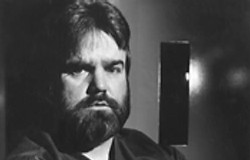 Marvin Gray
Murderer · USA · 1975
Marvin Gray was convicted killer who claimed responsibility for 23 slayings and…
23 victims
Marvin Gray
Murderer · USA · 1975
Marvin Gray was convicted killer who claimed responsibility for 23 slayings and…
23 victims
 Yahweh ben Yahweh
Murderer · USA · 1980
Yahweh ben Yahweh was born and legally named Hulon Mitchell Jr. (October 27, 19…
23 victims
Yahweh ben Yahweh
Murderer · USA · 1980
Yahweh ben Yahweh was born and legally named Hulon Mitchell Jr. (October 27, 19…
23 victims
 Russell Ellwood
Murderer · USA · 1991
Russell Ellwood was a former taxi driver. Authorities suspected him of killing…
20 victims
Russell Ellwood
Murderer · USA · 1991
Russell Ellwood was a former taxi driver. Authorities suspected him of killing…
20 victims
 Randy Arroyo Baez
Homicide · USA · 1997
Randy Arroyo Baez received a sentence of death on April 14, 1998. His sentence…
1 victim
Randy Arroyo Baez
Homicide · USA · 1997
Randy Arroyo Baez received a sentence of death on April 14, 1998. His sentence…
1 victim
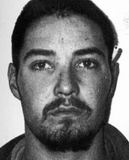 Lindsay Beckett
Murderer · Australia · 1997
Lindsay Hoani Beckett (born 27 March 1974) was convicted of the murders of scho…
2 victims
Lindsay Beckett
Murderer · Australia · 1997
Lindsay Hoani Beckett (born 27 March 1974) was convicted of the murders of scho…
2 victims
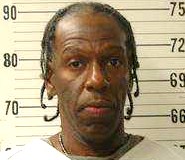 David Carl Duncan
Murderer · USA · 1981
Defendant: David Carl Duncan Victim: Ruby Evelyn Burgess, cashier at the Short…
1 victim
David Carl Duncan
Murderer · USA · 1981
Defendant: David Carl Duncan Victim: Ruby Evelyn Burgess, cashier at the Short…
1 victim
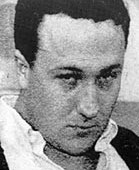 Steven Oken
Spree killer · USA · 1987
Steven Oken (defendant) Steven Oken was adopted at birth and was raised in a st…
3 victims
Steven Oken
Spree killer · USA · 1987
Steven Oken (defendant) Steven Oken was adopted at birth and was raised in a st…
3 victims
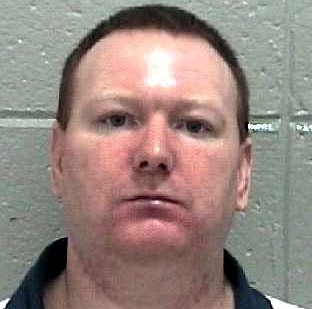 Billy Daniel Raulerson
Murderer · USA · 1993
Defendant: Billy Daniel Raulerson Jr. Age: 27 Court/case references: Raulerson…
3 victims
Billy Daniel Raulerson
Murderer · USA · 1993
Defendant: Billy Daniel Raulerson Jr. Age: 27 Court/case references: Raulerson…
3 victims
- Gender
- male
- Country
- USA
- Location
- Scott County, Missouri, USA
- Date of birth
- December 6, 1958
- Age at first offence
- 26
- Characteristics
- robbery, abuse
- Victim profile
- Jerry Russell Thornton, 46
- Method of murder
- St abbing with knife
- Date(s) of murder
- February 15, 1984
- Years active
- 1984
- Date of arrest
- Next day
- Status
-
Executed
Executed by lethal injection in Missouri on October 21, 1992; Grubbs was executed on October 21, 1992.
Parties
- Ricky Lee Grubbs — defendant
- Jerry Russell Thornton — victim (found dead inside a mobile home)
Timeline
- February 15, 1984 — Grubbs and his brother Randy went to Thornton’s trailer in Miner, Scott County, Missouri; both brothers wore gloves; Thornton was dead when they left.
- February 16, 1984 — Fire fighters were called to a mobile home fire in Miner, Missouri; they discovered Thornton’s body inside the mobile home.
- February 17, 1984 — Grubbs and his brother were arrested; Grubbs was arrested at about 8:30 p.m. on Friday, February 17, 1984.
- February 17, 1984 (next day after arrest) — Grubbs confessed to killing Thornton.
- November 27, 1985 — The Missouri trial court denied Grubbs’s motion to suppress his confession in a ruling recorded as a docket sheet entry in Perry County, Missouri.
- December 1985 — A trial was held; it ended in a mistrial after one juror denied that the guilty verdict was his separate, individual verdict.
- March 1986 — A second trial was held after a change of venue; Grubbs did not testify; his confession was admitted.
- February 1987 — The Missouri Supreme Court affirmed the judgment on direct appeal.
- November 1988 — The Missouri Supreme Court affirmed the denial of post-conviction relief.
- June 1989 — Grubbs filed a petition for writ of habeas corpus pursuant to 28 U.S.C. 2254 (1988).
- Late 1989 — The district court issued an unpublished order and memorandum finding a number of Grubbs’s claims to be procedurally barred.
- April 1990 — The district court issued a published order and memorandum addressing remaining claims and denying the petition.
- January 31, 1992 — The U.S. Court of Appeals for the Eighth Circuit affirmed the denial of Grubbs’s habeas petition.
- October 21, 1992 — The U.S. Supreme Court lifted a reprieve; Grubbs was executed by lethal injection in Missouri; he was pronounced dead at 9:35 P.M.
Background
Jerry Russell Thornton lived in a trailer in the town of Miner in Scott County, Missouri. Grubbs was acquainted with Thornton and had been at his trailer once before. Randy, Grubbs’s brother, had previously worked for Thornton.
On the afternoon of Wednesday, February 15, 1984, Grubbs and Randy went to Thornton’s trailer. Although they entered with permission, Thornton told Grubbs he did not like him and wanted him to leave. Both Grubbs and Randy wore gloves while in the trailer.
Grubbs and Randy had been drinking when they went to the trailer. Grubbs stated that when Thornton came toward him he became scared and struck him repeatedly. After Thornton fell to the floor, Grubbs and Randy “hog-tied” Thornton with neckties. Grubbs then cut Thornton’s throat.
After leaving the trailer, Thornton was dead. When the body was discovered, Thornton’s hands and feet were found bound with neckties.
Approximately thirty dollars and some food stamps were taken from Thornton’s trailer. The next day Grubbs and Randy returned to the trailer to set it on fire and destroy the evidence. Late that evening, the fire department was summoned to put out the fire and Thornton’s body was discovered.
The offence
Thornton suffered massive injuries to his upper torso, including thirteen broken ribs and a cracked sternum. Thornton also had a laceration of the liver and damage to the small intestine, abrasions and lacerations on the face, a broken nose, and a brain hemorrhage. Thornton had a large laceration of the neck, extending from the trapezius muscle to nearly the front of the left side of the neck.
At the scene, Thornton’s hands and feet were bound with neckties.
Grubbs confessed that he and his brother returned the following day and set the fire to destroy evidence that might incriminate them.
Investigation
Fire fighters were called to the scene of a mobile home fire in Miner, Missouri, on February 16, 1984, and they discovered Thornton’s body inside the mobile home.
Arrest
Grubbs and his brother were arrested the following day after the fire fighters were called to the scene and Thornton’s body was discovered. Grubbs was arrested at about 8:30 p.m. on Friday, February 17, 1984. Randy had been arrested earlier that day and was held in custody at another location.
Confession
Before trial, Grubbs filed a motion to suppress his confession, claiming that his confession was unconstitutionally obtained as a result of continued questioning by law enforcement officers after he had invoked his right to remain silent and after he had requested an attorney.
When Grubbs was brought into custody, the county sheriff read a Miranda warning to him. According to Grubbs’s testimony, he refused to answer any questions and requested an attorney. There was some indication in Grubbs’s testimony that questioning by the sheriff continued after that point. According to the sheriff’s testimony, Grubbs invoked his right to remain silent but did not request an attorney, and it was not clear from the sheriff’s testimony whether any questioning continued after Grubbs invoked his right to remain silent. Following a brief encounter described by Grubbs as lasting “a little while,” Grubbs was placed in a cell overnight.
The following day at about 1:30 p.m., the sheriff and Grubbs met again. According to Grubbs, the sheriff initiated the meeting, asked him if he wanted to make a statement, and Grubbs refused. The sheriff did not remember whether Grubbs initiated this meeting but testified that Grubbs did not refuse to make a statement and that Grubbs simply wanted to talk to his brother. There was no dispute that after this brief encounter Grubbs spoke to his brother Randy on the telephone to confirm whether Randy had been cooperating in the investigation. Grubbs testified that Randy informed him that he was cooperating with officials. After the telephone call, the sheriff asked Grubbs again if he wanted to make a statement and Grubbs told him no. Grubbs testified: “I said, 'No I don't want to [talk].' So he [the sheriff] took me and locked me back up.”
At about 3:30 p.m., according to the sheriff’s testimony, Grubbs told him he wanted to make a statement. The sheriff read the Miranda warning again, Grubbs signed a written waiver of his rights, and Grubbs confessed in a written statement. It was not clear from the record whether Grubbs contacted the sheriff and volunteered the confession or whether it was in response to further questioning.
The trial court denied Grubbs’s motion to suppress his confession. The trial court ruled: “[T]he court finds that the statements [of Grubbs] were given after a knowing [and] intelligent waiver of his rights were made [and] after his Miranda warnings were given to him explaining his constitutional rights. The [court] finds his statements were not coerced from him nor were they a result of a product of an illegal arrest.”
Grubbs’s statement to the sheriff was admitted as evidence. In March 1986, at his second trial, the confession was essentially the only direct evidence introduced to show that Grubbs had murdered Thornton.
Trial
A trial was held in December 1985 and resulted in a mistrial when one juror, during a poll of the jury after it had submitted its verdict to the court, denied that the guilty verdict was his. A change of venue was granted and a second trial was held in March 1986.
At the first trial, Grubbs testified in his own defense. At the second trial, Grubbs did not testify and his confession was admitted against him.
The jury convicted Grubbs of capital murder and he was sentenced to death.
Sentencing
The sentencing jury found three statutory aggravating circumstances to exist. In addition to aggravating circumstances, it considered nonstatutory aggravating circumstances.
Two aggravating circumstances included:
- That Grubbs murdered Thornton “for the purpose of receiving money or any other thing of monetary value,” stated as Jury Instruction No. 17.
- That the murder was committed “for the purpose of preventing” Grubbs’s lawful arrest, stated as Jury Instruction No. 17.
Nonstatutory aggravating circumstances included that Grubbs had been previously convicted of four counts of burglary, one count of stealing, theft of property, and armed robbery.
A jury instruction regarding mitigating circumstances required unanimity before weighing. The mitigating-instruction language was: “If you unanimously decide that a sufficient mitigating circumstance or circumstances exist which outweigh the aggravating circumstance or circumstances found by you to exist, then you must return a verdict fixing defendant's punishment at imprisonment for life by the Division of Corrections without eligibility for probation or parole until he has served a minimum of fifty years of his sentence.”
Appeals
Direct appeal
In February 1987, the Missouri Supreme Court affirmed the judgment on direct appeal. State v. Grubbs, 724 S.W.2d 494 (Mo.) (en banc), with cert. denied.
Post-conviction relief
Grubbs filed a motion for post-conviction relief pursuant to Missouri Supreme Court Rule 27.26. The post-conviction court denied relief and the Missouri Supreme Court affirmed this judgment in November 1988. Grubbs v. State, 760 S.W.2d 115 (Mo.1988) (en banc), with cert. denied.
Federal habeas corpus and Eighth Circuit
Grubbs filed a petition for writ of habeas corpus pursuant to 28 U.S.C. 2254 (1988) in June 1989. In late 1989 the district court issued an unpublished order and memorandum finding a number of Grubbs’s claims to be procedurally barred. In April 1990 the district court issued a published order and memorandum denying the petition.
The U.S. Court of Appeals for the Eighth Circuit decided the case on January 31, 1992 and affirmed.
United States Supreme Court reprieve and lifting
Grubbs’s execution was scheduled by injection after a reprieve. Late Tuesday, Justice Harry A. Blackmun issued a temporary reprieve. Late tonight, the full Court voted 6 to 3 to lift the reprieve. Justices Blackmun, David Souter and John Paul Stevens each dissented separately.
Outcome
Ricky Lee Grubbs was executed on October 21, 1992 by lethal injection in Missouri. He was pronounced dead at 9:35 P.M.
Other details
- The record identified Grubbs as 33 years old at the time of execution.
- The U.S. Supreme Court ruled in 1976 that states could resume the death penalty, and Grubbs was described as the 183d inmate executed nationwide since that ruling.
- Missouri had executed seven men, all by lethal injection, since the state resumed the death penalty in January 1989, and Grubbs’s execution was described as the first in the state this year.
- Grubbs went on death row in 1986 after being convicted of murder in the beating death of Jerry Thornton, 46, of Miner in southeast Missouri.
- In his written confession, Grubbs stated that he and his brother went to Thornton’s trailer on the afternoon of February 15, both brothers had been drinking beforehand, and Thornton had been drinking when they arrived.
- Grubbs stated in his confession that after Thornton told him he did not like him and wanted him to leave, Thornton came toward him and Grubbs became scared and struck him repeatedly.
- Grubbs stated in his confession that when Thornton fell to the floor, Grubbs and Randy “hog-tied” him with some of Thornton’s neckties and Grubbs cut Thornton’s neck with a knife.
- Grubbs stated in his confession that before leaving the trailer home, the brothers took thirty dollars and some food stamps.
- Grubbs testified at his confession-related suppression proceedings. His testimony about invoking counsel was: “And Bill Ferrell [the sheriff] read me my rights and he asked me, he said, "Ricky," he said, "Do you want to talk to us; you want to give us a statement?" I said, "No." I said, "I don't even want to talk to you." So he said, "Well," he said, "We know about the death of Jerry Thornton." He started telling me he knew about me killing Jerry Thornton. I said, "Well, I don't really even want to talk to you." I said, "I want a lawyer." So he kept--Well, Bill Ferrell told me, he said, "Well," he said, "We know about the death," like that. But we wasn't up there--We wasn't up there [the interrogation room] real long, but we was up there for a little while. Then Bill Ferrell and Kenny Howell took me back downstairs [jail cell].”
- The Eighth Circuit decision included named judges: BEAM, Circuit Judge; BRIGHT, Senior Circuit Judge; WOODS, District Judge (sitting by designation).
- The Eighth Circuit case number and citation included: 948 F.2d 1459, Ricky Lee Grubbs, Appellant, v. Paul Delo, Appellee, No. 90-1664.
Spotted an error, or have more information about this case?