Dion Smallwood
Murderer Brian Kevin Rosenfeld
Murderer · USA · 1985
Brian Kevin Rosenfeld Brian Kevin Rosenfeld was sentenced to three concurrent l…
23 victims
Brian Kevin Rosenfeld
Murderer · USA · 1985
Brian Kevin Rosenfeld Brian Kevin Rosenfeld was sentenced to three concurrent l…
23 victims
 Russell Ellwood
Murderer · USA · 1991
Russell Ellwood was a former taxi driver. Authorities suspected him of killing…
20 victims
Russell Ellwood
Murderer · USA · 1991
Russell Ellwood was a former taxi driver. Authorities suspected him of killing…
20 victims
 Robert Martines Perez
Murderer · USA · 1994
Name: Robert Martines Perez · Other name used in proceedings: Robert Martinez P…
15 victims
Robert Martines Perez
Murderer · USA · 1994
Name: Robert Martines Perez · Other name used in proceedings: Robert Martinez P…
15 victims
 Billy Frank Vickers
Murderer · USA · 1993
Billy Frank Vickers Vickers was executed by lethal injection in Texas on Januar…
14 victims
Billy Frank Vickers
Murderer · USA · 1993
Billy Frank Vickers Vickers was executed by lethal injection in Texas on Januar…
14 victims
 Luis Ramirez
Murderer · USA · 1998
Luis Ramirez was a Hispanic male executed by lethal injection in Texas on Octob…
1 victim
Luis Ramirez
Murderer · USA · 1998
Luis Ramirez was a Hispanic male executed by lethal injection in Texas on Octob…
1 victim
 Thomas Paul West
Murderer · USA · 1987
Defendant: Thomas Paul West · Victim: Don Bortle (Donald Bortle / Donald Bortle…
1 victim
Thomas Paul West
Murderer · USA · 1987
Defendant: Thomas Paul West · Victim: Don Bortle (Donald Bortle / Donald Bortle…
1 victim
 Carey Moore
Murderer · USA · 1979
Carey Moore was sentenced to death in 1980. In August 1979, Carey Dean Moore pu…
2 victims
Carey Moore
Murderer · USA · 1979
Carey Moore was sentenced to death in 1980. In August 1979, Carey Dean Moore pu…
2 victims
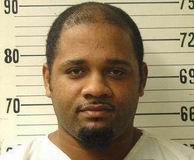 James Stout
Murderer · USA · 1995
James P. Stout and three accomplices were accused of carjacking, abducting and…
1 victim
James Stout
Murderer · USA · 1995
James P. Stout and three accomplices were accused of carjacking, abducting and…
1 victim
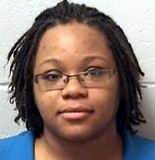 Takeyia Guthridge
Murderer · USA · 2012
Takeyia Guthridge was accused and convicted of killing her mother, Deloise “Dee…
1 victim
Takeyia Guthridge
Murderer · USA · 2012
Takeyia Guthridge was accused and convicted of killing her mother, Deloise “Dee…
1 victim
- Gender
- male
- Country
- USA
- Location
- Oklahoma County, Oklahoma, USA
- Date of birth
- August 15, 1969
- Age at first offence
- 23
- Characteristics
- domestic violence, abuse, arson
- Victim profile
- Lois Frederick, 68 ( his ex-girlfriend's adopted mother )
- Method of murder
- Beating with a croquet mallet
- Date(s) of murder
- February 5, 1992
- Years active
- 1992
- Date of arrest
- Same day
- Status
-
Executed
Executed by lethal injection in Oklahoma on January 18, 2001
Parties and identities
Dion Athanasius Smallwood was convicted of murdering Lois Frederick, 68, and third degree arson. He was executed by lethal injection in Oklahoma on January 18, 2001.
Timeline
- January 18, 2001 — Dion Athanasius Smallwood was executed by lethal injection in Oklahoma State Penitentiary.
- January 18, 2001 (9:09pm) — Smallwood was pronounced dead.
Background
Lois Frederick was the mother of Smallwood's ex-girlfriend. Lois Frederick disapproved of her daughter’s relationship with Smallwood. Their relationship involved numerous incidents of physical abuse.
Lois Frederick lived at an Oklahoma City home with her daughter, who was Smallwood's girlfriend. The daughter had moved back in with her mother about one month before the murder after recently moving out of the apartment she and Smallwood had shared and filing a protective order against him. Smallwood arrived looking for the daughter, who was not home when he arrived.
Smallwood testified that he arrived at Lois Frederick's home intending only to look for her daughter, walked into the residence uninvited knowing he was not welcome, and immediately encountered Lois. Lois asked Smallwood to leave, grabbing his arm. Smallwood pushed her away, causing her to fall over backward.
Smallwood was described as suffering from manic depression, and Dr. Patricia Fleming diagnosed him with bipolar disorder in 1997.
The offence
On February 5, 1992, after forcing his way into Lois Frederick's Oklahoma City home, Smallwood beat Lois Frederick with a croquet mallet, put her in a car, and set the car on fire.
Lois Frederick tried to call police, but Smallwood took the phone from her and smashed it. The confrontation continued with Smallwood conducting a room to room search of the house, looking for the daughter, with Lois in tow.
Smallwood struck Lois again in the face, knocking her to the ground and bloodying her nose. As they entered a bedroom, Lois attempted to clean up by washing blood from her face in an adjoining bathroom. Smallwood testified that Lois came out of the bathroom and kicked him in the shin. He then grabbed a croquet mallet and told Lois he had no "beef" with her.
Smallwood testified that Lois brandished a knife at him and that he struck her once in the head with the croquet mallet. He left Lois in the bedroom after hearing her choking and later said he had no recollection of Lois moving after he initially hit her.
Smallwood then attempted to clean up the house, wiping blood from various surfaces with a pair of Lois's socks, turning the bed mattress to conceal a large blood stain, and placing various items in a trash bag which he took to the garage. He eventually wrapped Lois's body in sheets and a bedspread from the bed and laid her in the back seat of her car.
At about 6:30 pm, Lois's daughter told her aunt during a phone call that Smallwood was going over to kill Lois. Lois's sister called 9-1-1 requesting that someone check on Lois, and Oklahoma City police went to the house to check on her. The officer tried to enter the house after getting no response, but the doors were locked. The officer testified that the daughter arrived home as he was investigating Lois's disappearance and was anxious, frantic, and excited. The officer eventually understood her to say that Smallwood had her mother and that he threatened to kill Lois if the daughter refused to meet him that day. The officer left after looking in the windows of the house and seeing no one.
Smallwood hid in a storage closet to avoid detection when the police officer knocked on the door. Lois's body had already been placed in the car, and Smallwood left the residence in her car after police left the scene.
Smallwood testified that he drove around for some time deciding what to do. He called a friend asking for assistance, telling him he thought he had killed somebody. The friend refused to help. Smallwood stopped at a gas station and purchased gasoline in a plastic container provided by the gas station personnel. Smallwood testified that he splashed gasoline around the outside of the car and on the front seat but denied pouring any on Lois's body.
Crime scene information at trial included that the car had been doused with gasoline and set ablaze, and after extinguishing the fire, a badly burned body was discovered in the back seat of the vehicle. A check run on the vehicle's license number revealed it was registered to Lois Frederick of Oklahoma City. The body was identified as Lois Frederick, and an autopsy revealed that she died as a result of a severe head injury and smoke inhalation. The medical examiner testified that her body was so severely burned it was impossible to determine the extent of the injuries she suffered.
At the trial, it was determined that Smallwood arrived at Lois's home around 4 p.m. during a search that lasted about 2.5 hours. Evidence described included blood spatter at numerous locations throughout the residence, including blood spatter evidence and expert testimony indicating more than one blow with the croquet mallet. Cups in the living room and bedroom showed bloody lip prints, suggesting Lois had been conscious enough to drink from containers at least twice before being beaten and/or bludgeoned into a state of unconsciousness. Photographs of the crime scene showed Lois's burned body with her head and torso facing the passenger's side of the vehicle, differing from Smallwood's testimony.
Smallwood was convicted of murdering Lois Frederick, and the sentencing evidence included the "heinous, atrocious, and cruel" aggravating factor.
Investigation and discovery
On the evening of February 5, 1992, Oklahoma City police and fire fighters were called to the scene of a car fire. After extinguishing the fire, a badly burned body was discovered in the back seat of the vehicle. The vehicle was registered to Lois Frederick. Simultaneously, Oklahoma City police were at Lois's home investigating a missing person's report filed by her family. The body was identified as Lois Frederick, and an autopsy revealed death from severe head injury and smoke inhalation.
Arrest and detention
No arrest details were provided in the supplied record.
Trial
Smallwood was tried in the Oklahoma County District Court by jury trial. The jury convicted him of First Degree Murder and Third Degree Arson in May of 1993.
At trial, the Oklahoma State Pardon and Parole Board and subsequent appellate proceedings described how the state presented evidence that Smallwood beat Frederick with a croquet mallet, strangled her, and set her on fire. The dentures were described as having flown from Smallwood's blows. Trial evidence included that Smallwood smashed Lois's phone so she could not call the police.
Smallwood also testified about placing Lois in the car and denying pouring gasoline on her body. Crime scene photographs and witness testimony were used to show differences from Smallwood's account of her placement and movement.
During the clemency hearing, Assistant Attorney General Bill Humes stated:
"When Lois discovered Dion in her house, she demanded he leave," Assistant Attorney General Bill Humes told members of the Oklahoma State Pardon and Parole Board during a Monday clemency hearing at Oklahoma State Penitentiary.
"That began a two and one-half hour reign of terror that culminated in her death."
Humes also stated:
"The evidence shows Dion hit her with such force the dentures flew from her mouth and across the room," Humes said, adding Frederick was still alive when Smallwood put her into her car and drove around looking for a place to dispose of her body.
During clemency-related reporting and witness accounts, Terri Frederick testified about abuse during their relationship, including choking and a gun pushed into her mouth that knocked out a tooth. Terri Frederick urged clemency and wrote a letter to the Oklahoma clemency board stating:
"I remember my mom begging me to leave him as she was so scared that one day he was going to end up killing me,"
and also wrote that she suffered depression and guilt since her mother's death and had attempted suicide several times.
During trial and related proceedings, evidence included:
- testimony by Terri Jo Frederick that Smallwood had "put knives up to her."
- a letter purportedly written by Lois Frederick describing Smallwood as "mean and dangerous" and stating he had pawned her TV and VCR, stolen her daughter's car, and destroyed her furniture with a knife.
- a document from the Department of Public Safety showing Smallwood had his driver's license revoked for refusing to submit to sobriety tests.
Smallwood had entered a plea of not guilty to allegations and was presumed innocent and required to be found guilty beyond a reasonable doubt. At the guilt and sentencing phases, the record described jury instructions including:
- A bill of particulars instruction and presumption of innocence.
- An instruction that if the jury entertained a reasonable doubt of guilt regarding the charges in the bill of particulars, the court required returning a life sentence without parole or life.
- A requirement that if the jury found aggravating circumstances existed beyond a reasonable doubt, it could impose death; but if it did not unanimously find aggravating circumstances beyond a reasonable doubt, then death was prohibited and the sentence had to be imprisonment for life or life without parole.
The bill of particulars instruction was:
The defendant, Dion A. Smallwood, has entered a plea of not guilty to the allegations of this Bill of Particulars, which casts on the State the burden of proving the material allegations in this Bill of Particulars beyond a reasonable doubt. This Bill of Particulars simply states the grounds upon which the State seeks imposition of the death penalty. It sets forth in a formal way the aggravating circumstance of which the defendant is accused. It is, in itself, not evidence that any aggravating circumstance exist[s], and you must not allow yourselves to be influenced against defendant by reason of the filing of this Bill of Particulars. The defendant is presumed to be innocent of the charge made against him in the Bill of Particulars, and innocent of each and every material element of said charge, and this presumption of innocence continues unless his guilt is established beyond a reasonable doubt. If upon consideration of the evidence, facts, and circumstances in the case, you entertain a reasonable doubt of the guilt of the defendant of the charge made against him in the Bill of Particulars, you must give him the benefit of that doubt and return a sentence of life imprisonment without parole or life. Second Stage Jury Instruction No. 3, R., Vol. III, at 592 (emphasis added).
Should you unanimously find that an aggravating circumstance exists beyond a reasonable doubt, you would be authorized to consider imposing a sentence of death. If you do not unanimously find beyond a reasonable doubt that an aggravating circumstance exists, you are prohibited from considering the penalty of death. In that event, the sentence must be imprisonment for life or imprisonment for life without parole. Second Stage Jury Instruction No. 4, R., Vol. III, at 594 (emphasis added).
The second stage instruction regarding mitigating circumstances included:
- Mitigating circumstances instruction:
- Instruction regarding death penalty imposition and aggravating vs. mitigating balancing:
- Instruction requiring writing for aggravating circumstances and not requiring writing for mitigating circumstances:
If you unanimously find that one or more of the aggravating circumstances existed beyond a reasonable doubt, unless you also unanimously find that such aggravating circumstance or circumstances outweigh the finding of one or more mitigating circumstances, the death penalty shall not be imposed. Second Stage Jury Instruction No. 9, R., Vol. III at 599.
Mitigating circumstances are those which, in fairness and mercy, may be considered as extenuating or reducing the degree of moral culpability or blame. The determination of what are mitigating circumstances is for you as jurors to resolve under the facts and circumstances of this case. Second Stage Jury Instruction No. 8, R., Vol. III at 597.
The law does
Spotted an error, or have more information about this case?