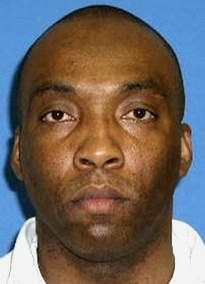
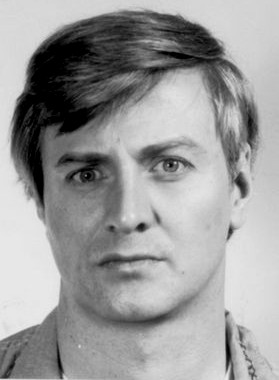
Farley Matchett
Murderer Brian Kevin Rosenfeld
Murderer · USA · 1985
Brian Kevin Rosenfeld Brian Kevin Rosenfeld was sentenced to three concurrent l…
23 victims
Brian Kevin Rosenfeld
Murderer · USA · 1985
Brian Kevin Rosenfeld Brian Kevin Rosenfeld was sentenced to three concurrent l…
23 victims
 Russell Ellwood
Murderer · USA · 1991
Russell Ellwood was a former taxi driver. Authorities suspected him of killing…
20 victims
Russell Ellwood
Murderer · USA · 1991
Russell Ellwood was a former taxi driver. Authorities suspected him of killing…
20 victims
 Robert Martines Perez
Murderer · USA · 1994
Name: Robert Martines Perez · Other name used in proceedings: Robert Martinez P…
15 victims
Robert Martines Perez
Murderer · USA · 1994
Name: Robert Martines Perez · Other name used in proceedings: Robert Martinez P…
15 victims
 Billy Frank Vickers
Murderer · USA · 1993
Billy Frank Vickers Vickers was executed by lethal injection in Texas on Januar…
14 victims
Billy Frank Vickers
Murderer · USA · 1993
Billy Frank Vickers Vickers was executed by lethal injection in Texas on Januar…
14 victims
 Abbas Baqir Abbas
Mass murderer · Sudan · 2000
Abbas Baqir Abbas was identified as a member of the militant Al-Takfir wa al-Hi…
23 victims
Abbas Baqir Abbas
Mass murderer · Sudan · 2000
Abbas Baqir Abbas was identified as a member of the militant Al-Takfir wa al-Hi…
23 victims
 Roy Allen Stewart
Murderer · USA · 1978
Roy Allen Stewart was convicted and sentenced to death for beating, raping and…
1 victim
Roy Allen Stewart
Murderer · USA · 1978
Roy Allen Stewart was convicted and sentenced to death for beating, raping and…
1 victim
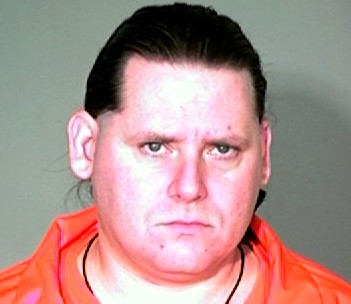 Darrel Pandeli
Murderer · USA · 1992
Darrel Pandeli was convicted of murder and sentenced to death, and his case ret…
2 victims
Darrel Pandeli
Murderer · USA · 1992
Darrel Pandeli was convicted of murder and sentenced to death, and his case ret…
2 victims
 Leo Alexander Jones
Murderer · USA · 1981
Leo Alexander Jones (April 13, 1950 – March 24, 1998) was sentenced to death an…
1 victim
Leo Alexander Jones
Murderer · USA · 1981
Leo Alexander Jones (April 13, 1950 – March 24, 1998) was sentenced to death an…
1 victim
 Venecia DePaula
Murderer · USA · 2009
Venecia DePaula was 32 during the trial and was pregnant with Felipe Perez’s ba…
1 victim
Venecia DePaula
Murderer · USA · 2009
Venecia DePaula was 32 during the trial and was pregnant with Felipe Perez’s ba…
1 victim
 Viktor Dembovskis
Murderer · United Kingdom · 2005
Viktor Dembovskis was convicted of murdering Jeshma Raithatha, 17, in 2005 afte…
1 victim
Viktor Dembovskis
Murderer · United Kingdom · 2005
Viktor Dembovskis was convicted of murdering Jeshma Raithatha, 17, in 2005 afte…
1 victim
- Gender
- male
- Country
- USA
- Location
- Harris County, Texas, USA
- Date of birth
- November 19, 1962
- Age at first offence
- 29
- Characteristics
- crack addict, robbery, drugs
- Victim profile
- Melonee Josey (female, 74) / Uries Anderson (male, 52)
- Method of murder
- Beating with a meat hammer / St abbing with knife
- Date(s) of murder
- July 10-12, 1991
- Years active
- 1991
- Date of arrest
- J uly 15, 1991
- Status
-
Executed
Executed by lethal injection in Texas on September 12, 2006
Overview
Farley Charles Matchett was executed by lethal injection in Texas on September 12, 2006. He was convicted after pleading guilty to the capital murder of Uries Anderson, and the jury sentenced him to death. He also pleaded guilty in related cases and was sentenced to life in prison and 99 years in prison for other attacks committed during a three-day crime spree in July 1991.
People
- Farley Charles Matchett — defendant; executed; death-row prisoner (# 999060)
- Uries Anderson — victim; 52-year-old Houston paint contractor; stabbed and struck in the head with a hammer; body found two days later
- Melonee Josey — victim; 74-year-old woman in Huntsville; killed by striking with a meat hammer after refusing to give money
- Ola Mae Williams / Ola Mac Williams — victim; 91-year-old woman in Huntsville; severely beaten with a hammer after refusing to give money
- Ur ie s Anderson Jr. — Anderson’s eldest son; stated questions about what provoked Matchett and commented on punishment and forgiveness
- Lonnie Anderson — Anderson’s mother
- Lamarcus Anderson — Anderson’s 13-year-old brother
- Brigitte Bardot / Bridget Bardot — anti-death-penalty supporter who wrote to Texas Gov. Rick Perry
- Rick Perry — Texas governor who received a plea for pardon
- Roe Wilson — Harris County assistant district attorney
- Donald Davis — lead trial attorney; “late” as stated in the account
- Robert Morrow — attorney who also represented Matchett during trial
- Roy E. Greenwood — Austin lawyer appointed to represent Matchett in the Huntsville cases
- Sim Lake — U.S. District Judge who denied Matchett’s assertion in a 2003 dismissal order
- Harris County jury — decided that Matchett should die
- Texas Court of Criminal Appeals — affirmed conviction and death sentence
- U.S. Court of Appeals for the Fifth Circuit — considered Matchett’s certificate of appealability application in Matchett v. Dretke
Timeline
- 1981 — Matchett was discharged from the U.S. Army for being absent without leave, fighting with a private, and possession of marijuana.
- 1989 — Matchett was convicted of marijuana possession and sentenced to 6 months’ probation.
- May 1990 — Matchett was convicted of marijuana possession and theft and was sentenced to 6 months’ probation.
- July 11, 1991 — Matchett engaged in an encounter at a residence where he later described the killing of Uries Anderson as self-defense; on the same day in Huntsville, he beat Ola Mae Williams / Ola Mac Williams, 91, on the head with a hammer after she refused to give him money.
- July 12, 1991 — Matchett appeared at Uries Anderson’s Houston home, stabbed Anderson twice in the back, and struck him in the head with a hammer during the robbery; he was also described as having killed Melonee Josey, 74, by striking her on the head with a hammer after she refused to give money.
- July 1991 — Matchett was arrested after he tried to cash forged checks.
- July 14, 1991 — Anderson’s body was found.
- February 22, 1993 — Matchett’s trial began; he pleaded guilty in court and later received a death sentence after jury findings.
- February 26, 1993 — Matchett’s trial ended.
- June 2000 — Donald Davis committed suicide, as stated in Matchett’s claims.
- November 1996 — the Texas Court of Criminal Appeals affirmed the conviction and death sentence.
- 2001 — the Court of Criminal Appeals denied Matchett’s post-conviction application, ruling the trial court’s findings and conclusions were supported by the record.
- May 2002 — the Texas Court of Criminal Appeals denied Matchett’s second post-conviction application as an abuse of the writ.
- 2003 — Sim Lake denied Matchett’s assertion and issued a dismissal order addressing ineffective assistance claims in post-conviction appeals.
- 2004 — Matchett v. Dretke, 380 F.3d 844, is described as involving habeas review.
- January 23, 2004 — Matchett gave a presentation at an anti-death-penalty gathering, as included in the record text.
- September 12, 2006 — Matchett was executed by lethal injection in Texas.
The offence
Matchett became involved in events connected to his drug use and committed attacks during a three-day crime spree in July 1991.
Attack on Ola Mae Williams / Ola Mac Williams
Matchett beat Ola Mae Williams / Ola Mac Williams, 91, on the head with a hammer after she refused to give him money for drugs.
- In one account, the attack occurred in Huntsville and resulted in permanent brain damage.
- The related sentence was described as 99 years in prison for attacking Williams.
Killing of Melonee Josey
Matchett killed Melonee Josey, 74, after she refused to give him money. He struck her with a meat hammer.
- The related sentence was described as life in prison for Josey’s murder.
Robbery and murder of Uries Anderson
Matchett randomly knocked on doors in a northeast Houston neighborhood and then appeared at Uries Anderson’s doorstep to ask for money. Anderson was described as related to Matchett by marriage. Anderson was home alone in one account.
- Anderson gave Matchett a lecture about his drug habit instead of handing over money.
- Matchett stabbed Anderson twice in the back and struck him in the head with a hammer.
- Anderson’s body was found two days later on July 14, 1991.
Matchett was arrested when he tried to cash one of Anderson’s personal checks or, in another account, forged checks with Anderson’s signature.
Matchett’s self-defense claim (as stated by him)
Matchett repeatedly claimed that the killing of Anderson was self-defense. In a letter and other included statements, he said he went to Anderson’s house because Anderson owed him money, described Anderson becoming angry, and described Anderson attacking him with a fist and grabbing a knife near Matchett’s throat. Matchett said he pushed the knife back toward Anderson, and he described the knife as lodging in Anderson’s chest. Matchett said he called paramedics and that Anderson died in surgery shortly after.
Investigation and arrest
Matchett was arrested after trying to cash forged checks connected to Anderson. He later confessed to Houston police about the attacks.
Trial
Guilty pleas and sentencing
Matchett pleaded guilty to the capital murder of Uries Anderson. A Harris County jury decided he should die for fatally stabbing and beating Anderson, and it returned affirmative answers to special issues submitted under the Texas capital murder procedure described in the appellate text.
Matchett also pleaded guilty to:
- Josey’s July 11, 1991 murder, for which he received a life prison sentence.
- The attack on Williams, for which he received 99 years in prison.
Evidence and procedural contentions mentioned in appellate discussion
The case record text included multiple discussions of appellate points and rulings, including procedural questions about the guilty plea timing, sufficiency review standards, mitigation issues, and jury instructions.
Sentencing
The jury imposed death for the robbery-murder of Uries Anderson. The record text described:
- a sentence of death as mandated under the Texas capital murder statute provisions referenced in the appellate opinion;
- life in prison for Josey’s murder;
- 99 years in prison for the attack on Williams.
Appeals
Texas Court of Criminal Appeals
The Texas Court of Criminal Appeals affirmed Matchett’s conviction and death sentence in November 1996. A direct appeal is described as Matchett v. State, 941 S.W.2d 922 (Tex.Cr.App. 1996), and it states that the judgment was affirmed.
The appellate opinion included discussion and rulings on numerous points of error, including but not limited to:
- the trial court procedure for accepting the guilty plea outside the jury’s presence and the sufficiency of the plea in open court;
- various contentions about jury findings on special issues, including dangerousness and mitigation;
- the court’s handling of jury-related issues and questions asked during juror misconduct hearings;
- the refusal to remind the jury that Matchett had pled guilty in the punishment instructions, where the appellate discussion stated that point thirty-seven was overruled.
Federal habeas proceedings and certificate of appealability
Matchett sought federal habeas relief. The United States District Court for the Southern District of Texas denied the petition on procedural grounds, and Matchett applied for a certificate of appealability.
In Matchett v. Dretke, 380 F.3d 844 (5th Cir. 2004), the Court of Appeals held that the petitioner could not use ineffective assistance of his state habeas counsel as “cause” for his procedural default, and it described the application as denied.
Sim Lake issued a 2003 dismissal order that addressed ineffective assistance claims in post-conviction appeals and stated that inmates’ claims of ineffective assistance of counsel in post-conviction appeals was not grounds for court relief. The text also stated that the Supreme Court recognized no constitutional right to an attorney in state appeals.
Supreme Court petition and other appeals
The record text stated that Matchett’s federal and state appeals were denied, and that all of his subsequent appeals in state and federal court were denied.
Execution and last statement
Execution details
Matchett was executed by lethal injection in Texas on September 12, 2006. In one description, he was pronounced dead at 6:16 p.m.
Support and final interactions described in the record text
Anti-death-penalty groups and activists, including French actress Bridget Bardot, latched onto Matchett’s case. In July, Bridget Bardot wrote to Texas Gov. Rick Perry asking for Matchett to be pardoned.
While strapped to a gurney in the death chamber shortly before his lethal injection, Matchett asked his family for forgiveness. One account included that he asked Anderson’s family to “find peace and cancellation with my death and move on.”
Quotes attributed to Matchett
Matchett said in a statement from death row: “I live every day with what happened, and I regret what happened,” and “How much remorse does society want me to show?”
Matchett also expressed a view about execution and freedom, stating: “I'll finally be free. Death is a bridge we all must cross, and if this is my time it's my time,”
and: “If I could turn back the hands of time, I would.”
He also stated in his last statement at execution: “for standing with me throughout this situation. Stay strong and know I am in a better place. I ask for forgiveness.”
He asked the victim’s family to: “find peace in your heart” and “move on.”
Last meal request (as included)
For his last meal, Matchett requested four olives and a bottle of wild-berry flavored water.
Other details
Age, demographics, and relationships
- Matchett was described as 43-year-old at the time of execution.
- Anderson was described as a 52-year-old Houston paint contractor.
- Josey was described as 74 years old.
- Williams was described as 91 years old.
- Anderson was described as having a father of four background, and the record text described Anderson’s family circumstances, including that Anderson’s mother and brother were out of town at the time Matchett was executed.
Matchett’s background and employment
The record text described childhood raised by Matchett’s paternal grandparents in an East Texas town of Madisonville; his teenage mother lived in nearby Midway; he rarely saw his father; he later lived with his mother in Grand Prairie near Dallas.
It described:
- at 13, he began hanging out on streets and running errands for drug dealers and prostitutes;
- when Matchett’s 11-year-old sister was raped, he dropped out of school;
- he joined the U.S. Army and was discharged in 1981 for being absent without leave, fighting with a private, and possession of marijuana;
- after the Army, he worked as a truck driver, school bus driver and landscaper;
- he was described as having at least two chances to quit his “$600-a-day” drug habit and being referred to drug and alcohol programs.
Drug treatment and probation history
The record text described:
- in 1990, he was referred to a drug and alcohol program after he was charged with possession of marijuana, and he never showed up after his first visit;
- a year later, his mother enrolled him in a drug treatment program, but he was discharged after less than a month;
- his mother’s program discharge is also described as occurring “four months before Anderson and Josey were slain” in that narrative account;
- he was described as having no prior felony convictions in one account, but also as having a history of drug abuse and minor offenses in that account.
Prior convictions
The record text included:
- a conviction for marijuana possession and probation in 1989 with a sentence of 6 months’ probation;
- a conviction in May 1990 for marijuana possession and theft with 6 months’ probation;
- a described army discharge in 1981 for specified conduct.
Weapon descriptions
- Anderson was stabbed twice in the back and struck in the head with a hammer.
- Josey was killed after she refused money; Matchett used a meat hammer in one account.
- Williams was beaten with a hammer.
Matchett’s written claims and included quotations
A letter in the record text began: “My name is Farley C. Matchett # 999060 and I’m a death row inmate here in the State of Texas.”
The letter described Matchett’s claimed self-defense, police conduct allegations, and counsel issues. It stated: “I couldn’t see the paper because of my swollen eyes, so the detective led my hand in signing the confession.”
It also described: “Trial began on February 22, 1993 and was over February 26, 1993.”
It included an assertion: “My Court appointed lawyer did literally nothing to defend my rights.”
It included: “He instructed me to plead guilty in order to avoid a death sentence and he would inject the self defense plea later.”
The letter also included claims about the portrayal of the victim’s race and later affidavits and an affidavit-related discussion connected to June 2000.
Anti-death-penalty presentation text included
The record text included a presentation titled as follows: “Presentation By Farley C. Matchett - January 23, 2004”
and included numerous statements about the death penalty, legal references, and appeals for support. The included text contained extensive quotations and statements attributed to Matchett, including:
“Today we gather together to stand united in the fight to abolish the death penalty world wide.”
and:
“I'll finally be free.
and:
“Hope” that man kind will come to the realization that in a civilized society such as ours, this death penalty punishment has no place on the face of this Earth and its eradication comes swiftly.
Execution scheduling and count claims (as included)
The record text included claims that Matchett was scheduled to become the 21st man in Texas to die by lethal injection that year, and described him as:
- the 21st person executed in Texas that year; and
- the 376th put to death in Texas since it resumed capital punishment in 1982, as stated in one narrative account;
- “Texas has six more executions scheduled this year,” as stated in one narrative account.
Spotted an error, or have more information about this case?