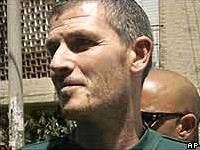
Asher Weisgan
Spree killer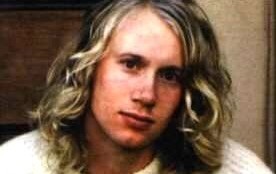 Martin Bryant
Spree killer · Australia · 1996
Martin Bryant was born May 7, 1967, and was the elder of two children of Mauric…
35 victims
Martin Bryant
Spree killer · Australia · 1996
Martin Bryant was born May 7, 1967, and was the elder of two children of Mauric…
35 victims
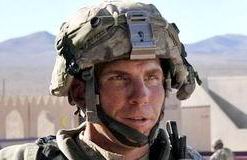 Robert Bales
Spree killer · Afghanistan · 2012
Robert Bales (born June 30, 1973) was a United States Army soldier. He murdered…
16 victims
Robert Bales
Spree killer · Afghanistan · 2012
Robert Bales (born June 30, 1973) was a United States Army soldier. He murdered…
16 victims
 Genildo Ferreira do Franca
Spree killer · Brazil · 1997
Genildo Ferreira de Franca died in a shootout after he released two hostages un…
15 victims
Genildo Ferreira do Franca
Spree killer · Brazil · 1997
Genildo Ferreira de Franca died in a shootout after he released two hostages un…
15 victims
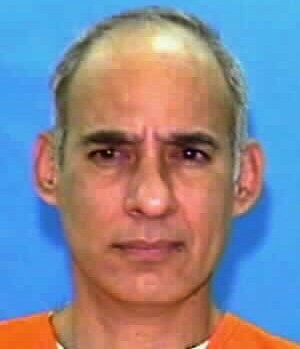 Manuel Valle
Murderer · USA · 1978
Manuel Valle was sentenced to death for the 1978 murder of Officer Louis Pena o…
1 victim
Manuel Valle
Murderer · USA · 1978
Manuel Valle was sentenced to death for the 1978 murder of Officer Louis Pena o…
1 victim
 Christine Malèvre
Serial killer · France · 1997
Christine Malèvre Christine Malèvre (born 1970) was a French serial killer. She…
30 victims
Christine Malèvre
Serial killer · France · 1997
Christine Malèvre Christine Malèvre (born 1970) was a French serial killer. She…
30 victims
 Patrick Tissier
Murderer · Franc e · 1971
Patrick Tissier was born on 24 August 1952 in Bourges. He was one of six childr…
3 victims
Patrick Tissier
Murderer · Franc e · 1971
Patrick Tissier was born on 24 August 1952 in Bourges. He was one of six childr…
3 victims
 Ronnie Joe Neal
Murderer · USA · 2004
Ronnie Joe Neal had prior prison sentences in Texas. TDCJ-ID #525256 reflected…
1 victim
Ronnie Joe Neal
Murderer · USA · 2004
Ronnie Joe Neal had prior prison sentences in Texas. TDCJ-ID #525256 reflected…
1 victim
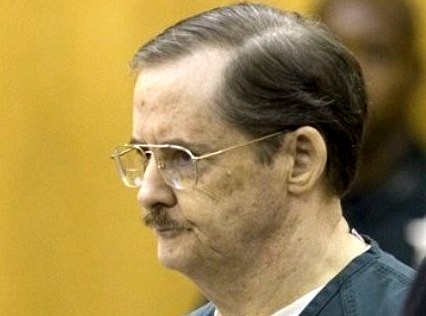 Nelson Serrano
Mass murderer · USA · 1997
Nelson Iván Serrano Sáenz was sentenced to death by lethal injection on June 26…
4 victims
Nelson Serrano
Mass murderer · USA · 1997
Nelson Iván Serrano Sáenz was sentenced to death by lethal injection on June 26…
4 victims
- Gender
- male
- Country
- Israel
- Location
- West Bank, Israel
- Date of birth
- 1966
- Age at first offence
- 39
- Characteristics
- shooting rampage, serial rapist
- Victim profile
- Khalil Muhammad Ra'uf Saleh Wleiwel, Ahmad 'Ali Hassan Mansur, Bassam Mussa Ahmad 'Odeh Tawafshah, and Osama Mussa Ahmad 'Odeh Tawafshah (Palestinians)
- Method of murder
- Shooting
- Date(s) of murder
- August 17, 2005
- Years active
- 2005
- Date of arrest
- Same day (wounded by police)
- Status
-
Died in custody
Sentenced to four consecutive terms of life in prison on September 27, 2006; committed suicide by hanging himself in prison on December 22, 2006
Case identification
- Name: Asher Weisgan
- Birth–death: 1966 – December 22, 2006
- Nationality/occupation: He was an Israeli bus driver.
The offence
On 17 August 2005, Asher Weisgan shot and killed four Palestinians and injured two others in the West Bank settlement of Shiloh. The shooting rampage occurred while he was giving Bassam and Usama Tawafsha and another victim a lift home from work.
Weisgan stole a security guard's gun and opened fire, shooting four Palestinians several times. After reloading, he sought out and shot a fifth victim at his work-place.
The court described the killings as executed with premeditation and in cold blood. The court also ruled that the murders were “savage murder of innocents”.
Victims
Weisgan’s victims were:
- Khalil Muhammad Ra'uf Saleh Wleiwel
- Ahmad 'Ali Hassan Mansur
- Bassam Mussa Ahmad 'Odeh Tawafshah
- Osama Mussa Ahmad 'Odeh Tawafshah
In addition, another man was wounded.
Motivation and stated intent
Weisgan wanted to disrupt the Israeli Government's unilateral disengagement plan in Gaza by sparking a Palestinian reaction. The prosecutors described Weisgan’s hope as using the attack to stop the pullout by forcing redeployment of Israeli troops from Gaza to the West Bank to quell unrest.
Before entering a courthouse outside of Tel Aviv, he declared:
“I'm not sorry for what I did. I hope someone also kills Sharon.”
At his court hearing the day after the killings, he said:
“I am not sorry for what I have done... and I hope someone murders Sharon as well,”
After sentencing, it was stated that Weisgan said he had no regrets and that his actions were a “necessary defence” of the Israeli people. He also expressed the hope that Israeli Prime Minister Ariel Sharon would be assassinated.
Background relationships
Weisgan lived in Shvut Rachel and had known Bassam and Usama Tawafsha from the neighbouring Palestinian hillside village of Sanjal for eight years. It was stated that they had worked together and had used to eat together, and that Weisgan used to ask for their food to take to his wife. It was also stated that they considered him a friend.
A neighbour, Ataf Radi, said:
“Our relationship with him was far better than you could imagine. No one could have expected this.”
Mark, a security officer who preferred not to give his surname, said:
“I hope that the people around us realise that this is the act of a madman, that it does not reflect Shilo or Shuvat Rachel”
Mark also said:
“All of our people are incredibly shocked - blown away - by what happened yesterday... These were guys who I knew, who I liked. I considered them my friends.”
Mark said:
“I think his mind just snapped, because of the history of violence in the area and because of what they presently call the disengagement,”
Investigation and capture
After the killing spree, Weisgan either turned himself in to or was overpowered by security guards at the settlement.
Trial
On September 12, 2006, an Israeli court convicted Asher Weisgan of killing four Palestinians in a West Bank shooting spree the previous year, described as part of a bid to stop Israel's pullout from the Gaza Strip.
The Jerusalem district court convicted Weisgan of murder, attempted murder and serious attempt to harm, prosecutors said. The conviction was for the killing of the Palestinian laborers on Aug. 17, 2005.
The panel of three judges said in its ruling:
“The preservation of life is not done through the spilling of blood,”
Sentencing
On 27 September 2006, a panel of three judges sentenced Weisgan to four consecutive terms of life in prison—for each person he killed—plus an additional twelve years in jail.
The court also ordered him to pay:
- NIS 228,000 in damages to each of the families of the four people killed
- NIS 100,000 to another man who had been wounded
The panel ruled:
“Every one of the victims had a name and an identity... They were the immediate victims of the convicted man's actions and he must be punished for the murders of each and every one of them. It was a savage murder of innocents, who fell victim to the twisted logic of the accused.”
Outcome
Weisgan was convicted and sentenced as described. On December 22, 2006, he committed suicide by hanging himself in prison.
Aftermath and community reaction
In the aftermath, Usama's wife Aisha called for revenge against Israel, the settlers and the then Israeli Prime Minister Ariel Sharon, saying:
“When one of them kills us they say he is crazy, but if an Arab does that to a settler the whole world is up in arms saying he's a terrorist.
They had worked with him (Weisgan) for eight years. They used to say how decent he was, how they used to eat together, how he used to ask them for our food to take to his wife.”
On the steep hillside of Sanjal, Ziyad Sabri said:
“It could happen anytime.
Sometimes they come in the night and attack our homes. You are ready for them, you are not armed like them, but you always have a rock or a stick handy.”
Timeline
- 17 August 2005 — Weisgan shot and killed four Palestinians and injured two others in the West Bank settlement of Shiloh.
- 17 August 2005 — The killing spree occurred while Weisgan was giving Bassam and Usama Tawafsha and another victim a lift home from work.
- September 12, 2006 — The Jerusalem district court convicted Weisgan of killing four Palestinians.
- 27 September 2006 — Weisgan was sentenced to four consecutive terms of life in prison and an additional twelve years in jail.
- December 22, 2006 — Weisgan committed suicide by hanging himself in prison.

Spotted an error, or have more information about this case?