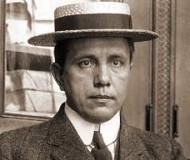
Harry Thaw
Murderer John S. Williams
Murderer · USA · 1910
John S. Williams was convicted of murder and sentenced to life imprisonment on…
18 victims
John S. Williams
Murderer · USA · 1910
John S. Williams was convicted of murder and sentenced to life imprisonment on…
18 victims
 Floyd Allen
Murderer · USA · 1912
Floyd Allen (July 5, 1856 – March 28, 1913) was an American landowner and patri…
5 victims
Floyd Allen
Murderer · USA · 1912
Floyd Allen (July 5, 1856 – March 28, 1913) was an American landowner and patri…
5 victims
 James Russell
Murderer · USA · 1974
James Russell was executed in Texas on September 19, 1991. Russell was charged…
1 victim
James Russell
Murderer · USA · 1974
James Russell was executed in Texas on September 19, 1991. Russell was charged…
1 victim
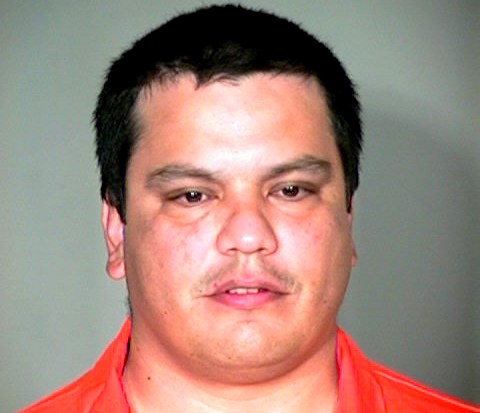 Alfonso Raymond Salazar
Murderer · USA · 1986
Alfonso Raymond Salazar Alfonso Raymond Salazar and Michael Davis entered the T…
1 victim
Alfonso Raymond Salazar
Murderer · USA · 1986
Alfonso Raymond Salazar Alfonso Raymond Salazar and Michael Davis entered the T…
1 victim
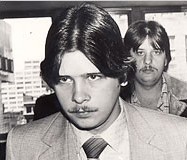 Craig Crimmins
Murderer · USA · 1980
Craig S. Crimmins was a Met stagehand. He was 21 at the time of the conviction…
1 victim
Craig Crimmins
Murderer · USA · 1980
Craig S. Crimmins was a Met stagehand. He was 21 at the time of the conviction…
1 victim
 Jose Luis Calva Zepeda
Serial killer · Mexico · 2004
Jose Luis Calva Zepeda was an aspiring horror writer in Mexico City who was acc…
3 victims
Jose Luis Calva Zepeda
Serial killer · Mexico · 2004
Jose Luis Calva Zepeda was an aspiring horror writer in Mexico City who was acc…
3 victims
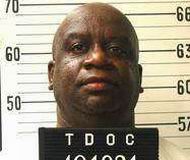 Robert Lee Faulkner
Murderer · USA · 1999
Robert Lee Faulkner was convicted of first degree premeditated murder of his wi…
1 victim
Robert Lee Faulkner
Murderer · USA · 1999
Robert Lee Faulkner was convicted of first degree premeditated murder of his wi…
1 victim
 Angel Nieves Diaz
Murderer · USA · 1979
Angel Nieves Diaz was a male convicted prisoner executed in Florida by lethal i…
3 victims
Angel Nieves Diaz
Murderer · USA · 1979
Angel Nieves Diaz was a male convicted prisoner executed in Florida by lethal i…
3 victims
- Gender
- male
- Country
- USA
- Location
- New York City, New York, USA
- Date of birth
- February 12, 1871
- Age at first offence
- 35
- Characteristics
- jealousy, history of mental illness, rape, kidnapping
- Victim profile
- A rchitect Stanford White
- Method of murder
- Shooting
- Date(s) of murder
- June 25, 1906
- Years active
- 1906
- Date of arrest
- Same day
- Status
-
Died in custody
Found not guilty by reason of insanity on February 1, 1908; incarcerated at the Matteawan State Hospital for the Criminally Insane; released 1915; died on February 22, 1947
Case record: Harry Thaw
Background
Harry Kendall Thaw (February 12, 1871 - February 22, 1947) was the son of Pittsburgh coal and railroad baron William Thaw. He was the brother of South Fork Fishing and Hunting Club member Benjamin Thaw.
Thaw was described as violent and paranoid almost since birth. His mother claimed his problems had started in the womb. He spent his childhood bouncing from private school to private school in Pittsburgh, never doing well, and teachers described him as unintelligible and a troublemaker.
Thaw received admission to the University of Pittsburgh, where he was to read law, though he apparently did little reading. He later used his name and social status to transfer to Harvard University. He later bragged that he had studied poker at Harvard.
Thaw went on long drinking binges, attended cockfights, and spent much of his time romancing young women. He was expelled after being picked up for chasing a cab driver through the streets of Cambridge with a shotgun—though he claimed the shotgun had been unloaded.
After his expulsion, Thaw bounced around between Pennsylvania and New York. He used morphine and cocaine and frequented Broadway shows, which he described as “studying.” He made a habit of studying chorus girls, which brought him into contact with architect Stanford White.
The offence
Thaw was known for the murder of architect Stanford White at Madison Square Garden in 1906.
In the spring of 1906, Harry and Evelyn decided to travel to Europe and New York. On June 25, while in New York, Evelyn and Harry saw Stanford White while dining at the Cafe Martin. After learning that White was to attend the premiere of Mam'zelle Champagne, a show the Thaws were also planning to attend, Harry took Evelyn back to their hotel and disappeared, returning just in time to pick up Evelyn and head to the show. He was dressed in a black overcoat though it was a hot evening.
At the rooftop theatre of Madison Square Garden, the hat check girl repeatedly tried to relieve Harry of his heavy coat, but he refused. During the show, he wandered through the crowd, approaching White's table several times, then back away on each occasion.
During the finale, “I Could Love A Million Girls”, Thaw fired three shots at close range into Stanford White's face, killing him. The crowd initially suspected the shooting might be part of the show. Soon it became apparent that Stanford White was dead.
Thaw, holding the gun aloft, walked through the crowd and met Evelyn at the elevator. When she asked what he had done, Thaw said that he had “probably saved your life.”
In another account, the shooting occurred at the restaurant Cafè Martin and then again later that night at the Madison Square Garden’s roof theatre during Mamzelle Champagne, with Thaw spotting White. In that account, Thaw pulled out a pistol and shot White several times while hundreds of people at the musical watched in horror. Thaw made no attempt to resist arrest and was promptly seized by policemen who rushed to the Garden.
Another account states that Thaw was reportedly exclaiming, “You will never see that woman again!”
Investigation and arrest
After the shooting, the crowd initially suspected the shooting might be part of the show. Thaw held the gun aloft and met Evelyn at the elevator.
Thaw was promptly seized by policemen who rushed to the Garden.
Trial
Timeline
- January 23, 1907 — First murder trial began.
- April 12, 1907 — First trial jury reported deadlocked; judge Fitzgerald adjourned pending retrial.
- January 6, 1908 — Second murder trial began.
- February 1, 1908 — Second trial jury found Thaw not guilty by reason of insanity.
- February 22, 1947 — Thaw died.
Charges and legal positions
Thaw was tried for murder.
First trial
At the first trial, the jury was deadlocked. The jury was reported as having seven jurors finding Thaw guilty of first degree murder and five jurors finding Thaw not guilty by reason of insanity.
The defence pleaded insanity. The prosecution urged the jury to resist an appeal to emotions.
The trial took place before Judge James Fitzgerald, with William Travers Jerome as prosecutor and a defence team including Delphin M. Delmas, John B. Gleason, Clifford Hartridge, Hugh McPike, and George Peabody.
Delphin M. Delmas represented Thaw and conducted the bulk of the defence.
The prosecution included William Travers Jerome, who had been a district attorney and was described as having ambitions to become governor one day.
Judge James Fitzgerald reminded the jury that they could only find Thaw not guilty by reason of insanity if Thaw could not understand at the time of the murder that his actions were wrong.
A quotation attributed to the prosecutor William Travers Jerome described his closing position as: “Will you acquit a cold-blooded, deliberate, cowardly murderer because his lying wife has a pretty girl's face?”
A quotation attributed to Delmas in closing argument described the insanity theory as: “And if Thaw is insane, it is with a species of insanity known from the Canadian border to the Gulf. If you expert gentlemen ask me to give it a name, I suggest that you label it Dementia Americana. It is that species of insanity that inspires of every American to believe his home is sacred. It is that species of insanity that persuades an American that whoever violates the sanctity of his home or the purity of his wife or daughter has forfeited the protection of the laws of this state or any other state.”
Evelyn Nesbit testified at the first trial, and the defence used Nesbit’s testimony as part of the case for insanity. Thaw’s mother told Evelyn that if she would testify that Stanford White abused her and that Harry only tried to protect her, she would receive a divorce from Harry Thaw and one million dollars in compensation. She did testify accordingly.
Evelyn Nesbit’s testimony included the following verbatim passage, given as questioning about events: “Mr. White asked me to come to see the back room and he went through some curtains, and the back room was a bedroom, and I sat down at the table, a tiny little table. There was a bottle of champagne, a small bottle and one glass. Mr. White picked up the bottle and poured the glass full of champagne.… Then he came to me and told me to finish my champagne, which I did, and I don't know whether it was a minute after or two minutes after, but a pounding began in my ears, then the whole room seemed to go around. Everything got very flat.… Then, I woke up, all my clothes were pulled off of me, and I was in bed. I sat up in the bed, and started to scream.”
On April 12, 1907, the jury reported to Judge Fitzgerald it could not reach a verdict and was deadlocked. Judge Fitzgerald adjourned the court pending a retrial.
Second trial
The second trial began January 6, 1908. Judge Victor J. Dowling replaced Judge Fitzgerald. William Travers Jerome remained the prosecutor.
Thaw had a new team of defence lawyers: Martin W. Littleton, Daniel O'Reilly, and Russell Peabody.
Essentially the same witnesses, including Nesbit, testified as in the first trial. The jury returned a verdict on February 1, 1908 after a trial of less than four weeks.
On February 1, 1908, after pleading insanity, the jury found Thaw not guilty by reason of insanity.
Significance of the insanity defence
Thaw’s attorneys took the insanity defence to murder to new extremes, arguing that Thaw suffered from “dementia Americana,” described as a condition supposedly unique to American men that caused Thaw to develop an uncontrollable desire to kill White after he learned of White’s previous affair with Nesbit.
Outcome
Thaw was incarcerated at the Matteawan State Hospital for the Criminally Insane.
Appeals
No appeal outcome was stated.
Aftermath
Incarceration, release, and escape
After the second trial verdict on February 1, 1908, Judge Dowling sent Thaw to the Asylum for the Criminally Insane at Matteawan, New York.
He was later released 1915. In 1913 he walked out of the asylum and was driven over the border to Sherbrooke, Quebec, and he was extradited back to the United States.
Another account described Thaw enjoying almost total freedom at Matteawan and strolled out of the asylum in 1913, being driven to Sherbrooke, Quebec. He was extradited back to the U.S., and in 1915 was released from custody after being judged sane.
Second adjudicated insanity and later confinement
The year after his release, Thaw was accused of sexually assaulting and horsewhipping Fred B. Gump, Jr., a teen-aged boy. He was adjudicated insane and sent to an asylum where he spent seven years, being released in 1924.
Another account described Thaw being arrested in 1917 for kidnapping and whipping 19-year-old Frederick Gump nearly to death, with Mother Thaw arranging that he be sent to a Pennsylvania insane asylum where he stayed until 1924.
Later life and legal events
In 1924, Thaw purchased a historic home known as Kenilworth in Clearbrook, a farming community in Frederick County, Virginia.
While living at Kenilworth, he joined the Rouss Fire Company and marched in local parades in his fireman’s uniform. He was regarded as an eccentric by citizens of Clearbrook but did not appear to have run into additional legal trouble.
In the late 1920s, Thaw went into the film production business based on Long Island. He attempted to make short comedies and stories about fake spiritualists.
In 1927, he contracted with John S. Lopez and famed detective-story author Arthur B. Reeve for a batch of scenarios continuing the fake spiritualism theme. The scenarios were not paid for, leading to a lawsuit when Thaw switched emphasis and attempted to film a story of his own life. The suit resulted in a $7000 judgment for Lopez in 1935.
In 1944 he sold the Kenilworth home and moved to Florida.
After 1924, Thaw was periodically in the news in connection with wild parties or lawsuits by showgirls alleging he had beaten and whipped them.
Death, burial, and will
Thaw died of a heart attack in Miami in 1947 at age 76. He died on February 22, 1947. He left $10,000—less than 1% of his fortune—to Evelyn Nesbit in his will. He was buried in Allegheny Cemetery, Pittsburgh.
Other details
Early relationship with Evelyn Nesbit and marriage
Evelyn Nesbit was described as a chorus girl from the show Florodora. Thaw met her after arranging to meet her at a party, based on White’s attention to her. White warned Nesbit, and Nesbit for a while avoided Thaw.
Thaw arranged an opportunity after a bout of presumed appendicitis put Nesbit in the hospital. Thaw came in bearing gifts and praise, impressing both Nesbit’s mother and the headmistress at the boarding school she attended.
Later, under Stanford White’s orders, Nesbit was moved to a sanatorium in upstate New York, where both White and Thaw visited often though never at the same time.
Thaw remained an ardent admirer of Nesbit. After her release from the sanatorium, Thaw invited her and her mother to visit Paris with him. In Europe, Thaw spent vast sums of money on Evelyn and her mother and proposed marriage to Evelyn, who demurred. Thaw continued to press her for her hand for several weeks.
Under duress, Evelyn admitted to Thaw that Stanford White had taken her virginity and that she was unworthy to be Thaw’s wife. Thaw remained enraged but continued his desire for marriage.
He packed Mrs. Nesbit off to New York and took Evelyn to an isolated German castle, where he forced himself on Evelyn and beat her repeatedly with a dog whip. Evelyn stayed with Thaw out of fear, and she later convinced him to let her return to New York.
Evelyn was described as giving in under continued pressure over several years. Thaw’s mother arrived at Evelyn’s doorstep and announced that she wished for Evelyn to marry her son, describing that settling down would help curb Harry’s “eccentricities.” Evelyn married Thaw and returned to Pittsburgh to live with Harry and Mother Thaw.
Thaw’s obsession with Evelyn seemed to wane after marriage; he sometimes disappeared to Europe or elsewhere for days.
Thaw ultimately killed Stanford White. After the first murder trial, he moved back to Pittsburgh and immediately divorced Evelyn.
Evelyn had given birth during Thaw’s incarceration and claimed the child, Russell Thaw, was Harry’s. Thaw denied this.
Another account stated that Thaw and Evelyn were married on April 4, 1905 and described that Thaw took Nesbit to Europe for their honeymoon and reportedly began to whip and beat her, and that Thaw forced her to repeat intimate details of her relationship with White.
Evelyn Nesbit’s biography included that she was born December 25, 1884 in Tarentum, Pennsylvania. Her family was left destitute when her father, a lawyer named Winfield Scott Nesbit, died in 1893 leaving substantial debts. By the time she reached adolescence, her beauty attracted local artists, and she worked as an artist’s model. In 1901, when Evelyn was sixteen, she and her mother moved to New York City where she posed for painter Frederick Church and photographer Rudolf Eickemeyer.
Charles Dana Gibson used Evelyn as the inspiration for illustrations of the “Gibson Girl.” As a Florodora chorus girl on Broadway, Evelyn attracted Stanford White, then 47 to her 16. White had installed strategically placed mirrors and a red velvet swing in his tower apartment at Madison Square Garden.
The affair between White and Evelyn lasted for three years. White ultimately got Nesbit intoxicated and raped her when she passed out, according to the trial account.
Another account stated that Evelyn left White early in 1905 for Harry Thaw. It also described that after Stanford White died, there were two murder trials and that at the second trial Evelyn testified on his behalf while he pleaded temporary insanity.
That account included that Thaw’s mother promised Evelyn a quiet divorce and a one million dollar divorce settlement if she testified that Stanford White had raped her and that Harry had only tried to avenge her honor. Evelyn got the divorce but not the money, and was cut off financially by Thaw’s mother.
It also described that when Evelyn took the witness stand, she was sketched by artist C, Allan Gilbert and that when the drawing ran in the New York Evening World, thousands of copies of her costume began appearing on young ladies in town.
Evelyn later married Jack Clifford (1880-1956, born Virgil James Montani) in 1916. He left her in 1918, and she divorced him in 1933.
In 1926, several months after she attempted suicide after losing her job as a dancer at the Moulin Rouge Café in Chicago, Nesbit gave an interview to the New York Times stating that she and Harry K. Thaw were reconciled, but nothing came of the renewed relationship. She lived quietly for several years in Northfield, New Jersey.
Representative trial cast and court details
Defence lawyers:
- First trial: Delphin M. Delmas, John B.
- Second trial: Martin W.
Chief prosecutor: William Travers Jerome.
Judges:
- First trial: James Fitzgerald.
- Second trial: Victor J. Dowling.
Trial place: New York, New York.
Dates of trials:
- First trial: January 23—; April 12, 1907.
- Second trial: January 6— February 1, 1908.
Verdicts:
- First trial: None; jury deadlocked.
- Second trial: Not guilty by reason of insanity.
Popular culture and non-fictional accounts
Actor Jack Oakie recounted that in the 1930’s, while doing a stage routine, he mentioned “Madison Square Garden — where Harry Thaw murdered Stanford White”. According to Oakie, a man in the audience screamed and fainted, reportedly it was Harry Thaw.
Non-fictional accounts named included:
- The Architect of Desire - Suzannah Lessard
- Glamorous Sinners - Frederick L. Collins
- Evelyn Nesbit and Stanford White: Love and Death in the Gilded Age - Michael Mooney
- The Murder of Stanford White - Gerald Langford
- The Traitor - Harry K. Thaw
- The Girl in the Red Velvet Swing - Charles Samuels - 1953
- The Story of my Life - Evelyn Nesbit Thaw - 1914
- Prodigal Days - Evelyn Nesbit Thaw - 1934
A fictionalised Thaw appeared in Jed Rubenfeld's 2006 novel The Interpretation Of Murder.
Fictional accounts and adaptations
A fictionalised account included:
- The Girl in the Red Velvet Swing (1955 movie)
- The 1975 historical fiction novel Ragtime by E. L. Doctorow adapted into the two below works:
- The film Ragtime
- The musical Ragtime
- “Dementia Americana” — a long narrative poem by Keith Maillard (1994)
- My Sweetheart's the Man in the Moon – play by Don Nigro
- La fille coupée en deux – movie by Claude Chabrol (2007)
Spotted an error, or have more information about this case?