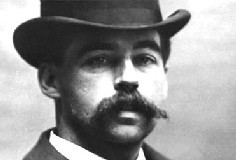
Herman Webster Mudgett
Serial killer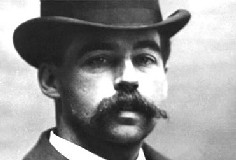 Herman Webster Mudgett
Serial killer · USA - Canada · 1886
Herman Webster Mudgett (May 16, 1861 – May 7, 1896), better known under the ali…
27 victims
Herman Webster Mudgett
Serial killer · USA - Canada · 1886
Herman Webster Mudgett (May 16, 1861 – May 7, 1896), better known under the ali…
27 victims
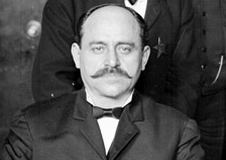 Johann Otto Hoch
Serial killer · USA · 1890
Johann Otto Hoch (1855 - 1906) was the most famous and last-used alias of a Ger…
15 victims
Johann Otto Hoch
Serial killer · USA · 1890
Johann Otto Hoch (1855 - 1906) was the most famous and last-used alias of a Ger…
15 victims
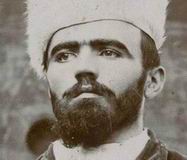 Joseph Vacher
Serial killer · France · 1894
Joseph Vacher (November 16, 1869 – December 31, 1898) was a French serial kille…
11 victims
Joseph Vacher
Serial killer · France · 1894
Joseph Vacher (November 16, 1869 – December 31, 1898) was a French serial kille…
11 victims
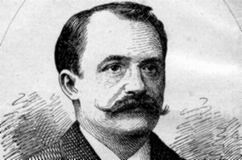 Hugo Schenk
Serial killer · Austria · 1883
Hugo Schenk was executed by hanging on April 22, 1884. · April 22, 1884 — Hugo…
6 victims
Hugo Schenk
Serial killer · Austria · 1883
Hugo Schenk was executed by hanging on April 22, 1884. · April 22, 1884 — Hugo…
6 victims
 Taiana Matheny
Murderer · USA · 2005
Taiana Matheny was a Tucson woman accused of luring two Omaha, Neb., men to the…
2 victims
Taiana Matheny
Murderer · USA · 2005
Taiana Matheny was a Tucson woman accused of luring two Omaha, Neb., men to the…
2 victims
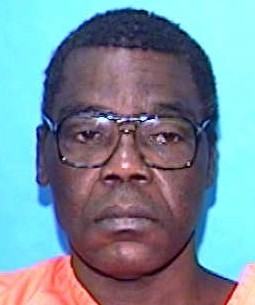 Dean Kilgore
Murderer · USA · 1978
Dean Kilgore (DOB: 10/16/50) was the appellant in Dean Kilgore, Appellant, vs.…
2 victims
Dean Kilgore
Murderer · USA · 1978
Dean Kilgore (DOB: 10/16/50) was the appellant in Dean Kilgore, Appellant, vs.…
2 victims
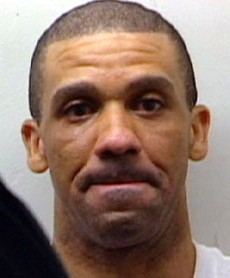 Napoleon Beazley
Homicide · USA · 1994
Napoleon Beazley was a 17-year-old offender who was convicted of capital murder…
1 victim
Napoleon Beazley
Homicide · USA · 1994
Napoleon Beazley was a 17-year-old offender who was convicted of capital murder…
1 victim
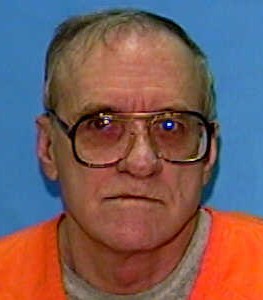 Lloyd Chase Allen
Murderer · USA · 1991
Lloyd Chase Allen was convicted and sentenced to death for the November 13, 199…
1 victim
Lloyd Chase Allen
Murderer · USA · 1991
Lloyd Chase Allen was convicted and sentenced to death for the November 13, 199…
1 victim
- Gender
- male
- Country
- USA - Canada
- Location
- Indiana/Pennsylvania/Illinois, USA - Canada
- Date of birth
- May 16, 1861
- Age at first offence
- 25
- Characteristics
- torture, to collect insurance money
- Victim profile
- Men, women and children
- Method of murder
- Several
- Date(s) of murder
- 1886 - 1894
- Years active
- 1886–1894
- Date of arrest
- November 17, 1894
- Status
-
Executed
Executed by hanging at Moyamensing Prison, Philadelphia, on May 7, 1896
Case identification
Herman Webster Mudgett (May 16, 1861 – May 7, 1896), better known under the alias of “Dr. H. H. Holmes” and also referred to under the alias “Dr. Henry Howard Holmes,” was an American serial killer.
Background
Mudgett was born in Gilmanton, New Hampshire, son of Levi Horton Mudgett and his wife, formerly Theodate Page Price.
He was described as earning a doctor’s degree from the University of Michigan.
Mudgett stole bodies from the school laboratory while enrolled at the University of Michigan Medical School and disfigured the corpses, claiming that the people had been accidentally killed. He collected insurance money from policies he had taken out on the bodies.
He married Clara A. Lovering of Alton, New Hampshire on 8 July 1878.
He married Myrta Z. Belknap bigamously on 28 January 1887 in Minneapolis, Minnesota, and they had a daughter named Lucy.
A divorce petition from his first wife after marrying his second wife never became final.
He married his third wife, Georgiana Yoke, on 9 January 1894.
Mudgett was also described as being the lover of Julia Smythe, the wife of Ned Connor, one of his trusted associates. Julia Smythe later became one of his victims.
The offence
Mudgett opened a hotel in Chicago for the 1893 World’s Fair, referred to as “The Castle,” which was built with a maze of over one hundred windowless rooms.
Over a period of three years, he selected female victims from among the hotel’s guests, and he tortured and murdered victims in chambers fitted with gas lines that permitted Mudgett to asphyxiate victims at any time. He repeatedly changed builders during construction.
Once dead, victims’ bodies went by chute to the basement, where they were either sold to medical schools or cremated and placed in lime pits for destruction. He also cremated some bodies or placed them in lime pits for destruction.
His operations were described as involving furnaces, pits of acid, bottles of poisons, and a stretching rack.
He used the remote rooms in “The Castle” to perform hundreds of illegal abortions, and some patients died as a result. Their corpses were also processed and skeletons sold.
He was described as fleeing Chicago after the World’s Fair and apparently continuing to murder people while traveling around the country. The period following Chicago included murders during which only certain bodies were discovered.
Mudgett was put on trial for murder and confessed to 27 murders (in Chicago, Indianapolis and Toronto) and six attempted murders. It was also stated that he confessed to 27 murders.
A number of sources in the provided material described the number of victims as typically estimated between 20 and 100, and sometimes higher, including estimates as high as 200, 230, and 250.
Investigation
While Mudgett was in prison in Philadelphia, Chicago police investigated his operations in Chicago, and Philadelphia police began to unravel the Pitezel situation, including what had happened to the missing children.
Philadelphia detective Frank Geyer was assigned to find the children.
In the course of searching for the missing children, Geyer’s quest for their remains received wide publicity. His eventual discovery of their remains was described as sealing Mudgett’s fate.
Arrest
Mudgett was arrested in 1895 when he was discovered with the body of Benjamin Pitezel and three of Pitezel’s children.
It was also stated that a fire of mysterious origin consumed the building on August 19, 1895 and that “The Castle” burned to the ground.
He was also described as being arrested in Boston on November 17, 1894 after being tracked there from Philadelphia by the Pinkertons, held on an outstanding warrant for horse theft in Texas, and later facing investigation leading to arrest in relation to the insurance scheme.
Trial
While Mudgett sat in prison in Philadelphia, the Chicago Police investigated his operations in Chicago.
He was put on trial for murder involving Pitezel and confessed following his conviction to 27 murders in Chicago, Indianapolis and Toronto, and six attempted murders.
It was stated that the trial began in Philadelphia shortly before Halloween 1895 and lasted six days.
The jury returned a guilty verdict after two and half hours of deliberation, and it was stated that the judge passed a sentence of death on November 30.
He was said to have appealed to the Pennsylvania Supreme Court, which affirmed the verdict, and the governor refused to intervene.
His conviction was described as being appealed to the Pennsylvania Supreme Court, where it was affirmed.
Sentencing
He was sentenced to death for the murders of Pitezel and his children.
Appeals
The Supreme Court of Pennsylvania affirmed the verdict, and the governor refused to intervene.
Outcome
Mudgett was hanged on May 7, 1896 at Moyamensing Prison, also known as the Philadelphia County Prison.
He remained calm and amiable until his death.
It was stated that he requested burial in concrete so no one could dig him up and dissect his body; this request was granted.
A quote about the execution was included: “Ready, Dr. Holmes?”, and Holmes replied: “Yes. Don’t bungle.”
It was also stated that his neck did not snap immediately and he died slowly and painfully of strangulation over about 15 minutes, with him pronounced dead 20 minutes after the trap was sprung.
Aftermath
Marion Hedgepeth, who had been pardoned for informing on Mudgett, was shot and killed by a police officer during a hold up at a Chicago saloon on New Year’s Eve, 1910.
A story in the Chicago Tribune dated March 7, 1914 reported the death of the former caretaker of “The Murder Castle,” Pat Quinlan. Quinlan was described as committing suicide by taking strychnine, and it was reported that his death meant “the mysteries of Holmes’ Castle” would remain unexplained.
Mudgett was buried at Holy Cross Cemetery in Yeadon, with his coffin described as being filled with cement and his body covered with more cement.
It was also stated that the Wistar Institute wanted to buy his brain but he did not allow it.
The lot where “The Castle” was located was stated as later occupied by a U.S. Post Office building.
Timeline
- 8 July 1878 — Mudgett married Clara A. Lovering of Alton, New Hampshire.
- 28 January 1887 — Mudgett married Myrta Z. Belknap in Minneapolis, Minnesota.
- 9 January 1894 — Mudgett married Georgiana Yoke.
- Nov. 17, 1894 — Mudgett was arrested in Boston after being tracked there from Philadelphia by the Pinkertons.
- Aug. 19, 1895 — “The Castle” burned to the ground.
- Nov. 30 — The judge passed a sentence of death.
- May 7, 1896 — Mudgett was hanged at Moyamensing Prison in Philadelphia.
- New Year’s Eve, 1910 — Marion Hedgepeth was shot and killed by a police officer during a hold up at a Chicago saloon.
- March 7, 1914 — Pat Quinlan’s death was reported in the Chicago Tribune.
Other details
Mudgett was described as sometimes being referred to under the alias of “Dr. Henry Howard Holmes” and as “Dr. H. H. Holmes.”
It was stated that he confessed to 27 murders and six attempted murders and that he was paid $7,500 by the Hearst Papers in exchange for this confession.
Mudgett gave various contradictory accounts of his life, initially claiming innocence and later claiming he was possessed by Satan.
It was stated that while in jail he requested to be buried in concrete so he could not be dissected, and the request was granted.
A letter to Carrie Pitezel from Alice Pitezel was provided with dated quotations:
- “Just arrived Philadelphia this morning ... I am going to the Morgue after awhile ... We stopped off at Washington, Md., this morning, and that made it six times that we transferred to different cars ... Mr. H says that I will have a ride on the ocean. I wish you could see what I have seen. I have seen more scenery than I have seen since I was born ... You had better not write to me here for Mr. H. says that I may be off tomorrow.”
- “I have to write all the time to pass away the time ... Mama have you ever seen or tasted a red banana? I have had three. They are so big that I can just reach around it and have my thumb and next finger just tutch. I have not got any shoes yet and I have to go a hobbling around all the time. Have you gotten 4 letters from me besides this? ... I wish that I could hear from you ... I have not got but two clean garments and that is a shirt and my white skirt. I saw some of the largest solid rocks that I bet you never saw. I crossed the Patomac river.”
A detail about executions crowds was included: “There was a good deal of fin de siecle brutality about the crowds. There was nothing that they could possibly see, but the high forbidding walls. There was nothing they could hear. Yet they all seemed drawn to the spot by some morbid fascination. Coarse jests were bandied from lip to lip as the crowd surged to and fro.”
A detail about Holmes’ actions on the day of execution was included: “Take your time, old man.”
A detail about an Inquirer account published on the same day was included: “Death was indeed merciful to the man who in his life had shown so little mercy,” and “With the springing of the trap, his neck had been broken.”
Carrie Pitezel’s quoted statement was included: “Yes, it is a relief to me to know that he did not succeed in escaping the gallows. Still, that does not bring my husband and my poor little children back to me.”
A separate quoted passage attributed to Holmes’ confession included: “These were particularly sad deaths, both on account of the victims being exceptionally upright and virtuous women and because Mrs. Sarah Cook, had she lived, would have soon become a mother.”
A quote attributed to Holmes about burning a victim alive was included:
“I proceeded to burn him alive by saturating his clothing and his face with benzine and igniting it with a match. So horrible was this torture that in writing of it I have been tempted to attribute his death to some humane means--not with a wish to spare myself, but because I fear that it will not be believed that one could be so heartless and depraved.”
The material also included a quote attributed to Holmes as part of his confession about planning Pitezel’s murder:
“furnishes a very striking illustration of the vagaries in which the human mind will, under certain circumstances, indulge,”
and “the seeking of buried treasure at the rainbow’s end.”
Victims referenced in the record
Benjamin Pitezel (with three of his children: Alice, Nellie, and Howard) was referenced as being discovered with Mudgett.
Pitezel’s wife, Carrie Pitezel (also referred to as Carrie Canning in some passages), was referenced in relation to identification and insurance matters.
Julia Smythe and her husband Ned Connor were referenced.
Sarah Cook was referenced in the confession quote.
Pat Quinlan was referenced as a former caretaker of “The Murder Castle.”
Marion Hedgepeth was referenced as a convicted train robber and as pardoned for informing on Mudgett.
Georgiana Yoke was referenced as Mudgett’s third wife, and the record described her as a witness for the state in connection with the trial.
Other names were referenced as being involved in various contexts connected to Mudgett’s activities, including Clara A. Lovering, Myrta Z. Belknap, Lucy, Ned Connor, Julia Smythe, Minnie Williams, Nannie Williams, Eugene Smith, Frank Geyer, Colonel Jeptha Howe, W. E. Gary, Frank P. Geyer, Marion Hedgepeth, Pat Quinlan, Dr. Robert Leacock, Dr. Russell, Mr. Rodgers, Lizzie, Emeline Cigrand, Minnie Williams, and Nannie Williams.

Spotted an error, or have more information about this case?