
Gregory Madej
Murderer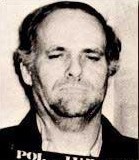 Ervil LeBaron
Murderer · USA · 1972
Ervil Morrell LeBaron (1925 to August 16, 1981) was the leader of a polygamous…
35 victims
Ervil LeBaron
Murderer · USA · 1972
Ervil Morrell LeBaron (1925 to August 16, 1981) was the leader of a polygamous…
35 victims
 Brian Kevin Rosenfeld
Murderer · USA · 1985
Brian Kevin Rosenfeld Brian Kevin Rosenfeld was sentenced to three concurrent l…
23 victims
Brian Kevin Rosenfeld
Murderer · USA · 1985
Brian Kevin Rosenfeld Brian Kevin Rosenfeld was sentenced to three concurrent l…
23 victims
 Marvin Gray
Murderer · USA · 1975
Marvin Gray was convicted killer who claimed responsibility for 23 slayings and…
23 victims
Marvin Gray
Murderer · USA · 1975
Marvin Gray was convicted killer who claimed responsibility for 23 slayings and…
23 victims
 Yahweh ben Yahweh
Murderer · USA · 1980
Yahweh ben Yahweh was born and legally named Hulon Mitchell Jr. (October 27, 19…
23 victims
Yahweh ben Yahweh
Murderer · USA · 1980
Yahweh ben Yahweh was born and legally named Hulon Mitchell Jr. (October 27, 19…
23 victims
 Russell Ellwood
Murderer · USA · 1991
Russell Ellwood was a former taxi driver. Authorities suspected him of killing…
20 victims
Russell Ellwood
Murderer · USA · 1991
Russell Ellwood was a former taxi driver. Authorities suspected him of killing…
20 victims
 Claude Dallas
Murderer · USA · 1981
Claude Lafayette Dallas Jr. was born March 11, 1950. He was a self-styled mount…
2 victims
Claude Dallas
Murderer · USA · 1981
Claude Lafayette Dallas Jr. was born March 11, 1950. He was a self-styled mount…
2 victims
 Manuel Machado Alvarez
Murderer · USA · 1987
Manuel Machado Alvarez was tried with co-defendant Belinda Denise Ross. · May 7…
1 victim
Manuel Machado Alvarez
Murderer · USA · 1987
Manuel Machado Alvarez was tried with co-defendant Belinda Denise Ross. · May 7…
1 victim
 Terence Andrus
Murderer · USA · 2008
Terence Andrus was a Black man. He was male, with black hair, brown eyes, a hei…
2 victims
Terence Andrus
Murderer · USA · 2008
Terence Andrus was a Black man. He was male, with black hair, brown eyes, a hei…
2 victims
 Yudenia Rodriguez
Murderer · USA · 2013
Yudenia Rodriguez, the accused. · Sonia Santiesteban, 65, Rodriguez’s mother an…
1 victim
Yudenia Rodriguez
Murderer · USA · 2013
Yudenia Rodriguez, the accused. · Sonia Santiesteban, 65, Rodriguez’s mother an…
1 victim
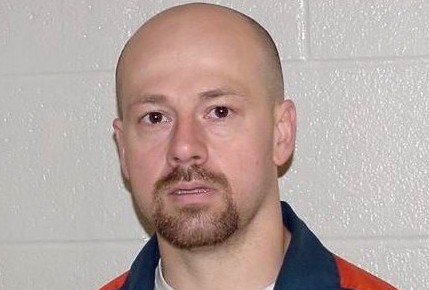 John Thomas Wolfenbarger
Mass murderer · USA · 2002
John Thomas Wolfenbarger, 31, of Detroit, was convicted of murdering a jeweler…
5 victims
John Thomas Wolfenbarger
Mass murderer · USA · 2002
John Thomas Wolfenbarger, 31, of Detroit, was convicted of murdering a jeweler…
5 victims
- Gender
- male
- Country
- USA
- Location
- Chicago, Illinois, USA
- Date of birth
- August 25, 1959
- Age at first offence
- 22
- Characteristics
- rape, abuse, alcohol, domestic violence
- Victim profile
- Barbara Doyle, 38
- Method of murder
- St abbing with knife
- Date(s) of murder
- August 23, 1981
- Years active
- 1981
- Date of arrest
- Same day
- Status
-
Life imprisonment
Sentenced to death in 1982; on January 10, 2003, the Governor of Illinois commuted Madej's capital sentence to life in prison without possibility of parole; the Illinois Supreme Court held the commutation valid in 2004; in 2002 a district court issued a writ of habeas corpus requiring Illinois to give Madej a new sentencing hearing within 60 days; the Seventh Circuit affirmed the denial of the state's request for relief under Rule 60(b) and did so without prejudice to Madej's opportunity to ask the district judge for supplemental relief
Case record: Gregory Madej
Status and procedural posture
Gregory Madej was sentenced to death in 1982. On January 10, 2003, the Governor of Illinois commuted his capital sentence to life in prison without possibility of parole. The Illinois Supreme Court held the commutation valid. A district court issued a writ of habeas corpus in 2002 requiring Illinois to give Madej a new sentencing hearing within 60 days, and later denied relief on reconsideration. The state’s requests seeking to avoid or vacate aspects of that writ were rejected, and the Seventh Circuit affirmed the denial of the state's request for relief under Rule 60(b), without prejudice to Madej's opportunity to seek supplemental relief through the contempt process, a conditional writ, or both.
People involved
- Gregory Madej — defendant; Polish national in Illinois
- Barbara Doyle — victim; 38-year-old; owner of the car in which Madej fled from police
- Hojamoto — “a friend” named by Madej as driving the victim’s car
- Consul General for the Republic of Poland in Chicago — intervenor-appellant in Illinois proceedings
- Kenneth R. Briley — warden; Stateville Correctional Center; Respondent-Appellant in the Seventh Circuit proceeding
- Marc R. Kadish — counsel (submitted) for Petitioner in the Seventh Circuit proceeding
- Marie Quinlivan Czech — counsel for Respondent in the Seventh Circuit proceeding
- Director of Corrections — entity to receive a certified copy of the mandate directing execution
- Tamms Correctional Center — referenced as a place to which a mandate was transmitted
- Circuit court of Cook County — court of original proceedings and later petitions
- Illinois Supreme Court — reviewed and ruled in multiple matters including the validity of the commutation
- United States Court of Appeals for the Seventh Circuit — reviewed the denial of Rule 60(b) relief and related petition
- EASTERBROOK, ROVNER, POSNER — Circuit Judges on the Seventh Circuit panel
Background
Gregory Madej was born in Kielce, Poland in 1959. Although his family had emigrated from Poland to the United States when Gregory was still a small child, neither he nor his parents became US citizens. The Madej family joined a large Polish community in Chicago and maintained strong ties with their native country.
At home, Gregory and his mother were subjected to abuse from his father, an alcoholic. Gregory intervened on more than one occasion to save his mother from beatings.
Madej’s family’s citizenship status and his Polish nationality were central to the consular-related issues. The Polish Consulate in Chicago remained unaware of Madej’s predicament for 17 years until they were contacted by defense attorneys in May of 1998.
Barbara Doyle was the owner of the car in which Madej fled from police. She was 38 years old.
Poland employed the death penalty at the time of Madej’s arrest in 1981. Poland abolished its death penalty effective January 1, 1998.
The offence
In 1981, Gregory Madej led police on a car chase through Chicago. When police arrested him, his hands and head had blood on them, and his shirt, pants, and underpants were heavily stained with blood. He also had deep scratches on his face and scratches on his chest, arms, and back.
Shortly after Madej’s arrest, Barbara Doyle, the owner of the car in which he fled from police, was found in an alley on the northwest side of Chicago. Doyle was naked and had died from multiple stab wounds. Her missing clothes were found in the car Madej was driving.
After his arrest, Madej told police that a friend named Hojamoto was driving the victim’s car. Madej rode around with Hojamoto. Hojamoto jumped from the car a block before police overtook it.
At trial, Madej testified that he was in the car with the victim and twice had consensual sex with her. He explained that the victim pulled a knife during an argument over drugs. They struggled, and the victim began bleeding. He then threw her from the car and left the scene.
Madej was convicted of murder, armed robbery, rape, and deviate sexual assault and sentenced to death.
A violent argument broke out during which Doyle was repeatedly stabbed.
Madej was later apprehended by police while driving the victim’s car. His clothes were stained with Barbara Doyle’s blood, and a bloody knife was found in the car together with the victim’s bloodstained clothes.
In recordings of the exchange with police headquarters, officers in the patrol car in pursuit of Madej were heard referring to both a passenger and a driver in the car ahead. This second occupant was never identified, and tapes of the exchange have reportedly been mislaid. At trial, police testimony denied any reference to a second suspect.
Investigation and arrest
Police arrested Madej after he led them on a car chase through Chicago. At the time of arrest, his hands and head had blood on them, and his shirt, pants, and underpants were heavily stained with blood.
Madej told police that a friend named Hojamoto was driving the victim’s car. Madej rode around with Hojamoto, who jumped from the car a block before police overtook the car.
Madej was later apprehended while driving the victim’s car. A bloody knife was found in the car together with the victim’s bloodstained clothes.
Trial
He explained that the victim pulled a knife during an argument over drugs, that they struggled and the victim began bleeding, that he then threw her from the car, and that he left the scene.
Madej was convicted of murder, armed robbery, rape, and deviate sexual assault, and he was sentenced to death.
The trial court’s sentencing process included judge sentencing rather than jury sentencing. Madej waived his right to sentencing by jury.
Before his trial in August 1992, prosecutors offered Madej a sentence of life imprisonment in exchange for a guilty plea. Madej turned down the offer, maintaining that Barbara Doyle had been killed in self defence and that the aggravating circumstances which supported a death sentence against him were unfounded.
The trial attorney later admitted to a series of grave shortcomings in the preparation of the defence, including incorrectly advising his client to testify and failing to present any significant mitigating circumstances.
The Seventh Circuit and the Illinois Supreme Court decisions described that Madej had not been informed of the One Juror rule, under which a death sentence cannot be handed down in Illinois if even one juror votes against it. The Illinois Supreme Court acknowledged in June 1997 that Madej had received inadequate representation at trial, but that this violation amounted to “harmless error”.
In the later Illinois Supreme Court decision, it stated that judgment was entered in 1982. It also stated that the Illinois Supreme Court had affirmed Madej’s conviction and sentence on direct appeal in People v. Madej, 106 Ill. 2d 201 (1985).
The Illinois Supreme Court later affirmed dismissal of Madej’s post-conviction petition in People v. Madej, 177 Ill. 2d 116 (1997).
Sentencing
Madej was sentenced to death in 1982 after his waiver of the right to sentencing by jury. The judge condemned him to death after only minutes of deliberation.
The Seventh Circuit later described that a properly conducted proceeding could have resulted in a sentence as low as 20 years’ imprisonment, citing Illinois law that only multiple murder convictions foreclosed the possibility of a sentence to a term of years.
Consular notification and related treaty issues
Madej filed a petition alleging violations of his rights under:
- the Vienna Convention on Consular Relations, April 24, 1963, and
- the Consular Convention of 1972 between Poland and the United States.
The Vienna Convention required consular access rights, including informing the person concerned of rights under Article 36(1)(b) if the accused so requests. The consular notification provisions were central to the legal arguments. The Consular Convention of 1972 was also cited.
In the later background narrative, it was stated that the Polish Consulate in Chicago remained unaware of Madej’s predicament for 17 years, until they were contacted by defense attorneys in May 1998.
The Polish Consul-General in Chicago noted concerns over a dual violation of consular rights, declaring that international law “dictates that the failure to obey either the Vienna Convention or the Consular Convention is itself a sufficient injury to require the annulment of legal proceedings carried out with disregard for these treaties”.
In 1999, amicus curiae briefs were filed in the Supreme Court of Illinois by the governments of Mexico and Germany, as well as by the Bar of England and Wales Human Rights Committee, supporting Poland’s claim and calling for Madej’s sentence to be overturned in accordance with the international treaty principle of restitutio in integrum.
Following a meeting in February 1999 with the Polish Consul-General and attorneys from the Center for International Human Rights, the District Attorney for Cook County, Illinois, announced new procedures to ensure that foreign nationals facing charges would be informed of their consular rights by the time of their first court hearing.
Barbara Doyle’s husband stated in an affidavit that, had he been called to testify for the defence, he would have urged the sentencing court not to impose a death sentence.
Timeline
- 1981 — Police arrested Gregory Madej after a car chase through Chicago; Barbara Doyle was later found in an alley on the northwest side of Chicago naked and having died from multiple stab wounds.
- 1982 — Madej was sentenced to death in Illinois; judgment was entered in 1982.
- 1985 — The Illinois Supreme Court affirmed Madej’s conviction and sentence in People v. Madej, 106 Ill. 2d 201.
- 1993 — Madej filed and amended a post-conviction petition.
- June 1997 — The Illinois Supreme Court acknowledged inadequate representation at trial but held the violation amounted to “harmless error”.
- 1997 — The Illinois Supreme Court affirmed dismissal of Madej’s post-conviction petition in People v. Madej, 177 Ill. 2d 116.
- May 1998 — Polish consular officials were contacted by defense attorneys.
- July 1998 — Madej filed the current action.
- December 1998 — The Consul General sought leave to intervene in the actions.
- February 1999 — A meeting occurred with the Polish Consul-General and attorneys from the Center for International Human Rights.
- 1999 — Amicus curiae briefs were filed in the Supreme Court of Illinois by the governments of Mexico and Germany and by the Bar of England and Wales Human Rights Committee.
- August 10, 2000 — Justice Rathje delivered the opinion of the court affirming the judgment of the circuit court of Cook County.
- May 28, 2004 — The Seventh Circuit affirmed the denial of Rule 60(b) relief and addressed mandamus and related issues.
- February 17, 2004 — At a status conference in state court, counsel for Illinois took the position that the state was entitled to disregard the federal court’s writ because the commutation gave Madej all relief he was entitled to.
- January 10, 2003 — The Governor of Illinois commuted Madej’s capital sentence to life in prison without possibility of parole.
- 2002 — A district court issued a writ of habeas corpus requiring Illinois to give Madej a new sentencing hearing within 60 days; reconsideration was denied under the name Madej v. Schomig.
Appeals and post-conviction proceedings
Illinois Supreme Court: direct appeal and post-conviction
The Illinois Supreme Court affirmed Madej’s conviction and sentence on direct appeal in People v. Madej, 106 Ill. 2d 201 (1985). It later affirmed dismissal of a post-conviction petition in People v. Madej, 177 Ill. 2d 116 (1997).
In the section 2-1401 proceeding, the court described section 2-1401 as allowing relief from judgment after more than 30 days have passed. It stated that a section 2-1401 petition must be filed not later than 2 years after the entry of the order or judgment, and that relief sought more than two years after the entry of judgment would not be considered absent a showing of duress, legal disability, or fraudulent concealment.
The Illinois Supreme Court said judgment was entered in 1982, while the petition was filed in 1998 approximately 14 years after the limitation period expired. The court held it could not treat the petition as a basis to consider the merits.
The Illinois Supreme Court rejected the argument that restitutio in integrum rendered the conviction and death sentence void. It defined restitutio in integrum by quoting Black’s Law Dictionary: “In the civil law, restoration or restitution to the previous condition. This was effected by the prætor (3) on equitable grounds, at the prayer of an injured party, by rescinding or annulling a contract or transaction valid by the strict law, or annulling a change in the legal condition produced by an omission, and restoring the parties to their previous situation or legal relations. The restoration of a cause to its first state, on petition of the party who was cast, in order to have a second hearing.” It then reasoned that the remedy described was an equitable remedy for treaty violations rather than rendering the court decision void.
The Illinois Supreme Court also addressed the Consul General’s knowledge and due diligence arguments, concluding that the Consul General did not allege duress, legal disability, or fraudulent concealment, and that failure to discover facts after the limitation period expired did not permit filing outside the period.
It rejected fraudulent concealment based on the alleged failure to inform Madej of Vienna Convention rights. It reasoned that the rights were matters of public record in treaties and thus could not constitute fraud where the rights were public.
It also rejected the argument that a state procedural rule could not prevent an action to seek a remedy for a treaty violation. It discussed that forum procedural rules generally govern implementation of treaties absent a clear and express statement otherwise, and it cited treaty language that receiving State laws and regulations must enable full effect to be given to purposes of the relevant article.
Illinois Supreme Court: mandamus proceeding
In the mandamus proceeding, the Illinois Supreme Court described mandamus as an extraordinary remedy to compel a public officer to perform a nondiscretionary act, requiring a clear, affirmative right to relief, a clear duty to act, and clear authority to comply. The court concluded that defendant and the Consul General had not demonstrated a clear, affirmative right to relief and therefore did not grant mandamus relief.
Opinions and dissents in Illinois
In a specially concurring opinion, Justice Bilandic agreed that the claim was procedurally barred and that the judgment of conviction was not void, and he wrote separately regarding repatriation to Poland. Justice Bilandic stated that Poland abolished its death penalty effective January 1, 1998 and referenced Amnesty International report details. He also stated that he would favor repatriation of defendant to Poland and noted Poland had never requested the return and that it was up to Poland to initiate discussions with appropriate authorities of the United States government.
Justice McMorrow concurred in part and dissented in part. The dissent argued that the State’s admitted violation of Article 36(1)(b) required vacating defendant’s death sentence but not his convictions. Justice McMorrow quoted Article 36(1)(b) of the Vienna Convention on Consular Relations:
"if the accused so requests, the competent authorities of the receiving State shall, without delay, inform the consular post of the sending State if, within its consular district, a national of that state is arrested or committed to prison or to custody pending trial or is detained in any other manner. Any communication addressed to the consular post by the person arrested, in prison, custody or detention shall also be forwarded by the said authorities without delay. The said authorities shall inform the person concerned without delay of his rights under this sub-paragraph. " and included “(Emphasis added.)”. Justice McMorrow discussed mandatory treaty language, the Supreme Court’s holdings on procedural rules, and an Inter-American Court advisory opinion, arguing that failure to observe the right to consular notification was prejudicial to due process of law and that imposing death penalty in such circumstances violated the right not to be deprived of life arbitrarily. Justice McMorrow stated: "Accordingly, because defendant's right to consular notification under the Vienna Convention was, in fact, violated in this case; because that violation is an extremely serious matter under international law; because the sovereign state of Poland has a strong and legitimate interest in aiding and assisting its citizens who are subject to death penalty proceedings; and because it is in the self-interest of the citizens of this state to uphold the rights provided by the Vienna Convention and remedy the error that occurred in this case; I would exercise this court's equitable powers and vacate defendant's death sentence and remand for a new sentencing hearing." He also stated he would hold that at the remand sentencing hearing the state may again pursue the death penalty while the Consul General may assist in the defence.
Chief Justice Harrison dissented and joined Justice Heiple’s dissent. Chief Justice Harrison stated his view that regardless of retrial outcome, defendant cannot be sentenced to death based on the Illinois death penalty law violating constitutional provisions. He referenced People v. Bull, 185 Ill. 2d 179 (1998) and described that the law violates the eighth and fourteenth amendments to the United States Constitution and article I, section 2, of the Illinois Constitution.
Justice Heiple also dissented. Justice Heiple described that Article 36 required the state to inform defendant of his right to contact a Polish consular official at the time of his arrest and stated that this was not done. Justice Heiple stated that the Polish government intervened after belatedly learning of the defendant’s situation, and he argued that convictions and sentence should be reversed and the cause remanded for a new trial in compliance with treaty obligations.
Federal habeas corpus and Seventh Circuit proceedings
Federal district court order and resentencing deadline
In 2002, the district court issued a writ of habeas corpus requiring Illinois to give Madej a new sentencing hearing within 60 days. The effective date of the order was September 24, 2002, when the court denied the state's request for reconsideration and the decision became final. Hence the hearing had to be held by November 25, 2002.
The state filed a notice of appeal, No. 02-3796, which it dismissed on November 8, 2002, with prejudice under Fed. R. App. P. 42(b). Madej dismissed his cross-appeal at the same time. The deadline for resentencing passed without action.
Governor commutation and later state litigation
On January 10, 2003, the Governor of Illinois commuted Madej’s capital sentence to life in prison without possibility of parole. The Attorney General of Illinois asked the state's highest court to annul the commutation; the Illinois Supreme Court held it valid in People ex rel. Madigan v. Snyder, 208 Ill. 2d 457, 281 Ill. Dec. 581, 804 N.E.2d 546 (2004).
By February 17, 2004, counsel for Illinois argued at a status conference that the state was entitled to disregard the federal court’s writ because commutation gave Madej all relief to which he was entitled. The state judge expressed skepticism and asked the prosecutor to take the issue up with the federal judge. Illinois then asked the district judge to vacate the writ as moot; the district judge declined, stating that at a new hearing Madej would be entitled to seek a term lower than the natural-life sentence the Governor substituted for the death penalty.
Mandamus and Rule 60(b) issues
The Seventh Circuit described that Madej's custodian was seeking a writ of mandamus compelling the district judge to vacate the writ of habeas corpus. The petition was jointly filed by the Attorney General of Illinois and the State's Attorney of Cook County.
The Seventh Circuit held mandamus was unavailable because the judge entered an appealable order. It treated the state’s motion as functionally under Fed. R. Civ. P. 60(b), although the state did not mention that rule or supply authority. The Seventh Circuit described that an order denying relief requested under Rule 60(b) is final and appealable, and it indicated that because the petition contained the information required by Fed. R. App. P. 3 for a notice of appeal, it treated the document as a notice of appeal.
The Seventh Circuit affirmed the decision, stating the district judge did not abuse discretion. It reasoned that the 2002 court held that Madej had received ineffective assistance of counsel at sentencing and that full remedy for the constitutional shortcoming entailed allowing Madej to seek a lower sentence now. It stated that the Constitution superseded incompatible state principles and characterized Illinois as fortunate that the district judge did not hold the warden or prosecutor in contempt.
The Seventh Circuit described an issue with the writ language. It explained that a writ of habeas corpus directed the petitioner's release from unconstitutional custody and that when curable, courts often issue conditional writs in the form: “Release the petitioner unless you do X within Y days.” It stated that the district judge may have meant to issue such a conditional writ, but the actual language read:
[The court] orders that the state resentence [Madej] in a manner that comports with the individualized sentencing requirements of the Eighth Amendment within sixty (60) days of the date of this order. and it concluded this language did not leave the state an option to release or reduce sentence but instead directed a new hearing whether or not it wanted to. It stated the proper conditional writ would have provided language requiring either reduction to the minimum term provided by state law for murder or a new sentencing hearing.
The Seventh Circuit concluded Illinois must comply with the unconditional order the district court entered. It affirmed denial of Rule 60(b) relief, without prejudice to Madej's opportunity to ask the district judge for supplemental relief.
The Seventh Circuit panel consisted of POSNER, EASTERBROOK, and ROVNER.
Outcome and implementation directives
In the Illinois Supreme Court decision dated August 10, 2000, the court affirmed the judgment of the circuit court of Cook County. It directed the clerk of the court to set Wednesday, November 22, 2000, as the date on which the sentence of death entered by the circuit court shall be implemented. It ordered execution in the manner provided by law (725 ILCS 5/119-5 (West 1998)). It also required a certified copy of the mandate to be transmitted by the clerk to the Director of Corrections, to the warden of Tamms Correctional Center, and to the warden of the institution where defendant is confined.
Other details
In the later Seventh Circuit discussion, the court described that because Madej had been convicted of a single murder, under Illinois law only multiple murder convictions foreclosed a sentence to a term of years, and it discussed that the outcome of a properly conducted proceeding could have been as low as 20 years’ imprisonment.
The Seventh Circuit described its substitution of the current warden of Madej’s prison for his custodian in the case.
In the Illinois Supreme Court decision, it stated that the defendant was Polish and that he had lived in the country for all but the first 18 months of his life, attended school here, earned a living here, and served in the United States army, and that he had committed numerous other crimes for which he was imprisoned in the United States.
Justice Bilandic’s specially concurring opinion stated:
"In short, defendant's life history reflects that he would be a stranger in Poland-without immediate family, friends, and social roots." It also stated: "A significant interest of the Polish government in this case is to spare defendant from the death penalty." Justice McMorrow’s opinion included a passage stating: "The importance of the Vienna Convention cannot be overstated. It should be honored by all nations that have signed the treaty and all states of this nation." It also stated: "More is at stake here than the rights of a single defendant." It further stated: "The decision reached in this case thus has implications reaching far beyond the execution of this defendant."


Spotted an error, or have more information about this case?