Wallace Norrell Thomas
Murderer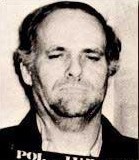 Ervil LeBaron
Murderer · USA · 1972
Ervil Morrell LeBaron (1925 to August 16, 1981) was the leader of a polygamous…
35 victims
Ervil LeBaron
Murderer · USA · 1972
Ervil Morrell LeBaron (1925 to August 16, 1981) was the leader of a polygamous…
35 victims
 Brian Kevin Rosenfeld
Murderer · USA · 1985
Brian Kevin Rosenfeld Brian Kevin Rosenfeld was sentenced to three concurrent l…
23 victims
Brian Kevin Rosenfeld
Murderer · USA · 1985
Brian Kevin Rosenfeld Brian Kevin Rosenfeld was sentenced to three concurrent l…
23 victims
 Marvin Gray
Murderer · USA · 1975
Marvin Gray was convicted killer who claimed responsibility for 23 slayings and…
23 victims
Marvin Gray
Murderer · USA · 1975
Marvin Gray was convicted killer who claimed responsibility for 23 slayings and…
23 victims
 Yahweh ben Yahweh
Murderer · USA · 1980
Yahweh ben Yahweh was born and legally named Hulon Mitchell Jr. (October 27, 19…
23 victims
Yahweh ben Yahweh
Murderer · USA · 1980
Yahweh ben Yahweh was born and legally named Hulon Mitchell Jr. (October 27, 19…
23 victims
 Shawn Lamb
Murderer · Canada · 2011
Shawn Cameron Lamb was 54 at sentencing. He was described as a chronic drug add…
3 victims
Shawn Lamb
Murderer · Canada · 2011
Shawn Cameron Lamb was 54 at sentencing. He was described as a chronic drug add…
3 victims
 Shawna Forde
Murderer · USA · 2009
Shawna Forde was sentenced to death on February 22, 2011. She was convicted of…
2 victims
Shawna Forde
Murderer · USA · 2009
Shawna Forde was sentenced to death on February 22, 2011. She was convicted of…
2 victims
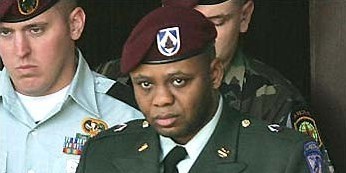 Hasan Akbar
Murderer · Kuwait · 2003
Sergeant Hasan Akbar was a U.S. Army soldier convicted for the murder of two fe…
2 victims
Hasan Akbar
Murderer · Kuwait · 2003
Sergeant Hasan Akbar was a U.S. Army soldier convicted for the murder of two fe…
2 victims
 Michael Alig
Murderer · USA · 1996
Michael Alig was the offender. · “Angel” Melendez was the victim. Michael Alig…
1 victim
Michael Alig
Murderer · USA · 1996
Michael Alig was the offender. · “Angel” Melendez was the victim. Michael Alig…
1 victim
- Gender
- male
- Country
- USA
- Location
- Jefferson County, Alabama, USA
- Date of birth
- 1955
- Age at first offence
- 21
- Characteristics
- kidnapping, rape
- Victim profile
- Quenette Shehane (female, 21)
- Method of murder
- Shooting
- Date(s) of murder
- December 20, 1976
- Years active
- 1976
- Date of arrest
- —
- Status
-
Executed
Executed by electrocution in Alabama on July 13, 1990
Case record: Wallace Norrell Thomas
Background
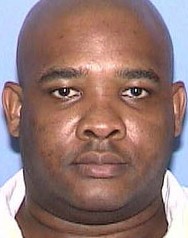
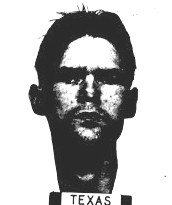
Wallace Norrell Thomas was an Alabama prisoner. He was 35 years old when he was executed. He had been convicted in the 1976 slaying of Quenette Shehane.
Thomas was placed on death row at Holman Prison near this southern Alabama town in March 1978.
While on death row, Thomas helped found Alabama’s branch of Project Hope, a group against the death penalty. Project Hope was described as an organization for prisoners and their families that fought the death penalty, sought to educate the public about it, and tried to bring condemned prisoners and their relatives together.
During Thursday before his execution, Thomas spent time visiting with relatives at Holman Prison in southern Alabama. A Corrections Department spokesman, John Hale, said: “He gave his TV to one of his family members and some other personal belongings to an inmate friend,”
The offence
Thomas was convicted of abducting and killing Quenette Shehane, who was 21. The victim was kidnapped at a convenience store near Birmingham-Southern College campus.
Quenette Shehane had graduated from Birmingham-Southern College a few days earlier. The statements about the kidnapping described her as being abducted as she was left a grocery store.
The sentencing materials and discussion in later proceedings described that Thomas had been sentenced to death for the abduction and fatal shooting of Quenette Shehane. The sentencing materials also stated that one of the two other men charged in the case implicated Thomas in the shooting. The co-defendants were serving life sentences.
A habeas corpus discussion later described the conviction as involving killing Quenette Shehane during the course of a robbery.
During the later appeal record, the defendant had presented a claim that he had not been charged with rape, and that the jury and the trial had considered sexual abuse evidence. The later appellate discussion stated that before trial, the defendant’s counsel submitted a motion in limine to preclude introduction of evidence showing that Quenette Shehane had been raped. The trial court denied the motion. At trial, the state introduced evidence that on the night Quenette Shehane was killed, Thomas stated that he was going out to pick up girls. The later appellate material also described evidence of semen stains found on the upholstery of the victim’s car and pubic hair found on the victim’s coat. During closing argument in both the guilt and sentencing stages, the prosecutor suggested that Quenette Shehane had been sexually abused before she was killed.
In the later appeal record, the defendant’s federal habeas contentions included arguments connected to the admission of sexual abuse evidence and references during closing argument.
Investigation
The record described evidence introduced at trial, including semen stains found on the upholstery of the victim’s car and pubic hair found on the victim’s coat. It also described the state’s evidence that Thomas stated that he was going out to pick up girls on the night the victim was killed.
Arrest
No arrest details appeared in the provided material.
Trial
Conviction and sentencing
The federal appellate discussion stated that on November 3, 1977, Thomas was convicted of intentionally killing Quenette Shehane during the course of a robbery and was subsequently sentenced to death. It stated that the conviction was reversed and remanded for a new trial.
The material stated that in May 1982, Thomas was retried for murdering Quenette Shehane. On May 19, 1982, the jury returned a verdict convicting Thomas of killing Quenette Shehane during the course of a robbery. On May 20, 1982, the jury tendered a verdict recommending a death sentence.
The conviction and sentence were affirmed by the Alabama Court of Criminal Appeals, Thomas v. State, 460 So.2d 207 (Ala.Crim.App.1983), and by the Alabama Supreme Court, Ex parte Thomas, 460 So.2d 216 (Ala.1984).
The material stated that Thomas was prevented from obtaining a writ of certiorari from the United States Supreme Court because of his failure to file timely a petition.
Jury instruction issue at sentencing deliberations
In the federal appellate discussion, the record showed that at about 2:00 p.m. on May 19, 1982, after a short discussion between the trial judge and counsel, lawyers for the state and for defendant Thomas began opening arguments regarding sentencing. The record stated that after the judge provided sentencing instructions, the jury began deliberations and deliberations lasted between one hour fifty minutes and two hours. A colloquy occurred with the trial court and juror Ms. Cunningham.
The colloquy was: THE COURT: Ms. Cunningham, does the jury have a report they would like to make to me? Do not tell me how you are split if there is a numerical division in your number. MS. CUNNINGHAM: Yes, it is. THE COURT: Okay. We have spent the better part of two days trying this case. Witnesses have been brought in and told everything there is to be told about this case. The lawyers have done a fine job in presenting both sides of the case to you. Under the circumstances I'm going to recess you until 8:30 in the morning. Let's make it 9:00 in the morning. I have a docket to call. And let y'all come back in fresh and try your deliberation again. I feel two hours is too short a time deliberation to call a hung jury. .... Is there anything further for the state? MR. BARBER: No, Sir. THE COURT: For the defendant? MR. HULTQUIST: No, Sir. (Folder No. 5, Vol. 4 at 602-03).
After that, the trial judge ordered the jury to remain sequestered and discharged them for the evening.
The following morning, defendant’s counsel argued that the jury should not be allowed to continue deliberating because of the Alabama Supreme Court’s decision in Beck v. State, 396 So.2d 645 (Ala.1980). The trial judge denied defendant’s request and charged the jury as follows: THE COURT: Ladies and gentlemen of the jury, I hope y'all had a pleasant evening and are rested. When I told you I wanted you to deliberate further, I am not trying to force you to get a verdict. There's one thing I feel like that y'all might not have understood from my previous charge to you and I want to make this clear to you. If the jury cannot agree on a unanimous sentence of death as the punishment, the alternative form of, we, the jury, find the punishment life imprisonment without parole would be what you would return. Did y'all understand that previously? JUROR: No, sir. THE COURT: So, you have two possible forms you may return. One, is the death verdict form I have given you. If you cannot agree on that unanimously, then your verdict would be the life imprisonment without parole. Do you have any questions or anything further I might be able to assist you in, in your deliberations at this time? (Indicating no.) THE COURT: Thank You. (Jury out for further deliberation.) (Folder No. 5, Vol. 4 at 602-03).
In the later federal appellate discussion, the defendant argued that the trial court violated constitutional rights by not accepting the jury’s statement that it had not yet reached a decision as a recommendation for life imprisonment without parole under Beck v. State. The defendant also argued that the trial court coerced the jury to return a sentence of death by instructing them to continue deliberations.
The federal appellate decision stated that it found both contentions meritless.
Motion in limine and evidence of rape/sexual abuse
Before trial, Thomas’ counsel submitted a motion in limine to preclude introduction of any evidence showing that Quenette Shehane had been raped because Thomas was not charged with rape.
The federal appellate discussion stated that at trial, the state introduced evidence that on the night Quenette Shehane was killed, Thomas had stated that he was going out to pick up girls. It also stated that the state introduced evidence of semen stains found on the upholstery of the victim’s car and pubic hair found on the victim’s coat. It added that during closing argument in both the guilt and sentencing stages, the prosecutor suggested that Quenette Shehane had been sexually abused before she was killed.
Thomas’ federal habeas contentions included that his counsel gave ineffective assistance by failing to object to the state’s references to rape. The federal appellate decision stated that it disagreed and rejected the ineffective assistance claim related to failure to object to the rape/sexual abuse evidence and closing argument references.
Sentencing
Thomas was sentenced to death for the abduction and fatal shooting of Quenette Shehane.
The record stated that Thomas was convicted in the 1976 slaying and that the jury sentenced him to death after the 1982 retrial.
Appeals
State post-conviction proceedings
After reversal and remand, Thomas was retried. The material described state court decisions affirming conviction and sentence, including:
- Thomas v. State, 460 So.2d 207 (Ala.Crim.App.1983)
- Ex parte Thomas, 460 So.2d 216 (Ala.1984)
Thomas then filed a petition for writ of error coram nobis in Mobile County Circuit Court. After an evidentiary hearing on July 22, 1985, the petition for a writ of error coram nobis was denied.
Thomas appealed the denial, and the Court of Criminal Appeals of Alabama affirmed the decision of the Mobile County Circuit Court:
- Thomas v. State, 511 So.2d 248 (Ala.Crim.App.), cert. denied, 511 So.2d 248 (Ala.1987)
Federal habeas corpus
The material stated that after exhausting his state court remedies, Thomas turned to the federal courts. He filed a petition for a writ of habeas corpus, an amended petition for a writ of habeas corpus, and a second amended petition for a writ of habeas corpus in the United States District Court for the Southern District of Alabama. All were dismissed on December 29, 1988.
Thomas appealed to the United States Court of Appeals, Eleventh Circuit:
- Wallace Norrell Thomas, Petitioner-Appellant, v. Charlie Jones, Warden, and the Attorney General of the State of Alabama, Respondents-Appellees.
- Civil Action No. 89-7213
- United States Court of Appeals, Eleventh Circuit
- Dec. 21, 1989. Rehearing Denied Feb. 13, 1990.
The Eleventh Circuit affirmed the district court’s dismissal of Thomas’ petition for writ of habeas corpus, stating: “Accordingly, we AFFIRM the district court's dismissal of defendant's petition for writ of habeas corpus.”
The federal appellate opinion addressed claims regarding the trial judge’s instruction to continue deliberations, the prosecutor’s comments and counsel’s failure to object regarding rape/sexual abuse evidence, and the trial court’s refusal to appoint an independent psychiatric examiner.
The record described issues including the argument that the state trial judge, knowing the jury had not reached a final decision, sequestered the jury for the evening with instructions to continue deliberations; an argument that counsel was ineffective because Thomas was not charged with rape; and a request for reversal regarding due process when the trial judge declined to order examinations to determine Thomas’ sanity at the time of the offense.
The federal appellate opinion stated that it found all of Thomas’ contentions meritless.
United States Supreme Court
The material described that the United States Supreme Court rejected an appeal in April. It also described that on Thursday the Supreme Court rejected Thomas’ plea for a stay by a 7-to-2 vote. Justices William J. Brennan and Thurgood Marshall, who opposed the death penalty in all circumstances, voted to grant the stay.
The material also described that later Thursday the Alabama Supreme Court denied an emergency motion.
Outcome
Thomas’ execution occurred early Friday. He died shortly after midnight central daylight time. He was executed by electrocution in Alabama on July 13, 1990.
The material stated that the Supreme Court had rejected Thomas’ plea for a stay by a 7-to-2 vote on Thursday, and that Alabama Supreme Court later denied an emergency motion.
The material stated that the execution was the 133rd in the United States since 1976 when the Supreme Court allowed states to resume use of the death penalty. It was the eighth execution in Alabama.
Thomas was described as wearing a white prison uniform with a purple ribbon and a sticker saying “Execute justice, not people.” Shortly after midnight, he gave his last statement, was strapped into the electric chair, and was executed.
The material included a statement read by Thomas. It quoted from the Bible and included the following message: “Let my death serve as an instigator that will awaken a nation to fight and adopt the philosophy of the late, great Dr. Martin Luther King Jr., who said, 'Injustice anywhere is a threat to justice everywhere.' ”
The material stated that only one pull of the switch was required.
Aftermath
A victim’s mother, Miriam Shehane, became Alabama’s leading advocate for victims’ rights and helped found a group called Victims of Crime and Leniency.
A quoted statement from Miriam Shehane described her perspective on her daughter’s abduction and death and on capital punishment. Her quoted remarks included: “Can you imagine what that does to a mother?”
Further quoted statements from Miriam Shehane included: “I’ve always believed in the death penalty. I had always wondered in the back of my mind if I served on a jury and it was my responsibility to mete out the death penalty if I would be capable of doing it. Now I know I would be capable of doing it, and I know why it is important. ... Quenette was killed Dec. 20 and she was already accepted as a graduate student at Auburn University. She was going to teach grammar school. She loved children. She didn’t have a prejudiced bone in her little body. She was bubbling over with energy, and it was all taken for nothing. Just for one little fling with a little white girl. I don’t hate blacks. I don’t. These were three mean black people. But I do get tired of hearing about the poor uneducated black people on death row. Well, I’m here to tell you there are more whites on death row than there are blacks. ... She got off work about 5:30 in the afternoon, after dark, and she went straight to the fraternity house. She got there, and her boyfriend was preparing the steaks and he realized he didn’t have any salad dressing. As she came out of the U-Tote-Em (store), she was abducted and was shoved into her car. She got under the steering wheel and she screamed. She was screaming. And the clerks admitted they heard her scream but didn’t go out. They thought it was children playing. So nobody went out to see what was happening, so they pushed her into the car and drove off and kept her for four or five hours, at least, raping her, and when they were all through with her, they decided she couldn’t live because Wallace Norrell Thomas told them they had called each other by name so they had no choice but to kill her. ... And when we found out when she was missing, I was praying all the way to Birmingham that she was warm, because it was so extremely cold. I can’t remember ever a colder night in my life. Then to have to find out when they found her body that she was stark naked and her body was frozen. And Jerry Lee Jones tells how they were shooting at her and how she was running through the briars and begging for her life saying, ‘You’re killing me.’ Now, can you imagine what that does to a mother? If I dwelt on what I know she went through for five or six hours, and knowing people look at me and view me as out for revenge. Revenge for me would be for me to ask for the state of Alabama to make Wallace Norrell Thomas go stark naked and shoot at him in the coldest weather ever for about five hours. That would be revenge. But to put him in the chair and he’s gone just like that is not revenge. That is justice. ... I have been asked how I felt when he was executed and it was nothing but relief. I was hoping. And I feel like if I knew the hour I was going to meet my maker, I would make amends for my sins and I would say I was sorry and beg the Lord to forgive me. So that was really what I was expecting from Wallace Norrell Thomas, because I knew without a shadow of a doubt that he was guilty.”
The material also stated the other defendants’ sentences:
- Edward Bernard Lee was sentenced to life in prison without parole.
- Jerry Lee Jones, who testified against the two, received life in prison.
In addition, the material stated that Quenette Shehane had been abducted and that three men raped and murdered her, and it named the involved men through the sentencing outcome described above, including Wallace Norrell Thomas.
Other details
Attempted execution hardware and findings of fact in later proceedings
The material included an extended account of execution equipment and findings of fact from a July 10, 1990 decision in Thomas v. Jones in the United States District Court for the Southern District of Alabama (Southern Division), citation 742 F. Supp. 598; 1990 U.S. Dist. LEXIS 8581, decided July 10, 1990.
It described Alabama’s wooden electric chair and its electrical connectors, including that the chair was in a separate “execution chamber,” and the description of receptacles and cable connections. It stated that if the cables were connected from the top receptacles to the electric chair, no electrical power reached the chair. It included views and testimony from individuals involved in execution hardware design and evaluation, including Fred A. Leuchter, Dr. Morse, and Dr. Bernstein.
It also described that some documentary evidence and live testimony tended to show that corpses of prisoners executed in Alabama’s electric chair bore unexplained burns, referencing the Richardson Autopsy Report and Dunkins Autopsy Report.
Findings of fact in that proceeding included:
- The initial application of electricity in a properly performed judicial electrocution was meant to cause instant brain death, with cardiac arrest secondary.
- The electric chair had been incorrectly connected on the night of July 14, 1989, and as a result no electrical power reached the chair during the first cycle; Horace Dunkins, Jr. did not receive an electrical shock until the second cycle.
- The court found that Dunkins fainted at the time of the first attempt at his execution and never regained consciousness, and found no credible evidence that Dunkins suffered any pain during the actual electrocution process; it stated that during the one time electricity passed through his body, Dunkins was instantaneously rendered brain dead and was unable to feel pain.
- The court found that the error which occurred during the Dunkins execution cannot be repeated.
Spotted an error, or have more information about this case?