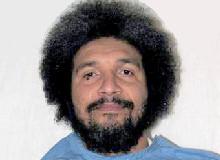
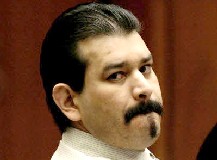
Manuel Machado Alvarez
Murderer Brian Kevin Rosenfeld
Murderer · USA · 1985
Brian Kevin Rosenfeld Brian Kevin Rosenfeld was sentenced to three concurrent l…
23 victims
Brian Kevin Rosenfeld
Murderer · USA · 1985
Brian Kevin Rosenfeld Brian Kevin Rosenfeld was sentenced to three concurrent l…
23 victims
 Yahweh ben Yahweh
Murderer · USA · 1980
Yahweh ben Yahweh was born and legally named Hulon Mitchell Jr. (October 27, 19…
23 victims
Yahweh ben Yahweh
Murderer · USA · 1980
Yahweh ben Yahweh was born and legally named Hulon Mitchell Jr. (October 27, 19…
23 victims
 Russell Ellwood
Murderer · USA · 1991
Russell Ellwood was a former taxi driver. Authorities suspected him of killing…
20 victims
Russell Ellwood
Murderer · USA · 1991
Russell Ellwood was a former taxi driver. Authorities suspected him of killing…
20 victims
 Anthony Leroy Pierce
Murderer · USA · 1977
Anthony Leroy Pierce (also known as Yatombi Ikei), TDCJ-ID Polunsky Unit 3872,…
2 victims
Anthony Leroy Pierce
Murderer · USA · 1977
Anthony Leroy Pierce (also known as Yatombi Ikei), TDCJ-ID Polunsky Unit 3872,…
2 victims
 Bonnie Heady
Murderer · USA · 1953
Bonnie Emily Brown Heady — convicted under the Lindbergh Act; kidnapper and mur…
1 victim
Bonnie Heady
Murderer · USA · 1953
Bonnie Emily Brown Heady — convicted under the Lindbergh Act; kidnapper and mur…
1 victim
 Wayne Cordell Mitchell
Murderer · USA · 1997
Wayne Cordell Mitchell Wayne Cordell Mitchell and Robin Little met and began da…
1 victim
Wayne Cordell Mitchell
Murderer · USA · 1997
Wayne Cordell Mitchell Wayne Cordell Mitchell and Robin Little met and began da…
1 victim
 Yokamon Hearn
Murderer · USA · 1998
Yokamon Laneal Hearn was convicted of capital murder and sentenced to death for…
1 victim
Yokamon Hearn
Murderer · USA · 1998
Yokamon Laneal Hearn was convicted of capital murder and sentenced to death for…
1 victim
 Robert Consalvo
Murderer · 1991
Defendant: Robert Consalvo Victim: Lorraine Pezza · 09/27/91 — Date of offense.…
1 victim
Robert Consalvo
Murderer · 1991
Defendant: Robert Consalvo Victim: Lorraine Pezza · 09/27/91 — Date of offense.…
1 victim
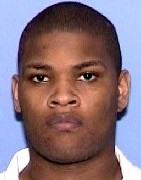 Gerald Edward Marshall
Murderer · USA · 2003
Gerald Edward Marshall was identified as the appellant in the Texas Court of Cr…
1 victim
Gerald Edward Marshall
Murderer · USA · 2003
Gerald Edward Marshall was identified as the appellant in the Texas Court of Cr…
1 victim
- Gender
- male
- Country
- USA
- Location
- Sacramento County, California, USA
- Date of birth
- 1962
- Age at first offence
- 25
- Characteristics
- robbery, rape, drug addict, domestic violence, abuse
- Victim profile
- Allen Ray Birkman, 35
- Method of murder
- Stabbing with knife
- Date(s) of murder
- May 17, 1987
- Years active
- 1987
- Date of arrest
- 10 days after
- Status
-
Sentenced to death
Sentenced to death on September 14, 1989
Parties
Manuel Machado Alvarez was tried with co-defendant Belinda Denise Ross.
Timeline
- May 7, 1987 — Machado and Ross were charged with the murder/robbery of Allan Birkman.
- May 12, 1987 — Defendant was socializing outside an apartment building late at night; he was drunk and vomiting; he made a sexual advance on Sandra S., was repulsed, and she went to bed.
- May 13, 1987 — Sandra S. awoke and saw defendant standing with his zipper open, masturbating; he responded “Oh, God, yes.”; he raped her; Percy Spence ran out; Anthony Simpkins arrived and Sandra S. told him defendant had raped her; defendant fled and went in the direction of Edwin Glidewell.
- May 15, 1987 — Defendant met Ross as she was cashing a welfare check she had received earlier that day; they set out to obtain and consume drugs and alcohol; they visited Neetelfer Hawkins and a friend of Ross named Gail Patton.
- May 17, 1987 — Defendant asked Ross to drive Glidewell’s Camaro as he rode as a passenger; she entered a shopping center and parked; at 11:28 a.m. Allen Birkman withdrew $60 at the Golden 1 Credit Union automatic teller machine; defendant accosted Birkman; a struggle ensued; defendant stabbed Birkman in the heart; Ross pulled out and defendant escaped with her.
- May 17, 1987 — Charles Kosobud came to aid Birkman; Kosobud asked if they had robbed him; Birkman responded “No, but they tried.”; Birkman said “Two blacks.”
- May 17, 1987 — Officer Calvin Lim arrived; Birkman said he felt numbness or tingling and identified his attacker as “[a] male black, approximately six foot tall”-like defendant-who “got into a Camaro.”
- May 17, 1987 — Ross and defendant reached Gail Patton’s apartment; Ross entered with a long knife and a sheath; she wiped the weapon and told Patton to give it to defendant; defendant later appeared normal and left the long knife and sheath behind; defendant and Ross apparently directed Patton not to say anything.
- About 1:30 p.m., May 17, 1987 — Greta Slatten, age 78, drove to a convenience store in a 1987 Ford Taurus; she saw defendant; he used a public telephone; she made a purchase; she returned to her automobile; she lost consciousness; later she was in a hospital with injuries requiring suturing with 20 stitches and blackened the left side of her face; defendant had taken Slatten’s car, keys, and purse and fled.
- May 18, 1987 — Birkman died as a result of the stab wound to the heart.
- May 18, 1987 — Leslie Colyer spoke with defendant over the telephone; she told him the victim of the homicide was a police officer.
- May 27, 1987 — Defendant was arrested in Mississippi and jailed; he was apprehended at the wheel of Slatten’s Taurus with Charles Robinson as a passenger.
- May 28, 1987 — Charles Robinson was arrested and jailed; defendant and Robinson shared a cell; defendant told Robinson that “he had killed a police officer in California”-referring evidently to Birkman.
- September 14, 1989 — Machado received the death penalty for the murder of Birkman and a total of 18 years and eight months for the other offenses.
- 1996 — People v. Alvarez (1996) II. Facts was included in the appellate discussion.
Background
Parole and living arrangements
In November 1986, defendant was released on parole after serving a term of imprisonment for convictions in the Los Angeles Superior Court in 1982 for voluntary manslaughter and assault with a deadly weapon; he was bound to Los Angeles by parole conditions. In March 1987, in violation of such conditions, defendant moved from Los Angeles to Sacramento. Over the following months, he lived, on and off, with Leslie Colyer and Neetelfer Hawkins. He spent the major part of his time obtaining and consuming drugs and alcohol.
Defendant’s background and character evidence (penalty phase)
Defendant was born in Cuba around 1960 and was raised there. As a young child, he suffered a significant injury to his head, which may have contributed to a condition that later showed itself as perhaps epilepsy, and he lost his mother to death. Thereafter, he lived an unstable life, and was subjected to abuse and neglect, especially at the hands of a woman with whom his father set up house. He began to exhibit problem behavior. He came to the United States in the “Mariel Boatlift” of 1980; he was apparently detained at camps including Fort Chaffee in Arkansas. He went to Richmond, Virginia, in 1981, under sponsorship of a married couple with small children; he lived with the family about six weeks and displayed kindness and generosity but also anger and immaturity. He made his way to California later in 1981. It was opined he suffered from conditions including “profound emotional immaturity” and “extreme culture shock.” He was nevertheless capable of love and helpfulness, including in dealings with Neetelfer Hawkins and with her mother and her disabled son.
The offence
Capital murder/robbery: Allan Birkman / James Birkman naming in proceedings
Machado and co-defendant Belinda Denise Ross were charged with the May 7, 1987 murder/robbery of Allan Birkman.
At 11:28 a.m. on May 17, 1987, Allen Birkman, a civilian identification technician for the Sacramento Police Department, withdrew $60 from his wife’s account at the Golden 1 Credit Union automatic teller machine. Defendant accosted Birkman; a struggle ensued; defendant stabbed Birkman in the heart. Ross pulled out of the parking space, and defendant managed to jump in. They made their escape.
Within seconds, passerby Charles Kosobud came to aid Birkman. Birkman held his right hand to his chest with blood flowing through his fingers, had a wallet in his left hand, and was swaying. Kosobud asked if they had robbed him; Birkman responded:
“No, but they tried.”
Kosobud asked who; Birkman responded:
“Two blacks.”
Birkman soon collapsed.
Officer Calvin Lim arrived; Birkman was already receiving emergency medical aid. Lim rode along to the hospital. Birkman had difficulty breathing and appeared to be in pain; he said he felt numbness or tingling in his body. Lim asked if he knew who had attacked him; Birkman responded:
“[a] male black, approximately six foot tall” and that the attacker “got into a Camaro.”
Sometime before noon, Ross and defendant reached Gail Patton’s apartment; Ross parked Glidewell’s Camaro nearby. Ross entered with a long knife and a sheath, appeared frightened, wiped the weapon, and told Patton to give it to defendant. Defendant entered minutes later and appeared normal. Police officers approached Patton’s apartment. Defendant and Ross apparently directed Patton not to say anything. The officers told Patton they were investigating the incident at the Golden 1 Credit Union, asked whether she knew anything about Glidewell’s Camaro, and she answered no. The officers departed. Patton told defendant to go. Defendant left behind the long knife and the sheath and also left behind Glidewell’s Camaro.
May 18, 1987—Birkman died as a result of the stab wound to the heart. The wound could have been inflicted by the long knife that defendant left behind at Patton’s apartment.
Rape: Sandra S.
On May 12, 1987, late at night, defendant socialized outside an apartment building where Sandra S. lived with her lover and her son; she was working as a prostitute. Defendant was drunk, vomiting, and made a sexual advance on her, but was repulsed. She returned to her apartment, went to bed.
On May 13, about noon, Sandra S. awoke. Her lover and her son were not at home. She saw defendant standing with his zipper open and masturbating. She said:
“Oh, God, no.”
Defendant replied, in a voice that was firm and serious:
“Oh, God, yes.”
Sandra S. called for her lover. Defendant said with coldness and calculation:
“He can’t help you now.”
Defendant began to rape her. Percy Spence walked in; he asked:
“Are you having a date?”
Sandra S. yelled:
“No, no[,] no, no, it’s not.”
Defendant stated:
“Yes, it is.”
Sandra S. repeated several times:
“No, it’s not.”
Spence said:
“Oh, man, don’t be doing that,”
and ran out. When defendant was finished, he put into his pants a long knife in a sheath, evidently brought to the scene.
Anthony Simpkins arrived as he was entering; Simpkins asked:
“[W]hat’s happening[?]”
Spence answered:
“[O]h, just let it be.”
Sandra S. ran to Simpkins almost hysterical and told him defendant had raped her. Defendant fled.
Defendant later denied he had raped Sandra S., asserting consent at least in part to obtain some cocaine he offered.
Robbery: Edwin Glidewell’s Camaro
Defendant was acquainted with Edwin Glidewell, whose 1975 Chevrolet Camaro was parked nearby with the key in the ignition. After raping Sandra S., defendant proceeded up the street toward Glidewell.
Defendant jumped into the driver’s seat, started the engine, and took off. Glidewell gave chase but failed to catch him.
Defendant denied he stole Glidewell’s Camaro; he said Glidewell gave him the automobile as security for a debt incurred when he bought about $400 worth of cocaine from Glidewell on credit.
Robbery: Greta Slatten
About 1:30 p.m. on May 17, Greta Slatten, 78 years old, drove to a convenience store in a 1987 Ford Taurus she had recently bought. The store was about two-thirds of a mile from Patton’s apartment, and there was no other automobile in the parking lot; only defendant was the other person. Slatten locked her car doors and watched defendant. Defendant went to a public telephone. As Slatten exited her vehicle with her purse and keys and made a purchase, she passed defendant at the phone. When she returned to her automobile, she lost consciousness.
After she came to, she found she was in a hospital. She had injuries requiring suturing with 20 stitches, could not open her mouth, and her left face from her hairline down through her neck was blackened. Defendant had taken her car, her keys, and her purse and fled.
Defendant later denied he had robbed Slatten, asserting alibi and misidentification. He claimed he obtained possession of her Taurus the day she was robbed by giving cocaine in trade to a young man who called himself “J.R.”
Co-defendant Ross: accessory and attempted robbery
Ross was found guilty of accessory to the murder of James Birkman and of his attempted robbery. She was sentenced to 8.5 years for these two counts.
Investigation and arrest
Attempted identification of attacker
After the stabbing, Birkman told Kosobud:
and identified the attackers as:
Lim testified that Birkman identified the attacker as: who “got into a Camaro.”
The appellate facts also described Ross as “an African-American” and defendant as, in his own words, “Spanish and Islander,” meaning “[a] native [Cuban].”
Arrest in Mississippi and evidence
On May 27, 1987, defendant was arrested in Mississippi and jailed. He was apprehended at the wheel of Slatten’s Taurus, with Charles Robinson, who was hitchhiking, as a passenger. In the automobile was found a second long knife in a sheath.
On the next day, Robinson was arrested and jailed. Defendant and Robinson shared a cell. Defendant told Robinson that:
“he had killed a police officer in California” referring evidently to Birkman.
Defendant was later returned to California.
Prior telephone conversation
Sometime before May 18, Leslie Colyer spoke with defendant over the telephone. Colyer had earlier been approached by police, who asked about his whereabouts and advised they were seeking him in connection with a homicide. Colyer told him that the victim of the homicide was a police officer.
Trial
Prosecution theory at the guilt phase
The People presented the jury with a story that included the rape of Sandra S., the attempted robbery and murder of Birkman, and other related conduct described in the guilt-phase evidence. The detailed account included defendant’s parole status and move to Sacramento, his cohabitation on and off with Leslie Colyer and Neetelfer Hawkins, his drug and alcohol use, and the sequence of offenses from May 12 through May 18.
Defendant’s testimony and denials
Defendant testified in his own behalf and introduced other evidence. He denied he had raped Sandra S., saying she consented at least in part to obtain cocaine he offered. He denied he stole Glidewell’s Camaro, asserting it was given as security for a cocaine debt. He denied he robbed or murdered Birkman, saying he was elsewhere at the time and was the victim of mistaken identity. He denied he robbed Slatten, asserting alibi and misidentification and claiming he acquired her Taurus via cocaine trade to a young man calling himself “J.R.” He generally denied he had ever had any knife in his possession.
Ross’s testimony and state-of-mind defense
Ross testified on her own behalf and introduced other evidence. She did not deny defendant had robbed or murdered Birkman; she denied she had possessed the requisite mental state, saying she did not even suspect what he had evidently intended, but had accompanied him out of fear.
Sentencing
Offences and sentences
On September 14, 1989, Machado received the death penalty for the murder of Birkman and a total of 18 years and eight months for other offenses.
Ross was sentenced to 8.5 years for accessory to murder and attempted robbery.
Prior felony convictions relied on in penalty phase
For the penalty of death, the People presented evidence of three prior felony convictions:
- In 1982, in the Los Angeles Superior Court, defendant was convicted of voluntary manslaughter with personal use of a deadly weapon.
- In the same court and time, defendant was convicted of assault with a deadly weapon.
- In 1983, in the San Luis Obispo Superior Court, defendant was convicted of escape from prison without force or violence.
Other instances of criminal activity (force or violence)
“Chinga su madre,” stabbed him fatally through the throat, and withdrew the blade. Defendant then started to move on one of the store’s clerks, halted when another clerk pulled out a shotgun and told him to stop, and then fled.
- The circumstances surrounding the voluntary manslaughter and assault with a deadly weapon convictions.
- A late night in 1981: a man ran into a small liquor store in Hollywood while defendant pursued him. The man was unarmed. Defendant brandished a long knife in his right hand. The man put his hands up; defendant pulled the man’s hands down with his left hand, said:
The People also presented evidence of four instances of criminal activity beyond the circumstances of the capital offense involving use or attempted use of force or implied threat to use force or violence: 3. 1987—an attack on fellow jail inmates during the pendency of the present proceedings: defendant punched a victim who could not defend himself. 4. 1988—another separate attack on a fellow jail inmate during the pendency of the present proceedings: defendant punched a victim who could not defend himself.
Background and character evidence for life imprisonment without possibility of parole
For life imprisonment without possibility of parole, defendant presented evidence of background and character, including the injury to his head, loss of his mother, instability, abuse and neglect especially by a woman with whom his father set up house, parole and immigration history including the “Mariel Boatlift” of 1980 and detainment at camps including Fort Chaffee, social sponsorship in Virginia in 1981, later travel to California, and opinions about “profound emotional immaturity” and “extreme culture shock,” plus evidence of continued qualities of love and helpfulness toward Neetelfer Hawkins and her mother and disabled son.
Defendant also presented evidence responsive to the People’s evidence, including efforts to disprove an attack on two jail inmates, and explanations regarding the prison escape conviction—describing that with two other Spanish-speaking prisoners he essentially walked away from an “honor camp,” offered no resistance to correctional officers who effected capture, and helped by serving as an interpreter for his two companions. He also addressed the circumstances of the voluntary manslaughter conviction, revealing that he killed the victim apparently in revenge for the latter’s burglary of the residence of a man who was his lover.
Outcome
Machado was sentenced to death on September 14, 1989, for the murder of Birkman, and received a total of 18 years and eight months for other offenses. Ross was found guilty of accessory to the murder of James Birkman and of his attempted robbery and received 8.5 years.
Other details
Defendant’s conduct on May 12 included vomiting while socializing outside an apartment building. Sandra S. had a lover and a son, and she lived in one of the units in the apartment building. She worked as a prostitute.
On May 13, the jury heard that Spence entered, asked about a date, ran out after defendant’s response, and that defendant put a long knife in a sheath into his pants upon completion.
A passerby who assisted Birkman was named Charles Kosobud.
Gail Patton’s apartment was not far from the Golden 1 Credit Union. Ross wiped the weapon before giving it to defendant.
At the scene involving Greta Slatten, she had locked her doors in her 1987 Ford Taurus, then made a purchase and later lost consciousness before awakening in a hospital.
Defendant’s language identification included that, in his own words, he was “Spanish and Islander,” meaning “[a] native [Cuban].”
Spotted an error, or have more information about this case?