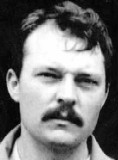
Claude Dallas
Murderer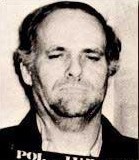 Ervil LeBaron
Murderer · USA · 1972
Ervil Morrell LeBaron (1925 to August 16, 1981) was the leader of a polygamous…
35 victims
Ervil LeBaron
Murderer · USA · 1972
Ervil Morrell LeBaron (1925 to August 16, 1981) was the leader of a polygamous…
35 victims
 Brian Kevin Rosenfeld
Murderer · USA · 1985
Brian Kevin Rosenfeld Brian Kevin Rosenfeld was sentenced to three concurrent l…
23 victims
Brian Kevin Rosenfeld
Murderer · USA · 1985
Brian Kevin Rosenfeld Brian Kevin Rosenfeld was sentenced to three concurrent l…
23 victims
 Marvin Gray
Murderer · USA · 1975
Marvin Gray was convicted killer who claimed responsibility for 23 slayings and…
23 victims
Marvin Gray
Murderer · USA · 1975
Marvin Gray was convicted killer who claimed responsibility for 23 slayings and…
23 victims
 Yahweh ben Yahweh
Murderer · USA · 1980
Yahweh ben Yahweh was born and legally named Hulon Mitchell Jr. (October 27, 19…
23 victims
Yahweh ben Yahweh
Murderer · USA · 1980
Yahweh ben Yahweh was born and legally named Hulon Mitchell Jr. (October 27, 19…
23 victims
 Russell Ellwood
Murderer · USA · 1991
Russell Ellwood was a former taxi driver. Authorities suspected him of killing…
20 victims
Russell Ellwood
Murderer · USA · 1991
Russell Ellwood was a former taxi driver. Authorities suspected him of killing…
20 victims
 Freda Rumbold
Murderer · United Kingdom · 1956
Freda Phyllis Rumbold was married to timber contractor husband Alfred Frank Rum…
1 victim
Freda Rumbold
Murderer · United Kingdom · 1956
Freda Phyllis Rumbold was married to timber contractor husband Alfred Frank Rum…
1 victim
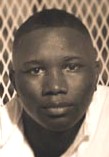 Dominique Green
Murderer · USA · 1992
Dominique Green was sentenced to death in Texas for the capital murder of Andre…
1 victim
Dominique Green
Murderer · USA · 1992
Dominique Green was sentenced to death in Texas for the capital murder of Andre…
1 victim
 Robert Vannoy Black
Murderer · USA · 1985
Robert Vannoy Black, Jr. was convicted in a Texas court of hiring a man to kill…
1 victim
Robert Vannoy Black
Murderer · USA · 1985
Robert Vannoy Black, Jr. was convicted in a Texas court of hiring a man to kill…
1 victim
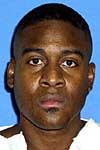 Edward Green III
Murderer · USA · 1992
Edward Green III was executed by lethal injection in Texas on October 5, 2004.…
2 victims
Edward Green III
Murderer · USA · 1992
Edward Green III was executed by lethal injection in Texas on October 5, 2004.…
2 victims
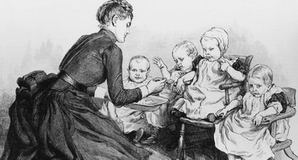 Jessie King
Murderer · United Kingdom · 1887
Jessie King was executed in Edinburgh on March 11, 1889, and she was described…
2 victims
Jessie King
Murderer · United Kingdom · 1887
Jessie King was executed in Edinburgh on March 11, 1889, and she was described…
2 victims
- Gender
- male
- Country
- USA
- Location
- Owyhee County, Idaho, USA
- Date of birth
- March 11, 1950
- Age at first offence
- 31
- Characteristics
- fugitive, armed robbery
- Victim profile
- Conley Elms and Bill Pogue (Idaho Fish and Game Officers)
- Method of murder
- Shooting
- Date(s) of murder
- January 5, 1981
- Years active
- 1981
- Date of arrest
- April 18, 1982
- Status
-
At large
Released in February 2005 after serving 22 years of a 30-year sentence; escaped from Idaho State Penitentiary in 1986 and was on the run for almost a year
Case record: Claude Dallas
Background
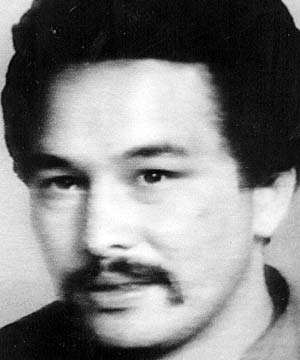
Claude Lafayette Dallas Jr. was born March 11, 1950. He was a self-styled mountain man.
He was the son of a dairy farmer. He grew up in rural Morrow County, Ohio, where he liked to trap and hunt game. He graduated from Mount Gilead High School in Mount Gilead, Ohio in 1967.
During the Vietnam War, he dodged the draft and fled west, earning a living as a ranch hand and trapper. He spent time in the 1970s as a cowboy/ranch hand. He often lived by himself in the northern Nevada wilderness, trapping and shooting animals for subsistence and income without regard for game regulations.
In the winter of 1980, he set up his trapping camp in Bull Basin, Idaho, three miles from the Nevada border, using a “home” address in nearby Paradise Hill, Nevada.
He was eventually charged with killing two game wardens in rural Owyhee County, Idaho, in 1981.
The offence
Two Idaho Department of Fish and Game officers, Conley Elms and Bill Pogue, approached Claude Dallas regarding suspected poaching in the rural woods of Idaho.
While Elms was inside a tent containing poached bobcats, Pogue drew his weapon. Dallas reacted by shooting Pogue with his own handgun. When Elms exited the tent, Dallas shot him as well. After the initial gunfire, Dallas used his .22 gauge rifle (also described as a .22 caliber lever action rifle, and later as a .22 Marlin) to shoot each officer once in the head.
After the initial gunfire, Dallas used his .22 caliber lever action rifle to shoot both officers once each in the head, execution-style. He then threw Elms' body in a nearby river. With the reluctant assistance of a friend, Jim Stevens, he transported Pogue's body to a distant location where he hid it in a coyote’s den.
Jim Stevens was in the vicinity but did not personally witness the first shots. The material stated Stevens did not witness the first shots even though they occurred only 15 feet from where he stood. Stevens did see Dallas shoot Elms and Pogue in the head as they lay on the ground.
Dallas fled the scene of the killings. He was found only after a manhunt.
The handgun was recovered by a local Idaho man using a metal detector in December 2008.
Investigation
The material described that Dallas fled to avoid prosecution and was only found after an 11-month manhunt.
It also described that he was captured in northern Nevada 15 months after the January 5, 1981 shootings.
It described conflicting discussion about whether Dallas acted in self-defense when he shot Officer Pogue. It also described that the claim that Pogue drew first had no evidence supporting it.
Arrest and custody
Dallas was captured outside a 7-11 store in Riverside, California, in March 1987.
The material also stated that Sheriff Tim Nettleton brought Claude Dallas back to Idaho after a shoot-out with the FBI and capture in Nevada on April 18, 1982.
After being captured, Dallas was placed in a higher security state prison in Kansas.
During the period before his conviction, the material described legal motion to move him from Owyhee County Jail to Caldwell, Idaho, based on claims he would not get a “fair trial” in Owyhee County.
Trial
Dallas was charged with two counts of murder (described as two counts of first degree murder, and also described later as two counts of first-degree murder).
The trial shifted focus to the alleged aggressiveness of Officer Pogue. The material described that this issue swayed the jury and was cited as concern that Dallas was acting in self-defense when he shot Pogue, who had brandished his own firearm.
The jury acquitted Dallas of murder.
The jury convicted Dallas of two counts of manslaughter and a third count of concealing evidence and using a firearm. Each of these counts rendered a sentence of 10 years, and the judge ordered that Dallas serve these consecutively to maximize what he saw as a lenient sentence. The material also described that the judge sentenced Dallas to 30 years, the maximum for this offense.
The material also described that at least one juror, Donna Diehl, said it was time for Dallas to be freed, and it included a quote attributed to Diehl:
Donna Diehl, a juror in his murder trial, said she thinks it's time for Dallas to be freed.
"A lot of people get out of prison who shouldn't, like sex offenders," Diehl said.
"I think (Dallas) will be changed by prison, that he will be on the right track. "
The material also described the testimony and disputed claims by Dallas that included the following:
- Dallas testified that while Elms was inside a tent containing poached bobcats, Pogue drew his weapon, although the material stated there was no evidence to support this claim.
- Dallas testified that Conley Elms was not armed at any point during the encounter.
- Dallas testified that CO Pogue advised him they were there to investigate a complaint about illegal bobcats.
- Dallas testified that CO Pogue had gone to the Fish and Game truck and retrieved handcuffs and a backpack for the descent to the camp, and that handcuffs were taken out of the truck at the rim.
- Dallas testified that at the rim, when CO Elms reached inside his Fish and Game coat, Dallas saw Elms' shoulder holster, implying that CO Elms was threatening him too.
- The material included narration that the judge found premeditation and “thinking about the situation,” including time to think about what he would do as they descended.
The material also included additional statements attributed to Jim Stevens, including quotes attributed to Stevens about what Stevens heard Dallas say:
Dallas had replied, "I swore I'd never be arrested again. They were gonna handcuff me."
He had also stated to Stevens, "This is murder one for me."
The material included a statement attributed to Dallas:
Dallas had said, "I could have taken them on the rim but they would have killed me up there."
The material included discussion that Judge Edward J. Lodge characterized Dallas' premeditated murders as “unjustified,” “morally reprehensible” and “without remorse.”
The material described that an Idaho Department of Correction “good time” provision reduced the sentence and that Dallas lost a year of “good time” for escaping from prison.
It also described that the material said jury deliberations led to manslaughter verdicts rather than murder.
Sentencing
Dallas was sentenced to 30 years in prison in 1983 (also described as 1982 in the current status field) after a Canyon County jury rejected first-degree murder charges and instead found him guilty of two counts of voluntary manslaughter and a gun charge.
The material also described that he received the maximum allowable sentence of 30 years.
It also described that his sentence was automatically reduced by a now-defunct Idaho Department of Correction “good time” provision. It also stated that his sentence was reduced by eight years for good behavior.
The material described that he served 22 years in prison.
It described that his parole was subject to the discretion of the Idaho Parole Board after he served a minimum for the killing of each officer, and it mentioned that he had a parole hearing before the Idaho Parole Commission.
Appeals
The material stated that an appeal to the Supreme Court of Idaho affirmed the lower court's ruling.
Prison, escape, and recapture
Dallas escaped from the Idaho State Penitentiary in 1986 and was on the run for almost a year.
It also described conflicting accounts about how the escape occurred and whether prison officials faked fence-cutting. It stated that “Prison officials have always said killer Claude Dallas cut through two fences on Easter Sunday 1986,” and it also stated that investigators suspected a cover-up and that the reinvestigation of who really snipped the holes ended inconclusively, with the case dropped in 2003.
The material described that the inquiry determined that officials could not prove a cover-up and that no employees were disciplined in connection with the escape.
It described that after his escape he again claimed law enforcement was trying to kill him and was sent to a Kansas Corrections facility.
It stated that he was captured in March 1987 outside a 7-11 store in Riverside, California, and placed in higher security custody in Kansas.
It also described that recaptured after 11 months, Dallas beat an escape rap in 1987 by convincing a jury he had to flee because his life was endangered by guards looking to kill him. It also stated that he lost a year of “good time” in the prison disciplinary process for escape and was ordered to repay $159 for damaging state property.
The material also discussed that a Warden Arave and Correction Director Al Murphy made statements about the escape and the need to find him.
Release and after
Dallas was released from the Idaho prison system’s custody in February 2005.
The material described that after his release he obtained an Idaho driver’s license in Emmett a month later but surrendered it in August 2005 to obtain a license in Washington state, which he still holds. It stated that the law prohibited disclosure of his address.
The material stated that his exact plans were not disclosed and that he had never granted a jailhouse interview and declined to talk to The Idaho Statesman about his release in a handwritten note.
It also described that former Owyhee County Sheriff Tim Nettleton said:
"He'll probably go back to Paradise Valley, where his friends are," Nettleton said.
"That'll last about three weeks, and then he'll realize he can't live that way anymore. That was 25 years ago. The times have changed."
It included a quote from Bill Mauk about Dallas’ likely choices:
"Those who are most impassioned by this case tend to be in Idaho," Mauk said. "For the most part, his network connections were not in Idaho - they were in Nevada. I don't see any reason why he would stay here."
It included a quote attributed to Bill Mauk about Dallas:
"His foremost desire is to do whatever he does quietly, and not be the subject of public attention," he said.
It included a quote attributed to Mauk about the difficulty of returning to a lifestyle:
"It would be very difficult for anyone to live the lifestyle Claude lived in this age," he said.
"Maybe in some of the more rural parts of Montana, Idaho, or Alaska..."
It included a quote from old friend Jim Stevens:
"I hope he has a good life ... I wish him all the luck in the world," said Stevens, who has exchanged birthday cards with Dallas for years and would welcome a visit.
"I assume he'll go back to California (where he was arrested in 1987 after escaping from prison) or something."
It included a quote from Jon Heggen, chief of enforcement for Idaho Fish and Game:
"We look at it like this. We are taking this opportunity to remember Pogue and Elms," said Jon Heggen, chief of enforcement for Idaho Fish and Game.
"Dallas has no legacy The legacy rests with the families of Pogue and Elms, and the legacy rests with all Fish and Game employees, and the legacy rests with the critters Pogue and Elms protected. That is the real story here."
It included a quote from Liz Chabot, a longtime Paradise Valley justice of the peace:
"We are all interested in what he is going to do, but I haven't heard a thing about it," said Liz Chabot, a longtime Paradise Valley justice of the peace.
"There are mixed emotions. There are some people here who love him, and probably some who hold a grudge."
The material also stated that Claude Dallas’ mother was still alive “back east,” and that he had a brother he might try to meet with.
The material said his story sparked a TV movie, a song and at least two books.
Other details
Pre-trial and contextual details in the material
The material included extensive discussion of alleged poaching and disputed behavior attributed to Dallas.
It included statements attributed to Tim Nettleton that included:
"Dallas thought the laws didn't apply to him and he always blamed someone else when things went wrong. His father raised him in Ohio and taught him to shoot geese for sale. He kept doing that long after market hunting was illegal."
"Ten days before the murders, Eddy Carlin checked Dallas out. He noted two illegal bobcat hides in Dallas' camp as well as poached deer. Carlin mentioned to Dallas that Idaho Fish and Game would check the area out. While ranchers might have a blind eye for one deer for food hunted out of season they do not have a blind eye to a lot of killing. Dallas had retorted, "I'll be ready for them.""
It included discussion and quotes attributed to Jerry Thiessen that included:
"Dallas had advised Carlin that he settles his business with a gun. Dallas was polite but his intimidating tactics to scared the heck out of anybody."
It included discussion that Don and Eddy Carlin of the 45 ranch had noted other trappers illegally poaching sage grouse on the 45's leased land and phoned CO Bill Pogue at home.
It included discussion that COs Bill Pogue and Conley Elms responded to a complaint and left their homes at night to drive to the Owyhee Mountains.
It included discussion that witness Jim Stevens testified Claude Dallas had said:
"I could have taken them on the rim but they would have killed me up there."
It included additional material about equipment and actions, including that pictures of CO Elms showed a sweater over his shoulder holster and that law enforcement verified Elms did not use his gun and kept it covered up.
It included discussion about Dallas being known to trap out a whole area and move on.
Media, characterization, and community reaction described in the material
The material stated that the case attracted national media attention. It said some Idahoans saw him as a folk-hero and others were disgusted.
It included the phrase “Dallas Cheerleaders” for a group of women who attended the 1982 murder trial, as well as discussion of a cult of personality around Dallas during that trial.
Escape investigation quoted statements and participants
The material included quotes from Ada County Detective Sgt. Pat Schneider:
“My take is they screwed up, and he was able to walk out the front door,” said Ada County Detective Sgt. Pat Schneider.
It included quotes from Ada County sheriff and others about the reinvestigation, including a quote from Ada County Detective Sgt. Pat Schneider:
“I’ve never been able to prove it, but that’s my gut instinct.”
It included quotes from Correction Director Al Murphy:
“You give Claude Dallas 6 miles and you might as well give him the country. Oh, well, we’ll find him. It might take a century, but we’ll find him.”
It included quotes attributed to Ada County Detective Sgt. Pat Schneider and Mike Dillon:
“I am not at all satisfied that we’ve got the whole story ... but at the same time we couldn’t come up with anything other than a lot of smoke. I remain skeptical.”
It included quotes attributed to Bill Mauk about Dallas wanting to fade back:
“He isn’t going to talk to you,” said Bill Mauk, who defended Dallas on the murder charges.
“He just wants to fade back into the woodwork.”
It included quotes attributed to Gary Deulen:
“I think Claude Dallas walked out on Easter Sunday,” Deulen said.
It included quotes attributed to Gary Deulen criticizing the escape narrative:
“We’re asked to believe that instead of a slit, he cuts two perfect triangles; then after he’s free he runs across a fresh dirt field after a rainstorm leaving no tracks; he keeps the bolt-cutters or the wire-snips but loses his hat, and his glasses fall off of his face and into a glasses case in the parking lot (350 feet away)? It’s bizarre.”
It included a quote from Randy Blades:
“The least logical way that this thing could have happened has been bought hook, line and sinker,” Blades said during one of the inquiry’s interviews in 2002.
It included a statement attributed to George Baird:
“I’ve believed for 20 years Claude Dallas walked out our front door,” Baird told the Statesman.
“Somebody didn’t want embarrassment. Claude Dallas was a high-profile offender. Claude Dallas committed a hideous crime against people in law enforcement and angered a great big community.”
“I think they lied,” Baird said.
It included a quote attributed to Then-Gov. John Evans:
“He was an obvious escape risk,” Evans complained.
“It’s obvious that we weren’t taking proper care to see that he didn’t escape.”
It included quotes attributed to Warden Arave and others about plausible explanations:
“He cut it himself, somebody else cut it, or he walked out the front door. But at the time we were focused on the fence.”
It included a quote attributed to Geneva Holman:
“I don’t think he really wants to do that,” she said.
“He’s doing really good, he’s working hard, he’s put that behind him. I don’t think he wants a bunch more baloney in the newspaper.”
It included a quote attributed to Blades:
“I was really hoping he’d talked to you,” Blades told the Statesman.
“My No. 1 motive was to find out what the truth was. We’ve got to find out what happened. We’ve got to find out what happened. It’s one of the great unsolved mysteries.”
Named individuals and roles appearing in the material
The material named:
- Conley Elms (Idaho Department of Fish and Game officer)
- Bill Pogue (Idaho Department of Fish and Game officer)
- Jim Stevens (friend with Dallas; witness)
- Jim Nielson (mentioned as providing money and supplies)
- George Nielson (identified as a Nevada bar owner who provided money and supplies)
- Tim Nettleton (former Owyhee County Sheriff)
- Bill Mauk (Boise attorney who represented Dallas)
- Donna Diehl (juror in his murder trial)
- Gary Loveland (District Conservation Officer)
- Jon Heggen (chief of enforcement for Idaho Fish and Game)
- Eddy Carlin (mentioned in connection with poaching and a warning)
- Don and Eddy Carlin of the 45 ranch (mentioned)
- Jerry Thiessen (retired State Game Manager)
- CO Gary Loveland (appears as the same person)
- CO Daniel Boyco of Alberta (mentioned)
- CO Dale Elliot of Nevada (mentioned)
- Judge Edward J. Lodge (mentioned)
- Sheriff Vaughn Killeen (mentioned)
- Attorney General Alan Lance (mentioned)
- Ada County sheriff (mentioned)
- Tim Nettleton (appears multiple times)
- Sheriff Killeen (mentioned)
- Mike Dillon (supervisor of the 2001-2003 inquiry)
- Wayne Nimmo (Lt. Wayne Nimmo)
- George Baird (Sgt. George Baird)
- Capt. Jerry Redmon (mentioned)
- Lt. Nimmo (mentioned)
- Deputy Warden George Bernick (mentioned)
- Deputy Warden Larry Wright (mentioned)
- Warden Arave (mentioned)
- Al Murphy (Correction Director)
- Greg Claitor (mentioned)
- Sgt. Robert Hazzard (mentioned)
- John Evans (then-Gov.)
- Lt. Jim Gibbeson (mentioned)
- Randy Blades (mentioned)
- Geneva Holman (mentioned)
- George Sumner (former warden at California’s San Quentin prison)
- Pat Schneider (Ada County Detective Sgt.)
- Gary Deulen (attorney general’s investigator)
- Vaughn Killeen (mentioned)
- Alan Lance (mentioned)
Prison jobs and transfers described in the material
The material stated Dallas worked in a prison print shop in Kansas and later helped operate a printing press. It stated he spent most of his Idaho prison term in Nebraska and New Mexico and most recently Kansas. It also stated that he was transferred to Orofino in preparation for his release.
Driver’s license details
The material stated that Dallas obtained an Idaho driver’s license in Emmett a month after his release and surrendered it in August 2005 to obtain a license in Washington state.
Timeline
January 5, 1981 — Two Idaho Fish and Game officers, Conley Elms and Bill Pogue, approached Claude Dallas regarding suspected poaching; Dallas shot both officers. 1982 — Dallas was sentenced to 30 years in prison after acquittal of murder and convictions of manslaughter and a gun-related count. 1983 — Dallas was sentenced to 30 years in prison in connection with the jury rejecting first-degree murder charges and convicting him of two counts of voluntary manslaughter and a gun charge. April 18, 1982 — Sheriff Tim Nettleton brought Claude Dallas back to Idaho after a shoot-out with the FBI and capture in Nevada. 1986 — Dallas escaped from the Idaho State Penitentiary. March 30, 1986 — A later inquiry theory described that Dallas left shortly before 8 p.m. that night with departing visitors. March 1987 — Dallas was captured outside a 7-11 store in Riverside, California. 2001 — The Idaho attorney general, Ada County sheriff, and Idaho Department of Correction began an 18-month investigation into the prison escape; a parole hearing was referenced as occurring before the Idaho Parole Commission. 2003 — The reinvestigation of the escape ended inconclusively; the case was dropped in 2003. December 2008 — The handgun was recovered by a local Idaho man using a metal detector. February 2005 — Dallas was released from the Idaho prison system’s custody. March 8, 1987 — The FBI caught Dallas in Riverside, California as described in the material. April 26, 2001 — A parole hearing before the Idaho Parole Commission was referenced as occurring on this date in the material. August 2005 — Dallas surrendered his Idaho driver’s license to obtain a Washington state license, as described in the material.
Spotted an error, or have more information about this case?