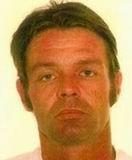
William Richard Bradford
Murderer Brian Kevin Rosenfeld
Murderer · USA · 1985
Brian Kevin Rosenfeld Brian Kevin Rosenfeld was sentenced to three concurrent l…
23 victims
Brian Kevin Rosenfeld
Murderer · USA · 1985
Brian Kevin Rosenfeld Brian Kevin Rosenfeld was sentenced to three concurrent l…
23 victims
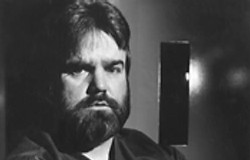 Marvin Gray
Murderer · USA · 1975
Marvin Gray was convicted killer who claimed responsibility for 23 slayings and…
23 victims
Marvin Gray
Murderer · USA · 1975
Marvin Gray was convicted killer who claimed responsibility for 23 slayings and…
23 victims
 Yahweh ben Yahweh
Murderer · USA · 1980
Yahweh ben Yahweh was born and legally named Hulon Mitchell Jr. (October 27, 19…
23 victims
Yahweh ben Yahweh
Murderer · USA · 1980
Yahweh ben Yahweh was born and legally named Hulon Mitchell Jr. (October 27, 19…
23 victims
 Russell Ellwood
Murderer · USA · 1991
Russell Ellwood was a former taxi driver. Authorities suspected him of killing…
20 victims
Russell Ellwood
Murderer · USA · 1991
Russell Ellwood was a former taxi driver. Authorities suspected him of killing…
20 victims
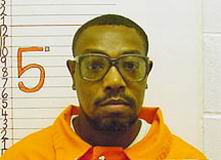 Herbert Smulls
Murderer · USA · 1991
Defendant: Herbert Smulls Accomplice: Norman Brown Victims: · Stephen Honickman…
1 victim
Herbert Smulls
Murderer · USA · 1991
Defendant: Herbert Smulls Accomplice: Norman Brown Victims: · Stephen Honickman…
1 victim
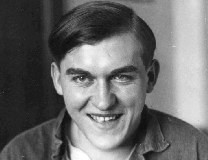 Gordon Northcott
Serial killer · USA · 1928
Gordon Stewart Northcott was a Canadian-born ranch owner who later murdered boy…
20 victims
Gordon Northcott
Serial killer · USA · 1928
Gordon Stewart Northcott was a Canadian-born ranch owner who later murdered boy…
20 victims
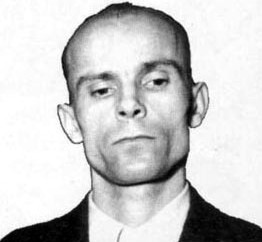 Václav Mrázek
Serial killer · Czechoslovakia · 1951
Václav Mrázek (October 22, 1925 - December 30, 1957) was a Czech serial killer…
7 victims
Václav Mrázek
Serial killer · Czechoslovakia · 1951
Václav Mrázek (October 22, 1925 - December 30, 1957) was a Czech serial killer…
7 victims
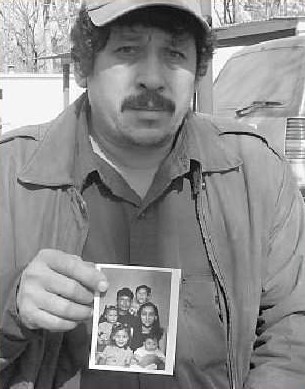 Lucio Franco
Mass murderer · USA · 2001
Lucio Franco was 24 years old. His wife was 21-year-old Maria Franco. Lucio Fra…
5 victims
Lucio Franco
Mass murderer · USA · 2001
Lucio Franco was 24 years old. His wife was 21-year-old Maria Franco. Lucio Fra…
5 victims
- Gender
- male
- Country
- USA
- Location
- Los Angeles County, California, USA
- Date of birth
- 1946
- Age at first offence
- 38
- Characteristics
- rape, drug addict, history of mental illness, mentally ill
- Victim profile
- Shari Miller, 21 (barmaid) / Tracey Campbell, 15 (neighbor)
- Method of murder
- Strangulation
- Date(s) of murder
- July-August 1984
- Years active
- 1984
- Date of arrest
- —
- Status
-
Died in custody
Sentenced to death in 1988; died in prison on March 13, 2008
Case record
Background
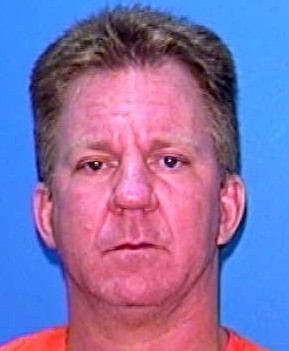
William Richard “Bill” Bradford (1948–2008) was an American murderer incarcerated in San Quentin State Prison for the 1984 murders of his 15-year-old neighbor Tracey Campbell and barmaid Shari Miller.
In July 1984, while out on bail and awaiting trial for rape, Bradford met Shari Miller, a barmaid at a Los Angeles establishment called “The Meet Market”.
In July 2006, the Los Angeles County Sheriff’s Department released a compilation of photos found in Bradford’s apartment in the 1980s, depicting 54 different women in modelling poses. Police believed Bradford was in fact a serial killer, and they believed the photos depicted other victims in moments before their deaths.
Bradford died at the Vacaville prison medical facility on March 13, 2008. A death-row inmate William Bradford died of natural causes while awaiting execution in a California prison, and the California Department of Corrections and Rehabilitation said he died at a prison medical facility in Vacaville; it did not elaborate on the cause of death.
The offence
Bradford lured Shari Miller by promising her a modelling career. He met her while he was awaiting trial for rape and offered to help her build a modelling portfolio.
Bradford took Miller to a remote campsite in the deserts north of Los Angeles, photographed her in a variety of modelling poses, and then strangled her. After killing her, Bradford sliced off her tattoos and removed her blouse. He then transported her body to a Hollywood parking lot, where he dumped the corpse in an adjoining alley.
When Miller’s body was found, there was no identification on it. Miller was therefore labelled “Jane Doe #60”.
Shortly after the murder of Shari Miller, Bradford convinced his 15-year-old neighbor Tracey Campbell that she could be a model. Bradford took Campbell to the same desert campsite, where he likewise photographed and strangled her. Bradford left the body there, covering the face with Shari Miller’s blouse.
Investigation
Investigators became suspicious when they learned that Bradford had been the last person to see Tracey Campbell alive. This led police to obtain a search warrant for Bradford’s apartment, and inside they found photos of Miller and Campbell along with an assortment of 54 other photos of unidentified women.
Police recognized the photos of Miller as “Jane Doe #60” and arrested Bradford on suspicion of murder.
Using a rock formation visible in one of the photos of Miller, police located the camp site in the desert where the murders had occurred. Upon searching the site, police found Campbell’s decomposed body behind the rock formation.
In 2006, Los Angeles County sheriff’s investigators reopened Bradford’s file and made public dozens of pictures of women and girls photographed decades earlier by Bradford. The investigation into Bradford’s possible involvement in other disappearances was to continue.
Officials eventually eliminated all but 14 women as potential victims. Detectives worked to identify 47 women whose pictures were taken decades earlier, and at one height, the work consumed half the sheriff’s Homicide Bureau.
The investigation eliminated most of the potential victims and left a set of remaining women, including several believed most strongly may have have been murdered, with bodies found in remote canyon areas. Authorities linked the manner in which bodies were dumped to the method used in the murders for which Bradford was convicted.
Arrest
Bradford was arrested on suspicion of murder after police recognized the photos of Miller as “Jane Doe #60”.
Trial
Bradford was put on trial in 1988. During the trial phase in which Bradford acted as his own attorney, he offered no evidence or arguments as to his innocence.
Bradford fired his lawyer and chose to act as his own counsel.
The prosecution identified Bradford as a serial killer during the course of the trial, and the prosecution offered no information on murders aside from those of Miller and Campbell.
In his closing statement, Bradford implied he had murdered several other women in addition to Campbell and Miller: “Think of how many you don't even know about. You are so right. That's it.”
The jury found Bradford guilty of both murders and sentenced him to death.
Sentencing
Bradford was sentenced to death in 1988 for the murders four years earlier of Shari Miller and Tracey Campbell.
Earlier, shortly after his arrest, Bradford pleaded no contest to the rape charge he was awaiting trial for and was sentenced to eight years in prison.
Appeals and death row
In 1998, Bradford dropped all of his appeals, claiming that life in San Quentin had become unbearable.
Having had no legal representation for the past 10 years, Bradford hired a lawyer to help speed the process of his execution and began writing poems about life in San Quentin.
His poetry attracted attention from the press, which dubbed him “Death Row Poet”.
Five days before his scheduled execution, Bradford said that he had changed his mind, professing his innocence and declaring that he wanted the execution process to be halted.
2006 events and related identifications
In 2006, Los Angeles County sheriff’s investigators made public dozens of pictures of women and girls photographed decades earlier by Bradford. Authorities suspected at least one of the identified women was a homicide victim linked to Bradford.
Los Angeles County sheriff’s homicide investigators went public with 54 photographs seized from Bradford’s home in 1984 and stored as evidence until a cold-case detective unearthed them.
The sheriff’s homicide unit received more than 2,000 calls and e-mails from as far away as Germany as investigators worked to identify women in the photos.
Authorities said that 34 women had been tentatively identified. The identification process involved confirmation that many of the women or their families were alive, and investigators received 700 clues and eventually identified all but 14 of the missing women.
Some women remaining on the list were unclear as either victims or people who did not want to come forward.
Authorities also identified at least one photograph connected to a known homicide victim from 1978:
- A woman known as Donnalee Campbell Duhamel was identified from a photograph marked “#28”. Duhamel had a decapitated corpse found in a canyon in Malibu in 1978. Investigators determined that Duhamel met Bradford in a Culver City bar, “The Frigate,” a few days before her body was found.
Detectives also revealed that several of the women in the photographs were identified as Bradford’s ex-wives. No indication was given that the ex-wives were dead, and no indication was given that Bradford was suspected of murdering them.
Another identified photograph was described as the sister of CSI: Miami actress Eva LaRue. She was number three in the picture. The CSI: Miami episode “Darkroom” was based on this case.
The “vast majority” of the women in the photos remained unidentified and were viewed as possible rape and/or murder victims.
Police encouraged distribution of the photos nationwide because Bradford spent time in Michigan, Florida, Texas, Oregon, Illinois, Kansas and Louisiana, and because he faced criminal charges in several of those states.
The investigation noted:
- In 1978 Bradford faced criminal charges for sexually assaulting his wife in Michigan.
- In 1980 Bradford was accused of sexual assault in Valparaiso, Florida.
A separate report listed other names and circumstances of potential victims:
- Patricia Dulong, 34, was found dead in Santa Monica in September 1975.
- Donnalee Duhamel, 31, was killed in August 1978, with her body found on Old Topanga Road in Malibu.
Attorney communications and interviews
William Richard Bradford offered to help investigators trying to locate girls and women photographed decades earlier, including three the investigators believed were murdered.
Through his attorney, Bradford stated he would be happy to look at those photos if law enforcement wanted him at San Quentin: “He told me if law enforcement wants to come to San Quentin ... he would be happy to look at those photos,” said his lawyer, Darlene Ricker.
Ricker said: “At this time we're not interested because all he's going to (provide are) self-serving statements, trying to get himself out of it ... muddy the water while we're coming up with evidence,” and she reported that she got a phone call from her client.
Los Angeles County sheriff’s homicide Sgt. Alfred Castro said: “He's going to die anyway. So why not confess?”
Castro also said investigators had no intention of talking to Bradford while they tried to build a potential serial-killing case: “He's going to die anyway,” Castro added, and: “So why not confess?”
Bradford had dismissed efforts to implicate him in the possible deaths or disappearances of women in the photos as “a waste of taxpayers' money.”
Castro said: “He's going to die anyway,” and “So why not confess?”
Bradford was described as having been on death row since May 1988.
Additional allegations, family and witness statements
Bradford denied committing any murders and appealed his conviction and death sentence.
Bradford was convicted in 1987 of first-degree murder in the stranglings of Shari Miller, 21, whom he met in a bar, and Tracey Campbell, 15, whom he described as a neighbor.
An attorney contended that even though Bradford was a freelance photographer and the pictures were seized while in his possession, he may not have taken them: “He hasn't seen these photos, because you see they've been locked up in evidence for 20 years,” his attorney said.
A relative of Tracey Campbell recalled seeing some of the photos: “He showed me all of them,” said Todd Heidrick, 41, the cousin of Tracey Campbell.
Todd Heidrick provided details of his relationship to Tracey Campbell and described his experiences after Tracey disappeared: “He showed me all of them,” Heidrick said. Heidrick was 19 and living with Tracey Campbell and other relatives in a Los Angeles apartment next to Bradford’s. Heidrick said that during a night of drinking, Bradford drove him around town and pointed out locations where he said he had photographed women. Heidrick said he was at work the next day when Bradford apparently went to the apartment, looking for him. Heidrick said Tracey was home alone when family members returned and she was gone. Heidrick said Tracey took care of the household work and the beds were unmade, and he said: “Her purse was there and her cigarettes were there.” Heidrick said he and Tracey’s brother combed the neighborhood for her and stopped at Bradford’s unit. Heidrick said the unit was closed but the woman left a note on the door that said: “the girl next door is missing and I hope to God you had nothing to do with it,” Heidrick recalled.
Bradford’s ex-wife described Bradford as threatening and abusive: “It was a marriage of pure hell,” said Cindy Horton to KNBC-TV on Thursday. Horton described marrying Bradford at age 18 in 1977, and they had a son before their 7-month marriage dissolved. Horton said: “He used to tell me about hurting people and that he was killing people,” and she said: “Nobody would believe me. They just said I was distraught.” Horton described being originally from Michigan and living in Florida. Horton said: “There's not a day that goes by that I don't look in my rearview mirror in my car or my bathroom mirror and expect to see him there to kill me,” and: “Bill Bradford follows through on everything he says, and he'll find a way to get me.”
Horton’s quotes were also described as appearing in The Grand Rapids Press in Michigan, in which Horton said Bradford hit and tortured her and that she still was frightened of him.
Other details
The case involved Bradford being placed on death row, including references to his schedule for execution and statements about halting execution.
Bradford’s case prompted identification efforts involving tens of women in photographs seized from Bradford’s home in 1984 and stored as evidence until cold-case detectives revived the matter.
Police said Bradford spent time in multiple states and faced criminal charges in several of those states, including Michigan and Valparaiso, Florida.
The investigation into possible additional victims continued after Bradford’s death.
Spotted an error, or have more information about this case?