Daniel Steven Jones
Murderer Clinton Lee Young
Murderer · USA
Clinton Lee Young (born July 19, 1983) was convicted of murdering two men in No…
2001 victims
Clinton Lee Young
Murderer · USA
Clinton Lee Young (born July 19, 1983) was convicted of murdering two men in No…
2001 victims
 Ivan Abner Cantu
Murderer · USA
Name: Ivan Abner Cantu · TDCJ number: 999399 · Date of birth: 06/14/1973 · Age…
2000 victims
Ivan Abner Cantu
Murderer · USA
Name: Ivan Abner Cantu · TDCJ number: 999399 · Date of birth: 06/14/1973 · Age…
2000 victims
 Michael John Yowell
Murderer · USA
Name: Michael John Yowell · TDCJ number: 999334 · Date of birth: 01/25/1970 · P…
1998 victims
Michael John Yowell
Murderer · USA
Name: Michael John Yowell · TDCJ number: 999334 · Date of birth: 01/25/1970 · P…
1998 victims
 Michael Duane Zack
Murderer · USA
Michael Duane Zack was convicted and sentenced to death for the 06/13/96 murder…
1996 victims
Michael Duane Zack
Murderer · USA
Michael Duane Zack was convicted and sentenced to death for the 06/13/96 murder…
1996 victims
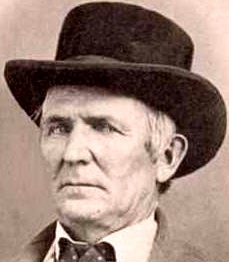 John Doyle Lee
Murderer · USA · 1857
Name: John Doyle Lee Lifespan: September 12, 1812 - March 23, 1877 Legal outcom…
120 victims
John Doyle Lee
Murderer · USA · 1857
Name: John Doyle Lee Lifespan: September 12, 1812 - March 23, 1877 Legal outcom…
120 victims
 Champ Ferguson
Murderer · USA · 1861
Champ Ferguson was born November 29, 1821 in Clinton County, Kentucky, near the…
100 victims
Champ Ferguson
Murderer · USA · 1861
Champ Ferguson was born November 29, 1821 in Clinton County, Kentucky, near the…
100 victims
 Dana Ewell
Murderer · USA · 1992
Dana Ewell (born January 28, 1971, Fresno, California) — American convicted tri…
3 victims
Dana Ewell
Murderer · USA · 1992
Dana Ewell (born January 28, 1971, Fresno, California) — American convicted tri…
3 victims
 Barry Prudom
Murderer · United Kingdom · 1982
Barry Prudom was the prime suspect in the killings of police officers after pol…
3 victims
Barry Prudom
Murderer · United Kingdom · 1982
Barry Prudom was the prime suspect in the killings of police officers after pol…
3 victims
 Bobby Joe Fields
Murderer · USA · 1993
Bobby Joe Fields was executed by lethal injection in Oklahoma on February 13, 2…
1 victim
Bobby Joe Fields
Murderer · USA · 1993
Bobby Joe Fields was executed by lethal injection in Oklahoma on February 13, 2…
1 victim
 Graham Backhouse
Murderer · United Kingdom · 1984
Graham Backhouse was convicted of the murder of Bedale-Taylor and the attempted…
1 victim
Graham Backhouse
Murderer · United Kingdom · 1984
Graham Backhouse was convicted of the murder of Bedale-Taylor and the attempted…
1 victim
 Michael Allen Griffin
Murderer · USA · 1990
Michael Allen Griffin was born on 03/27/70. He was tried in the Eleventh Judici…
1 victim
Michael Allen Griffin
Murderer · USA · 1990
Michael Allen Griffin was born on 03/27/70. He was tried in the Eleventh Judici…
1 victim
 Jessie Misskelley
Homicide · USA · 1993
Jessie Misskelley was sentenced to life plus 40 years in prison on February 4,…
3 victims
Jessie Misskelley
Homicide · USA · 1993
Jessie Misskelley was sentenced to life plus 40 years in prison on February 4,…
3 victims
- Gender
- male
- Country
- USA
- Location
- Nevada, USA
- Date of birth
- May 27, 1961
- Characteristics
- robbery
- Victim profile
- Man (for his trailer)
- Method of murder
- Shooting
- Date(s) of murder
- —
- Years active
- —
- Date of arrest
- —
- Status
-
Sentenced to death
Sentenced to death, 1992 127 F.3d 886 97 Cal.
Case information
- Defendant: Daniel Steven Jones
- Case name (appeal): Frankie Sue Del Papa, Attorney General of the State of Nevada, Petitioner, v. UNITED STATES DISTRICT COURT FOR THE DISTRICT OF NEVADA, Respondent, Daniel Steven Jones, Real Party in Interest.
- Docket number: No. 97-70707
- Court: United States Court of Appeals, Ninth Circuit
- Judges: FLETCHER, REINHARDT, and RYMER
- Submission date: Aug. 1, 1997
- Decision date: Oct. 17, 1997
- Opinion type: Per Curiam Opinion; Concurrence by Judge RYMER
- Lower court docket: D.C. No. CV-N-96-00633-ECR
Timeline
- 1992 — Daniel Steven Jones was sentenced to death.
- Nov. 19, 1996 — The district court entered its first scheduling order.
- Jan. 15, 1997 — The district court issued an order that discovery be completed by July 14, 1997, and that Jones file an amended petition on or before September 17, 1997.
- Jan. 16, 1997 — The district court entered its second scheduling order “constitut[ing] leave of court to conduct discovery” and setting cut-off.
- Apr. 24, 1997 — The Ninth Circuit issued an unpublished order in McDaniel v. U.S. District Court (Bennett), No. 97-70344.
- June 13, 1997 — The State submitted to the Ninth Circuit a petition for a writ of mandamus or prohibition vacating the district court’s discovery order.
- June 17, 1997 — Each of the State’s emergency stay motion and mandamus petition was filed.
- Mar. 21, 1997 — The Ninth Circuit issued unpublished orders in McDaniel v. U.S. District Court (Riley), No. 97-70520, and in McDaniel v. U.S. District Court (Haberstroh), No. 97-70228.
Background
Daniel Steven Jones pled guilty to and was convicted of murder in Nevada. A three-judge panel of the state court sentenced him to death. The Nevada Supreme Court upheld his conviction and sentence and dismissed his subsequent motion for review. After appointed counsel failed to notify him of the Nevada Supreme Court’s decision, or to provide him with a copy of that decision, Jones wrote to the district court requesting assistance in pursuing further appeals.
Habeas proceedings and discovery
The district court treated Jones’s letter as initiating a habeas action and appointed counsel for Jones. Jones, through counsel, filed a first habeas petition alleging four claims. The petition provided a factual basis for each claim and stated that each had been presented to the Nevada courts on direct appeal or in a petition for post-conviction relief. Jones sought and received from the district court a stay of execution.
On January 15, 1997, the district court issued an order requiring that discovery be completed by July 14, 1997, and requiring that Jones file an amended petition on or before September 17, 1997. Between January and June 1997, the State complied with at least one of Jones’s discovery requests and a discovery dispute was resolved without the benefit of an order compelling production.
Jones filed a first habeas petition alleging four claims:
- The three-judge sentencing panel violated the Eighth and Fourteenth Amendments by failing to consider mitigating evidence.
- Jones’s Sixth and Fourteenth Amendment rights were violated when the prosecutor expressed his opinion as to Jones’s guilt.
- Jones’s Eighth and Fourteenth Amendment rights were violated because the court failed to order a competency hearing at either the guilt or penalty phase, or to appoint a psychiatrist, despite evidence that Jones’s mental state was an issue.
- Jones’s trial and appellate counsel were ineffective, depriving him of his Sixth and Fourteenth Amendment rights.
Mandamus petition and emergency motion
On June 13, 1997, the State submitted to the Ninth Circuit a petition for a writ of mandamus or prohibition vacating the district court’s discovery order. The State also filed an emergency motion for a stay of the order.
The State claimed that Jones had not sought discovery through the state courts, had not outlined factual allegations supporting his habeas claims, had presented unexhausted federal claims, that his requests were analogous to “pre-petition” discovery, and that he was attempting to use the discovery process for a “fishing expedition.” The panel stated that the State’s claims were spurious and found no support in the record before the court.
The panel said the State’s petition and emergency motion were “virtually carbon copies” of those filed in McDaniel v. U.S. District Court (Bennett), No. 97-70344, decided by the Ninth Circuit on Apr. 24, 1997. The panel stated that in an unpublished order in that case, a panel denied the motion for an emergency stay, dismissed the mandamus petition, and left the discovery process to the district court’s sound discretion.
The panel stated that Hill and Nicolaus involved pre-petition discovery, and that Jones filed a habeas petition containing only exhausted claims and including factual allegations in support of each claim. The panel stated that Jones had “presented specific allegations in the form of a verified petition,” and was entitled to discovery. The panel cited the Supreme Court’s reconfirmation of the right of capital habeas petitioners to obtain discovery upon a showing of “good cause.”
The panel stated that Jones had shown “good cause” for seeking discovery because Jones’s appellate counsel, against whom Jones sought to assert an ineffective assistance claim, apparently destroyed Jones’s entire file. The panel stated that Jones’s claims did not appear purely speculative or without any basis in the record, that Jones raised only four claims, each including factual allegations and a statement of exhaustion, and that he therefore was entitled to discovery under Rule 6 of the Federal Rules Governing Section 2254 Cases. The panel cited Harris v. Nelson and Jones v. Wood.
The panel held that the district court acted well within its discretion in ordering discovery.
Court’s reasoning (Bauman factors and waiver/delay)
In determining whether mandamus should issue, the panel discussed factors from Bauman v. U.S. District Court:
- Whether the party seeking the writ had no other adequate means, such as direct appeal, to attain the relief he desired.
- Whether the petitioner would be damaged or prejudiced in a way not correctable on appeal.
- Whether the district court’s order was clearly erroneous as a matter of law.
- Whether the district court’s order was an oft repeated error or manifested persistent disregard for the federal rules.
- Whether the district court’s order raised new and important problems or issues of law of first impression.
The panel concluded that none of these factors supported the State’s petition. The panel stated that the district court did not clearly err as a matter of law because Jones was entitled to discovery. The panel stated that a stay of discovery or a writ of mandamus was not the State’s only adequate means of relief, noting the State was not foreclosed from making routine challenges to specific discovery requests based on privilege or relevance.
The panel stated it was unlikely the State could correct negative effects on appeal, but that this factor carried little weight compared with the needs of an incarcerated capital habeas petitioner. The panel stated that this was not an oft repeated error, but instead involved another attempt by the State to circumvent discovery in a capital habeas case. The panel stated that the case raised no new legal issues and also noted the State waited five months before seeking relief from the district court’s discovery order and complied with at least one of Jones’s discovery requests.
The panel stated that the Nevada Attorney General’s office helped formulate a general discovery order for habeas cases identical to the order the district court issued. The panel stated that the State was not entitled to emergency relief or mandamus unless it would seriously be harmed by denial of relief, and that unreasonable delay, partial compliance, and implicit consent undermined any claim of irreparable injury or a balance of hardships tipping in its favor. The panel cited Baldwin Co. Welcome Center v. Brown on diligence and Artukovic v. Rison and In re Cement Antitrust Litigation on stays and mandamus.
The panel stated that the State’s failure to immediately and unequivocally assert opposition to discovery undermined its argument that extraordinary circumstances existed warranting mandamus relief. The panel declined to facilitate continuous attempts to undermine capital habeas petitioners’ efforts to obtain information needed to present and litigate claims.
Outcome
- The panel denied the emergency stay motion and dismissed the mandamus petition.
- The panel issued a brief per curiam opinion.
- The emergency motion was denied and the petition for a writ of mandate was dismissed.
Concurrence by Judge RYMER
Judge RYMER concurred in the judgment. He stated he agreed that the State’s emergency motion to stay scheduling orders should be denied and that the petition for writ of mandamus should be dismissed, but for different reasons.
Judge RYMER stated that the State’s filing should have been dismissed as premature because the district court had not been asked to stay its orders. Judge RYMER stated that the State later filed a motion to stay in the district court, which the district court denied, and that presumably a renewed motion in the appellate court would then be ripe.
Judge RYMER stated that even treating it as ripe, the motion still failed because there was no “emergency.” He described the district court’s first scheduling order entered November 19, 1996, and its second scheduling order entered January 16, 1997 after a status conference in which discovery and the time for conducting it were discussed. Judge RYMER stated that no objection was made to either order until less than a month before the cut-off date when the State sought a stay.
Judge RYMER stated that the district court denied a stay and that the record did not reflect any live dispute between the parties over specific discovery matters. He concluded that there was no way the district court abused its discretion in denying a stay, and no basis for doing otherwise.
Judge RYMER stated that the district court’s orders were case management orders requiring counsel to meet and confer regarding discovery and setting the time period for completing discovery, and that they neither approved nor disapproved any particular request. He stated that the State did not object when the first order was entered, or at the first status conference, or when the second status conference was held, or when the second scheduling order was entered permitting discovery and establishing a cut-off date.
Judge RYMER quoted the district court’s explanation in denying the stay:
“discovery was authorized in this action pursuant to the established practice in this district, a practice that was devised some years ago in cooperation with the Attorney General's Office and the then death penalty resource center ...”
Judge RYMER stated that the State waived any right to appellate review of whether discovery was ordered in error, and that it was too late to ask the appellate court to vacate the district court’s scheduling orders. He stated there was no longer anything concrete to rule on because the scheduling orders had been complied with and no concrete dispute remained because there was no live dispute. He stated that for these reasons, the mandamus petition should simply be dismissed and that everything else in the majority opinion was dicta.
Judge RYMER also stated that the State was entitled to argue in another case where its position was timely preserved that permitting discovery after a bare-bones petition but before an amended, real petition is on file, and before the court made a discrete finding of good cause for discovery on exhausted claims as required by Rule 6(a), was the same thing in substance if not form as pre-petition discovery procedure condemned in Nicolaus. He stated the district court should decide questions about whether Jones’s claims had a basis in the record, were exhausted, or whether there was good cause for discovery.
Other parties mentioned
- E.K. McDANIEL — Warden of Ely State Prison
- Frankie Sue Del Papa — Attorney General of the State of Nevada
- United States District Court for the District of Nevada — Respondent
Other details
- The panel included a section labeled “***** *” indicating the panel found the case suitable for submission without oral argument pursuant to Fed. R. App. P. 34(a) and Ninth Cir. R. 34-4.
- The record included “SEX: M RACE: W TYPE: N MOTIVE: CE” and “MO: Killed one Nev. man for his trailer; others suspected in Fla.”
- A “DISPOSITION” field in the provided text stated: “Condemned on one count in Nev.”
- A line in the provided text stated “Michael Newton - An Encyclopedia of Modern Serial Killers,” along with additional navigation-like text (“home last updates contact”).


Spotted an error, or have more information about this case?