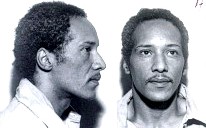
William Bracy
Murderer Ervil LeBaron
Murderer · USA · 1972
Ervil Morrell LeBaron (1925 to August 16, 1981) was the leader of a polygamous…
35 victims
Ervil LeBaron
Murderer · USA · 1972
Ervil Morrell LeBaron (1925 to August 16, 1981) was the leader of a polygamous…
35 victims
 Brian Kevin Rosenfeld
Murderer · USA · 1985
Brian Kevin Rosenfeld Brian Kevin Rosenfeld was sentenced to three concurrent l…
23 victims
Brian Kevin Rosenfeld
Murderer · USA · 1985
Brian Kevin Rosenfeld Brian Kevin Rosenfeld was sentenced to three concurrent l…
23 victims
 Marvin Gray
Murderer · USA · 1975
Marvin Gray was convicted killer who claimed responsibility for 23 slayings and…
23 victims
Marvin Gray
Murderer · USA · 1975
Marvin Gray was convicted killer who claimed responsibility for 23 slayings and…
23 victims
 Yahweh ben Yahweh
Murderer · USA · 1980
Yahweh ben Yahweh was born and legally named Hulon Mitchell Jr. (October 27, 19…
23 victims
Yahweh ben Yahweh
Murderer · USA · 1980
Yahweh ben Yahweh was born and legally named Hulon Mitchell Jr. (October 27, 19…
23 victims
 Emerson Rudd
Murderer · USA · 1988
Emerson Rudd was executed by lethal injection in Texas on November 15, 2001. Th…
1 victim
Emerson Rudd
Murderer · USA · 1988
Emerson Rudd was executed by lethal injection in Texas on November 15, 2001. Th…
1 victim
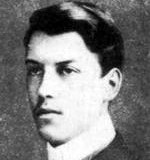 Horace Rayner
Murderer · United Kingdom · 1907
Horace Raynor was sentenced to death for the killing of William Whiteley. After…
1 victim
Horace Rayner
Murderer · United Kingdom · 1907
Horace Raynor was sentenced to death for the killing of William Whiteley. After…
1 victim
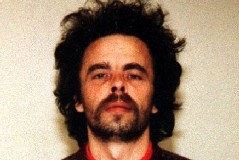 Robin Ligus
Serial killer · United Kingdom · 1994
Robin Stanislaw Ligus was a father-of-three who was serving a life term for the…
3 victims
Robin Ligus
Serial killer · United Kingdom · 1994
Robin Stanislaw Ligus was a father-of-three who was serving a life term for the…
3 victims
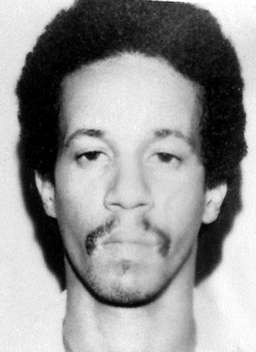 Leo Edwards
Murderer · USA · 1980
Name: Leo Edwards Jr. Age: 36 Race: black Home: New Orleans Status at time of e…
3 victims
Leo Edwards
Murderer · USA · 1980
Name: Leo Edwards Jr. Age: 36 Race: black Home: New Orleans Status at time of e…
3 victims
 Joseph Lave
Murderer · USA · 1992
Joseph Lave was convicted in connection with the murder of Justin Marquart duri…
2 victims
Joseph Lave
Murderer · USA · 1992
Joseph Lave was convicted in connection with the murder of Justin Marquart duri…
2 victims
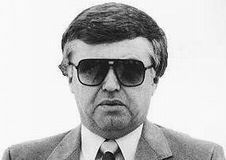 Wilbert Colin Thatcher
Murderer · Canada · 1983
Wilbert Colin Thatcher was convicted of the murder of his ex-wife, JoAnn Wilson…
1 victim
Wilbert Colin Thatcher
Murderer · Canada · 1983
Wilbert Colin Thatcher was convicted of the murder of his ex-wife, JoAnn Wilson…
1 victim
- Gender
- male
- Country
- USA
- Location
- Illinois/Arizona, USA
- Date of birth
- August 23, 1941
- Age at first offence
- 39
- Characteristics
- armed robbery, kidnapping, murder for hire, torture
- Victim profile
- Three men expecting to buy drugs / Patrick Redmond and his mother-in-law, Helen Phelps
- Method of murder
- Shooting
- Date(s) of murder
- November 12/December 31, 1980
- Years active
- 1980
- Date of arrest
- —
- Status
-
Sentenced to death
Sentenced to death in Arizona on February 11, 1983; sentenced to death in Illinois in 1985
Case overview
William Bracy was convicted, in a joint trial with Murray Hooper and in related proceedings involving other defendants, of multiple murders, along with counts including conspiracy to commit first-degree murder, attempted first-degree murder, kidnapping, armed robbery, and first-degree burglary. Bracy was sentenced to death for the first-degree murder convictions.
Separately, in later Illinois federal habeas proceedings involving William Bracy and Roger Collins, Bracy’s and Collins’s convictions were affirmed while their death sentences were vacated, and the case was remanded for further proceedings on sentencing.
Timeline
- February 11, 1983 — Bracy was sentenced to death in Arizona.
- 1985 — Bracy was sentenced to death in Illinois.
- November 4, 1982 — Start of trial (Arizona proceedings).
- December 24, 1982 — Verdicts (Arizona proceedings).
- September 21, 2001 — Argued in the United States Court of Appeals for the Seventh Circuit.
- March 29, 2002 — Decided en banc by the United States Court of Appeals for the Seventh Circuit.
- 1994 — A federal district court denied habeas relief as to conviction issues; sentencing relief was granted.
- 1999 — A federal district court decision (United States ex rel. Collins v. Welborn) denied habeas relief as to each petitioner’s conviction but granted relief as to their sentencing.
- 2001 — The Seventh Circuit affirmed habeas-related sentencing relief; later the opinion was vacated when the court voted to rehear en banc.
- 1996 — The Seventh Circuit affirmed denial of habeas relief in a panel decision.
- 1997 — The United States Supreme Court reversed the Seventh Circuit’s decision on discovery.
Background
On the evening of December 31, 1980, William Bracy and Murray Hooper (both from Chicago) and Edward McCall (a former Phoenix police officer) went to the home of Patrick Redmond in Phoenix. Patrick Redmond, his wife, and his mother-in-law, Helen Phelps, were at home preparing for a New Year’s Eve party.
Separately, later proceedings addressed a long history of Illinois state-court proceedings, federal habeas petitions, and appellate review connected to the death penalty.
The offence
Bracy, Hooper, and McCall entered the Redmond home at gunpoint and forced the Redmonds and Mrs. Phelps into the master bedroom. After taking jewelry and money, the intruders bound and gagged the victims. They then shot each victim in the head and also slashed Mr. Redmond’s throat.
Patrick Redmond and Helen Phelps died from their wounds. Mrs. Redmond survived and later identified all three killers.
Investigation and evidence
Mrs. Redmond later identified all three killers as the people who committed the home invasion and killings.
In the Illinois death penalty litigation involving Bracy and Roger Collins, Morris Nellum testified regarding the events leading to the episode in which three men were expecting to buy drugs, were instead robbed, and were taken from a Chicago apartment to a viaduct at Roosevelt Road and Clark Street where they were shot to death. Nellum admitted involvement in the crimes. Nellum testified that Collins asked him to drive Collins’ Cadillac to Roosevelt Road and Clark Street because Collins wanted to be picked up there. Nellum saw Collins, Bracy, and Hooper place three men in the back seat of an Oldsmobile; Collins drove away in that car. Bracy drove his own car and Nellum drove the Cadillac.
Nellum testified that when he arrived at the viaduct, he heard shots, and he immediately saw Bracy running to his automobile carrying a sawed-off shotgun. Collins got into the car with Nellum. As they sped away, Collins said:
“That damn Hooper. I told him to wait until — I wanted to use the shotgun because they can't trace the shotgun, but he used the gun instead.”
Nellum testified that Bracy gave him $125 and told him:
“Just be cool.”
Nellum testified that he then drove with Collins to Lake Michigan, where Collins threw two handguns into the lake: a .38-caliber Charter Arms revolver and a .357 revolver. The Charter Arms revolver was identified by Christina Nowell, who testified that Bracy previously had the opportunity to take the revolver from her. Nowell also testified that Bracy later told her:
“he had murdered some people with [her gun] and threw it into the Chicago River.”
A gun later discovered in the lake was Nowell’s gun.
Arrest
No arrest facts were provided in the supplied material.
Trial
Arizona trial proceedings
A joint trial in Arizona convicted Bracy and Hooper of the murders after the jury trial. In the related joint trial, McCall and Robert Cruz (alleged to have hired the killers) were also convicted of the murders.
The trial court imposed the death penalty for each first-degree murder conviction.
- Presiding Judge: Cecil Patterson
- Prosecutors: Joseph Brownlee and Michael Jones
- Start of Trial: November 4, 1982
- Verdicts: December 24, 1982
- Sentencing: February 11, 1983
In Arizona proceedings, Bracy was convicted in Superior Court (Maricopa) of:
- one count of conspiracy to commit first-degree murder
- two counts of first-degree murder
- one count of attempted first-degree murder
- three counts of kidnapping
- three counts of armed robbery
- one count of first-degree burglary
Illinois-related trial and sentencing proceedings
In the Illinois state-court proceedings described within the Seventh Circuit en banc decision, Bracy and Roger Collins were convicted, after a jury trial, on multiple charges including murder, armed robbery, and aggravated kidnaping. Following a further, two-stage hearing before the same jury, both men were sentenced to death for their murder convictions and to concurrent 60-year prison sentences on their other convictions.
In the Seventh Circuit en banc decision, the court described procedural steps in which the Illinois Supreme Court affirmed convictions and sentences, and later postconviction relief was sought and denied.
Sentencing
Arizona sentencing
The death penalty was imposed for each first-degree murder conviction.
Aggravating circumstances found in the Arizona proceedings included:
- Prior convictions punishable by life imprisonment
- Prior convictions involving violence
- Grave risk of death to others (struck on appeal)
- Pecuniary gain
- Especially heinous/cruel/depraved
Mitigating circumstances were found to be none sufficiently substantial to call for leniency. The court found that Bracy’s claim of innocence was not a mitigating circumstance. Bracy testified at the sentencing hearing that he was not in Arizona on the date of the murder and did not kill anyone. The court noted that the jury found the opposite and that there was ample evidence to support the verdict.
Illinois death sentences and vacatur
In the Seventh Circuit en banc decision concerning Bracy and Collins, the judgment affirming convictions but vacating death sentences was affirmed, with the State permitted to proceed with a new penalty hearing as directed by the district court, and the case remanded for further proceedings.
Appeals
Arizona automatic direct appeal
The Arizona Supreme Court affirmed the conviction and sentences.
The Arizona Supreme Court upholding or reversing specific aggravating circumstances included:
- (F)(1) Prior Life or Death Felony — UPHELD
- (F)(2) Prior Violent Felony — UPHELD
- (F)(3) Grave Risk of Death — REVERSED
- (F)(5) Pecuniary Gain — UPHELD
- (F)(6) Heinous, Cruel or Depraved — UPHELD
The Arizona Supreme Court’s analysis included:
- The (F)(1) finding was supported by prior conviction in Illinois on three counts of first-degree murder.
- The (F)(2) finding was supported by prior convictions in Illinois of three counts of armed robbery and three counts of aggravated kidnapping, with judicial notice that those crimes involved the use or threat of violence against others.
- The (F)(3) grave risk of death finding was reversed. The defendant and two others bound and gagged three people and shot each in the head, intending to kill them. One victim survived. The aggravating circumstance did not exist for either of the other two murders because the survivor was an intended victim and not a bystander in the zone of danger during the murderous act.
- For (F)(5) pecuniary gain, the court found sufficient evidence that Bracy was a hired murderer and concluded the aggravator “indisputably” applied. Evidence described advance payment of a stack of $100 bills, a statement that Bracy would be getting $50,000 for a “big job” described as “not very pretty,” and descriptions of the murders as contract killings.
- For (F)(6) heinous, cruel or depraved, the court cited State v. McCall. The victims experienced mental anguish. The victims were “herded” throughout the home where they were killed at gunpoint. They were forced to lie down on the bed, with their hands taped behind their backs and gagged with socks. They knew the assailants were armed, and it could be inferred they were uncertain as to their ultimate fate. Except for the first victim shot, the victims had to experience hearing their loved ones shot to death and then wait for their own turn. The court considered the statement:
“we don't need these two anymore” immediately before the shooting started as relevant to cruelty and depravity. Physical pain was found as to one victim. Expert medical testimony was described as establishing that the victim did not die from the first gunshot wound to her head, did not lose consciousness, and suffered pain. The court found heinous or depraved, gratuitous violence, and mutilation. Mutilation was found where one victim was shot twice in the head and had his throat slashed open. Medical testimony established the timing of slashing as just at the time of death or shortly thereafter. The slashing was designed to be a “message” to warn other people. Senselessness was found, with the victim described as an elderly houseguest of the other victims, having no possible interest in the business affairs, and her murder described as not furthering the plan. Helplessness was found and referenced as in senselessness.
The Arizona Supreme Court found no mitigating circumstances sufficiently substantial, and it affirmed the conviction and sentences.
The Arizona Supreme Court published opinions including:
- State v. Bracy, 145 Ariz. 520, 703 P.2d 464 (1985)
- State v. Bracy, 145 Ariz. 520, 751 P.2d 464 (1985)
Illinois federal appellate proceedings (Seventh Circuit en banc and Supreme Court steps)
In federal habeas proceedings described in the Seventh Circuit en banc decision:
- A district court decision in 1994 denied relief.
- The Seventh Circuit affirmed in a 2-1 panel decision.
- The United States Supreme Court reversed on the discovery issue, holding Bracy had made a sufficient showing under Rule 6(a).
- The cases were remanded for reconsideration.
- The district court eventually denied habeas relief as to conviction issues but granted relief as to sentencing.
- The Seventh Circuit affirmed the district court as to convictions but reversed on sentencing in a 2-1 panel decision; subsequently, the opinion was vacated when the court reheard en banc.
- In the Seventh Circuit en banc decision dated March 29, 2002, the judgment affirming convictions but vacating death sentences was affirmed, with remand for further proceedings.
The en banc decision included discussion of aggravating evidence and procedural issues at sentencing, including the admission of evidence regarding murders in Arizona as aggravating factors. The decision also described quoted courtroom exchanges about arguments and mitigation.
In the Seventh Circuit en banc decision, McDonnell made an argument against the death penalty, and the court reproduced the argument verbatim as part of the description of the penalty phase:
“This is a human being and we don't have the right to take another person's life. Only God can do that. God gave us this life and only God can take it away, and I don't care, none of us have the right to take a fellow human being's life, not Bracy, not his Honor, not the prosecutor, and not you people.”
The decision also reproduced exchanges concerning arguments at sentencing:
“MR. McDONALD [SIC]: Wait a moment, judge.
THE COURT: What do you want?
MR. McDONALD: I want to argue.
THE COURT: You do?
MR. McDONALD: Certainly.
Maloney then called for a side-bar conference:
THE COURT: You don't have to argue in this case.
MR. FRAZIN: Arguments are part of it.
THE COURT: They can be but they don't have to be.
Ultimately, arguments were allowed.”
The decision also included quoted statements attributed to Collins and also to the prosecution’s characterization of McDonnell’s argument and remarks about veterans, including:
“a slap in every veteran's face.”
The decision included a quoted question about the possibility of escape:
“Should we give them another chance; lock them up and give them a chance to escape and kill someone else?”
Other related convictions and retrials mentioned
In the Arizona-related proceedings described in the material:
- Cruz won a new trial on appeal, was convicted again, won another new trial on appeal, and was ultimately found not guilty.
- Joyce Lukezic (the wife of Mr. Redmond’s business partner) was also charged with the murders and was convicted in a separate trial.
- After obtaining a new trial, Joyce Lukezic was found not guilty.
People named
- William Bracy — defendant
- Murray Hooper — co-defendant (from Chicago), convicted with Bracy
- Edward McCall — former Phoenix police officer; convicted with Cruz and others in joint trial
- Patrick Redmond — victim
- Helen Phelps — victim
- Mrs. Redmond — victim and survivor who later identified the killers
- Robert Cruz — alleged to have hired the killers; convicted and later found not guilty after multiple appeals
- Joyce Lukezic — charged with the murders; convicted in separate trial and later found not guilty
- Cecil Patterson — presiding judge (Arizona proceedings)
- Joseph Brownlee and Michael Jones — prosecutors (Arizona proceedings)
- Roger Collins — co-petitioner/cross-appellee in Seventh Circuit en banc proceedings; also a defendant in Illinois death penalty proceedings
- Thomas J. Maloney — described as the circuit judge involved in Illinois federal litigation context
- James Schomig and Roger Cowan — respondents/cross-appellants in the Seventh Circuit case caption
- Morris Nellum — chief witness against Bracy and Collins in the Illinois death penalty proceeding described
- Christina Nowell — witness identifying a handgun and testifying about statements made by Bracy
- Irvin Frazen — Collins’ attorney (mentioned in connection with a severance request)
- Robert McDonnell — attorney appointed to represent Bracy
- William T. Hart — district judge whose opinion was referenced
- Ilana Diamond Rovner — circuit judge in dissent/concurring discussion in the Seventh Circuit en banc material
- Terence T. Evans — circuit judge authoring the en banc decision
- Chief Judge Flaum and other Seventh Circuit judges named in the en banc decision — referenced in discussion of the divided court and votes
Methods and conduct described
The material described:
- Entry at gunpoint.
- Binding and gagging of victims.
- Shooting each victim in the head.
- Slashing Mr. Redmond’s throat.
- Forensic and evidentiary details including slashing timing described as “just at the time of death or shortly thereafter,” and an assertion that the slashing was designed to be a “message.”
- In the Illinois death episode narrative: robbery, taking victims from a Chicago apartment to a viaduct at Roosevelt Road and Clark Street, shooting to death, and disposal of two handguns into Lake Michigan.
- Statements included that Collins wanted to use a sawed-off shotgun because “they can't trace the shotgun,” and that Hooper used the gun instead.
Legal outcomes at the center of the record
- In Arizona, Bracy received the death penalty for first-degree murder convictions, and the conviction and sentences were affirmed on automatic direct appeal.
- In the Seventh Circuit en banc decision, Bracy and Collins’s convictions were affirmed while their death sentences were vacated, and the State could proceed at its discretion with a new penalty hearing as directed by the district court.
Spotted an error, or have more information about this case?