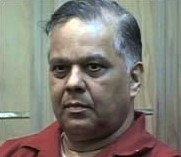
Krishna Maharaj
Murderer Brian Kevin Rosenfeld
Murderer · USA · 1985
Brian Kevin Rosenfeld Brian Kevin Rosenfeld was sentenced to three concurrent l…
23 victims
Brian Kevin Rosenfeld
Murderer · USA · 1985
Brian Kevin Rosenfeld Brian Kevin Rosenfeld was sentenced to three concurrent l…
23 victims
 Yahweh ben Yahweh
Murderer · USA · 1980
Yahweh ben Yahweh was born and legally named Hulon Mitchell Jr. (October 27, 19…
23 victims
Yahweh ben Yahweh
Murderer · USA · 1980
Yahweh ben Yahweh was born and legally named Hulon Mitchell Jr. (October 27, 19…
23 victims
 Russell Ellwood
Murderer · USA · 1991
Russell Ellwood was a former taxi driver. Authorities suspected him of killing…
20 victims
Russell Ellwood
Murderer · USA · 1991
Russell Ellwood was a former taxi driver. Authorities suspected him of killing…
20 victims
 David Lynn Carpenter
Murderer · 1991
David Lynn Carpenter was sentenced to death in the state of Texas. He was liste…
1 victim
David Lynn Carpenter
Murderer · 1991
David Lynn Carpenter was sentenced to death in the state of Texas. He was liste…
1 victim
 Robert Allen Weitzel
Homicide? · USA · 1995
Robert Allen Weitzel was a psychiatrist charged in relation to the deaths of fi…
5 victims
Robert Allen Weitzel
Homicide? · USA · 1995
Robert Allen Weitzel was a psychiatrist charged in relation to the deaths of fi…
5 victims
 Luke Mitchell
Homicide · United Kingdom · 2003
Luke Muir Mitchell (born July 24th 1988) was a Scottish teenager convicted of m…
1 victim
Luke Mitchell
Homicide · United Kingdom · 2003
Luke Muir Mitchell (born July 24th 1988) was a Scottish teenager convicted of m…
1 victim
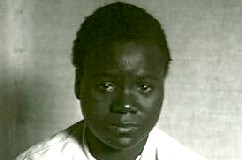 Virginia Christian
Homicide · USA · 1912
Virginia Christian was the first woman to die in the electric chair in Virginia…
1 victim
Virginia Christian
Homicide · USA · 1912
Virginia Christian was the first woman to die in the electric chair in Virginia…
1 victim
 Samuel Morgan
Murderer · Gran Bretaña · 1940
Samuel Morgan was a 28-year-old soldier AWOL from the Irish Guards at Seaforth…
1 victim
Samuel Morgan
Murderer · Gran Bretaña · 1940
Samuel Morgan was a 28-year-old soldier AWOL from the Irish Guards at Seaforth…
1 victim
- Gender
- male
- Country
- USA
- Location
- Miami, Florida, USA
- Date of birth
- January 26, 1939
- Age at first offence
- 47
- Characteristics
- —
- Victim profile
- Derrick Moo Young, 53, and his son, Duane Young, 23
- Method of murder
- Shooting
- Date(s) of murder
- October 16, 1986
- Years active
- 1986
- Date of arrest
- Same day
- Status
-
Life imprisonment
Sentenced to death in 1987; commuted to life imprisonment in 2002
Case record: Krishna Maharaj
Background
Krishna Maharaj (born January 26, 1939) was a Trinidad and Tobago-born British businessman and brother of Ramesh Maharaj, former Attorney General of Trinidad and Tobago.
Maharaj moved to the United Kingdom in 1960, where he remained until 1985 when business interests took him to Florida.
In Florida, Maharaj was dissatisfied with the handling of his business affairs by associate Derrick Moo Young and his son Duane, and he filed a civil lawsuit against them.
Maharaj arranged a false meeting with Derrick Moo Young in the DuPont Plaza Hotel. Derrick Moo Young turned up to room 1215 together with his son Duane.
Maharaj absolutely denied committing the murders for which he was convicted. He claimed he was 40 miles away at the time of the murders, and he also said he was 30 miles away from the crime scene at the time of the murders.
Maharaj reportedly suffered from diabetes and heart disease.
The offence
In October 1986, Derrick Moo Young and his son Duane were shot to death in a Miami hotel suite.
Once inside room 1215, Maharaj appeared with a gun from behind a door. An argument resulted, and Derrick Moo Young was shot to death by Maharaj.
The prosecution stated that Duane was taken upstairs in the suite and shot by Maharaj.
Investigation
The prosecution stated that the alleged motive was that Derrick Moo Young had fraudulently taken money from Krishna Maharaj's relatives in Trinidad, and Maharaj wanted to confront Moo Young to demand repayment of the money.
Maharaj denied the killings, saying Derrick Moo Young and his son were victims of Miami's drugs underworld.
Questions about the reliability of the prosecution witnesses arose during later proceedings and investigations. Defence attorneys maintained that evidence was withheld which would have shown that, contrary to the state's theory, a number of other individuals had motives for murdering the Moo Youngs.
Defence lawyers maintained that evidence was not presented at trial that would have established an alibi for Maharaj, and they claimed that five alibi witnesses were never called to testify.
A Newsnight investigation traced a new alibi witness. The witness said she saw Krishna Maharaj in Fort Lauderdale twice during the time when the state said the murders occurred in Miami, between 11am and noon on 16 October 1986.
When asked whether it was feasible that sometime between 11am and noon Krishna Maharaj could have been in downtown Miami committing murder, the witness replied:
"No, it's not. No, it's not. Absolutely not."
The Newsnight investigation also tracked down Adam Hosein in Trinidad. George Abchal, a former employee of Hosein, claimed that on the day of the murders Hosein said he was going to the hotel where the killings occurred. Abchal also claimed a gun and silencer were missing from Hosein's drawer and that night Hosein told him he had "eliminated" a few people. The man was said to have never been questioned by the police in relation to this case.
The defence team asserted that Neville Butler, described as the only apparent eyewitness, failed part of a lie-detector test and that his account was riddled with inconsistencies, including changing versions of who booked the hotel room where the murders took place.
A tour operator, Prince Ellis, was quoted as saying he saw Butler on the day of the murders. Prince Ellis said he spent the evening with Butler and another man Eddie Dames. Ellis claimed Butler had blood on his shirt, had never mentioned Krishna Maharaj's name once during the evening, and was told by Dames to get his "story straight" before going to the police. Ellis also said Butler implied that more than one person was involved in the shooting, contrary to his account in court that Maharaj had acted alone.
The defence team stated that one prosecution witness, Jamaican Tino Geddes, originally provided an alibi for Krishna Maharaj but changed his story on the eve of the trial in 1987 to say that the Londoner had planned the murders. The defence team also stated that, at the time of the trial, Geddes was facing a criminal trial in Jamaica for bringing ammunition into Jamaica from the US, a charge which could carry a jail sentence.
Maharaj's British defence lawyer Clive Stafford Smith was quoted:
"If the jury had really got the story about how Tino was getting favours from the government it would have made them look very differently at Tino"
The Newsnight investigation also included claims that authorities helped Geddes with a charge for driving under the influence of alcohol, and that prosecutors went to a lap-dancing bar with their star witness.
Arrest
Maharaj reportedly was not told when arrested of his right to notify the British consulate, and the consulate was not informed of the arrest. Defence and appeals raised this as a dual violation of international law.
Trial
Maharaj was charged with the murders and brought to trial in October 1987.
On the third day of the trial, the presiding judge was arrested on charges of bribery in an unrelated case. A substitute judge was called in, and the trial proceeded.
The jury recommended a sentence of death for the murder of Duane Moo Young by a narrow vote of 7-5.
Sentencing
In 1987, Maharaj was convicted of the murders of Derrick Moo Young and Duane Moo Young and sentenced to death.
During the resentencing referred to later, a jury of 12 voted by 11 to one to reduce his death sentence to life imprisonment.
Maharaj received a sentence of death for the murder of Duane Moo Young and a life imprisonment sentence for the death of Derrick Moo Young.
Florida Judge Jerald Bagley said that he had no reason to override the jury's recommendation.
Appeals
In 1996, the Supreme Court of Florida granted an evidentiary hearing to resolve claims of prosecutorial misconduct and ineffective assistance of counsel.
The Supreme Court of Florida expressed concern that the presiding judge at an earlier appeals proceeding had been the supervisor of the assistant state attorneys who had prosecuted Maharaj at trial.
Maharaj's death sentence was overturned after an evidentiary hearing in September 1997. The appellate court found that the trial judge had erred by asking the prosecution to prepare an order sentencing Maharaj to death before the sentencing hearing had even begun.
The appellate court and later claims described new evidence undermining the reliability of the prosecution's case and casting doubt on the conviction itself.
Separate amicus curiae briefs were filed by members of the House of Commons, the House of Lords and the European Parliament as well as by the Bar of England and Wales Human Rights Committee, outlining their concerns that Maharaj's trial fell below internationally accepted standards and calling for a new trial.
It was also stated that three of these 'friend of the court' briefs submitted that the length of time Maharaj had spent on death row constituted cruel and unusual punishment or inhuman and degrading treatment.
In 2001, 300 British politicians from various different parties wrote a letter to Gov. Jeb Bush asking for a retrial, saying there were 'astonishing flaws' in the case against him and his original trial.
Maharaj claimed he had seven witnesses that placed him 25 miles away from the crime scene at the time of the murders.
Outcome
Maharaj's sentence was commuted to life imprisonment in 2002.
Maharaj sought clemency from the state of Florida and in June 2008 he lost his final chance to be set free.
Gov. Charlie Crist announced the decision denying the application for clemency:
"I would deny the application"
Shaula Ann Moo Young Nagel, daughter and sister of the victims, pleaded for Maharaj to be kept behind bars:
"Please, we are begging you to keep him locked away so that we can be assured that he will not hurt or harm anyone else's family, as he has destroyed not only our family, but his own,"
British Member of Parliament Peter Bottomley described the involvement of some of his government's top-ranking officials in the case as "very, very unusual." Bottomley was quoted:
"I care about justice," Bottomley said. "That means reducing the number of crimes, catching criminals, and when there's significant doubt over the fairness of a conviction or the process that led to it, or evidence which was not frankly considered, that people should be prepared to do that." and "Everyone knows about Louise Woodward, who was white, female and young. Mr Maharaj is black, British and old and does not have the glamour. But his case is even stronger."
Former attorney general Sir Nicholas Lyell was quoted:
"There are real reasons for thinking that he may have been framed; that crucial evidence about the principal prosecution witness may not have been disclosed - indeed, was not disclosed; that he was inadequately represented; that the case was handled by a judge who in the middle of the case was arrested and subsequently disbarred. 'And that there are real reasons to think that this is a grave miscarriage of justice, which one would hope can be put right.'"
Aftermath
Maharaj had spent 15 years on Death Row before his sentence was commuted to life imprisonment in 2002.
After the commutation, his defence team sought further legal steps, including appealing to the Florida Supreme Court for a full retrial.
It was stated that Maharaj would not be eligible for parole for more than 50 years.
Maharaj and his wife, Marita, moved to the US in the mid-1980s, and his property investment company failed, leaving him penniless.
Maharaj was described as previously being a self-made millionaire living in Peckham, south London, and as having started driving trucks before setting up a successful fruit-importing business that funded his horse-racing obsession.
One of his horses finished ahead of the Queen's to win at Royal Ascot in 1974.
Other details
Maharaj was reported as being 68 years old when he lost his final chance to be set free in June 2008.
Maharaj was described as a former self-made millionaire and former racehorse owner.
He was described as a businessman from London and was said to be from Peckham.
Spotted an error, or have more information about this case?