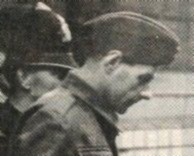
Samuel Morgan
Murderer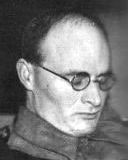 Harold Hill
Murderer · Gran Bretaña · 1941
Harold Hill was convicted of the murder of Doreen Joyce Hearne aged 8 and Kathl…
2 victims
Harold Hill
Murderer · Gran Bretaña · 1941
Harold Hill was convicted of the murder of Doreen Joyce Hearne aged 8 and Kathl…
2 victims
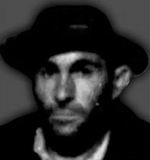 Ernesto Picchioni
Murderer · Italy · 1944
March 12, 1949 — He was sentenced to life in prison. · 2016 — The case record l…
16 victims
Ernesto Picchioni
Murderer · Italy · 1944
March 12, 1949 — He was sentenced to life in prison. · 2016 — The case record l…
16 victims
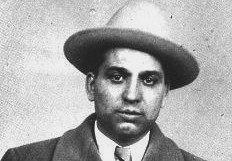 Harry Maione
Murderer · USA · 1937
Harry “Happy” Maione (1908 – February 19, 1942) was a New York mobster who serv…
12 victims
Harry Maione
Murderer · USA · 1937
Harry “Happy” Maione (1908 – February 19, 1942) was a New York mobster who serv…
12 victims
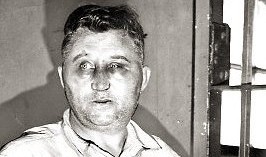 Harry Powers
Murderer · USA · 1931
Harry Powers was executed by hanging on March 18, 1932, at the West Virginia Pe…
5 victims
Harry Powers
Murderer · USA · 1931
Harry Powers was executed by hanging on March 18, 1932, at the West Virginia Pe…
5 victims
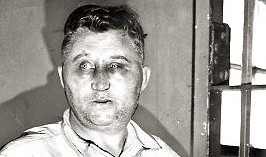 Herman Drenth
Murderer · USA · 1931
Herman Drenth was also known by the aliases Harry F. Powers and Cornelius O. Pi…
5 victims
Herman Drenth
Murderer · USA · 1931
Herman Drenth was also known by the aliases Harry F. Powers and Cornelius O. Pi…
5 victims
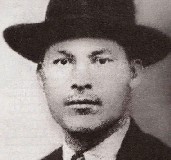 Beltrán Cortés
Murderer · Costa Rica · 1934
21 November 1908 — Beltrán Dalay Cortés Carvajal was born. · 1 June 1928 — Dr.…
4 victims
Beltrán Cortés
Murderer · Costa Rica · 1934
21 November 1908 — Beltrán Dalay Cortés Carvajal was born. · 1 June 1928 — Dr.…
4 victims
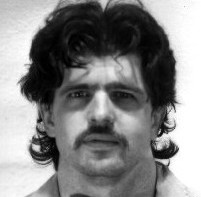 David Edwin Mason
Serial killer · USA · 1980
David Edwin Mason was raised by strict fundamentalist (Pentecostal) parents. Ac…
6 victims
David Edwin Mason
Serial killer · USA · 1980
David Edwin Mason was raised by strict fundamentalist (Pentecostal) parents. Ac…
6 victims
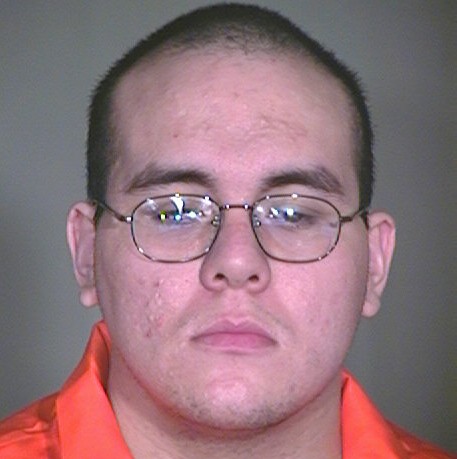 Ruben Garza
Murderer · USA · 1999
December 1, 1999 — Ruben Garza entered the Franco/Rush residence and shot Ellen…
2 victims
Ruben Garza
Murderer · USA · 1999
December 1, 1999 — Ruben Garza entered the Franco/Rush residence and shot Ellen…
2 victims
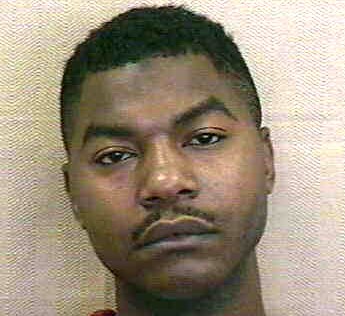 William Quentin Jones
Murderer · USA · 1987
William Quentin Jones was convicted in connection with a robbery and shootings…
1 victim
William Quentin Jones
Murderer · USA · 1987
William Quentin Jones was convicted in connection with a robbery and shootings…
1 victim
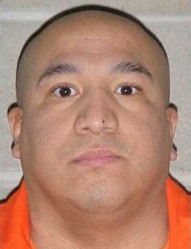 William Herrera
Murderer · USA · 1988
Defendant: William Herrera Victim: Caucasian (Deputy Sheriff Vernon Marconnet)…
1 victim
William Herrera
Murderer · USA · 1988
Defendant: William Herrera Victim: Caucasian (Deputy Sheriff Vernon Marconnet)…
1 victim
 Edward Lester Gibbs
Murderer · USA · 1950
Edward Lester Gibbs Edward Lester Gibbs was electrocuted in Pennsylvania on Apr…
1 victim
Edward Lester Gibbs
Murderer · USA · 1950
Edward Lester Gibbs Edward Lester Gibbs was electrocuted in Pennsylvania on Apr…
1 victim
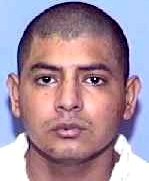 Jesus Flores
Murderer · USA · 2001
Jesus Flores received a death sentence and was later found dead in his cell wit…
1 victim
Jesus Flores
Murderer · USA · 2001
Jesus Flores received a death sentence and was later found dead in his cell wit…
1 victim
- Gender
- male
- Country
- Gran Bretaña
- Location
- Liverpool, Merseyside, England, Gran Bretaña
- Date of birth
- 1912
- Age at first offence
- 28
- Characteristics
- rape, domestic violence
- Victim profile
- Mary Hagan, 15
- Method of murder
- Strangulation
- Date(s) of murder
- November 2, 1940
- Years active
- 1940
- Date of arrest
- November 15, 1940
- Status
-
Executed
Executed by hanging at Walton prison on April 4, 1941
Case details
Samuel Morgan was a 28-year-old soldier AWOL from the Irish Guards at Seaforth Barracks.
Background
Mary Hagan was fifteen years old.
Morgan had deserted two months earlier. His family was questioned and admitted to harbouring him while he had been AWOL from the army; he had stayed with an older brother and his wife.
The offence
The sexually assaulted body of fifteen-year-old Mary Hagan was found in a concrete blockhouse in Liverpool. She had been strangled. A muddy debris area near the body included a fresh bootprint on the floor.
The investigation described a bandage and a zinc ointment connection: a piece of material proved to come from a military medical dressing and had been used on a finger or thumb. A chocolate bar wrapper containing traces of zinc ointment was found nearby. It was found that Mary Hagan had eaten this chocolate bar, meaning whoever had worn the bandage had come into contact with Mary.
The post mortem revealed that Mary had died as a result of asphyxiation.
Investigation
On the evening of 2 November 1940, Mary Hagan disappeared while buying a newspaper and cigarettes for her father in Waterloo, north of Liverpool. Search parties were set up. That night, Mary’s body was found in a concrete blockhouse described as a wartime anti-invasion fortress.
Among the people called to the scene was Dr James Firth, head of the Home Office forensic science lab at Preston. He saw that, as well as a newspaper and a half-eaten bar of chocolate, a small piece of fabric lay near the body. It was a muddy and bloodstained bandage. A bloody thumbprint was seen on one side of the young girl’s bruised neck.
A laboratory analysis determined that:
- the two parts of the bandage matched precisely
- dirt on Morgan’s uniform matched soil samples taken from the murder scene
- Morgan’s boot matched the cast taken
A woman came forward to say that late on the night of the murder she had been asked the way to the barracks by a soldier and that she had noticed scratches on his face.
When the police questioned officers at the Royal Seaforth barracks, they came up with a suspect. Morgan was described as a private in the Irish Guard and a local man. He was already suspected of being involved in an attack on a woman.
Arrest
Samuel Morgan was detained a couple of days later in London.
Trial
Morgan was duly charged and tried. He was found guilty. He was found guilty without much deliberation.
In court, Morgan admitted robbing cigarettes and money from Mary but denied rape and murder.
Sentencing
Morgan was hanged at Walton Jail, Liverpool, on 4 April 1941.
Timeline
- 31 October 1940 — Morgan was said to have cut his thumb; a bandage and zinc ointment were applied to the wound.
- 2 November 1940 — Mary Hagan disappeared while buying a newspaper and cigarettes for her father in Waterloo, north of Liverpool; her body was found that night in a concrete blockhouse; forensic examination located a muddy and bloodstained bandage, a bloody thumbprint on her neck, and other items including a half-eaten bar of chocolate and a newspaper.
- 4 November 1940 — Search parties were described as having been set up after Mary Hagan was reported missing, and her body had been found by that night.
- (couple of days later) — Samuel Morgan was detained in London.
- 17 days after the murder — Irish guard Sam Morgan was being held in London over the McVittie robbery.
- 4 April 1941 — Morgan was hanged at Walton Jail, Liverpool.
Other details
Morgan said that the cut on his thumb had been caused by barbed wire, and that he had dressed it with his own field dressing.
Witnesses identified Morgan as having been seen near the scene of the crime. A local pub landlord said Morgan had been in his pub the same night, sporting a bloodstained cap.
A cyclist named Anne McVittie was robbed by a soldier on a canal bank a mile from where Mary was killed; the descriptions in that incident and Mary Hagan’s case were described as familiar.
Morgan’s house in Seaforth was searched and a bandage cloth was found which matched that from the murder scene. Soil samples from there were also found on his uniform.
Morgan’s boots matched a cast taken from the footprint found next to the body.
Dr James Firth, head of the Home Office forensic science lab at Preston, was called to the scene among others.

Spotted an error, or have more information about this case?