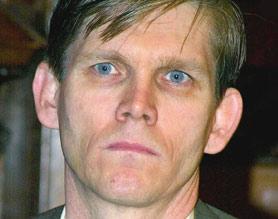
Theodore Maher
Homicide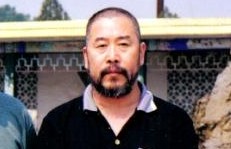 Hu Wanlin
Homicide · China · 1997
Hu Wanlin (胡万林), born 1949, was from Mianyang, Sichuan Province. · 1993 — While…
146 victims
Hu Wanlin
Homicide · China · 1997
Hu Wanlin (胡万林), born 1949, was from Mianyang, Sichuan Province. · 1993 — While…
146 victims
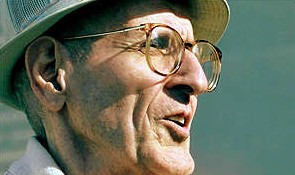 Jack Kevorkian
Homicide · USA · 1990
Jack Kevorkian (born May 26, 1928) was a controversial American pathologist. He…
130 victims
Jack Kevorkian
Homicide · USA · 1990
Jack Kevorkian (born May 26, 1928) was a controversial American pathologist. He…
130 victims
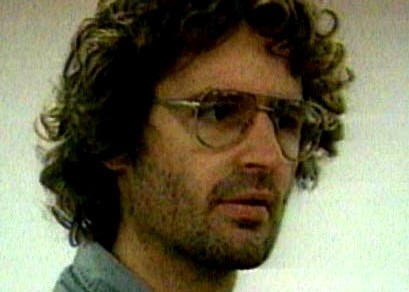 David Koresh
Homicide · USA · 1993
David Koresh (born Vernon Wayne Howell; August 17, 1959 – April 19, 1993) led t…
79 victims
David Koresh
Homicide · USA · 1993
David Koresh (born Vernon Wayne Howell; August 17, 1959 – April 19, 1993) led t…
79 victims
 Todd Hall
Homicide · USA · 1996
Todd Hall was described by neighbors as "mentally slow" and was said to have su…
9 victims
Todd Hall
Homicide · USA · 1996
Todd Hall was described by neighbors as "mentally slow" and was said to have su…
9 victims
 Joshua Jenkins
Homicide · USA · 1996
Joshua Jenkins was a 15-year-old American killer who killed five members of his…
5 victims
Joshua Jenkins
Homicide · USA · 1996
Joshua Jenkins was a 15-year-old American killer who killed five members of his…
5 victims
 Robin Lee Archer
Murderer · USA · 1991
Robin Lee Archer was tried in the First Judicial Circuit, Escambia County, Case…
1 victim
Robin Lee Archer
Murderer · USA · 1991
Robin Lee Archer was tried in the First Judicial Circuit, Escambia County, Case…
1 victim
 William Freund
Homicide · USA · 2005
October 15, 2005 — Freund wrote that he had tried suicide before. · October 29,…
2 victims
William Freund
Homicide · USA · 2005
October 15, 2005 — Freund wrote that he had tried suicide before. · October 29,…
2 victims
 Paul Devoe
Spree killer · USA · 2007
Paul Devoe was sentenced to death on October 8, 2009. · Aug. 24, 2007 — Michael…
6 victims
Paul Devoe
Spree killer · USA · 2007
Paul Devoe was sentenced to death on October 8, 2009. · Aug. 24, 2007 — Michael…
6 victims
 Ashley Humphrey
Murderer · USA · 2003
Ashley Humphrey was the wife of Timothy "Tracey" Humphrey. She was born Oct. 13…
1 victim
Ashley Humphrey
Murderer · USA · 2003
Ashley Humphrey was the wife of Timothy "Tracey" Humphrey. She was born Oct. 13…
1 victim
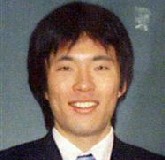 Yu Hagino
Murderer · Japan · 2005
Yu Hagino (萩野 裕, Hagino Yū, born 1982) was a teacher at a cram school in Uji, K…
1 victim
Yu Hagino
Murderer · Japan · 2005
Yu Hagino (萩野 裕, Hagino Yū, born 1982) was a teacher at a cram school in Uji, K…
1 victim
- Gender
- male
- Country
- Monaco
- Location
- Monte Carlo, Monaco
- Date of birth
- June 9, 1958
- Age at first offence
- 41
- Characteristics
- arson
- Victim profile
- His billionaire employer, banker Edmond Safra, 67, and Safra's nurse, Vivian Torrente
- Method of murder
- Fire
- Date(s) of murder
- December 3, 1999
- Years active
- 1999
- Date of arrest
- 3 days after
- Status
-
Released
Sentenced to 10 years in prison on December 4, 2002; released in October 2007
Background
Theodore Maher was an American registered nurse and an ex-Green Beret.
Maher was born June 9, 1958, in Auburn, Maine. He lived in Maine and California before his family settled in Upstate New York when he was 12.
After serving a stint in the army in the mid-1970s, Maher received nursing degrees from Dutchess County Community College and Pace University.
A brief marriage produced a son, Chris, now 18. While studying at Dutchess County Community College, Maher met his third wife, Heidi Wustrau. They lost contact for two years but started dating in 1991 while both attended Pace University and worked at Columbia Medical Center of New York Presbyterian Hospital. They married on December 12, 1993. The marriage produced two more children: Ian, 11, and Amber, 9. The family made their home in Stormville, N.Y., about 70 miles north of Manhattan.
While working as a registered nurse at the neonatal unit at Columbia Medical Center, Maher developed film from a camera he found left behind in a discharged patient's room. The camera's owners, Laura and Harry Slatkin, were grateful to retrieve the first photographs of their newborn twins. Harry Slatkin offered Ted the “job of a lifetime.”
Shortly thereafter, Maher interviewed with the personal assistant to Edmond Safra, a banker and billionaire based in Monaco who required private nursing care for Parkinson's and other ailments. According to Heidi Maher, the Safras liked that Ted was an ex-Green Beret and thought he could be both a bodyguard and a nurse.
The Safras offered Ted Maher a contract at $600 per day, more money than he had ever made, and he would have to leave for Monaco right away. With a hospital strike looming and legal bills mounting from a visitation battle with his ex-wife regarding his oldest son, Maher accepted the job in early August.
The offence
Edmond Safra, a 67-year-old founder and principal stock owner of the Republic National Bank of New York, had Parkinson's disease and required constant care.
On Dec 3, 1999, Maher was scheduled at the last minute to work the overnight shift caring for Safra with Vivian Torrente at Safra's Monaco penthouse at La Belle Epoque, a four-story bank and two-story flat at 17 Avenue D'Ostende.
What Maher did and what he claimed
Immediately after his arrest, Maher claimed two intruders had gained access to the apartment and that he had fought them off, receiving stab wounds. He said he informed the other nurse, Vivian Torrente, of the assailants and that he gave her his cell phone to call for help. He said he ordered her to take Edmond Safra into the secure dressing room while he went to the nearby nursing station, where he lit toilet paper in a trash basket to set off a smoke alarm, with the intention of alerting outside people that there was a problem.
He said he then made his way, bleeding and feeling faint, downstairs to the lobby of the building to get help.
During television interviews after release, Maher maintained his pretrial statements were coerced, threats were made against his family by authorities, and he continued to maintain his innocence.
In television interviews, Maher maintained that the deaths of Safra and Torrente would have been averted if police had not blocked firefighters from launching a rescue attempt until long after Maher was rushed to a hospital.
In testimony during trial, Maher confessed to setting the blaze but said he never expected the fire to rage out of control and that the fire was part of a plan to ingratiate himself with Safra.
Maher testified that he’d started the blaze in a small wastebasket, expecting it to set off a fire alarm that would bring help and allow him to reap the credit for saving his employer.
Maher also testified about friction between himself and Sonia Casiano, Safra’s head nurse. Maher stated Casiano had control of the nurses' work schedule and could make their lives difficult. Maher said Casiano did not like him, described her as considering him “just another "flavor of the month,"” and said he feared becoming number 18. Maher said he believed she was intentionally providing him with wrong information causing him to make mistakes, and that she frequently altered his scheduled between day and night shifts with little or no notice. Maher testified that he was fearing the loss of his well-paid job, and he said that just six weeks after arriving in Monaco, he hatched the idea of setting the fire to ingratiate himself with his boss and earn a promotion.
The defence position described his intention as “to trigger the fire alarm and pose as Safra's rescuer,” and it argued that he “did not intend to harm anyone.”
Prosecutor’s account and confession announcement
A few days later on December 7, Monaco's chief prosecutor, Daniel Serdet, announced that Maher confessed to starting the fire “to draw attention to himself” as he was “jealous” of Mr. Safra's seven other nurses. It was also stated that Maher's stab wounds had been self-inflicted. Maher was said to have slashed himself twice with his own switchblade—once in the thigh and once in the stomach—to corroborate his story about the intruders.
The prosecution described how Maher cut himself with a knife and then set a fire in a wastepaper basket, and called for rescue while telling authorities that two masked intruders were in the apartment. Prosecutors stated that Maher let the fire spread rather than extinguish it, leading to the two deaths. They also said his tale about intruders delayed the work of firefighters.
At sentencing, head prosecutor Daniel Serdet said:
“He directly caused the deaths of Mrs. Torrente and Mr. Safra,” said head prosecutor Daniel Serdet. “He trapped the victims.”
Investigation
On Dec 3, 1999, a chronology of events described how the fire alarm was detected and how emergency services responded.
At 4.49 a.m., a monitoring station detected a fire alarm from Safra's apartment.
At 5:00 a.m., Vivian Torrente called head nurse Sonia Casiano from Safra's dressing room to ask her to call police. Torrente informed Casiano that Maher was injured.
During the next 90 minutes, five more calls were made by Torrente.
At 5:12 a.m., the first police officers arrived in the lobby of the building. Police began organizing a floor by floor search for intruders.
At 5:20 a.m., Maher was transported to Princess Grace Hospital for treatment of stab wounds.
At 5:24 a.m., passers by and neighbours began flooding emergency phone lines with reports of seeing smoke from the building.
At 5:30 a.m., Torrente made the fourth call to Casiano from the cellphone and did not mention any smoke. Safra appeared calm but requested police intervention.
At 6:15 a.m., firefighters began battling the blaze.
At 6:30 a.m., Torrente, losing consciousness, made her sixth and final call from the cellphone, and Safra was heard coughing in the background.
At 7:45 a.m., firefighters gained access to the locked dressing room on the top floor of the penthouse and discovered the bodies of Edmond Safra and Vivian Torrente.
After arrest, Maher’s claim was that intruders had attacked him and that he had set off a smoke alarm to bring help. In trial proceedings, the jury deliberated on whether he intended to cause harm and whether police actions affected the rescue timing.
Arrest
Immediately after his arrest, Maher claimed intruders had gained access to the apartment and that he had fought them off, receiving stab wounds. He said he gave his cell phone to Vivian Torrente so she could call for help and that he had set a fire in a trash basket to trigger a smoke alarm.
Maher was transported to Princess Grace Hospital at 5:20 a.m. as part of the events described after the fire began.
Trial
The case was described as a sensation in Monaco, where Edmond Safra's death occurred.
During his trial, Maher confessed to setting the blaze but testified he never expected the fire to rage out of control and that it was part of a bizarre plan to ingratiate himself with Safra. Maher testified he started the blaze in a small wastebasket, expecting it to set off a fire alarm that would bring help and allow him to reap the credit for saving his employer.
Maher testified about friction and schedule control involving Sonia Casiano. The prosecution stated he let the fire spread leading to the two deaths and that his intruder story delayed firefighters.
American lawyer Michael Griffith volunteered to assist with Ted Maher’s defense.
In closing arguments, defence lawyer Sandrine Setton said:
“Stupidity is reprehensible, but it is not a crime,” Sandrine Setton, one of the defense lawyers, said in closing arguments.
In discussing the defence theory, American lawyer Michael Griffith said:
“It was a stupid, most insane thing a human being could do,” says Griffith. “He did not intend to kill Mr. Safra. He just wanted Mr. Safra to appreciate him more. He loved Mr. Safra. This was the best job of his life.”
Maher also stated in his final word on the final day of trial that he called Safra:
“the best employer I ever had,”
and said:
“What's happened is and always will be a terrible accident”,
reiterating earlier testimony in the hours before the verdict.
During the trial, it was stated that Safra’s widow Lily, was present in court, as was Maher’s wife.
Sentencing
In December 2002, Maher was convicted in the arson deaths of Edmond Safra and Vivian Torrente and sentenced to 10 years in prison.
On December 4, 2002, Maher was sentenced to 10 years in prison.
The prosecution requested 12 years in prison, and it was stated that the charges carried a maximum penalty of life in prison.
It was stated that the jury of three judges and three citizens sentenced Maher to serve only 10 years in prison, and that Maher was not eligible for parole for at least a year according to an adviser to the defense team.
Appeals
No specific appeal outcome was provided in the case summary.
In 2007, allegations by Judge Jean-Christophe Hullin that the outcome of the trial itself had been manipulated or fixed through collusion between Hullin, chief investigative judge on the case, along with Monaco's chief prosecutor and a member of Maher's state-appointed defence team were described as remaining unresolved.
Outcome
Maher was convicted of arson leading to death for the 1999 fire.
He was released in October 2007 after serving eight years in jail, and he returned to the United States.
Aftermath
After release, Maher appeared in television interviews on American Court TV, where he maintained his pretrial statements were coerced, and he maintained his innocence.
It was also described that Dominick Dunne had investigations on the case for courtroom television and was not completely convinced that Ted Maher was responsible for Safra’s death.
Dunne’s doubt centered on the timing of firefighters reaching Safra and his nurse, and a question about how Safra’s wife Lily (who was in her bedroom on the other end of the apartment) was able to get out.
Jail break and recapture
Less than two months after being sentenced, on 22 January 2003, Ted Maher and his cellmate, an Italian awaiting trial in Monaco on charges stemming from a robbery, sawed through the bars on their cell and then, using a rope made of black garbage bags, climbed out and escaped overnight.
Maher made it 15 miles to Nice, where he holed up in a hotel and made telephone contact with people in the US, including his wife, his lawyer, and his priest. They gave him up to the police, who apprehended him seven hours later.
It was stated that Maher served an additional nine months which were added to his sentence for escape.
Hunger strike and letter to Prince Rainier III
Maher was described as protesting with a hunger strike protesting harassing, closed-court interrogations by Richet.
In early May, Ted stopped accepting food from his guards at the hilltop prison where he was held, sustaining himself only on liquids. He was transferred to the psychiatric wing of Princess Grace Hospital, where he was kept under 24-hour guard as the protest continued.
He was said to have been informed about stopping the hunger strike by defence lawyer Michael Griffith, who learned of the hunger strike from Ted Maher's court-appointed Monegasque lawyer, who wanted it stopped.
Heidi Maher and Ted Maher's mother, Elayne Maher, flew to Monaco to persuade him to end his 11-day hunger strike.
Heidi said she was strip-searched before being allowed to enter a small hospital room where her husband, dressed only in a hospital gown, was confined. She noticed that his 6-foot-1-inch frame appeared considerably lighter, and his blond hair had turned white. A guard pulled out his sidearm and stood between the couple after Heidi rushed forward to hug her husband for the first time in 18 months.
It took Heidi three more visits and a promise by the prison to deliver Ted's letter to Prince Rainier, to get Ted to end his 11-day hunger strike.
In a May 17 letter, first reported in Dominick Dunne's article in the July issue of Vanity Fair, Ted Maher wrote that he would no longer subject himself to questioning by Richet.
The letter included the following:
“I have collaborated to the full extent of my ability for more than 500 days. I will not be brought forth for interrogation by her for the sole person of being harassed, demeaned or ridiculed,”
and it included:
“I am only asking for what is right: that the charges be reduced to their just proportion as Judge Richet knows they should be,”
and:
“I must ask you this for the sake of my wife and my three little children.”
It was stated that Heidi supported the starting and ending of the hunger strike, and that Griffith said the hunger strike was a bad move from the moment he learned about it.
Other details
A Monaco judge, Chief Examining Magistrate Patricia Richet, was described as serving as a one-person grand jury deciding which charges Ted Maher would face, with a report expected to be issued sometime this summer or early fall to a three-judge panel who, along with three civilian advisers, would try Ted Maher. It was also stated that the trial could be held this fall or winter.
If Maher were tried for “arson causing death,” it was stated he would face life imprisonment if convicted.
Maher referred to the botched rescue in a letter to Prince Rainier III. The letter included:
“I have always stated that I accept my limited part of responsibility in the tragedy, but I do not want to be the scapegoat for the slowness of the fire and police rescue efforts,”
and:
“I was taken to the Monaco hospital at 5:20 a.m. and Mr. Safra and Vivian Torrente died after 6:30 a.m. ... I am neither an arsonist nor a murderer.”
Personal accounts and contemporaneous statements
Heidi Maher described early morning conversation on Dec. 3, 1999 from Ted's younger sister Tammy Evans:
“She said, 'What's Ted's boss's name?'”
and:
“I said, 'Why?' She said she was watching TV and there was a billionaire, and there was a fire and he and a nurse died. I said, 'Oh, my God. Ted died.'”
Heidi later told Court TV on June 17 that her husband insisted he was a scapegoat for Monaco police officials whose decisions impeded the work of firefighters called to La Belle Epoque.
On the subject of the hunger strike, Heidi said:
“He did it out of protest, not out of depression at all.”
She also stated:
“I supported his starting it and supported his ending it,”
Griffith said:
“I was very concerned that his action would be detrimental to his relationship with the judge in the courtroom,”
and:
“I tried to impress upon him and stress that you don't want to piss off the person who controls the keys to the jailhouse door.”
Security and additional context described
Days before Safra’s death, it was described that Safra finalized the sale of his Republic National Bank to HSBC Holdings plc for billions.
Safra was described as a “jet-setter who kept company with statesmen like Shimon Peres, the former prime minister of Israel.”
It was described that in 1998 Republic Bank made a report to the F.B.I. that began an investigation into a vast Russian money laundering that came to focus on the Bank of New York and helped break a $6bn crime ring.
Safra was said to have employed a small army of guards trained in Israel by intelligence units. It was stated that none of his security team were on duty on the night of the fire, which enabled Maher to carry out the arson attack and hampered police and firefighters' efforts to gain access to the heavily fortified penthouse.
It was stated that, upon arrest, Maher initially fabricated the story that two intruders had penetrated the apartment and that he had fought them off receiving stab wounds.
There were reports that police may have been delaying rescue operations. It was also stated that a six-month investigation by two court-appointed fire experts suggested that Safra and his nurse might still have been alive if not for elaborate security arrangements and decisions made at the time of the fire by police.
Henry Viellard and Ghislaine Reiss wrote in their report:
“The duration of the intervention of the emergency services was abnormally long for a limited-scale fire ... [T]he police and fire brigade had delayed taking into account the information provided by the two fire protection services, the police having favored the implausible scenario of attack,”
and it was stated that the report was translated into English and published on a Web site created by Maher’s brother, Michael Maher.
Quotes about Safra and intent
In court, on Monday, Safra’s widow’s lawyers argued that Maher should be judged for his actions, not his intentions.
The defence asserted that even though Maher admitted setting the fire, his intention was described as merely to trigger a fire alarm and pose as Safra’s rescuer, and that “Stupidity is reprehensible, but it is not a crime.”
Spotted an error, or have more information about this case?