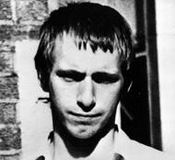
Bruce Lee
Serial killer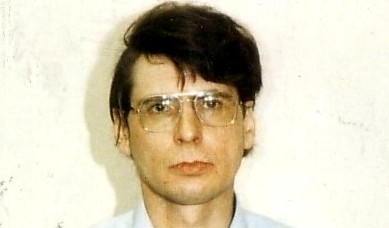 Dennis Nilsen
Serial killer · United Kingdom · 1978
Dennis Andrew Nilsen was born on November 23, 1945. He lived in London. He was…
16 victims
Dennis Nilsen
Serial killer · United Kingdom · 1978
Dennis Andrew Nilsen was born on November 23, 1945. He lived in London. He was…
16 victims
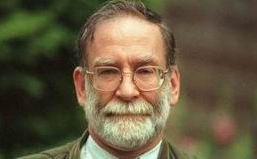 Dr. Harold Shipman
Serial killer · United Kingdom · 1974
Harold Fredrick Shipman was an English doctor who was convicted as a serial kil…
15 victims
Dr. Harold Shipman
Serial killer · United Kingdom · 1974
Harold Fredrick Shipman was an English doctor who was convicted as a serial kil…
15 victims
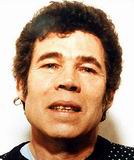 Frederick West
Serial killer · United Kingdom · 1967
Frederick West (29 September 1941 – 1 January 1995) was an English serial kille…
13 victims
Frederick West
Serial killer · United Kingdom · 1967
Frederick West (29 September 1941 – 1 January 1995) was an English serial kille…
13 victims
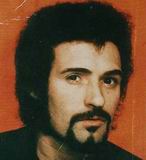 Peter Sutcliffe
Serial killer · United Kingdom · 1975
Peter William Sutcliffe (born 2 June 1946) was an English serial killer dubbed…
13 victims
Peter Sutcliffe
Serial killer · United Kingdom · 1975
Peter William Sutcliffe (born 2 June 1946) was an English serial killer dubbed…
13 victims
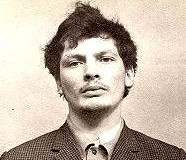 Patrick David Mackay
Serial killer · United Kingdom · 1973
Patrick David Mackay was born on September 25, 1952, in England. He was the son…
11 victims
Patrick David Mackay
Serial killer · United Kingdom · 1973
Patrick David Mackay was born on September 25, 1952, in England. He was the son…
11 victims
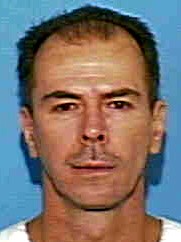 William Dean Wickline
Murderer · USA · 1979
William D. Wickline was executed by lethal injection on March 30, 2004, at the…
3 victims
William Dean Wickline
Murderer · USA · 1979
William D. Wickline was executed by lethal injection on March 30, 2004, at the…
3 victims
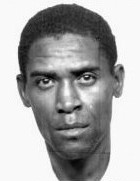 Leon Rutherford King
Murderer · USA · 1978
Name: Leon Rutherford King · Age at execution: 44 · Education level: 11th grade…
1 victim
Leon Rutherford King
Murderer · USA · 1978
Name: Leon Rutherford King · Age at execution: 44 · Education level: 11th grade…
1 victim
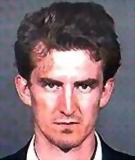 Kenneth Kimes
Murderer · USA · 1996
Kenneth Kimes was convicted and sentenced in relation to the murders of Irene S…
3 victims
Kenneth Kimes
Murderer · USA · 1996
Kenneth Kimes was convicted and sentenced in relation to the murders of Irene S…
3 victims
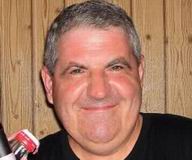 Gianluca Casseri
Murderer · Italy · 2011
Gianluca Casseri committed suicide by shooting himself the same day after an ar…
2 victims
Gianluca Casseri
Murderer · Italy · 2011
Gianluca Casseri committed suicide by shooting himself the same day after an ar…
2 victims
- Gender
- male
- Country
- United Kingdom
- Location
- Hull, East Yorkshire, England, United Kingdom
- Date of birth
- J uly 31, 1960
- Age at first offence
- 13
- Characteristics
- arson, mentally ill
- Victim profile
- Men, women and children
- Method of murder
- Fire
- Date(s) of murder
- 1973 - 1979
- Years active
- 1973–1979
- Date of arrest
- December 4, 1979
- Status
-
Sentenced to an indefinite term in a mental hospital on January 20, 1981
Case identification
Bruce Lee was born Peter George Dinsdale in 1960. He later changed his name to “Bruce Lee” at nineteen.
Background
Lee was described as the son of a prostitute. He was not well-educated. He was brought up in children’s homes and suffered from congenital spastic disabilities in his right limbs, which left him with a limp in his right leg and a compulsion to hold his right arm across his chest. He worked as a laborer and was known locally as a loner. Up until he was sixteen, he attended a school for the physically handicapped. He was introduced to homosexual practices. At nineteen, he changed his name to show how much he idolized his favorite kung-fu star.
Lee was described as a pyromaniac. He claimed that the tingling in his fingers signalled him that it was time to light a fire. One of his first fires caused $30,000.00 of damage to a shopping center. He killed his first person in 1973.
The offence
Fires and deaths
A total of 26 people died in Lee’s fires, and he was charged with multiple counts of manslaughter. At his trial, he pleaded guilty to 26 counts of manslaughter and to the arson attacks.
During investigation, Lee confessed to “starting nine more fatal fires in Hull over the previous seven years,” after police discovered him in connection with fires. Investigations later recorded misadventure verdicts at inquests, and arson was not considered at those times.
Lee claimed that most of the fires were started at random because he loved fire, and that he rarely considered whether he was endangering life when he started them. Only the Hastie fire and two others were at houses owned by people he knew and against whom he bore a grudge.
In the case of the residential home fire, police said the deaths had been caused by arson; later, a public inquiry concluded that the fire at the residential home was accidental and that Lee was not responsible for it, and senior fire investigation officers backed the inquiry’s conclusions. The eleven relevant manslaughter convictions were later quashed on the grounds that such contrary evidence made the convictions uneasy, reducing Lee’s killing record to a total of 15 people.
Statement attributed to Lee
“I am devoted to fire...Fire is my master, and that is why I cause these fires.”
Investigation
About 18,000 people were questioned during the investigation for the fire in Hull. During the inquiry, one of the victims was discovered to have been acquainted with various homosexuals who frequented the public restrooms near his home. Lee was among those homosexuals. Lee had confessed to a bunch of fires over the past 20 years.
Police set up a makeshift incident room in a local disused church hall after being called due to the presence of paraffin on the floor of the front porch, noticed by fire officers who had extinguished the blaze.
Investigating officers drove Lee around the city of Hull to the locations he had specified, where Lee pointed out the buildings in question. Lee could not be particular with dates or chronology, but research later showed that fires had been started at each of the dwellings he had signalled.
At one point during questioning, officers took Lee to a dwelling where a high-profile fire had occurred and where a criminal conviction had already been secured. Lee immediately ruled out involvement, saying he had never been anywhere near the area, and police knew then that he was being truthful about his range of fatal blazes.
Lee initially said he was not sorry for the deaths he caused, stating that killing was not on his mind when he began most of the fires. Lee later offered apologies for his actions while awaiting trial.
Arrest
Lee was discovered by police and began to confess to countless other fatal fires after one fire drew police attention.
Trial
Charges and pleas
In October 1980, Lee was charged with a total of 26 murders, along with alternative offences of manslaughter. He was also charged with eleven counts of arson and two of causing grievous bodily harm. He had admitted in interview to starting a fire in which a young mother and her daughter suffered severe burns but survived.
At his trial at Leeds Crown Court in January 1981, Lee denied every murder charge but pleaded guilty to 26 counts of manslaughter, as well as the arson attacks. The pleas were accepted.
Sentencing remarks and detention order
Lee was ordered to be detained indefinitely under the Mental Health Act. The judge stated that Lee was a psychopath and a danger to the public.
Mental hospital placement
Lee was initially taken to Park Lane Special Hospital in Liverpool. He was later transferred to Rampton Secure Hospital.
Sentencing
On January 20, 1981, Lee was sentenced to an indefinite term in a mental hospital.
Appeals
In 1983, a public inquiry concluded that the fire at the residential home was accidental and that Lee was not responsible for it, nor therefore its consequences of killing eleven men. Senior fire investigation officers backed the inquiry’s conclusions. The eleven relevant manslaughter convictions were later quashed on the grounds that such contrary evidence made the convictions uneasy.
Outcome
Lee’s killing record was reduced to a total of 15 people after the quashing of the eleven relevant manslaughter convictions. Lee never ceased to claim responsibility for the residential home blaze.
Aftermath
Libel action by the detective
The detective in charge of Lee’s case, Superintendent Ronald Sagar, later launched a libel action against the Sunday Times after they published articles suggesting Lee’s statements had been not entirely voluntary. The paper later withdrew the allegations and offered an apology. The case finally settled out of court in 1987.
Sagar, now retired and awarded with an MBE, publicly stated in his book “Hull, Hell & Fire” his hope that Lee would one day be deemed fit and safe enough to be freed. The text also stated that it seemed very unlikely that Lee would ever be released.
Marriage in 2005
In 2005, Lee was permitted to marry his fellow Rampton patient Anne-Marie Davison. The text said that this caused dismay to his victims’ families, who were subsequently assured that while Lee was legally entitled to marry, he and his new wife were not entitled to consummate the marriage.
Timeline
- January 5, 1977 — Eleven men were killed and six people injured when Lee set a local rest home on fire.
- January 20, 1981 — Lee was sentenced to an indefinite term in a mental hospital.
- 1983 — A public inquiry concluded the fire at the residential home was accidental and that Lee was not responsible; senior fire investigation officers backed the inquiry’s conclusions.
- 1987 — Sagar’s libel action against the Sunday Times settled out of court.
- 2005 — Lee was permitted to marry fellow Rampton patient Anne-Marie Davison.
Other details
The Hastie fire and surrounding circumstances
The fire described as the Hastie fire occurred on December 4, 1979 in Hull, East Yorkshire. It trapped Charles Hastie, who was 15, and his younger brothers Paul (12) and eight-year-old Peter, as well as their mother Edith and another brother Thomas. All were asleep in the house when the blaze began. Charles managed to rescue his mother by forcibly pushing her out of an upstairs window, but he was unable to help his other brothers, two of whom were in the same bedroom as him. Charles suffered almost complete burns and died the next day; Paul and Peter fought for life in Pinderfields Hospital in Wakefield, West Yorkshire, which housed the nearest specialist burns unit. Peter died two days after the fire while Paul battled for nine days before also succumbing to his burns. Their mother survived, while Thomas was rescued with minor injuries from a back bedroom where the flames were less severe. The fire also killed the family dog.
Charles, Paul and Peter also had three sisters: 16-year-old Angeleena, 11-year-old Nicola, and Peter’s twin Sophie, who were staying with relatives elsewhere in the area that particular night. Their father was a prison inmate at the time and was granted immediate release on compassionate grounds.
The text described that due to the presence of paraffin on the floor of the front porch, fire officers had noticed it and police were called. Police set up a makeshift incident room in a local disused church hall and began talking to local people about the fire and the family. It said the neighbourhood’s response was rather unfussed despite the severity of the fire which led to the deaths.
At the joint funeral in January 1980, Edith Hastie issued an outburst to the gathering crowd over their lack of sympathy for the loss of her sons. The three boys were buried together in one grave at the Northern Cemetery in Hull.
Once police established that the Hasties were known as a “problem” family, responsible for petty crime and vendettas, police began looking for an arsonist who may have been seeking a form of revenge.
Six months after the inquiry began, Lee confessed in great detail about pouring paraffin through the letterbox and setting it on fire as a revenge mission against Charles Hastie, with whom he had been in a homosexual relationship. Lee said Charles had threatened to go to the police (as he was a minor) unless Lee gave him money.
The investigation included a situation where officers took Lee to a dwelling where a high-profile fire had occurred and a criminal conviction had already been secured. Lee ruled out his involvement and police accepted that Lee was telling the truth about his range of fatal blazes.
Charles Hastie’s death and injuries to family members
Thomas Hastie Snr died in a motorcycle accident in July 1980 and that accident also injured daughter Nicola, who was his passenger. Two months later, Edith Hastie gave birth to another son.
Victims list (with inquest context)
The following people all died as a result of either burns or asphyxiation due to fires started by Bruce Lee at dwellings where they were either a resident or guest. At each fire and subsequent inquest, arson was never considered, and misadventure verdicts were recorded by the coroner in each case.
- June 23, 1973 — Richard Ellerington, aged six: He was trapped in the front bedroom of his home when his parents, siblings and two guests were all escaping from a less-damaged bedroom, unaware he wasn’t with them. No definite conclusion was reached at the inquest, although there was a suspicion that there had been a leak from a gas oven.
- October 12, 1973 — Bernard Smythe, aged 72: He died when paraffin was ignited in the lounge of his house, trapping him as he rarely left the room, even to sleep at night. Paraffin was detected in the room but was put down to two paraffin heaters, one of which was overturned. The text described an unconfirmed suspicion that it had come into contact with the flame of a candle which Mr Smythe used for lighting, as the electricity was cut off.
- October 27, 1973 — David Brewer, aged 34: He died after falling asleep on the settee of the flat he shared with his mother (who was not at home) and woke up on fire. He was doused down by wet towels fetched by a neighbour but died in hospital eight days later, never able at any point to speak about the incident. No other fire damage beyond the settee and surrounding linoleum was found. The inquest concluded that clothes drying by the fire had caught light, and the text also included that Lee later confirmed he was friends with the son of the woman in the next flat and that he sneaked in to set fire to his victim because he had struck him two days earlier in a row about the pigeons he kept.
- December 23, 1974 — Elizabeth Rokahr, aged 82: She died when fire engulfed the living room of her terraced home, where she also slept at night. The inquest concluded she had unwittingly started the blaze herself through smoking in bed, despite relatives and neighbours saying she was a careful smoker and always made sure drying clothes were at the side of the fire rather than in front of it.
- June 3, 1976 — Andrew Edwards, aged one: He was taken upstairs to bed by his great-grandmother, who was babysitting for him and his elder brother and sister while their parents were out, only to discover a fire in the understairs cupboard where two more of her great-grandchildren were playing as she returned from the bedroom. She grabbed both children and took them to a neighbour and waited for the fire brigade, only then remembering the baby upstairs when someone casually asked if anyone else was in the house. The inquest concluded that the little boy in the understairs cupboard must have started it himself with some matches he had secreted away. The great-grandmother was so traumatised by the incident afterwards she was committed to a mental hospital.
- January 2, 1977 — Katrina Thacker, aged six months: She died in her cot in the living room of her home when fire broke out while her mother was taking her half-sister to the toilet. A toddler asleep upstairs was rescued. The fireplace was stacked with fuel but no flame, and the inquest still concluded that a spark from the fire had set the living room alight. The text stated Lee knew the family through an interest in pigeons but had recently fallen out with them over his habit of walking in uninvited.
- January 5, 1977 — Harold Akester, aged 95; Victor Consitt, aged 83; Benjamin Phillips, aged 83; Arthur Ellwood, aged 82; William Hoult, aged 82; William Carter, aged 80; Percy Sanderson, aged 77; John Riby, aged 75; William Beales, aged 73; Leonard Dennett, aged 73; Arthur Hardy, aged 65: The Wensley Lodge residential home was leased to the local council and provided accommodation to elderly men of various ages and states of mind and mobility. The care assistant on night duty saw smoke coming from a first-floor corridor, yelled for his colleague to phone the Fire Brigade, and found the bedroom where the fire was sourced and managed to escort the sole resident from the room. Despite this, the fire spread through the first floor and to the second, trapping more residents. The text stated that later much was made of work done by a plumber earlier that day involving a blowtorch directly below the room where the fire started, although experts said there were no faults with the plumber’s work or tools and the plumber vehemently denied any errors on his part. (The text added that the 11 convictions were later overturned on appeal, though Lee maintained his guilt.)
- April 27, 1977 — Deborah Hooper, aged 13; Mark Jordan, aged seven: A mentally-handicapped girl and the son of a friend staying the night died when fire engulfed the lounge and sent smoke to the bedroom area upstairs. The little boy’s father was asleep on the settee when the fire began, ran upstairs to warn the other inhabitants, then returned down to escape through the front door. He woke his wife, their two daughters and the guest’s two sons and ushered them into the front room to leave via the window. Two children were helped out, but there was no sign of the others. The text stated that the little boy had gone back to help the handicapped girl and both became overcome by smoke. The inquest supposed that the man asleep in the lounge had left a cigarette burning, despite little evidence to support this. The little boy was later recommended for a posthumous bravery award.
- January 6, 1978 — Christine Dickson, aged 24; Mark Dickson, aged five; Steven Dickson, aged four; Michael Dickson, aged 16 months: A mother died with three of her four sons as she tried to rescue them from the flames and smoke of their terraced house. She had been chatting outside to a neighbour, with her four sons in the house and her unwell husband in bed upstairs when she noticed smoke coming from the window and instinctively ran inside through the smoke. She came out with her baby son and handed him to a neighbour and then went back inside to fetch the other three, but was trapped and eventually engulfed by the blaze. The husband escaped from the stairs and the front door. The inquest suspected that the eldest two boys had somehow found matches and lit the fire themselves, and the text also recorded that their father and the neighbour vehemently refuted this. The mother was later given a posthumous bravery award, and the baby she saved was brought up by his grandmother.
- December 4, 1979 — Charles Hastie, aged 15; Paul Hastie, aged 12; Peter Hastie, aged eight: The text also repeated that Lee set the fire and that Charles rescued his mother by forcibly pushing her out of an upstairs window; Charles died the next day from almost complete burns; Paul and Peter died after hospital treatment.
Additional harms mentioned
Lee also caused grievous bodily harm to Rosabell Fenton, aged 27, and her daughter Samantha, aged eight, after setting fire to their marionette on June 21, 1979. Both suffered serious burns, and Fenton miscarried her unborn baby.
The text stated that Lee was known to have set fire to numerous unoccupied dwellings and outbuildings.
People involved
Bruce Lee / Peter Dinsdale
Bruce Lee was the name adopted by Peter George Dinsdale.
Superintendent Ronald Sagar
Superintendent Ronald Sagar was described as the detective in charge of Lee’s case and later launched a libel action against the Sunday Times.
Anne-Marie Davison
Anne-Marie Davison was described as Lee’s fellow Rampton patient and as the person he was permitted to marry in 2005.
Victims named
Richard Ellerington; Bernard Smythe; David Brewer; Elizabeth Rokahr; Andrew Edwards; Katrina Thacker; Harold Akester; Victor Consitt; Benjamin Phillips; Arthur Ellwood; William Hoult; William Carter; Percy Sanderson; John Riby; William Beales; Leonard Dennett; Arthur Hardy; Deborah Hooper; Mark Jordan; Christine Dickson; Mark Dickson; Steven Dickson; Michael Dickson; Charles Hastie; Paul Hastie; Peter Hastie; Rosabell Fenton; Samantha.
Spotted an error, or have more information about this case?