
The Bender family
Serial killers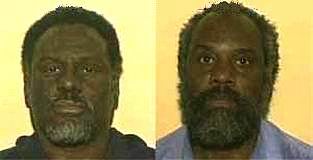 Anthony & Nathaniel Cook
Serial killers · USA · 1973
Anthony Cook and Nathaniel Cook were brothers and long-haul truck drivers who c…
9 victims
Anthony & Nathaniel Cook
Serial killers · USA · 1973
Anthony Cook and Nathaniel Cook were brothers and long-haul truck drivers who c…
9 victims
 John Wesley Hardin
Murderer · USA · 1867
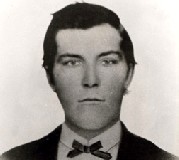
John Wesley (Wes) Hardin (1853-1895) was an American outlaw, gunfighter, and co…
42 victims
John Wesley Hardin
Murderer · USA · 1867
John Wesley (Wes) Hardin (1853-1895) was an American outlaw, gunfighter, and co…
42 victims
 Changyin & Changping Shen
Serial killers · China · 1999
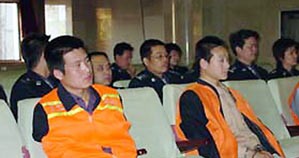
Changyin Shen and Changping Shen were convicted and sentenced to death for kill…
12 victims
Changyin & Changping Shen
Serial killers · China · 1999
Changyin Shen and Changping Shen were convicted and sentenced to death for kill…
12 victims
 Henry Wirz
Murderer · USA · 1864
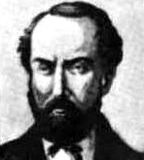
Henry Wirz (also known as Heinrich Hartmann Wirz) (November 25, 1823 – November…
11 victims
Henry Wirz
Murderer · USA · 1864
Henry Wirz (also known as Heinrich Hartmann Wirz) (November 25, 1823 – November…
11 victims
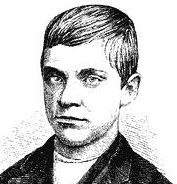 Jesse Pomeroy
Homicide · USA · 1874
Jesse Pomeroy was sentenced to death on two counts in 1876. His sentence was co…
10 victims
Jesse Pomeroy
Homicide · USA · 1874
Jesse Pomeroy was sentenced to death on two counts in 1876. His sentence was co…
10 victims
 Nicole Baukus
Homicide · USA · 2012
Nicole Baukus was charged after a wrong-way crash in which two teenagers died a…
2 victims
Nicole Baukus
Homicide · USA · 2012
Nicole Baukus was charged after a wrong-way crash in which two teenagers died a…
2 victims
 Walter Kelbach
Spree killer · USA · 1966
Walter Kelbach was 28 years old. Myron Lance was 25 years old. Kelbach and Lanc…
6 victims
Walter Kelbach
Spree killer · USA · 1966
Walter Kelbach was 28 years old. Myron Lance was 25 years old. Kelbach and Lanc…
6 victims
 Marco Antonio Montez
Murderer · USA · 1987
Marco Antonio Montez was convicted of aggravated murder and sentenced to death,…
1 victim
Marco Antonio Montez
Murderer · USA · 1987
Marco Antonio Montez was convicted of aggravated murder and sentenced to death,…
1 victim
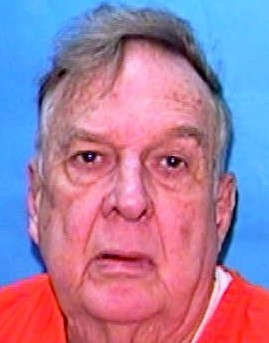 John Bruce Vining
Murderer · USA · 1987
John Bruce Vining John Vining was convicted and sentenced to death for the murd…
1 victim
John Bruce Vining
Murderer · USA · 1987
John Bruce Vining John Vining was convicted and sentenced to death for the murd…
1 victim
 James Ronald Meanes
Murderer · USA · 1981
James Ronald Meanes (African-American) was executed for his involvement in a mi…
1 victim
James Ronald Meanes
Murderer · USA · 1981
James Ronald Meanes (African-American) was executed for his involvement in a mi…
1 victim
 Robert Paul Langley
Homicide · USA · 1987
Robert Paul Langley, Jr. was convicted and sentenced to death for the aggravate…
2 victims
Robert Paul Langley
Homicide · USA · 1987
Robert Paul Langley, Jr. was convicted and sentenced to death for the aggravate…
2 victims
- Gender
- male
- Country
- USA
- Location
- Labette County, Kansas, USA
- Date of birth
- —
- Characteristics
- murder for hire, serial rapist, child killer, drug dealer, crack addict, arsonist
- Victim profile
- Travelers
- Method of murder
- Hitting with a hammer - Cutting their throats
- Date(s) of murder
- 1872 - 1873 Age: John Bender Sr., 60 - Ma Bender, 42 - John Bender Jr., 25 - Kate Bender, 22
- Years active
- 1872–1873
- Date of arrest
- —
- Status
-
At large
No legal outcome is recorded; the Bender family disappeared after the murders and was never arrested or tried; multiple conflicting accounts said vigilantes killed the family or that the family escaped, and later reports described further arrests that did not result in trial
The Bender family
The Bender family was associated with serial killings in southeastern Kansas. The family consisted of John Bender, his wife Kate, son John Jr., and daughter Kate. The murders and disappearances were linked to a “general store” and inn operated at the Wayside Inn in Osage township, Labette County, Kansas from 1872 to 1873.
People often believed that John and Kate were brother and sister, but some neighbors claimed a closer relationship and said they were man and wife.
Background
After the American Civil War, the United States government moved the Osage Indians from Labette County to a new Indian Territory located in what would eventually be Oklahoma. The “vacant” land was then made available to homesteaders.
In October 1870, five families of spiritualists settled in western Labette County around 7 mi (11 km) northeast of where Cherryvale would be established seven months later, and 17 mi (27 km) from Independence. One of the families included John Bender Sr. and John Bender Jr., who registered 160 acres (65 ha) of land adjacent the Great Osage Trail, which was described as the only open road for travelling further west.
After building a cabin, a barn with corral and a well in the fall of 1871, Kate (Ma) Bender and her daughter Kate arrived. The cabin was divided into two rooms by a canvas wagon-cover. The smaller rear room was used for living quarters, while the front room was converted into a “general store” and inn.
Ma and Kate Bender also planted a 2 acres (0.81 ha) vegetable garden and apple tree orchard north of the cabin.
Other details
Pa, Ma, John Jr. and Kate
John Bender Sr. (“Pa”) was around sixty years old and spoke very little English. His few words were described as guttural and usually unintelligible.
Ma Bender was described as allegedly speaking very little English at first and as unfriendly. Neighbors took to calling her a “she-devil.” Shortly before the Benders fled, it was discovered that Ma spoke English fluently.
John Bender Jr. (“John Jr.”, also described with German-accented English) was around 25 years old, was described as handsome with auburn hair and moustache, and spoke English fluently with a German accent. He was prone to laughing aimlessly, which led many to consider him a “half-wit.”
Kate Bender was around 23 years old, described as cultivated and attractive, and as speaking good English with very little accent. She was described as a self-proclaimed healer and psychic who distributed flyers advertising supernatural powers and the ability to cure illnesses, conducted séances, and gave lectures on spiritualism. Her notoriety included advocating free love. Kate’s popularity was described as drawing travelers to the inn.
Although the elder Benders kept to themselves, Kate and her brother regularly attended Sunday school in nearby Harmony Grove.
Claimed and reported identities
The Benders were widely believed to be German immigrants, but only the male Benders were described as being born overseas. The narrative stated they were not actually the Bender family.
Pa Bender was described as from either Germany or Holland and as being born John Flickinger.
Ma Bender was described as born Almira Meik in the Adirondack Mountains and as having married George Griffith with whom she had 12 children. Ma was described as allegedly marrying several times after the death of previous husbands from head injuries.
Kate was described as the fifth child of Ma Bender and as being born as Eliza Griffith. After marriage, Kate went by the name of Sara Eliza Davis, while John Jr. was described as being born John Gebhardt.
Location details
The inn was described as a dingy place called the Wayside Inn. The narrative also described the property as being between Thayer and Galesburg in southeastern Kansas, and as being associated with the Osage Trail, sometimes referred to as the Osage Mission-Fort Scott Road.
Thayer was described as 10-miles north of the inn. The inn was described as a resting spot for travelers, and feed was described as being provided for travelers’ horses.
The offences
The killings were associated with a method described as targeting guests who appeared wealthy.
Guests were purportedly given a “seat of honor” with their backs to a curtain over a trap door that led down into the cellar. Kate was described as distracting the guest while John Bender or his son came from behind the curtain and struck the guest on the right-hand side of the skull with a hammer. The victim’s throat was then described as being cut by one of the women to ensure death.
The body was described as being dropped through the trap door into the cellar, stripped, and later buried somewhere on the property, often in the orchard. More than a dozen bullet holes were described as having been found in the roof and sides of the room, possibly indicating some victims had attempted to fight back after being hit with a hammer.
Investigation
By 1873, reports of missing people who had passed through the area became so common that travelers began to avoid the trail. The area was described as widely known for horse thieves and “villians,” and vigilance committees were described as “arresting” some for disappearances, later releasing them by authorities. Other “honest” men under suspicion were described as being run out of the country by these committees.
In late winter of 1872, after the funeral of his wife, George Loncher and his daughter left Independence to resettle in Iowa, but were never seen again.
In the spring of 1873, Dr William York went looking for the missing Lonchers, questioning homesteads along the trail. He reached Fort Scott and on March 9 began the return journey to Independence but never arrived home.
Dr York’s brothers were described as Colonel Ed York living in Fort Scott and Kansas Senator Alexander York living in Independence. When Dr York did not return, an all-out search began for the missing doctor. Colonel York led a company of some 50 men who questioned travelers along the trail and visited area homesteads.
On March 28, 1873, Colonel York arrived at the Bender inn with a Mr Johnson. York explained that his brother was missing and asked if the Benders had seen him. The family admitted that Dr York had stayed with them and suggested that he may have run into trouble with Native Americans after leaving. Colonel York remained for dinner.
On April 3, Colonel York returned to the inn with armed men after being informed that a woman had fled from the inn after being threatened with knives by Ma Bender. Ma was described as allegedly being unable to understand English while the younger Benders denied the claim. When York repeated the claim, Ma became enraged and said the woman was a witch who had cursed her coffee and ordered the men to leave her house. The narrative stated that this revealed, for the first time, that “her sense of the English language” was much better than had been thought.
Before York left, Kate asked him to return alone the following Friday night and she would use her clairvoyant abilities to help him find his brother.
The men with York were described as being convinced the Benders and a neighboring family the Roaches were guilty and wanting to hang them, but York insisted that evidence must be found.
Arrests and searches
Harmony Grove meeting and search warrant
Around the same time, neighboring communities made accusations that the Osage community was responsible for disappearances. A meeting was arranged by the Osage township in the Harmony Grove schoolhouse. It was described as attended by 75 locals, including Colonel York and both Pa and John Bender.
After discussing disappearances including that of William York, it was agreed that a search warrant would be obtained to search every homestead between Big Hill Creek and Drum Creek.
Despite York’s suspicions regarding the Benders since his visit several weeks earlier, it was described as not having been noticed for several days that they had fled.
Abandoned property and discovery
Three days later, Billy Tole was driving cattle past the Bender property and noticed the inn was abandoned and the farm animals were unfed. Tole reported the fact to the Township Trustee, but due to bad weather it was several days before the abandonment could be investigated.
The Township Trustee called for volunteers and several hundred turned out to form a search party that included Dr York’s brother, Colonel York. When the party arrived at the Bender inn, they found the cabin empty of food, clothing, and personal possessions.
A bad odour was traced to a trap door underneath a bed that was found to be nailed shut. After opening the trap, the empty room beneath was described as 6 feet (1.8 m) deep and 7 feet (2.1 m) square at the top by 3 feet (0.91 m) square at the bottom. Clotted blood was found on the floor. The stone slab floor was broken up with sledgehammers, but no bodies were found. It was determined the smell was from blood that had soaked into the soil.
The men physically lifted the cabin and moved it aside to dig under it, but no bodies were found there either.
They then probed the ground around the cabin with a metal rod, especially in disturbed soil of the vegetable garden and orchard where the first body was found later that evening. The body was described as Dr York, buried face downwards with his feet barely below the surface. Probing continued until midnight with another nine suspected graves marked. Digging continued the following morning and another nine bodies were found in eight graves, plus a large number of body parts.
All but one were described as having their heads bashed with a hammer and their throats cut, and it was reported that all had been “indecently mutilated.” A body of a young girl was described as found with no injuries sufficient to cause death, and it was speculated she had been strangled or buried alive.
Hanging of Brockman and translated prayer book
A Kansas newspaper reported that the crowd was so incensed that a friend of the Benders, Brockman, who was among the onlookers, was hung from a beam in the Bender inn until unconscious, revived, interrogated, and then hung again. After the third hanging, he was described as released and staggered home “as one who was drunken or deranged.”
A Catholic prayer book was found in the house with notes inside written in German, which was later translated. The text read “Johannah Bender. Born July 30 1848” and “John Gebhardt came to America on July 1 18xx.”
Arrests of accessories
Several weeks later, Addison Roach and his son-in-law William Buxton were arrested as accessories. In total, 12 men were arrested. All had been involved in disposing of the stolen goods with one, described as a member of the vigilance committee, implicated for forging a letter from one of the victims informing the victim’s wife that he had arrived safely at his destination in Illinois.
Visitation and rewards
Word of the murders spread quickly, and more than 3,000 people, including reporters from as far away as New York and Chicago, visited the site.
The Bender cabin was described as destroyed by souvenir hunters who took everything, including bricks lined the cellar and stones lining the well.
Another brother of Dr York, Kansas Senator Alexander York, offered a $1,000 reward for the Bender family’s arrest. On May 17, Governor Thomas A. Osborn offered a $2,000 reward for the apprehension of all four.
No one described as claiming the $3,000 (2009: $53,000) reward appeared in the narrative.
Escape and later fate
The detectives following wagon tracks discovered the Benders’ wagon abandoned with a starving team of horses with one mare lame just outside the city limits of Thayer, 12 mi (19 km) north of the inn.
In Thayer, it was confirmed that the family bought tickets on the Leavenworth, Lawrence & Galestown Railroad for Humboldt. At Chanute, John Jr. and Kate left the train and caught the MK&T train south to the terminus in Red River County near Dennison, Texas. From there they traveled to an outlaw colony in the border region between Texas and New Mexico. It was described that they were not pursued as lawmen following outlaws into this region often never returned.
One detective claimed later that he traced the pair to the border where he found that John Jr. had died of apoplexy.
Ma and Pa Bender did not leave the train at Humboldt; instead, they continued north to Kansas City, where it was believed they purchased tickets for St. Louis, Missouri.
Multiple conflicting stories were described about their end:
- Multiple stories said a vigilante group caught the Benders and shot all of them but Kate, whom they burned alive.
- Another group claimed they caught the Benders and lynched them before throwing their bodies into the Verdigris River.
- Another claim stated they killed the Benders during a gunfight and buried their bodies on the prairie.
No one described as ever claiming the $3,000 reward.
The story of their escape spread, and the search continued on and off for the next fifty years, including frequent accusations that traveling women were Ma Bender and her daughter.
Reports of later arrests and extradition
In 1884, it was reported that John Flickinger had committed suicide in Lake Michigan.
On October 31, 1889, it was reported that a Mrs Almira Monroe and Mrs Eliza Davis had been arrested in Niles, Michigan (often reported as Detroit), several weeks earlier, and that their identities had been confirmed by two witnesses from a tintype photograph. Mrs Davis was described as signing an affidavit admitting that Mrs Monroe was Ma Bender and that both were extradited to Oswego, Kansas for trial.
A trial originally scheduled for February 1890 was held over to May, and because the county was unwilling to accept the expense of boarding the two women for three months, the county released both.
In 1886, the house in which the Benders lived was described as reduced to an empty hole. Relic seekers carried away remnant materials including stones lining the cellar walls.
Timeline
- October 1870 — Five families of spiritualists settled in western Labette County; John Bender Sr. and John Bender Jr. registered 160 acres (65 ha) adjacent the Great Osage Trail.
- Fall 1871 — Kate (Ma) Bender and her daughter Kate arrived; the cabin was divided into two rooms by a canvas wagon-cover; vegetable garden and apple tree orchard were planted.
- May 1871 — The body of a man named Jones with a crushed skull and throat cut was discovered in Drum Creek.
- February 1872 — Bodies of two men were found with the same injuries as Jones.
- February 1872 — Two unidentified men were found on the prairie with crushed skulls and throats cut.
- Winter 1871/1872 — Two unidentified men were found on the prairie in February 1872 with crushed skulls and throats cut.
- December 1872 — Henry McKenzie disappeared after relocating to Independence; a team of horses and $36 were missing.
- December 1872 — Johnny Boyle disappeared with $10, a pacing mare, and an $850 saddle; Boyle’s body was found in the Benders well.
- December 1872 — George Loncher and his daughter disappeared; the narrative described reported ages as either eight years old or 18 months old.
- March 9, 1873 — Dr William York began the return journey to Independence but never arrived home.
- March 28, 1873 — Colonel York arrived at the Bender inn with a Mr Johnson and was told Dr York had stayed with the family.
- April 3, 1873 — Colonel York returned to the inn with armed men after a woman fled after being threatened with knives by Ma Bender.
- Three days after the meeting (year 1873) — Billy Tole reported that the inn was abandoned and farm animals were unfed.
- May 17, 1873 — Governor Thomas A.
- May 15, 1873 — The Wilson County Free Press printed a story beginning “The Cherryvale Tragedy: The Most Diabolical On Record. Over 3,000 persons visited the scene of horrors on Sunday. All kinds of rumors afloat.”
- 1884 — John Flickinger was reported to have committed suicide in Lake Michigan.
- October 31, 1889 — Reports described arrests of Mrs Almira Monroe and Mrs Eliza Davis in Niles, Michigan, with identities later confirmed and then extradition to Oswego, Kansas for trial.
- January or February 1890 (trial scheduled) — Trial was originally scheduled for February 1890.
- May 1890 (trial held over) — The trial was held over to May, and the women were released after the county declined the expense of boarding them for three months.
Victims
The narrative listed multiple individuals and body discoveries associated with the killings and the search.
- 1869 — Joe Sowers: Found with a crushed skull and throat cut, but not believed to be a Bender victim.
- May 1871 — Mr Jones: Body found in Drum Creek with a crushed skull and throat cut.
- Winter 1871/1872 — Two unidentified men: Found on the prairie in February 1872 with crushed skulls and throats cut.
- 1872 — Ben Brown: From Howard County, Kansas; $2,600 (2009:$46,000) missing; buried in the apple orchard.
- 1872 — W.F. McCrotty: Co D 123rd Ill Infantry; $38 and a wagon with a team of horses missing.
- December 1872 — Henry McKenzie: Relocating to Independence from Hamilton County, Indiana; $36 and a matched team of horses missing.
- December 1872 — Johnny Boyle: From Howard County, Kansas; $10, a pacing mare, and an $850 saddle missing; found in the Benders well.
- December 1872 — George Loncher and his daughter: $1,900 (2009:$33,600) missing; buried together in the apple orchard.
- May 1873 — Dr William York: $2,000 (2009:$35,000) missing; buried in the apple orchard.
- — John Greary: Buried in the apple orchard.
- — Unidentified male: Buried in the apple orchard.
- — Unidentified female: Buried in the apple orchard.
- — Various body parts: The parts did not belong to any of the other victims found.
During the search, the bodies of four unidentified males were found in Drum Creek and the surrounds. All four had crushed skulls and throats cut. One may be Jack Bogart, whose horse was purchased from a friend of the Benders after he went missing in 1872.
With the exception of McKenzie, York, and the Lonchers who were buried in Independence, the narrative stated that none of the other bodies were claimed and they were reburied at the base of a mound 1 mi (2 km) south-east of the Benders orchard.
Evidence and artefacts
The search of the cabin resulted in the recovery of three hammers used as murder weapons. These hammers were given to the Bender museum in 1967 by the son of LeRoy Dick, the Osage Township Trustee who headed the search.
The hammers were displayed at the Museum in Cherryvale from 1967 to 1978 when the site was acquired for a fire station. Attempts to relocate the museum became controversial among locals who objected to the town being known for the Bender murders. The Bender artifacts were eventually given to the Cherryvale Museum.
A detective story section described that Colonel York noticed something “glittering underneath one of the beds,” which he pulled out and found as “a locket on a gold chain,” inside which were the faces of his brother’s wife and daughter. It described that York recognized the locket as a trinket his brother wore on his watch chain, which made him realize the inn might have been the last place his brother had been seen alive.
Appearances in fiction
- The Bender Family was the subject of the Western novel The Hell Benders (1999) by Ken Hodgson.
- In Lyle Brandt’s novel Massacre Trail (2009), the Benders were described as responsible for several homestead killings and brought down by Marshal Jack Slade.
- The novel Cottonwood (2004) by Scott Phillips features Kate Bender in a supporting role; the second half of the book takes place during the trial of two alleged surviving members of the Bender Family.
- The Benders were also the subject of the historical novel Candle of the Wicked (1960) by Manly Wade Wellman and played a role in the short story “They Bite” (1943) by Anthony Boucher.
- A nonfiction graphic adaptation of their history was part of Rick Geary’s Treasury of Victorian Murder series.
- The Benders were mentioned, though not by name, in Neil Gaiman’s 2001 novel American Gods as a cult apocryphally said to worship the Slavic god Czernobog.
- In the first season of the television series Supernatural, a murderous family was named Bender as a reference to the historical family.
Spotted an error, or have more information about this case?