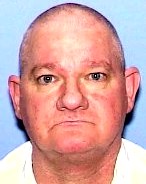
Billy Jack Crutsinger
Murderer Robert Martines Perez
Murderer · USA · 1994
Name: Robert Martines Perez · Other name used in proceedings: Robert Martinez P…
15 victims
Robert Martines Perez
Murderer · USA · 1994
Name: Robert Martines Perez · Other name used in proceedings: Robert Martinez P…
15 victims
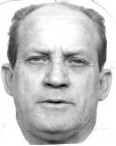 Billy Frank Vickers
Murderer · USA · 1993
Billy Frank Vickers Vickers was executed by lethal injection in Texas on Januar…
14 victims
Billy Frank Vickers
Murderer · USA · 1993
Billy Frank Vickers Vickers was executed by lethal injection in Texas on Januar…
14 victims
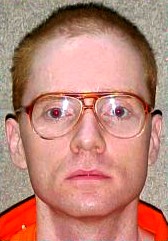 Robert Glen Jones
Murderer · USA · 1996
Defendant: Robert Glenn Jones (ADC#070566) · Co-defendant: Scott Nordstrom (ADC…
7 victims
Robert Glen Jones
Murderer · USA · 1996
Defendant: Robert Glenn Jones (ADC#070566) · Co-defendant: Scott Nordstrom (ADC…
7 victims
 Michelle Michaud
Murderer · USA · 1997
Defendant: Michelle Lyn Michaud (age 38 at crime; white) Court: United States C…
1 victim
Michelle Michaud
Murderer · USA · 1997
Defendant: Michelle Lyn Michaud (age 38 at crime; white) Court: United States C…
1 victim
 Siswanto
Serial killer · Indonesia · 1994
Siswanto, also known as Robot Gedek, was a homeless Indonesian man. Siswanto mu…
12 victims
Siswanto
Serial killer · Indonesia · 1994
Siswanto, also known as Robot Gedek, was a homeless Indonesian man. Siswanto mu…
12 victims
 Marybeth Davis
Murderer · USA · 1981
Marybeth Davis (born c. 1952) was an American nurse convicted in 1997 of the mu…
2 victims
Marybeth Davis
Murderer · USA · 1981
Marybeth Davis (born c. 1952) was an American nurse convicted in 1997 of the mu…
2 victims
 Violette Nozière
Murderer · France · 1933
Violette Nozière was convicted of parricide in 1934 for poisoning her parents i…
1 victim
Violette Nozière
Murderer · France · 1933
Violette Nozière was convicted of parricide in 1934 for poisoning her parents i…
1 victim
- Gender
- male
- Country
- USA
- Location
- Tarrant County, Texas, USA
- Date of birth
- October 5, 1954
- Age at first offence
- 49
- Characteristics
- murder for hire, robbery
- Victim profile
- Pearl "R.D." Magouirk, 89, and her daughter, Patricia "Pat" Syren, 71
- Method of murder
- St abbing with knife
- Date(s) of murder
- April 6, 2003
- Years active
- 2003
- Date of arrest
- —
- Status
-
Sentenced to death
Sentenced to death on October 8, 2003
Case record: Billy Jack Crutsinger
Background
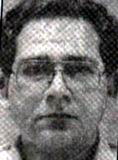
Billy Jack Crutsinger was a white male. He was born on 10/05/1954 and was received on 10/08/2003 at the age of 49. His education level was 10. He was 05'09" tall and weighed 217. His hair color was gray and his eye color was green. His race and gender were White/Male. His native county was Tarrant and his native state was Texas. His prior occupation was laborer. His prior prison record included State Jail #1014350 on a 1 year sentence from Cochran County for reckless injury to elderly with bodily injury.
The offence
On April 6, 2003, Crutsinger entered the home of Pearl “R.D.” Magouirk, 89, and Patricia “Pat” Syren, 71, after Crutsinger entered the residence of the two victims on the pretense of doing repairs. Crutsinger stabbed both victims multiple times, resulting in their deaths.
After the killings, Crutsinger took items from the house, including Syren’s Cadillac and credit card. Magouirk’s and Syren’s decomposing bodies were found inside their home on April 8, 2003, two days after the killings. The blood-stained Cadillac was found outside a Fort Worth bar. The bloody clothes that Crutsinger wore during the killings were later recovered in a trash bin near another bar.
Crutsinger was convicted of capital murder. The jury deliberated about an hour. In September 2003, a jury convicted Crutsinger of capital murder. Pursuant to the jury’s answers to the special issues set forth in Texas Code of Criminal Procedure Article 37.071, sections 2(b) and 2(e), the trial judge sentenced Crutsinger to death.
Investigation
Officers learned that Syren’s credit card was being used in Galveston, Texas. Detectives contacted the Galveston Police Department and traveled to the city to further investigate. The Galveston police determined that the person using the credit card was currently in one of several bars in Galveston.
The investigation ultimately led Officer Clemente Garcia to a man later identified as Crutsinger. When Garcia approached Crutsinger and asked him his name, Crutsinger did not initially answer. When Garcia asked again for his name, Crutsinger told him his name was “David.” Garcia arrested Crutsinger for failing to identify himself and read him his Miranda rights.
After reading Crutsinger his rights, Garcia asked him again for his name, and Crutsinger identified himself as “David Townsend.” Garcia took Crutsinger to the Galveston Police Department where he subsequently was able to properly identify him.
While in the holding cell, Crutsinger was introduced to Detective John McCaskill of the Fort Worth Police Department. McCaskill asked Crutsinger if he could see his hands, and Crutsinger obliged. Immediately thereafter, McCaskill left the area where Crutsinger was being held. A few minutes later, Crutsinger said that he had “messed up” and asked to speak to McCaskill. Crutsinger was then taken to an interview room where McCaskill met with him and again read him his rights.
Crutsinger consented to having a DNA sample taken and to a search of a black duffel bag that had been in his possession when he was arrested. After McCaskill again read Crutsinger his legal warnings and Crutsinger waived them, Crutsinger confessed in a tape-recorded statement to killing the two women in Fort Worth and taking their property. In the confession, Crutsinger told officers where other evidence of the crime could be found.
Arrest
The trial court found that although the Galveston police had probable cause to arrest Crutsinger for the offense of credit card abuse, a warrantless arrest was not justified because there was insufficient evidence to show that the defendant was about to escape. The trial court concluded that Crutsinger did not commit the offense of failure to identify before he was arrested. Therefore, the police illegally arrested Crutsinger on statutory grounds. Texas Penal Code section 38.02, Failure to Identify, provided in pertinent part:
(a) A person commits an offense if he intentionally refuses to give his name . . . to a peace officer who has lawfully arrested the person and requested the information.
(b) A person commits an offense if he intentionally gives a false or fictitious name . . . to a peace officer who has:
(1) lawfully arrested the person;
(2) lawfully detained the person[.]
The trial court determined that when Crutsinger refused to give Garcia his name, Crutsinger was not under arrest, so subsection (a) did not apply. The trial court determined that it was after Crutsinger gave Garcia the name of “David” that he decided to detain and arrest him. Under these facts, Crutsinger did not commit the offense of failing to identify himself. The court also determined that the officers provided no evidence at the suppression hearing to justify a warrantless arrest, such as showing that Crutsinger was about to escape.
Trial
Crutsinger appealed his conviction and raised five points of error.
Crutsinger claimed the trial court erred by sua sponte excusing prospective juror Enlow over his objection that he was not given notice or an opportunity to address the venire person. He cited Green v. State, 764 S.W.2d 242 (Tex. Crim. App. 1989), cert. denied, 507 U.S. 1020 (1993), and Goodman v. State, 701 S.W.2d 850, 856 (Tex. Crim. App. 1985), which stood for the proposition that:
“[t]he trial judge should not on its own motion excuse a juror for cause unless the juror is absolutely disqualified from serving as a juror.”
The court concluded that Green and Goodman discussed the propriety of a trial court granting challenges for cause under Articles 35.16 and 35.19, while in this case the trial court specifically stated it excused Enlow under Article 35.03 because she had previously arranged travel plans. The appellate court concluded that Article 35.03 gave the trial court broad discretion to excuse prospective jurors for good reason. It noted that Article 35.03 provided:
“the court shall . . . hear and determine excuses offered for not serving as a juror, and if the court deems the excuse sufficient, the court shall discharge the juror or postpone the juror's service[.]”
The appellate court concluded that unless the excuse given was economic in nature, neither the appellant nor his attorney was required to be present. It stated that postponement or cancellation due to a pre-existing scheduling conflict was a legitimate exercise of the trial court’s discretion under Article 35.03. Point of error two was overruled.
Crutsinger argued in his fourth point of error that the taint of his illegal arrest was not sufficiently attenuated to authorize admission of his confession, DNA sample, and other evidence obtained pursuant to his illegal arrest. After a pre-trial hearing on Crutsinger’s motion to suppress, the trial court found that Crutsinger had waived his legal rights and had voluntarily signed the consent forms allowing the police to collect DNA evidence and to search his duffel bag. The court also determined that Crutsinger voluntarily gave a recorded statement and was not threatened, coerced, or promised anything. The court concluded that any taint from illegal arrest was sufficiently attenuated, so confession and any other evidence discovered after Crutsinger asked to speak to McCaskill were admissible.
Crutsinger’s first point of error asserted that the death penalty was unconstitutional because the determination to seek the death penalty was arbitrary and was “overridden by the financial situation of individual counties.” He argued that there should be a statewide policy or standard for determining which cases the State would seek the death penalty, rather than leaving the decision in the hands of individual district attorneys. The appellate court overruled the point of error one.
Crutsinger’s third point of error asserted that the “10/12” rule of Article 37.071 violated the constitution. The appellate court stated that it previously considered and rejected this claim and overruled point of error three.
Crutsinger’s fifth point of error claimed that the mitigation question submitted to the jury pursuant to Article 37.071, section 2(e), was unconstitutional because the statute did not require the State to prove beyond a reasonable doubt that there was insufficient mitigating evidence to support a life sentence. He relied on Ring v. Arizona, 536 U.S. 584 (2002), and Apprendi v. New Jersey, 530 U.S. 466 (2000). The appellate court overruled point of error five.
The appellate court affirmed the judgment of the trial court and delivered the opinion on May 10, 2006.
Sentencing
The jury answered the special issues set forth in Texas Code of Criminal Procedure Article 37.071, sections 2(b) and 2(e). Pursuant to those answers, the trial judge sentenced Crutsinger to death. The sentence was imposed on October 8, 2003.
Appeals
Direct appeal was automatic. The appellate court docketed the case as:
- IN THE COURT OF CRIMINAL APPEALS OF TEXAS No. AP-74,769 BILLY JACK CRUTSINGER, Appellant v. THE STATE OF TEXAS ON DIRECT APPEAL FROM CAUSE NO. 0885306D IN THE 213 TH DISTRICT COURT TARRANT COUNTY
The appellate court opinion stated:
“Holcomb, J., delivered the opinion of the Court, in which Keller, P.J., and Meyers, Johnson, Keasler, Hervey, and Cochran, JJ., joined. Price and Womack, JJ., concurred in the result.”
The appellate court affirmed the judgment of the trial court. It delivered the opinion May 10, 2006.
Outcome
The trial court sentenced Crutsinger to death on October 8, 2003.
Other details
When Crutsinger asked to speak to McCaskill, Crutsinger said:
“messed up”
The appellate court referenced Brown v. Illinois, 422 U.S. 590, 598-99 (1975), describing factors for attenuation:
- whether Miranda warnings were given
- the temporal proximity of the arrest and the confession
- the presence of intervening circumstances
- the purpose and flagrancy of official misconduct
The appellate court concluded that the confession and evidence were admissible following attenuation analysis. It stated that Crutsinger was first given his warnings when he was arrested, that he was again read his warnings prior to McCaskill’s interview and signed a warning form, and that he again received warnings at the beginning of the tape-recorded statement. It stated that less than one hour to an hour and a half elapsed between arrest and interview. It stated that after McCaskill stepped out of the holding room, Crutsinger became emotional, stated he had “messed up,” and asked to speak to McCaskill; it treated Crutsinger’s request as an independent act of free will and an intervening circumstance. It stated that official misconduct was not purposeful or flagrant. It also stated that Garcia improperly arrested Crutsinger on a different charge, and that this did not make the conduct purposeful or flagrant.
Spotted an error, or have more information about this case?