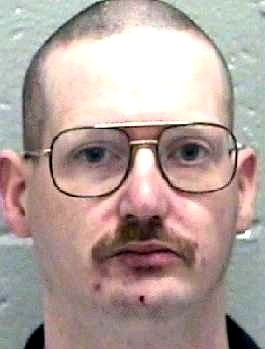
William David Riley
Murderer Russell Ellwood
Murderer · USA · 1991
Russell Ellwood was a former taxi driver. Authorities suspected him of killing…
20 victims
Russell Ellwood
Murderer · USA · 1991
Russell Ellwood was a former taxi driver. Authorities suspected him of killing…
20 victims
 Robert Martines Perez
Murderer · USA · 1994
Name: Robert Martines Perez · Other name used in proceedings: Robert Martinez P…
15 victims
Robert Martines Perez
Murderer · USA · 1994
Name: Robert Martines Perez · Other name used in proceedings: Robert Martinez P…
15 victims
 Billy Frank Vickers
Murderer · USA · 1993
Billy Frank Vickers Vickers was executed by lethal injection in Texas on Januar…
14 victims
Billy Frank Vickers
Murderer · USA · 1993
Billy Frank Vickers Vickers was executed by lethal injection in Texas on Januar…
14 victims
 George Sitts
Murderer · USA · 1945
George Sitts was executed by the State of South Dakota on April 8, 1947 for the…
3 victims
George Sitts
Murderer · USA · 1945
George Sitts was executed by the State of South Dakota on April 8, 1947 for the…
3 victims
 David F. Dawson
Murderer · USA · 1986
David F. Dawson was executed by lethal injection in Delaware on April 26, 2001.…
1 victim
David F. Dawson
Murderer · USA · 1986
David F. Dawson was executed by lethal injection in Delaware on April 26, 2001.…
1 victim
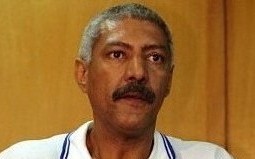 Edson Isidoro Guimaraes
Serial killer · Brazil · 1999
Edson Isidoro Guimarães was a Brazilian nursing assistant and nurse’s aide at S…
131 victims
Edson Isidoro Guimaraes
Serial killer · Brazil · 1999
Edson Isidoro Guimarães was a Brazilian nursing assistant and nurse’s aide at S…
131 victims
 Simone Weber
Murderer · France · 1980
Simone Weber was 60 years old at trial. She was described as “round and dowdy”…
2 victims
Simone Weber
Murderer · France · 1980
Simone Weber was 60 years old at trial. She was described as “round and dowdy”…
2 victims
- Gender
- male
- Country
- USA
- Location
- Newton County, Georgia, USA
- Date of birth
- 1968
- Age at first offence
- 32
- Characteristics
- parricide, arson
- Victim profile
- H is three children, Ashley aged 6, William aged 5 and Samantha aged 3
- Method of murder
- Setting fire the trailer
- Date(s) of murder
- August 16, 2000
- Years active
- 2000
- Date of arrest
- Same day
- Status
-
Sentenced to death
Sentenced to death on March 14, 2003
Background
William David Riley, Sr. was a 32-year-old married man with three children. His wife moved out in May 2000, and Riley was in dire financial straits. Riley had been denied welfare benefits and was facing eviction, with an eviction hearing scheduled for August 18. Riley was estranged from his wife, and she had signed over full custody of the children to Riley.
The offence
On August 16, 2000, a fire broke out in a trailer at Pine Valley Mobile Home Park. The trailer was rented by Riley, who lived there with his girlfriend and their three children: Ashley (6), William (5), and Samantha (3). Riley’s friend was also living there and sleeping on a couch.
All three adults escaped the fire. The three children died.
Neighbors reported that during the fire Riley seemed dry, unemotional, and cold. Witnesses testified that Riley ran to the back of the trailer before the firefighters arrived, yelled for his children to awake, banged on the outside wall a few times, and then moved his car away from the trailer. He was the only adult who escaped the fire fully dressed. Witnesses testified that Riley did not try to save his children and that his demeanor was cold, unemotional, and dry. Witnesses also testified that Riley had ash and soot on his face and in his nose, but no burns on his hands, arms, or anywhere on his body.
Witnesses testified that Riley rarely interacted with the children and had used derogatory names when referring to them. Riley had made threats to kill the children to a prior girlfriend if she called the Department of Family and Children Services (“DFACS”). A neighbor heard Riley tell Jacque that he would kill the children before he would let DFACS take them, and Riley also said he would burn the trailer before he would be evicted. In an argument with Jacque three days before the fire, another neighbor heard Riley say he wished Jacque and the children were dead. Neighbors also testified that Riley and Jacque had a loud argument outside the trailer a few hours before the fire started.
A firefighter at the scene asked Riley if the children could have obtained a cigarette lighter, and Riley insisted that was not possible because “we keep them put up.” Riley suggested a short circuit as the fire’s possible cause.
A state arson investigator concluded that the fire had been intentionally set; it started in the children’s bedroom near the center of the trailer, exited that room, and traveled down the hall to the living room. No cigarette lighter was found in the children’s room where the three bodies were discovered. The investigator found no problems with the electrical system: electrical shorts will melt wire with a “beading” effect similar to the effect of welding on metal, but no such beading of the wires in the trailer was found. The investigator found no problems with the electrical appliances.
An electrician who inspected the trailer for the county in May 2000, just before Riley moved in, agreed that the wiring was not defective and that almost all the light fixtures had been recently replaced. The landlord and the mobile home park maintenance worker testified that Riley had never complained about any electrical problems or faulty wiring in his trailer. The police found a cigarette lighter on the ground eight feet from the trailer.
Investigation
On the night of August 16, Riley drove to the sheriff’s office for another audiotaped interview. When a GBI agent confronted him with a belief that Riley was not telling the truth about the fire, Riley stated, “My son plays with lighters. Okay?”
Riley said he left a lighter out that he thought was empty and that his son must have found it, shook it, and started the fire in the children’s room. Riley asserted he was asleep when the fire started and that he first heard Samantha screaming; the agent reminded him that Riley had earlier said he was getting dressed. Riley also changed his account when confronted: when the agent pointed out that Riley said he had gone into the children’s small bedroom to try to save them, but that his arm hair was not even singed, Riley then said he had not gone into their room.
Eventually, Riley admitted that, while the children were sleeping and to scare Jacque, he used a cigarette lighter to set fire to the bedding on the corner of his son’s bed. When he returned to the children’s room two or three minutes later, he saw that his son had jumped to the girls’ bed, and Riley described what happened next:
“and they started coughing and hacking and everything else and the heat from that fire just got 'em.”
Riley’s second statement was not the product of an illegal arrest nor was it involuntary.
Arrest
Riley drove to the sheriff’s office on August 16 and agreed to be interviewed. The police read him his Miranda rights and Riley executed a written waiver of them. Riley was 31 years old, had an eleventh grade education, and had average intelligence. The interview lasted less than two hours and was audiotaped. The incriminating statement was reduced to writing, and Riley signed each page. The evidence showed that Riley was free to leave until he admitted setting the fire that killed his children.
Trial
A jury convicted William David Riley, Sr. of three counts of malice murder and two counts of first-degree arson. The murder victims were Riley’s three young children. The jury recommended a death sentence for each murder after finding beyond a reasonable doubt seven statutory aggravating circumstances.
The trial court denied Riley’s motion for new trial. Riley appealed, and the Georgia Supreme Court affirmed.
During the trial, the jury heard Riley’s audiotaped statement. The State and police questioning were described as confrontational, with officers repeatedly accusing Riley of lying, but without threats or promises. The officers suggested to Riley that Jacque had “dumped it on poor old Bill,” which was not true. The narrative included that officers spent a considerable portion of questioning trying to convince Riley to incriminate Jacque, but Riley only incriminated himself. The officers’ bluff that scientific evidence would tell them exactly what happened in the trailer also did not make Riley’s statement inadmissible, even considering that the officers admitted at the pretrial hearing that they had overstated their investigative capability.
Riley alleged the trial court erred by limiting testimony of Dr. Stark, a psychologist called to testify by Riley. Dr. Stark tested and evaluated Riley before trial. Dr. Stark became conversant about false confession issues after being retained in the case; he had never testified before a jury about false confession theory and knew of no expert who had done so in a Georgia court. Dr. Stark testified that his knowledge was based on reading five articles about false confession theory, with the first being published in 1988. Dr. Stark admitted the theory is “mainly anecdotal” and that most specific examples involved police threats or coercion, suspects who were juveniles or mentally retarded, or interrogations lasting ten or more hours with isolation and deprivation of sleep. Dr. Stark admitted some articles had been professionally criticized and that one critic asserted that some cited confessions were not false.
When asked about whether false confession theory had reached a verifiable stage of scientific certainty, Dr. Stark replied:
“I don't think it's going to reach a verifiable study stage of scientific certainty until a number of years go by and we know more, do more research. We need much more research and more experience with it. I think all the writers that I have read so far agree that the phenomenon happens, we just don't know how often.”
When asked by the trial court what Dr. Stark’s testimony would supply outside common juror knowledge, Dr. Stark answered:
“I guess to simply let the jurors know that this phenomenon does occur and it's being studied and it is in its infancy.”
The trial court held a hearing on Dr. Stark’s proposed testimony. The trial court refused to allow Dr. Stark to testify before the jury about false confession theory to show that the police interview technique could have led Riley to falsely confess. The trial court did not err by limiting Dr. Stark’s testimony concerning false confession theory and concluded the theory had not reached a verifiable stage of scientific certainty. The court held the theory’s reliance was mainly on anecdotal evidence and did not apply to Riley based on the circumstances described.
The trial court also excluded part of Dr. Stark’s testimony regarding whether Riley’s lack of emotion could be attributable to his personality, partly because Riley’s counsel had not complied with discovery obligations under OCGA § 17-16-4 (b) (2), and the exclusion was discussed under OCGA § 17-16-6 and Reddick v. State. The trial court concluded that any error would be harmless in light of other evidence. The trial court also found Dr. Stark’s proposed testimony on false confession theory inadmissible in the penalty phase.
Riley claimed evidence seized from his destroyed mobile home pursuant to search warrants executed weeks after the fire should have been suppressed. The trial court determined no search warrants were needed because Riley did not have a reasonable expectation of privacy in the destroyed rental trailer. The court addressed privacy expectations in fire-damaged property and compared the case to Pervis v. State. The court found the trailer home was completely destroyed, with photographs showing most of the roof and walls collapsed or burnt away and that Riley had no possessions remaining. Riley told police on August 16 that all he had left was his car and the clothes on his back, and the narrative stated he made no attempt to secure the premises.
The trial court did not err by finding Riley no longer had a privacy interest in the mobile home, and it also addressed that the search warrants were valid and supported by probable cause. The trial court concluded Riley’s complaint about the cigarette lighter was without merit because it was not found pursuant to the warrants; it was found on the day of the fire outside the trailer lying on the ground.
Sentencing
Riley was sentenced to death by lethal injection. The Georgia Supreme Court affirmed the conviction.
Appeals
Riley’s motion for new trial was denied by the trial court. His appeal was affirmed by the Georgia Supreme Court.
The case was described as being decided in Riley v. State, S04P1039, SUPREME COURT OF GEORGIA, (Oct. 25, 2004).
Riley had one appeal denied and was allowed a further ten appeals.
Outcome
William David Riley, Sr. was convicted by a jury of three counts of malice murder and two counts of first-degree arson, and the jury recommended a death sentence for each murder after finding seven statutory aggravating circumstances beyond a reasonable doubt. The trial court denied his motion for new trial, and the Georgia Supreme Court affirmed. He was sentenced to death on March 14, 2003, and he was on death row in a Georgia State prison.
Other details
Riley was described as 6' 5" tall. The narrative included an account of the interior layout: the children’s room had two twin-sized beds that filled almost the entire room, the room measured 9' 1" by 7' 8", and the corner of the nearest bed was only 2.5 feet from the entrance. Riley was described as reaching into the children’s room to try to reach them when he saw smoke and flames, but he was unable to do so because heat was too intense; he then went outside, picked up a piece of wood, and threw it through the children’s window.
The narrative included that Riley and Jacque had tacked a sheet over the doorway to the master bedroom. The narrative stated that Riley heard “Daddy, help me!” from Samantha and that Samantha was 3 years old.
The narrative included a request by “Brian Bowler” for help and a description of his correspondence and letter-writing campaign, listing recipients: the Defence Attorney, the State Governor, the State Attorney General, President Bush, The American Bar Association, Radio, TV, Press, and ten American University Law Faculties.
The address block included:
- William Riley G- House #1131540 G.D.C.P.
- P.O. Box 3877
- Jackson, Georgia 30233-0078 USA
The narrative included a statement: “Georgia Supreme Court finds no privacy right in fire destroyed trailer.” It also included a named publisher and attorney attribution: “Published by: Peter A. Lynch, Esq. of Cozen O'Connor Interfire.com.”
Spotted an error, or have more information about this case?