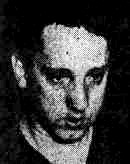
James Ruppert
Mass murderer James Huberty
Mass murderer · USA · 1984
James Oliver Huberty was a 41-year-old unemployed security guard. He was born i…
21 victims
James Huberty
Mass murderer · USA · 1984
James Oliver Huberty was a 41-year-old unemployed security guard. He was born i…
21 victims
 Charles Whitman
Mass murderer · USA · 1966
Charles Joseph Whitman (June 24, 1941 – August 1, 1966) shot and killed 14 peop…
15 victims
Charles Whitman
Mass murderer · USA · 1966
Charles Joseph Whitman (June 24, 1941 – August 1, 1966) shot and killed 14 peop…
15 victims
 George Emil Banks
Mass murderer · USA · 1982
George Emil Banks was an American mass murderer and a former Camp Hill prison g…
13 victims
George Emil Banks
Mass murderer · USA · 1982
George Emil Banks was an American mass murderer and a former Camp Hill prison g…
13 victims
 James Edward Pough
Mass murderer · USA · 1971
James Edward Pough (1948 – 18 June 1990) was an American mass murderer. On 18 J…
12 victims
James Edward Pough
Mass murderer · USA · 1971
James Edward Pough (1948 – 18 June 1990) was an American mass murderer. On 18 J…
12 victims
 Roger Dale Stafford
Mass murderer · USA · 1978
Roger Dale Stafford was a white man who was 27 when he received death sentences…
9 victims
Roger Dale Stafford
Mass murderer · USA · 1978
Roger Dale Stafford was a white man who was 27 when he received death sentences…
9 victims
 Nicholas Sheley
Spree killer · USA · 2008
Nicholas Troy Sheley (born July 31, 1979) was an American ex-convict accused of…
8 victims
Nicholas Sheley
Spree killer · USA · 2008
Nicholas Troy Sheley (born July 31, 1979) was an American ex-convict accused of…
8 victims
 Dorothy Matajke
Murderer · USA · 1985
Dorothy Matajke was a resident of Nevada and Iowa before being in Little Rock,…
3 victims
Dorothy Matajke
Murderer · USA · 1985
Dorothy Matajke was a resident of Nevada and Iowa before being in Little Rock,…
3 victims
 Shonda Johnson
Murderer · USA · 1997
Shonda Johnson was also known as Shonda Nicole Richards. She was White. She was…
1 victim
Shonda Johnson
Murderer · USA · 1997
Shonda Johnson was also known as Shonda Nicole Richards. She was White. She was…
1 victim
 Asher Weisgan
Spree killer · Israel · 2005
Name: Asher Weisgan · Birth–death: 1966 – December 22, 2006 · Nationality/occup…
4 victims
Asher Weisgan
Spree killer · Israel · 2005
Name: Asher Weisgan · Birth–death: 1966 – December 22, 2006 · Nationality/occup…
4 victims
 Robert Hansen
Serial killer · USA · 1973
Robert Hansen was a serial killer who abducted women and hunted them down in th…
21 victims
Robert Hansen
Serial killer · USA · 1973
Robert Hansen was a serial killer who abducted women and hunted them down in th…
21 victims
- Gender
- male
- Country
- USA
- Location
- Hamilton, Ohio, USA
- Date of birth
- 1934
- Age at first offence
- 41
- Characteristics
- parricide, inheritance
- Victim profile
- His mother, Charity Ruppert; his brother, Leonard Ruppert; Leonard's wife, Alma, and the couple's eight children, ages 4 to 17
- Method of murder
- Shooting
- Date(s) of murder
- March 30, 1975
- Years active
- 1975
- Date of arrest
- Same day
- Status
-
Sentenced to 11 consecutive life terms on July 3, 1975; conviction overturned on appeal; in 1982 a jury convicted him of two counts of murder and found him innocent of the other nine deaths by reason of insanity; sentenced to two consecutive life terms; parole was denied by the Ohio Parole Board on June 23, 1995
Case record: James Ruppert
Background
James Ruppert killed his mother, brother, sister-in-law, and eight nieces and nephews at an Easter Sunday dinner in Hamilton, Ohio. The killings occurred at his mother’s house. The day began with family members gathering for an Easter egg hunt and then going into the house for the family reunion and dinner.
Ruppert was an unemployed draftsman and never married. Neighbors described him as a loner, intelligent, and an ardent reader, and said he had no police record. He gave his address to the police as his mother’s house but neighbors said he traveled. A milkman for Leonard Ruppert said “James was the quiet one.” A neighbor described Charity Ruppert as “the sweetest little woman who ever walked.”
Ruppert spent his time near the Great Miami River collecting guns and walking tin cans along the ground with his pistols. A gun store employee said that a month or two before the Easter killings, Ruppert asked where he could obtain a gun silencer. Police later described him as a “gun freak.”
At trial and sentencing, psychiatrists described Ruppert as suffering from severe paranoia and operating under a delusional system. Harvard psychiatrist Dr. Lester Grinspoon testified that Ruppert’s rage had been accumulating over some ten years or more, and that there was no way in which he could avoid doing the act, adding that “if there had been more people in the house, they might have been killed also.” Defense psychiatrists testified that Ruppert believed family members, the police, and the FBI were involved in a long-standing conspiracy to persecute him.
Defense attorney Hugh Holbrock later said: “He's one of the kindest human beings I have ever met. He would do anything to help people.'”
A retired court stenographer, Mrs. Lucille Tabler, lived in the Hamilton area for seventy years and knew the Rupperts as a family friend and neighbor. Upon hearing about the mass killings, she told reporters: “I just don't believe it. Why would he want to do something like that? ... I wish I could talk to Jimmy.” Even after learning of Ruppert’s confession and presence at the scene, she continued to defend him and later visited him in jail, asking: “Why was the whole world against the Ruppert family?”
Members of the Donald Ruppert family, who were not related to James, faced harassment after the slayings and Donald Ruppert said people at work thought he did it. Donald Ruppert also said: “At work they thought I did it .... Some wanted to know when I was going to get the money .... I hate it every time I see something about the trial in the newspaper.”
The offence
On Easter Sunday, 1975, James Ruppert shot and killed 11 family members at his mother’s home in Hamilton, Ohio: Charity Ruppert, Leonard Ruppert, Alma Ruppert, and Leonard and Alma’s eight children aged 4 to 17. Police reported that each victim had been shot in the head except one woman who was shot in the chest. Investigators said there was no sign of a struggle in the house except for an overturned waste paper basket.
The victims included:
- Charity Ruppert, 65
- Leonard Ruppert, 42
- Alma Ruppert
- Leonard and Alma’s eight children ranging from age 4 to 17
In total, the 11 victims were shot 35 times. Police counted 31 spent cartridges. Ten of the victims had been shot in the head at close range, and one had been shot in the chest. Investigators said that it was possible some victims were shot once and then shot again to ensure death. Butler County coroner Garret Boone said: “It's unlikely that 11 people would have been shot and killed unless they were held in some way or were in a position where none of them could escape.” Boone also said it was possible that some victims had been shot once, then shot again “to make sure they were dead.”
Police said the house was a two-story frame house in a middle-class neighborhood on the south side of Hamilton. The address that appeared in the account was “635 Minor Avenue.” Neighbors reported that they did not hear gunshots from the two-story wooden frame home.
Ruppert surrendered without resistance after police arrived. Prosecutors said he waited for police to arrive, made no attempt to flee, changed his clothes, and then called police. Prosecutors said he had called the police at about 9:30 last night and reported bodies in the house.
When officers arrived and later questioned him, Ruppert told them: “My mother drove me crazy by always combing my hair, talked to me like I was a baby, and tried to make me into a homosexual”.
Police found five bodies in the living room and six in the kitchen. Ten bodies were shot in the head and one in the chest. The overturned wastebasket was identified as the single sign of possible struggle.
Investigation
Hamilton Police Chief George McNally said: “We can’t seem to find a motive for this.” He added: “This kind of murder usually has a motive like sex, greed or jealousy. We can’t find any of those things here. Some aspects of this case just leave us puzzled.”
Hamilton Prosecutor John Holcomb said police were alerted by a phone call from Ruppert reporting bodies in the house. Holcomb stated that when police arrived they found Ruppert standing inside the door. While he was talking, police noticed two bodies in the living room. When police entered the house, five bodies were found in the living room and six in the kitchen. Holcomb said all had been dead up to four hours.
Holcomb described the first trial evidence included that Ruppert reloaded his guns four times during the killings. Prosecutors said Ruppert waited three hours in the house and then changed his clothes before calling police.
Police found three pistols in the living room and a rifle propped against the refrigerator door in the kitchen. The pistols included a .357 magnum revolver and twin .22 caliber handguns, and the rifle was described as an 18-shot rifle which Ruppert immediately propped against the refrigerator door.
Coroner Garret Boone said he had seen the bodies and said: “It's possible that some of them were shot once, then shot again to make sure they were dead.” He also said: “It's unlikely that 11 people would have been shot and killed unless they were held in some way or were in a position where none of them could escape.”
A pointed narrative detail in the account described an 8-year-old girl delivering an Easter basket. The account described: “Excitement Over Dinner” and said the girl crossed the street to Mrs. Ruppert’s home to deliver the basket and told her father that Mrs. Ruppert was excited the family was coming.
Arrest
James Ruppert was taken into custody without incident immediately after an officer discovered the bodies on the first floor. He gave his address as his mother’s house and was arrested after police found him inside the front door of the house.
Ruppert refused to talk to police about the murders. Municipal Court Judge John Moser appointed a psychiatrist to examine Ruppert before his preliminary hearing.
At the time of his arrest, he was charged with 11 counts of aggravated murder. Bond was set at $200,000. A preliminary hearing was scheduled for Friday.
Trial
During a 1975 trial, Ruppert entered a plea of insanity. Prosecutors said Ruppert planned to take his family’s inheritance, and that he planned to get an acquittal by reason of insanity and later be released from the hospital.
In the account, prosecutors argued that Ruppert planned to take the family's $300,000 net worth for himself by killing everyone else, getting declared not guilty by reason of insanity, and then, after being “cured” within a few years, being released as a wealthy man.
Defense psychiatrist evidence included testimony by Dr. Howard Sokolov and others. Dr. Howard Sokolov testified that Ruppert suffered from “a paranoid psychotic state,” with one symptom being “departure from reality in terms of thinking and behavior.” Defense psychiatrists also testified that Ruppert was “absolutely obsessed” with the belief that family members, the police, and the FBI were involved in a long-standing conspiracy.
Dr. Philip Meehanick testified: “His ability to evaluate is impaired, his view of others is warped, he sees virtually no one in a kindly light.”
Dr. Lester Grinspoon testified: “His ego was just completely overwhelmed by this rage, this suppressed rage which had been accumulating over some ten years or more, actually since childhood, that there was no way in which he could avoid doing that act. In fact, if there had been more people in the house, they might have been killed also.”
The defense described the act as insane and argued Ruppert had been insane for ten years and was incapable of controlling his actions.
Prosecutors called twenty-nine witnesses and presented two hundred exhibits. Prosecuting attorney John Holcomb argued that the arrest and indictment were part of a plan “to enter a plea of not guilty by reason of temporary insanity ... to be sent to Lima, a state mental hospital where he would eventually be declared sane and then walk out with $300,000 in his pocket.”
A prosecution witness and member of the real estate and probate committees of the American Bar Association testified that Ruppert stood to inherit proceeds including his brother’s life insurance, his mother’s estate, and half of the property of his brother’s children. The account listed valuations and amounts:
- Leonard’s home was valued at $40,000
- Property belonging to Leonard’s family was assessed at $19,500
- His mother’s home was worth $14,000
- Leonard’s life insurance coverage at General Electric was $62,000
- His personal coverage was another $100,000
- His family also held savings accounts amounting to almost $30,000
In 1975, a three-judge panel found him guilty and sentenced him to 11 consecutive life terms on July 3, 1975.
That ruling was overturned on appeal, and in 1982 a jury convicted him of two counts of murder and found him innocent of the other nine deaths by reason of insanity. He was sentenced to two consecutive life terms in prison after that retrial on July 23, 1982.
Sentencing
On July 3, 1975, a three-judge panel sentenced James Ruppert to 11 consecutive life terms. The account stated that this was on a 2-1 vote.
After appeal, in 1982 a jury convicted him of two counts of murder and found him innocent of the other nine deaths by reason of insanity. On July 23, 1982, he was sentenced to two consecutive life terms in prison.
The inheritance was forfeited.
The account also stated prosecutors did not seek the death penalty in the second trial because it was “obvious there was mental impairment, which is always a mitigating factor,” as Holcomb said.
Appeals
The account stated that the 1975 ruling was overturned on appeal.
Outcome
James Ruppert remained in prison and was serving his sentence at the Allen Correctional Institution in Lima, Ohio. His first parole hearing was in 1995, and his next one was scheduled for 2035, when he would be 101 years old.
Aftermath
In 1995, the Ohio Parole Board rejected his parole request. The Cincinnati Post account said: James Ruppert’s parole request was rejected, and the parole board ordered him to serve at least 40 more years behind bars. It also said he would be entitled to a second parole review in another 20 years at the midpoint of the additional 40 years, meaning he would be 80 years old in the year 2015.
The account also described a parole hearing process: Joe Andrews, a spokesman for the Ohio Department of Rehabilitation and Correction, said the board would schedule a hearing for James Ruppert on July 3 or July 5 in Columbus. The board would consider his case in full next month.
Other details
Ruppert’s victims were described as 8-year-old to high-school aged; the youngest child was 4 years old and the oldest was in high school.
In the narrative background included in the account, the firearms were described as three revolvers—a .357 magnum and twin .22 caliber handguns—and an 18-shot rifle.
The narrative portion included a dispute over motive and a discussion of his alleged financial troubles and unemployment prior to the killings. The account described that the night before the shootings, Ruppert met Wanda Bishop at the 19th Hole Cocktail Lounge. The account said Rupert’s mother told him: “if he could drink seven days a week, he could help pay the rent. Otherwise, he would have to leave home.” The account also included Bishop’s testimony that when she asked whether he had taken care of his problem, he answered: “No, not yet.”
The account included that a question by his brother about his Volkswagen preceded the shootings. It reported that his brother asked him “with a mocking smile,” “How's your Volkswagen, Jimmie?” The account also described psychiatrists’ testimony that Ruppert believed Leonard had tried to sabotage his Volkswagen.
The account used additional quotations to describe community reactions and trial coverage. City Councilman George McNally said: “It was mass carnage, no question,” and “I can understand the heat of passion. I can't understand someone doing that to kids or their mother.” Butler County Prosecutor John Holcomb said: “I worked on that case, beginning Easter Sunday evening, worked on that exactly 20 hours a day, 33 days in a row.” Holcomb also said in describing his view when walking into the front door: “There's been a shooting here,” and later: “When I walked through that front door, right into the middle of all that carnage, I saw that little 4-year-old boy, with blue bib corduroy overalls on, a long-sleeve blue cotton shirt and lying on the floor at the foot of the couch, stretched out with a bullet hole in his head," and “In his outstretched right hand, he had partially opened the tin-foil purple wrapper off a chocolate Easter egg. That was a sight that shook me to the depths of my soul, and I have never forgotten it.”
The account included comments by Police Chief McNally: “This kind of murder usually has a motive like sex, greed or jealousy. We can’t find any of those things here.” It also included a statement: “We hope the path the bullets traveled and the point of entry will determine if the victims tried to dodge the bullets,” which was attributed to Chief McNally.
The account described rumors, including:
- “Alma had wanted to commit suicide and take one of her children with her. She started the whole thing by harrassing Jimmie.”
- “Ruppert went beserk when he learned his mother had made Hamburger Helper for Easter dinner.”
- “If Prosecutor John Holcomb loses the Ruppert case, he'll quit.”
- “The Ruppert house is haunted.”
- “Kids snuck into the Ruppert house on Minor Avenue and said everything, was covered with blood.”
- “The new occupants of what was formerly the Ruppert house were newcomers to Hamilton who weren't told that the mass murder had taken place there.”
- “Though confined in a mental hospital since the trial, James Ruppert has an extensive wardrobe, loves to eat ice cream, and continues to receive the Wall Street journal on a daily basis.”
The account described that the Ruppert home was unlocked to auction off household possessions one year after Easter Sunday, 1975, and included an eyewitness quotation from Nancy Baker: “Babies asleep in strollers ... housewives in curlers ... men smoking big cigars - all added to the carnival atmosphere.'”
The account also included a quote attributed to reporter Dick Perry: “It was a free show!”
Spotted an error, or have more information about this case?