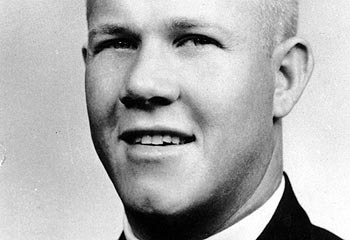
Charles Whitman
Mass murderer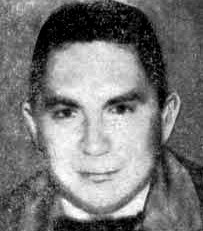 Francisco Paula Gonzales
Mass murderer · USA · 1964
Francisco Paula Gonzales was a passenger on Pacific Air Lines Flight 773. Gonza…
44 victims
Francisco Paula Gonzales
Mass murderer · USA · 1964
Francisco Paula Gonzales was a passenger on Pacific Air Lines Flight 773. Gonza…
44 victims
 Thomas Doty
Mass murderer · USA · 1962
Thomas G. Doty was a passenger on Continental Airlines Flight 11. He was a marr…
44 victims
Thomas Doty
Mass murderer · USA · 1962
Thomas G. Doty was a passenger on Continental Airlines Flight 11. He was a marr…
44 victims
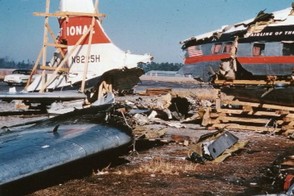 Julian Andrew Frank
Mass murderer · USA · 1960
6 January 1960 — National Airlines Flight 2511 exploded and crashed 1-1/2 miles…
33 victims
Julian Andrew Frank
Mass murderer · USA · 1960
6 January 1960 — National Airlines Flight 2511 exploded and crashed 1-1/2 miles…
33 victims
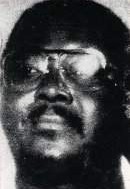 James Edward Pough
Mass murderer · USA · 1971
James Edward Pough (1948 – 18 June 1990) was an American mass murderer. On 18 J…
12 victims
James Edward Pough
Mass murderer · USA · 1971
James Edward Pough (1948 – 18 June 1990) was an American mass murderer. On 18 J…
12 victims
 James Ruppert
Mass murderer · USA · 1975
James Ruppert killed his mother, brother, sister-in-law, and eight nieces and n…
11 victims
James Ruppert
Mass murderer · USA · 1975
James Ruppert killed his mother, brother, sister-in-law, and eight nieces and n…
11 victims
 Richard Speck
Mass murderer · USA · 1966
Richard Speck (December 6, 1941–December 5, 1991) was a mass murderer who syste…
8 victims
Richard Speck
Mass murderer · USA · 1966
Richard Speck (December 6, 1941–December 5, 1991) was a mass murderer who syste…
8 victims
 Theodore Gregory
Murderer · USA · 1948
Theodore W. Gregory was executed at the Nevada State Prison on January 29, 1951…
1 victim
Theodore Gregory
Murderer · USA · 1948
Theodore W. Gregory was executed at the Nevada State Prison on January 29, 1951…
1 victim
 William L. Thompson
Murderer · USA · 1976
William L. Thompson was convicted and sentenced to death for the 03/30/76 kidna…
1 victim
William L. Thompson
Murderer · USA · 1976
William L. Thompson was convicted and sentenced to death for the 03/30/76 kidna…
1 victim
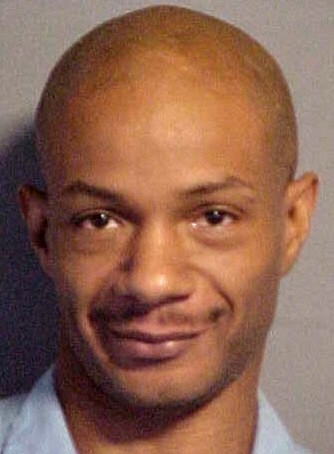 Tyrone Darks
Murderer · USA · 1994
Tyrone Peter Darks was convicted of the first degree murder of his former wife,…
1 victim
Tyrone Darks
Murderer · USA · 1994
Tyrone Peter Darks was convicted of the first degree murder of his former wife,…
1 victim
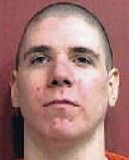 Douglas Turner
Homicide - Murderer · USA · 1987
Douglas Turner was a juvenile who was released from an alcohol treatment progra…
9 victims
Douglas Turner
Homicide - Murderer · USA · 1987
Douglas Turner was a juvenile who was released from an alcohol treatment progra…
9 victims
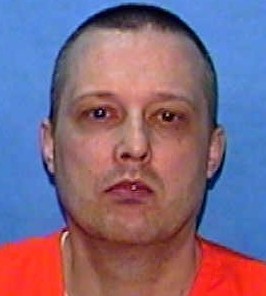 Robin Lee Archer
Murderer · USA · 1991
Robin Lee Archer was tried in the First Judicial Circuit, Escambia County, Case…
1 victim
Robin Lee Archer
Murderer · USA · 1991
Robin Lee Archer was tried in the First Judicial Circuit, Escambia County, Case…
1 victim
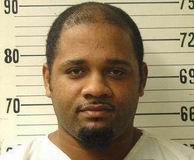 James Stout
Murderer · USA · 1995
James P. Stout and three accomplices were accused of carjacking, abducting and…
1 victim
James Stout
Murderer · USA · 1995
James P. Stout and three accomplices were accused of carjacking, abducting and…
1 victim
- Gender
- male
- Country
- USA
- Location
- Austin, Texas, USA
- Date of birth
- J une 24, 1941
- Age at first offence
- 25
- Characteristics
- parricide, shooting rampage
- Victim profile
- His mother Margaret Whitman (43 ) / His wife Kathy Whitman (23) / Edna Townsley (47) / Mark Gabour (16) / Marguerite Lamport (45) / Paul Sonntag (18) / Claudia Rutt (18) / Roy Dell Schmidt (29) / Thomas Aquinas Ashton (22) / Thomas Eckmann (18) / Baby Boy Wilson (unborn) / Thomas Karr (24) / Karen Griffith (17) / Doctor Robert Boyer (32) / Harry Walchuk (39) / Billy Speed (22)
- Method of murder
- Shooting
- Date(s) of murder
- August 1, 1966
- Years active
- 1966
- Date of arrest
- —
- Status
-
Died in custody
Shot and killed by Austin Police Officer Houston McCoy the same day
Case record: Charles Whitman
Overview
Charles Joseph Whitman (June 24, 1941 – August 1, 1966) shot and killed 14 people (including those who survived the initial shooting but later died as a result of their injuries) and wounded 31 others from the observation deck of the University of Texas Main Building (the University of Texas at Austin) on August 1, 1966. He had murdered his wife and mother before being shot by Austin police.
After killing his mother and wife, Whitman went to the top of the University clock tower after the lunch break and began to pick off the stragglers who remained. Three police officers and one retired Air Force tailgunner found their way into the Tower, where they shot him 6 times with a .38 and twice in the face with a 12-gauge shotgun from 5 feet away.
The autopsy requested in the suicide note left by Whitman revealed that he had a brain tumor. This led to speculation that the tumor was responsible for his rampage. During later medical discussion, a glioblastoma tumor in the hypothalamus region was revealed; speculation continued about its possible contribution, and it was also stated that the relationship between the tumor and actions could not be established with clarity.
Timeline
- July 6, 1959 — Whitman enlisted in the Marines.
- September 15, 1961 — Whitman was accepted into the University of Texas mechanical engineering program on a USMC scholarship.
- 1962 (month not specified) — Whitman married Kathleen Frances Leissner in Kathy’s hometown of Needville, Texas, presided over by Fr. Leduc.
- 1963 (month not specified) — Whitman’s scholarship was withdrawn following a teenage prank in which he shot a deer and dragged it to his dormitory.
- 1963 (month not specified) — Whitman was court-martialed for gambling, possessing a personal firearm on base, and threatening another Marine over a $30 loan for which Whitman demanded $15 interest; he was sentenced to 30 days of confinement and 90 days of hard labor and was demoted to Private.
- December 1964 — Whitman was honorably discharged from the Marines and enrolled at the University of Texas in architectural engineering.
- 1966 (March 29) — Whitman met with psychiatrist Maurice Dean Heatly for about an hour and described frustration with his parents’ separation and strains at work and school; during the interview he remarked about feeling the urge to “start shooting people with a deer rifle” from the University tower.
- June 24, 1941 — Charles Joseph Whitman was born.
- July 31, 1966 (early evening) — Whitman sat at his desk in the living room of the house on Jewell Street and typed a suicide letter.
- July 31, 1966 (about 7:30 P.M.) — Whitman was interrupted by a visit from Larry Fuess and his wife Elaine; he was writing and replied that he was writing “Letters to old friends.”
- July 31, 1966 (about 10:00 P.M.) — Whitman drove to pick up Kathy and later visited his mother.
- Just after midnight (August 1, 1966) — Whitman killed his mother Margaret.
- August 1, 1966 (about 5:45 A.M.) — Whitman telephoned Kathy’s supervisor at Bell to say she was sick and would not be in for work.
- August 1, 1966 (about 7:15 A.M.) — Whitman rented a dolly from Austin Rental Equipment Service, cashing checks afterward.
- August 1, 1966 (about 9:30 A.M.) — Whitman appeared at Sears Roebuck and purchased a twelve-gauge shotgun on credit; he sawed off part of the stock and barrel.
- August 1, 1966 (after 11:30 A.M.) — Whitman entered the Main Building, struggled with the elevator until employee Vera Palmer informed him it was not powered and turned it on for him, and took the elevator to the top floor of the Tower just beneath the clock face.
- August 1, 1966 (about 11:48 A.M.) — Whitman opened fire from the tower observation deck.
- August 1, 1966 (about 1:24 P.M.) — Charles Whitman was dead following gunfire from officers including Houston McCoy and Ramiro Martinez, with assistance from Jerry Day and deputized citizen Allen Crum.
- August 1, 1966 — Whitman was shot and killed by Austin police.
Background
Charles Whitman was raised in Lake Worth, Florida. He had scored 138 on an IQ test at age 6. He attended St. Ann’s High School in Palm Beach where he was a pitcher on the baseball team, and he took five years of piano lessons. All three brothers served as altar boys at Sacred Heart Roman Catholic Church, and Whitman chose the Confirmation name Joseph for himself.
Whitman had a history of mental illness discussions and was described as having depression; he consulted the University’s doctor Jan Cochrun and was prescribed Valium and advised to visit campus psychiatrist Maurice Dean Heatly. Whitman met Heatly on March 29, 1966, and never returned.
Family dysfunction was described. By 1966, Whitman’s mother Margaret had announced she was divorcing his father. Whitman drove to Florida to help his mother move to Austin, Texas, where she found work in a cafeteria. The move prompted his youngest brother John to move out. His brother Patrick continued living with their father, whose plumbing business employed him. Whitman’s father began telephoning Whitman several times a week pleading with him to convince his mother to give the marriage another try, but Whitman refused.
Shortly afterward, John was arrested for throwing a rock through a window and was released after paying a $25 fine.
Declining health included Whitman’s daily journal and discussions of depression and increasing strains at work and school. By summer 1966, Whitman was prescribed Dexedrine.
During the autopsy, it was revealed that Whitman had a cancerous glioblastoma tumor in the hypothalamus region of his brain. Some theorized the tumor may have pressed against the nearby amygdala affecting emotive passion, and others speculated the medical condition was in some way responsible for the attacks. Other statements said the tumor did not directly affect the frontal lobe and could not be established with clarity as the cause of his actions. Doctors were unable to establish if he consumed prescribed drugs prior to the attacks.
Fr. Leduc met with Whitman for the last time two months prior to the shootings and said Whitman confided that he had lost his faith and no longer considered himself a practicing Catholic.
After the attacks, a study of Whitman’s journal showed him lamenting that he had acted violently towards Kathy, and that he was resolved not to follow his father’s abusive example and to be a good husband. John and Fran Morgan later told the Department of Public Safety that Whitman had confided in them that he had struck Kathy on three occasions.
Other details (education, military, work, and personal life)
Whitman attended St. Ann’s High School in Palm Beach, was a pitcher on the school’s baseball team, and took piano lessons for five years.
He achieved Eagle Scout at age 12, described as among the youngest to achieve the rank. At age 14, his scout leader Joseph Leduc completed seminary and served as priest of Sacred Heart for a month. Leduc later became a confidant of Whitman and was a family friend who accompanied Whitman and his father on hunting trips.
At age 16, Whitman underwent a routine appendectomy and was hospitalized following a motorcycle accident.
Whitman’s Marines service began when he joined the Marines on July 6, 1959, against his father’s wishes. He explained to Fr. Leduc that he had come home drunk several weeks earlier and his father had hit him repeatedly and pushed him into the family swimming pool. While Whitman was aboard a train headed towards Marine Corps Recruit Depot Parris Island, his father telephoned “some branch of Federal Government” to have his son’s enlistment cancelled, but was rebuffed.
After enlistment, Whitman was accepted into the University of Texas’ mechanical engineering program on September 15, 1961 through a USMC scholarship. His hobbies included karate, scuba diving, and hunting. The hunting hobby got him into trouble at the University when he was involved in a teenage prank in which he shot a deer, dragged it to his dormitory, and skinned it in his shower. As a result of this incident and sub-standard grades, his scholarship was withdrawn in 1963.
In August 1962, Whitman married Kathleen Frances Leissner (Kathy) in Needville, Texas, presided over by Fr. Leduc. The following year he returned to active duty at Marine Corps Base Camp Lejeune, North Carolina, where he was promoted to Lance Corporal and involved in a Jeep accident in which his Jeep rolled over an embankment; after rescuing his pinned comrade, he was hospitalized for four days.
That November, Whitman was court-martialed for gambling, possessing a personal firearm on base, and threatening another Marine over a $30 loan for which Whitman demanded $15 interest. He was sentenced to 30 days of confinement and 90 days of hard labor and was demoted to Private.
In December 1964 he was honorably discharged and returned to the University of Texas, enrolling in architectural engineering.
Without his scholarship, Whitman worked as a bill collector for Standard Finance Company and later as a bank teller at Austin National Bank. By 1965 he took a temporary job with Central Freight Lines and worked as a traffic surveyor for the Texas Highway Department. He volunteered as a Scoutmaster for Austin Scout Troop 5 while Kathy worked as a biology teacher at Lanier High School.
The offence
Whitman’s offence involved:
- murdering his mother Margaret and his wife Kathy, then
- shooting and killing multiple people and wounding additional victims from the University of Texas tower observation deck on August 1, 1966, and
- being shot dead by Austin police officers.
Preparations and equipment
Whitman purchased binoculars and a knife from Davis’ Hardware, and Spam from a 7-Eleven store the day before the shootings. He bought the items used during the rampage including a 12-gauge shotgun, a Remington 700 with 4x Leupold scope, a 6 millimeter Remington rifle, an M1 Carbine, pistols including a .357 Magnum Galesi-Brescia pistol and a Luger pistol, plus Nesco machete, scabbard hatchet, Ammunition box with gun-cleaning kit, Camillus hunting knife, scabbard Randall knife inscribed with name, locking pocketknife, steel rebar, a hunter’s body bag, and other gear.
He had equipment including a Channel Master 14 transistor radio, blank Robinson notebook, Black Papermate pen, light green towel, white towel, water jugs, gasoline jugs, nylon and cotton ropes and clothesline, and clothesline.
He had additional prepared supplies including food items:
- canned food including Spam and fruit cocktail,
- Planters peanuts,
- raisins,
- sweet rolls, and other provisions described as Twelve cans of food, Bread, honey, and SPAM (including sandwiches), Planters Peanuts and raisins, and sweet rolls.
He also carried deodorant and toilet paper and other items including a lighter fluid, lighter, box of matches, extension cord, grey gloves, eyeglasses, earplugs, Mennen spray deodorant, and food and supplies.
Murder of his mother and wife
Whitman killed his mother Margaret just after midnight, with the exact method disputed. One description said he rendered her unconscious before stabbing her in the heart.
He returned to his suicide note now writing by hand:
To Whom It May Concern: I have just taken my mother’s life. I am very upset over having done it. However, I feel that if there is a heaven she is definitely there now...I am truly sorry...Let there be no doubt in your mind that I loved this woman with all my heart.
He returned to his home at 906 Jewell Street and stabbed Kathy five times as she slept naked. He left another note:
I imagine it appears that I brutally killed both of my loved ones. I was only trying to do a quick thorough job...If my life insurance policy is valid please pay off my debts...donate the rest anonymously to a mental health foundation. Maybe research can prevent further tragedies of this type.
He left notes to each of his brothers and his father, and instructions in the apartment that film canisters on the table should be developed, and the puppy Schocie should be given to Kathy’s parents.
Additional narrative of the murders included a description that during the struggle he broke bones in Margaret’s left hand with such force that the engagement ring band was driven into her finger. It was also described that after stabbing and shooting, he pinned a note to Margaret’s mother’s door: “Roy, mother ill and not able to come to work today.”
For Kathy, it was described that she was stabbed and her body wrapped in a bed sheet.
Suicide note (evening before the shootings)
Whitman typed a letter Sunday July 31, 1966, including these verbatim passages (mispellings in original as given):
Sunday July 31, 1966 6:45 P.M. I don't quite understand what it is that compels me to type this letter. Perhaps it is to leave some vague reason for the actions I have recently performed. I don't really understand myself these days. I am supposed to be an average reasonable and intelligent young man. However, lately ( I can't recall when it started ) I have been a victim of many unusual and irrational thoughts. These thoughts constantly recur and it requires a tremendous mental effort to concentrate on useful and progressive tasks. In March when my parents made a physical break I noticed a great deal of stress. I consulted a Dr. Cochrum at the University Health Center and asked him to recommend someone that I could consult with about some psychiatric disorders I felt I had. I talked with a Doctor once for about two hoursand tried to convey to him my fears that I felt come overwhelming violent impulses. After one session I never saw the Doctor again, and since then I have been fighting my mental turmoil alone, and seemingly to no avail. After my death I wish an autopsy would be performed on me to see if there's any visible physical disorder. I have had some tremendous headaches in the past and have consumed two large bottlesof Excedrin in the past three months. It was after much thought that I decided to kill my wife, Kathy, tonight after I pick her up from work at the telephone company. I love her dearly, and she has been as fine a wife to me as any man could ever hope to have. I cannot rationaly pinpoint any specific reason for doing this. I don't know whether it is selfishness, or if I don't want her to have to face the embrassment my actions would surely cause her. AT this time, though the p rominent reason in my mind is that I truly do not consider this world worth living in, and am prepared to die, and I do not want to leave her to suffer alone in it. I intend to kill her as painlessly as possible. Similar reasons provoked me to take my mother's life also. I don't think the poor woman has ever enjoyed life as she is entitled to. She was a simple young woman who married a very possessive and dominating man. All my life as a boy until I ran away from home to join the Marine Corps ( At this point in the note, Whitman broke off his writing, picking it up later that same night ) friends interrupted 8-1-66 Mon. 3:00 A.M. Both Dead I was a witness to her being beaten at least one a month. Then when she took enough my father wanted to fight to keep her below her usual standard of living. I imagine it appears that I bruttaly kill both of my loved ones. I was only trying to do a quick thorough job. If my life insurance policy is valid, please see that all the worthless checks I wrote this weekend are made good. Please pay off my debts. I am 25 years old and have been financially independent. Donate the rest anonymously to a mental health foundation. Maybe research can prevent further tragedies of this type. Charles J. Whitman Give our dog to my-in-laws please. Tell them Kathy loved "Schocie" very much. R. W. Leissner Needville, Texas If you can find it in yourself to grant my last wish Cremate me after The autopsy. *****
Additional handwritten note beside his mother’s body included:
I have just taken my mother's life. I am very upset over having done it. However I feel that if there is a heaven, she is definitely there now, and if there is no life after, I have relieved her of her suffering here on earth. The intense hatred I feel for my father is beyond description. My mother gave that man the 25 best years of her life and because she finally took enough of his beatings, humiliation, degredation, and tribulations that I am sure no one but she and he will ever know - to leave him. He has chosen to treat her like a slut that you would bed down with, accept her favors and then throw a pittance in return. I am truly sorry that this is the only way I could see to relieve her suffering but I think it was best. Let there be no doubt in your mind that I loved the woman with all my heart. If there exists a God, let him understand my actions and judge me accordingly.
Shooting from the tower
After gaining access to the Main Building and reaching the observation deck, Whitman concealed and attacked the receptionist Edna Townsley. He knocked her unconscious and concealed her body behind a couch; she later died from her injuries.
He barricaded the stairway and engaged other visitors and family groups. One description states that the first shots from the tower’s outer deck came at approximately 11:48 AM. A history professor was the first to phone the Austin Police Department after seeing students shot on the South Mall gathering center.
Police and other law enforcement converged on campus, including off-duty officers, sheriff’s deputies, and Texas Department of Public Safety officers.
During the response, it was described that Whitman used waterspouts on each side of the tower as loop holes to continue shooting largely protected. Police lieutenant and sharpshooter Marion Lee reported from a small airplane that there was only one sniper firing from the parapet.
Ambulance and medical response occurred, including armored car and ambulances run by local funeral homes. Ambulance driver Morris Hohmann was shot in a leg artery and taken to Brackenridge Hospital. Blood donation queues formed at Brackenridge and the Travis County Blood Bank.
On the observation deck, Police Officer Conner and DPS Agent Cowan remained inside to cover windows while officers Ramiro Martinez, Houston McCoy, and Jerry Day took a hastily deputized citizen Allen Crum up toward the observation deck.
There was dispute about which officers killed Whitman; both claimed responsibility.
In the final confrontation, McCoy fired his shotgun twice and Martinez fired six rounds from his revolver before taking the shotgun and approaching Whitman and firing again point-blank. Jerry Day took a green towel from Whitman’s footlocker and waved it to indicate that the sniper had been killed. Whitman was shot dead 96 minutes after his first fusillade from the tower.
Investigation and police actions
After the initial calls to police and the arrival of law enforcement, officers tried to seal off the area, chartered an airplane for spotting and attempted sharpshooting from the air. The airplane was driven away under Whitman’s fire and forced to retreat.
At the end of the assault, the group that confronted Whitman included Ramiro Martinez, Houston McCoy, Jerry Day, and deputized citizen Allen Crum (a retired Air Force tailgunner). This group entered from the stairway, accessed the observation deck area, and attacked Whitman in a stairway and walkway confrontation.
Victims (killed)
Killed victims included:
- Margaret Whitman — killed in her apartment.
- Kathy Whitman — killed while she slept.
- Edna Townsley — receptionist.
- Marguerite Lamport — killed by shotgun on stairs.
- Mark Gabour — killed by shotgun on stairs.
- Thomas Eckman — shoulder wound; kneeling over Claire Wilson.
- Robert Boyer — back wound; visiting physics professor.
- Thomas Ashton — chest wound; Peace Corps trainee.
- Thomas Karr — spine wound.
- Billy Speed — police officer; shoulder/chest wound.
- Harry Walchuk — doctoral student and father of six.
- Paul Sonntag — shot through the mouth; age 18.
- Claudia Rutt — age 18.
- Roy Schmidt — electrician shot outside his truck.
- Karen Griffith — chest wound; age 17; died after week in hospital.
- Unborn Child David Gunby — survived the initial shooting but required life-long dialysis as a result of his injuries.
The record also described that David Gunby announced he was quitting dialysis and died within a week as a result, and that he died later from long-term kidney complications.
Additional identification of several victims included:
- Claire Wilson — 18 years old and eight months pregnant; shot in the abdomen; survived, while her baby was stillborn (described as an unborn child).
- Alecs Hernandez (newsboy Alec Hernandez) — wounded after bullet hit his bicycle seat and him.
- Robert Heard — Associated Press reporter; hit in shoulder.
- Billy Snowden — basketball coach; wounded in shoulder.
- Roy Dell Schmidt — 29-year-old city employee; shot while making a customer service call; last words included: “I’m hit! I’m hit!”
- Thomas Eckmann — 18-year-old from Barcelona, Spain; died in a local hospital; bullet passed through him into Claire Wilson’s abdomen.
- Thomas Karr — 24; died on the operating table.
Victims (wounded)
Wounded individuals listed included: Allen, John Scott Bedford, Billy Ehlke, Roland Evgenides, Ellen Esparza, Avelino Foster, F. L. Frede, Robert Gabour, Mary Frances Gabour, Michael Garcia, Irma Harvey, Nancy Heard, Robert Hernandez, Alex Hohmann, Morris Huffman, Devereau Kelley, Homar J. Khashab, Abdul Littlefield, Brenda Gail Littlefield, Adrian Martinez, Dello Martinez, Marina Mattson, David Ortega, Delores Paulos, Janet Phillips, Lana Rovela, Oscar Snowden, Billy Stewart, C. A. Wilson, Claire Wilson, Sandra Wheeler, Carla Sue.
Aftermath
After the shootings, it was described that the events, together with the Watts riots of the early 1960s, were considered an impetus for establishing SWAT teams and other task forces to deal with situations beyond normal police procedures. It also led President Lyndon B. Johnson to call for stricter gun control policies.
The Tower’s observation deck was closed for two years and reopened in 1968. After several suicides, it was closed again in 1974 and remained closed until September 15, 1999. Access to the tower later was controlled through guided tours scheduled by appointment only, with metal detectors and other security measures. Repaired scars from bullets were described as still visible on limestone walls.
Houston McCoy was diagnosed with post-traumatic stress disorder in 1998 by Dr. Mink of the Department of Veterans Affairs in Waco, Texas, who related the diagnosis to the tower tragedy three decades earlier. It was stated that as of 2007 McCoy was living in western Texas.
Ramiro Martinez became a narcotics investigator, a Texas Ranger, and a Justice of the Peace in New Braunfels, Texas. In 2003, Martinez published memoirs entitled, They Call Me Ranger Ray: From the UT Tower Sniper to Corruption in South Texas.
On November 12, 2001, David Gunby died of long-term kidney complications from a wound received while on the South Mall.
The case was also referenced in later popular culture, including multiple films, songs, TV episodes, and books. Specific items included:
- Time cover August 12, 1966 with an article entitled “The Psychotic & Society.”
- Life cover in 1966 with an article entitled “The Texas Sniper.”
- John Berryman’s poem “Dream Song 135” (1968).
- Peter Bogdanovich’s film Targets (1968).
- Harry Chapin’s album Sniper and Other Love Songs (1972).
- Texas singer Kinky Friedman’s “The Ballad of Charles Whitman” (1973).
- The made-for-TV film The Deadly Tower (1975) starring Kurt Russell.
- Insane Clown Posse track “The Tower” (2007). Other works were listed with their descriptions as included in the record.
Spotted an error, or have more information about this case?