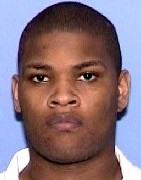
Gerald Edward Marshall
Murderer Robert Martines Perez
Murderer · USA · 1994
Name: Robert Martines Perez · Other name used in proceedings: Robert Martinez P…
15 victims
Robert Martines Perez
Murderer · USA · 1994
Name: Robert Martines Perez · Other name used in proceedings: Robert Martinez P…
15 victims
 Billy Frank Vickers
Murderer · USA · 1993
Billy Frank Vickers Vickers was executed by lethal injection in Texas on Januar…
14 victims
Billy Frank Vickers
Murderer · USA · 1993
Billy Frank Vickers Vickers was executed by lethal injection in Texas on Januar…
14 victims
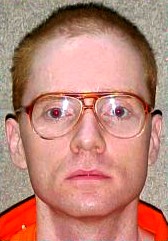 Robert Glen Jones
Murderer · USA · 1996
Defendant: Robert Glenn Jones (ADC#070566) · Co-defendant: Scott Nordstrom (ADC…
7 victims
Robert Glen Jones
Murderer · USA · 1996
Defendant: Robert Glenn Jones (ADC#070566) · Co-defendant: Scott Nordstrom (ADC…
7 victims
 Richard Charles Duncan
Murderer · USA · 1987
Richard Charles Duncan was the longtime homosexual partner and business partner…
2 victims
Richard Charles Duncan
Murderer · USA · 1987
Richard Charles Duncan was the longtime homosexual partner and business partner…
2 victims
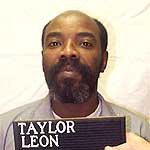 Leon Taylor
Murderer · USA · 1994
State of Missouri v. Leon Taylor, 7944 S.W. 2d 925 (Mo.banc). On April 14, 1994…
1 victim
Leon Taylor
Murderer · USA · 1994
State of Missouri v. Leon Taylor, 7944 S.W. 2d 925 (Mo.banc). On April 14, 1994…
1 victim
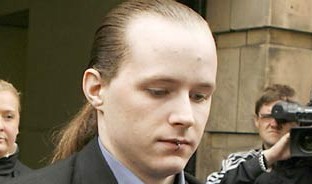 Luke Mitchell
Homicide · United Kingdom · 2003
Luke Muir Mitchell (born July 24th 1988) was a Scottish teenager convicted of m…
1 victim
Luke Mitchell
Homicide · United Kingdom · 2003
Luke Muir Mitchell (born July 24th 1988) was a Scottish teenager convicted of m…
1 victim
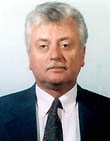 Bennie Lawson
Murderer · USA · 1994
Bennie Lawson was a “street thug” who was described as having been concerned ab…
3 victims
Bennie Lawson
Murderer · USA · 1994
Bennie Lawson was a “street thug” who was described as having been concerned ab…
3 victims
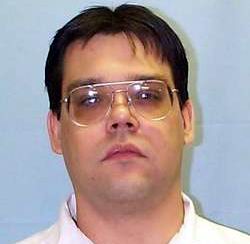 John Forrest Parker
Murderer · USA · 1988
John Forrest Parker was an inmate of the Alabama Department of Corrections. He…
1 victim
John Forrest Parker
Murderer · USA · 1988
John Forrest Parker was an inmate of the Alabama Department of Corrections. He…
1 victim
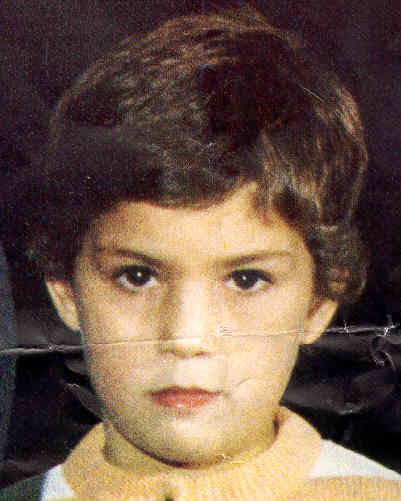 Vincenzo Campanella
Homicide · Italy · 1990
Vincenzo Campanella was a 17-year-old cousin of Santina Renda. He had mental pr…
2 victims
Vincenzo Campanella
Homicide · Italy · 1990
Vincenzo Campanella was a 17-year-old cousin of Santina Renda. He had mental pr…
2 victims
- Gender
- male
- Country
- USA
- Location
- Harris County, Texas, USA
- Date of birth
- J uly 11, 1982
- Age at first offence
- 21
- Characteristics
- armed robbery, murder for hire, robbery
- Victim profile
- A mentally retarded Whataburger employee
- Method of murder
- Shooting
- Date(s) of murder
- May 11, 2003
- Years active
- 2003
- Date of arrest
- —
- Status
-
Sentenced to death
Sentenced to death on December 8, 2004
Case details
Gerald Edward Marshall was identified as the appellant in the Texas Court of Criminal Appeals in No. AP-75,048 (direct appeal from Cause No. 948591, from the 180th District Court, Harris County). The opinion was delivered by Hervey, J. for a unanimous court.
Timeline
- 05/11/2003 — In Harris County, Texas, Marshall and three codefendants entered a What-a-burger to commit a robbery; during the robbery Marshall shot a white male employee in the head resulting in his death.
- 12/08/2004 — Marshall received age 22 (when received) and had an education level listed as 12.
- 12/08/2004 — The trial court sentenced Marshall to death pursuant to the jury’s answers to the special issues submitted at the punishment phase of trial.
- 12/20/2006 — The Court of Criminal Appeals affirmed the trial court’s judgment.
Background
Marshall was associated with Texas Department of Criminal Justice information including TDCJ Number 999489 and a listed Date of Birth 07/11/1982. The record listed Marshall’s age when received as 22, and his education level as 12.
Marshall’s listed county was Harris and his listed race was Native with gender male. The record listed hair color Black, height 6'1", weight 212, and eye color Brown. Marshall’s prior occupation was Bell Texas Janitor / Laborer, and his prior prison record was listed as None.
The record described Marshall as having a nickname of "Tank". The record reflected that appellant’s shaved his head soon after his arrest.
The offence
On 05/11/2003 in Harris County, Texas, Marshall and 3 codefendants entered a What-a-burger to commit a robbery. During the course of the robbery Marshall shot a white male employee in the head resulting in his death.
People involved
- Victim: a white male employee of Whataburger; the record described him as a “mentally retarded Whataburger employee.”
- Codefendants: Gregory Loves, Ronald Worthy, and Kenny Calliham.
- Additional person mentioned: the “Whataburger night-manager (Love),” whose calls were shown by cell phone records to Julia’s apartment.
- Julia: Marshall’s sister (the record stated a car belonged to the boyfriend of appellant’s sister “Julia”).
Whataburger robbery scene and conduct described by witnesses
The record reflected that around 4:00 a.m. on May 11, 2003, Marshall, Ronald Worthy, and Kenny Calliham were involved in a robbery at a Whataburger restaurant. The Whataburger drive-through window was open, but the doors to the Whataburger were locked. The police were unable to enter the Whataburger through these doors when they responded to a robbery in progress call.
The evidence showed that Marshall, Worthy, and Calliham pulled up to the Whataburger drive-through window in a car driven by Calliham. The car belonged to the boyfriend of appellant’s sister (Julia). One of the car’s occupants entered the Whataburger through the drive-through window armed with a pistol.
A Whataburger employee (Marsh) saw the armed assailant exit the back seat of the car and come through the drive-through window. Marsh hid behind some boxes in a storeroom where he could “see and hear.” Marsh testified that the victim ran out the back door and slammed it against the assailant who was chasing the victim. Marsh heard the assailant hit the door several times while the victim attempted to keep it shut from the outside. Marsh also heard the assailant tell the victim to open the door. Marsh heard the back door open. Marsh testified that the assailant and the victim went out the back door which then shut and locked.
Marsh testified that he did not hear anything for “about two minutes” at which time he “heard a noise inside the building again.” Marsh then heard the same assailant inside the Whataburger close to the back door tell the victim three times that he would kill him if the victim did not produce the key to the safe. Marsh heard the victim tell the assailant twice that he did not have the key to the safe. Marsh testified that the assailant shot the victim just after the assailant threatened him the third time.
The record reflected uncertainty in the opinion about how the assailant and victim reentered the Whataburger, and noted that a locked door issue was discussed by testimony on direct and cross-examination; the opinion also stated that the evidence did not necessarily have to show how the assailant and the victim reentered to withstand a factual sufficiency challenge.
Identification testimony about who shot the victim
Marsh testified that he could “see and hear” and he could only see the back part of the victim and “very little of the assailant.” Marsh testified that he never heard or saw a second assailant inside the Whataburger and that “the person who shot [the victim] was the same person [he] saw come through the window.”
Marsh testified:
Q. [STATE]: I want to ask you this. And I want you to think hard about it. To your knowledge, besides that one man who came through [the drive-through window] with the gun in his hand, did anybody else come into the Whataburger from what you could hear and from what you could see?
A. [MARSH]: I did not hear nobody [sic] that came inside and I did not see nobody came [sic] inside, only one person I saw inside the building. * * * Q. Is there any doubt in your mind that the person who shot [the victim] was the same person who you saw come through the [drive-through] window?
A. That's the same person I saw coming through the [drive-through] window and shot [the victim].
Marsh testified that he meant to pick appellant’s picture (not Robinson’s) when police showed him the two photospreads. The record reflected that Marsh never identified appellant before trial as the person he saw come through the Whataburger drive-through window.
A second Whataburger employee (Ketchum) hid in a freezer when he saw the assailant enter the Whataburger through the drive-through window. Ketchum testified the assailant was wearing a baseball cap and had a red bandana “cowboy style” over his mouth, and that the assailant had a silver gun. Marsh testified he thought the assailant was wearing a black bandana and no hat. Marsh testified that the assailant had a shiny gun.
Appellant’s presence and statements described in the record
Appellant’s girlfriend (Woods) testified she saw appellant with a silver gun about three hours after the victim’s murder. The record stated that appellant admitted in a statement to police that Woods saw him with a silver gun about five hours before the victim’s murder.
The record stated that police recovered a fired bullet and a shell casing from the crime scene, and that the murder weapon was never recovered.
The opinion described evidence that the police believed the robbery was an “inside job” also involving the Whataburger night-manager (Love), who knew appellant from having worked with him at another fast-food restaurant. Evidence was presented that Love was supposed to be at the Whataburger during the robbery and give the robbers about $7,000 without anyone getting hurt. Love left before the offense was committed and, when questioned, denied any involvement. Love’s cell phone records showed numerous calls to Julia’s apartment before the victim’s murder. Appellant told Woods shortly before the offense that he planned to rob some Whataburgers, and Woods saw appellant with a napkin with Love’s first name and phone number written on it.
Crimestoppers tip and suspect elimination
The day after the offense, police received a Crimestoppers tip that two persons nicknamed “Bo” and “Tank” were involved in the offense and that “Bo” was the shooter. Police investigation revealed that appellant went by the nickname of “Tank.” Police initially believed that a person whose last name was Robinson was the “Bo” mentioned in the tip. Police showed Marsh a photospread with appellant’s picture and a photospread with Robinson’s picture. Marsh did not pick anyone out of the photospread containing appellant’s picture, but Marsh immediately picked Robinson out of the photospread containing his picture. The police eventually eliminated Robinson as a suspect. Another homicide investigator (Moreno) believed there was a “strong resemblance” between Robinson and Worthy who also went by the nickname of “Bo.”
The police arrested appellant, Worthy, Calliham, and Love; all were charged with capital murder.
The record stated police recovered the car used in the offense at the home of appellant’s aunt. At trial, Marsh identified appellant as the one he saw come through the Whataburger drive-through window.
Investigation and arrest
The opinion described a response to a robbery in progress call where police were unable to enter through locked Whataburger doors. It described the investigation steps, including photospreads shown to Marsh, cell phone records tying Love to Julia’s apartment, and the Crimestoppers tip involving “Bo” and “Tank.”
The opinion further described police having arrested appellant and codefendants (Worthy, Calliham, and Love) on capital murder charges.
Trial
Charges and conviction
The jury convicted appellant of capital murder as a result of this event. The opinion stated that the jury charge authorized the jury to convict appellant of capital murder only if it found that appellant himself shot the victim, and there was no parties instruction.
Appellant’s challenges and sufficiency review
The opinion addressed appellant’s point of error three, contending factual insufficiency to support a finding that he shot the victim. The Court of Criminal Appeals decided the evidence was factually sufficient to support a finding that appellant shot and killed the victim.
The opinion stated that Calliham and Green provided testimony supporting the finding. It also emphasized Marsh and additional corroboration discussed by the Court.
Calliham testimony and deal
Calliham testified that Worthy was in the front passenger seat and appellant in the back seat when he drove the car up to the Whataburger drive-through window. Calliham claimed at trial he was unaware of any planned robbery until appellant went inside the Whataburger through the drive-through window with a silver pistol in his hand.
Calliham testified he did not see where Worthy went and that it seemed Worthy was chasing him as he drove off into a parking lot. He testified he could see Worthy behind the car when he heard a single gunshot.
Calliham testified he made a deal with the State to plead no contest to an aggravated robbery charge with no adjudication and receive ten years “probation” in exchange for his testimony.
On cross-examination Calliham testified he previously told police appellant had a black pistol and that he did not know where Worthy went when appellant went inside. Calliham also testified he previously told police that after he heard a gunshot he saw both appellant and Worthy with pistols running back to the car from the area of the drive-through.
Green inmate testimony
A county jail inmate (Green) testified that in August 2003 appellant told him that he was the one who shot the victim. Green was facing 25 years to life on pending charges, and made a deal with the State for a year in the county jail on these charges in exchange for his testimony.
Appellant’s statements to police and interview evidence
The opinion stated that the State presented evidence appellant initially told police he was not involved, but later admitted to homicide investigator Scales that he, Calliham, and Worthy were involved in the offense.
Appellant claimed his involvement was minimal: he said he was watching the back door with a brown gun with no bullets in it, and only Worthy went inside the Whataburger through the drive-through window and killed the victim.
The opinion set out portions of Scales’s testimony and the audiotape content. Scales testified:
Q. [DEFENSE]: One thing I would like to make clear. On page 15, near the bottom, when you [Scales] are trying to establish who is sitting where in the car, [appellant] told you that he was in the passenger seat-I am sorry, passenger back seat; is that not correct?
A. [SCALES]: Correct.
Q. About a line or so below there you say, Who was in the driver's seat? And [appellant] said [Worthy].
A. Correct.
Q. At all other times did he not just tell you that [Calliham] was driving?
A. He did refer that [sic], yes.
Q. So, with that-if you know, was that simply a mistake on his part or he didn't understand the question or something wrong? Because he never tried to convince anyone that [Worthy] was driving other than that.
A. Apparently not, but right there you are right.
Q. But he always said [Calliham] was driving?
A. I think so.
The opinion described an audiotape of appellant’s interview with Scales (State’s Exhibit 45) reflecting appellant told Scales he was in the back seat with Worthy and Calliham in the front seats and Calliham driving when the car pulled up. The opinion set out portions of the audiotape exchange including:
Q. [SCALES]: You go to the drive-thru, ok. [Calliham's] driving. . . .was there any other vehicles in the drive-thru with you or?
A. [APPELLANT]: Uh-uh.
Q. About what (inaudible) what time of night?
A. It was about 5:00.
Q. Early, early morning.
A. Early in the morning.
Q. Like 4:00 or so, ok. Between 4:00 or 5:00 am on May 11 th which is Sunday morning. Saturday night, Sunday morning. You pull through the drive-thru, where are you in the car?
A. Uh, I was in like the passenger back seat.
Q. The back seat.
A. But I was behind the passenger seat. He was in the driver's seat.
Q. Who was in the driver's seat?
A. [Worthy].
Q. Ok and [Calliham's] driving. Then, what happens when you come up to the window? The drive thru window.
A. He got out and he came up to the window.
Q. Who's this, [Worthy]?
A. Yeah, and he jumped through there and I see the people going.
The opinion also described Marsh testimony about the number of persons in the car’s front seats:
Q. [STATE]: Could you see anybody in the car?
A. [MARSH]: I could see two persons was in front of the car.
Q. Where were they in the car?
A. I think they was in the front seat of the car.
Q. Was there somebody in the driver's side?
A. There was a driver and-driver on one side and someone on the other side.
Q. Both in the front seat?
A. Both was in the front seat.
Q. Are you sure now-this is important-that neither of the two people in the front seat are the people who came through the window?
A. No, sir, they didn't come out the car, from what I see, they didn't move from the car. They were still in the car.
Q. So, as far as you could tell, when the person came through the window there were still two people in the front seat?
A. In the car, yes, sir.
Evidentiary issues and trial objections addressed in the appeal
The Court of Criminal Appeals addressed points of error one through thirteen, including:
- Article 37.071 constitutionality arguments based on Apprendi v. New Jersey and the burden to prove mitigating circumstances (points of error one and two).
- Admission of appellant’s second statement to police, including waiver of the right to remain silent and alleged response to a false promise (points of error four and five).
- Denial of a mistrial after extraneous offense reference during guilt phase testimony by Woods (point six), where the trial court instructed the jury to disregard and denied mistrial.
- Sixth Amendment confrontation/Crawford issue regarding testimony by Dr. Milton about cause of death based on Dr. Lester’s autopsy report and Dr. Narula’s status (point seven), with the Court concluding any constitutional error was harmless beyond a reasonable doubt.
- Admission of Worthy’s out-of-court statement to inmate Meyer that Worthy was not the shooter; the Court held any error was harmless (point eight).
- Exclusion of testimony about another shooting as an excited utterance involving Officer Moreno and report prepared by Officer Triplett; the trial court excluded evidence based on probative value versus unfair prejudice/confusion; the Court upheld exclusion (point nine).
- Denial of motion for mistrial for the State’s failure to correct allegedly false testimony by Calliham; the Court held jury heard Meyer information and State closing arguments and could weigh credibility, and found no harm (point ten).
- Denial of motion for mistrial during punishment phase based on alleged Brady violations concerning inmate Cadena testimony (point eleven).
- Denial of motion for mistrial during punishment phase after irrelevant speculation in testimony by jailer Miller, where the trial court sustained an objection and instructed jury to disregard (point twelve).
- Denial of motion for new trial based on alleged Brady violations and other discovery orders; trial court admitted affidavits and denied new trial; Court upheld denial (point thirteen).
The opinion set out additional verbatim testimony, including a suppression-related transcript about waiver of rights and re-initiation of interview by appellant through his girlfriend Woods, with Scales and appellant answering “no sir” then “yes sir” to questions about waiving rights.
Punishment phase evidence and jury sentence
The opinion stated that the trial court sentenced appellant to death pursuant to the jury’s answers to the special issues submitted at the punishment phase of trial.
At sentencing, the State presented punishment evidence about appellant misbehaving while in county jail awaiting trial for this offense. In particular, the record discussed:
- Dixon’s testimony about appellant and another inmate assaulting a Hispanic inmate trying to break up a fight; defense called an inmate named Cadena who testified appellant did not assault him and appellant helped stop the fight.
- Miller’s testimony as to an incident in which appellant and other inmates extorted inmate Gonzales for his tennis shoes, and that Miller wrote up appellant because he struck Gonzales; the court sustained an objection to speculation and instructed the jury to disregard.
The opinion also described punishment phase Brady and mistrial issues and the trial court’s rulings.
Appeals
Marshall raised thirteen points of error through his counsel on direct appeal. The Court of Criminal Appeals considered and rejected all points raised, stating it found the thirteen points of error raised by appellant’s counsel to be without merit and affirmed the trial court’s judgment.
The opinion referenced that appellant filed a pro se brief raising seven points of error after counsel filed a brief, and the Court declined to address those pro se points due to no right to hybrid representation.
Outcome
The judgment of the trial court was affirmed. The trial court’s sentence of death stood as the result.
The Court of Criminal Appeals’ opinion was delivered December 20, 2006 and marked as Publish.
Other details
The record included discussion that there were no parties instruction in the jury charge and that appellant’s conviction required finding that appellant himself shot the victim.
The opinion included discussion that in the Whataburger incident evidence did not necessarily have to show exactly how the victim and assailant reentered the Whataburger to withstand a factual sufficiency challenge.
The record stated that police recovered the car used in the offense at the home of appellant’s aunt.
During discussion of an excluded evidentiary offer, the defense lawyers described a prior shooting on “April 27 th” (two weeks prior) at “13503 Northborough” involving two ladies and a man in a car, an argument, a pistol being used, broken vehicle window, and shots into the back of the car; defense further tied the description “Damon or Damiano” and location “12803 Northborough” to Worthy’s apartment, and argued the gun was used about two weeks prior. The trial court excluded the evidence due to probative value being substantially outweighed by danger of unfair prejudice or confusion of the issues.
The opinion also noted that evidence was presented at the punishment phase that appellant, Calliham, and Worthy were involved in a robbery at a Shipley’s donut shop about an hour after the Whataburger offense, including testimony that appellant got out of the car and robbed a Shipley’s employee, threatening her with a silver pistol.
A separate reference in the opinion stated “Evidence was presented that appellant shaved his head soon after his arrest.”
The record also contained statements attributed to the State, including closing argument remarks denying belief in Calliham’s claim of ignorance about the planned robbery, and included quoted testimony such as the State’s “What is our evidence on [Calliham]?” question followed by closing statements including:
“What is our evidence on [Calliham]? First of all, [Calliham] says that he was not at all involved in the planning of the Whataburger robbery. He says that he was just going there to have a hamburger and get something to eat from the way-from one club to the other club. Now, it should be fairly obvious to all of us that we do not believe that. Certainly, we do not believe that. We did not dismiss his case. We gave him a deal. That's certainly so. But we do not believe that [Calliham] did not know a robbery was going down. That's why we have charged him the way that we have. And that's why we will pay and plead guilty-plead no contest to an aggravated robbery.”
Spotted an error, or have more information about this case?