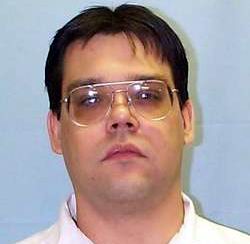
John Forrest Parker
Murderer Brian Kevin Rosenfeld
Murderer · USA · 1985
Brian Kevin Rosenfeld Brian Kevin Rosenfeld was sentenced to three concurrent l…
23 victims
Brian Kevin Rosenfeld
Murderer · USA · 1985
Brian Kevin Rosenfeld Brian Kevin Rosenfeld was sentenced to three concurrent l…
23 victims
 Yahweh ben Yahweh
Murderer · USA · 1980
Yahweh ben Yahweh was born and legally named Hulon Mitchell Jr. (October 27, 19…
23 victims
Yahweh ben Yahweh
Murderer · USA · 1980
Yahweh ben Yahweh was born and legally named Hulon Mitchell Jr. (October 27, 19…
23 victims
 Russell Ellwood
Murderer · USA · 1991
Russell Ellwood was a former taxi driver. Authorities suspected him of killing…
20 victims
Russell Ellwood
Murderer · USA · 1991
Russell Ellwood was a former taxi driver. Authorities suspected him of killing…
20 victims
 Robert Martines Perez
Murderer · USA · 1994
Name: Robert Martines Perez · Other name used in proceedings: Robert Martinez P…
15 victims
Robert Martines Perez
Murderer · USA · 1994
Name: Robert Martines Perez · Other name used in proceedings: Robert Martinez P…
15 victims
 Dorian O'Kelley
Murderer · USA · 2002
Dorian Frank O’Kelley was an accused killer in Chatham County. He was accused o…
2 victims
Dorian O'Kelley
Murderer · USA · 2002
Dorian Frank O’Kelley was an accused killer in Chatham County. He was accused o…
2 victims
 Freddie Lee Webb
Murderer · USA · 1985
Freddie Lee Webb was executed by lethal injection in Texas on March 31, 1994. W…
1 victim
Freddie Lee Webb
Murderer · USA · 1985
Freddie Lee Webb was executed by lethal injection in Texas on March 31, 1994. W…
1 victim
 Donald Reese
Murderer · USA · 1986
Donald E. Reese was executed on August 13, 1997. · September 9, 1986 — Reese mu…
4 victims
Donald Reese
Murderer · USA · 1986
Donald E. Reese was executed on August 13, 1997. · September 9, 1986 — Reese mu…
4 victims
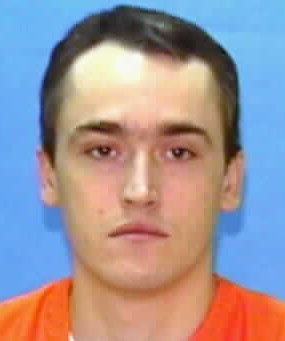 Guy Richard Gamble
Murderer · USA · 1991
Guy Richard Gamble was sentenced to death on August 10, 1993. Gamble and Michae…
1 victim
Guy Richard Gamble
Murderer · USA · 1991
Guy Richard Gamble was sentenced to death on August 10, 1993. Gamble and Michae…
1 victim
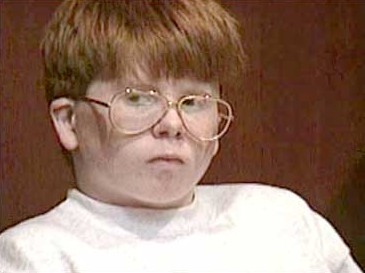 Eric Smith
Homicide · USA · 1993
Eric M. Smith was an incarcerated American criminal. Derrick Robie was a four-y…
1 victim
Eric Smith
Homicide · USA · 1993
Eric M. Smith was an incarcerated American criminal. Derrick Robie was a four-y…
1 victim
- Gender
- male
- Country
- USA
- Location
- Colbert County, Alabama, USA
- Date of birth
- May 21, 1968
- Age at first offence
- 20
- Characteristics
- murder for hire, rape, drugs, alcohol
- Victim profile
- Elizabeth Dorlene Sennett (female, 45)
- Method of murder
- St abbing with knife
- Date(s) of murder
- March 18, 1988
- Years active
- 1988
- Date of arrest
- —
- Status
-
Executed
Executed by lethal injection in Alabama on June 10, 2010
Case information
John Forrest Parker was an inmate of the Alabama Department of Corrections. He was recorded as male and as Race M. His date of birth was 5/21/1968. He was received into Holman Prison on 6/22/1989, and his county was listed as Colbert. He was convicted of capital murder and sentenced to death.
Victim
Elizabeth Dorlene Sennett was the victim. She was described as a grandmother and as a 45-year-old. She died at Helen Keller Hospital in Sheffield. The death was described as resulting from cardiac arrest and exsanguination. Authorities described her as stabbed repeatedly and beaten with a pipe at her Colbert County home, and she was declared dead after resuscitation efforts failed. An examination of her body revealed multiple stab wounds to the right side of her chest, the right side of her neck, the base of her neck, forehead, nose, and scalp, and contusions on her nose and forehead.
Other named individuals
Charles Sennett was the victim’s husband and was identified as a minister. Billy Gray Williams was described as a tenant who contracted to murder the victim for $3000. Kenneth Eugene Smith was described as a participant who was hired for $1000 and later convicted of capital murder and sentenced to death. Ronnie May was identified as a Colbert County Sheriff and as lead investigator on the murder case, and he was identified as Investigator Ronnie May in accounts of the investigation. Dr. David Parks McKinley was identified as the physician who saw the victim after she was transported to the hospital. Dr. James Crowder was identified as a clinical psychologist who testified at sentencing. In other parts of the case, Dr. David Thompson was referenced as a former investigator for the District Attorney, and other witnesses and experts were named, including Donald Buckman, Dr. Emily Ward, Dr. James Allen Barksdale, Dr. Emily Ward, John Kilborn, and Dr. Sparks P. Veasey, plus Dr. Peter Breggin and Dr. Emanuel Hriso. Joan Parker was named as Parker’s mother. Edward Parker was named as Parker’s father. Carolyn Watson was named as a friend. Ben Sherrod and Taylor Perry were identified as religious advisers from the Kairos prison ministry who were to witness the execution. In the Batson-related proceedings, names of venire members and jurors were listed, including S.A., Thykle L. Coman, Jeffrey S. Davis, Willie M. Mayes, Cynthia Montgomery, Annie O. Owes, Eugene L. Watkins, Mary A. Webb, and Carter Triplett, plus Betty Rickard and others including Rebecca Barr, Sharon Landers, Rebecca Livingston, Marshal Newman, Marty Willingham, Pamela Hendon, Jenaine Johnson, Jennifer Razor, Birdie McCarley, Joni Simpson, Gary Highfield, Teddy Roe Mansell, Mike Quillen, Williams Glenn Pettus, Johnny O. Miller, and many others with juror numbers and reasons for being struck.
STATUS and final words
Parker executed by lethal injection in Alabama on June 10, 2010. Parker’s final words were: “I'm sorry. I don't ever expect you to forgive me. I really am sorry.”
Timeline
- March 18, 1988 — Parker and Kenneth Eugene Smith went to the home of Elizabeth Dorlene Sennett in rural Colbert County, Alabama, with the intent to kill Elizabeth Dorlene Sennett.
- April 1988 — Parker was indicted for the capital murder of Dorlene by beating and stabbing her with a knife for the pecuniary consideration of $1000.
- June 6, 1989 — The jury found Parker guilty of capital murder; the court announced the jury’s verdict on June 6, 1989, and a sentence hearing began June 7, 1989.
- June 7, 1989 — The court commenced a sentence hearing before the same jury.
- June 10, 2010 — Parker was executed by lethal injection in Alabama at 6:41 p.m. CST (18:41).
- June 11, 2010 — Comments were made by Charles Sennett after the execution.
Background
Charles Sennett was described as a Church of Christ minister who was in financial trouble and weary of his marriage to his recently insured wife, Elizabeth Dorlene Sennett. Sennett had recently insured his wife and was described as being deeply in debt and wanting to collect on insurance. Sennett contracted with one of his tenants, Billy Gray Williams, to murder Elizabeth Dorlene Sennett for $3000. Williams hired John Parker and Kenneth Eugene Smith for $1000 each to commit the murder. Williams gave Parker $100 to purchase a weapon, and later promised to pay him the balance when the job was completed.
The offence
Parker and Kenneth Eugene Smith traveled to the Sennetts’ residence. Parker drove his vehicle to the Sennetts’ residence while Smith, who was in the passenger seat, sharpened Parker’s survival knife. Parker told Dorlene that her husband had given them permission to look at the property as a hunting site and, after receiving Dorlene’s approval, they walked into a wooded area with Smith. They later returned to the house and received permission from Dorlene to use her bathroom. While in the bathroom, Parker put cotton socks onto his hands. He then exited the bathroom, jumped Dorlene, and began hitting her. Parker and Smith hit Dorlene with a galvanized pipe and stabbed her while she pled with them not to hurt her. Consistent with their plan to make it look like a burglary, they broke the glass in the medicine cabinet and took a stereo and video cassette recorder (VCR). After the killing, Parker later burned his clothes and threw the stereo off a bridge, and Parker and Smith threw away the knife that they used. The indictment described the offense as capital murder by beating and stabbing with a knife for pecuniary consideration of $1000. Parker was found guilty by a jury of capital murder, and the jury recommended life imprisonment without parole. The trial judge overrode the jury’s recommended punishment and sentenced Parker to death.
Investigation
When Charles Sennett arrived home, he found his house ransacked and Dorlene close to death, and he called Colbert County Sheriff’s Investigator Ronnie May at 11:44 A.M. May dispatched a rescue squad and sheriff’s deputies to the Sennetts’ home. May and another deputy arrived about 12:05 P.M., and the rescue squad arrived soon thereafter. Dorlene was transported to the hospital and seen by Dr. David Parks McKinley. Resuscitation efforts failed, and she was declared dead as a result of cardiac arrest and exsanguination. An examination revealed multiple stab wounds to the right side of her chest, the right side of her neck, the base of her neck, forehead, nose, and scalp, and contusions on her nose and forehead. Hairs found at the crime scene in a cap located near Dorlene’s body were consistent with Smith’s known hair sample, and fibers on an afghan wrapped around Dorlene’s body were consistent with fibers later taken from Parker’s knife. The VCR taken from the Sennetts’ house was found inside Smith’s residence. Authorities said that after the execution later that the weapon was disposed of in a pond next to the home, but the investigation included that Parker and Smith disposed of the knife and that Parker threw the stereo off a bridge and burned his clothes.
Arrest and statements
Parker was arrested after law enforcement approached his residence. Accounts described law enforcement arriving on 31 March 1988 at Parker’s residence while their guns were drawn and Parker was patted down inside his home. Officers knocked and asked Parker to come out after observing him looking out of a window and hearing someone running through the apartment. Angela Fountain and Tony Lakey were ordered out. Parker was patted down, advised of his rights, and then was asked to go downtown to be questioned. Parker and Fountain drove to the Colbert County Sheriff’s Department. At the Sheriff’s Office, Parker was given Miranda warnings by Hargett and May before he made any statements. Parker’s warrant for arrest was issued the next day, 1 April 1988. During post-conviction proceedings, there was testimony about the warrantless nature of Parker’s initial detention at his residence and the subsequent interview at the Sheriff’s Office. The habeas discussion addressed whether probable cause existed at the moment of Parker’s courthouse confession and whether statements were admissible.
Trial
Parker was tried in Colbert Circuit Court. The jury unanimously found him guilty of capital murder and found him guilty of the capital offense as charged in the indictment and not of any lesser included offenses. At the sentencing phase, the jury returned a verdict fixing Parker’s punishment at life imprisonment without parole, with a vote of two for death and ten voting for life imprisonment without parole. The judge set a hearing date and overrode the jury recommendation and sentenced Parker to death on 21 June 1989. The trial court’s amended order included findings of fact about the commission of the murder, including Parker and Smith killing the victim by hitting her with a galvanized pipe, holding her down with a small blue chair, and stabbing her while she was asking them not to hurt her. The court found that Parker and Smith took a VCR and stereo to make it look like a burglary and broke glass in the medicine cabinet to further the plan. The court also described Parker throwing away the stereo and burning his clothes after the killing. The order listed aggravating and mitigating circumstances. The court found an aggravating circumstance that the capital offense was committed for pecuniary gain of $1000. The court found mitigating circumstances including that Parker had no significant history of prior criminal activity, and that Parker was 19 years old at the time of the commission of the crime. The court found nonstatutory mitigating circumstances including the jury’s recommendation of life without parole and Parker’s remorse. In discussing Parker’s remorse, the court recorded that Parker was asked if he had anything to say before sentence was imposed and he said: “No.”
Sentencing
The sentencing judge overrode the jury recommendation and sentenced Parker to death on 21 June 1989. The amended order provided that the court found the aggravating circumstance outweighed the mitigating circumstances. The court’s order directed execution by electrocution, and it included:
Mr. Parker, may God have mercy on you.
It also concluded with:
Therefore, on this the 21st day of June, 1989, with the defendant, John Forrest Parker, being present, and having been convicted by a jury of capital murder and the Court having weighed the aggravating circumstance against the mitigating circumstances and factors and the Court having found that the aggravating circumstance outweighs the mitigating circumstances and factors; It is therefore, ORDERED, ADJUDGED and DECREED by the Court, and it is the judgment of this Court and its sentence of law that the defendant, John Forrest Parker, suffer death by electrocution.
Appeals
Direct appeal and remand
Parker appealed his conviction and sentence, raising issues including Batson-related juror strike claims. On remand, the trial judge conducted an evidentiary hearing and entered specific written findings that the principles of Batson were not violated by the prosecution’s use of peremptory strikes to remove eight black venire members. The trial judge’s findings for Batson included descriptions of the venire composition and the prosecutor’s stated reasons for striking certain venire members, with findings that the prosecution’s strikes were race-neutral and that there was no proof of a pattern of strikes against black jurors on the particular venire. The trial court also entered an amended order of court on imposition of sentence on 3 December 1991.
U.S. habeas proceedings and affirmance
Parker sought federal habeas relief pursuant to 28 U.S.C. § 2254 following exhaustion of state post-conviction remedies. The United States Court of Appeals for the Eleventh Circuit affirmed the denial of relief. The holdings included that the state court did not unreasonably apply federal law by finding facially race-neutral reasons for juror strikes were not pretextual; that improper vouching and advocacy of the death penalty in closing argument was not prejudicial; that the state did not commit Brady violations regarding a prosecution witness; that no ineffective assistance of counsel was shown regarding failure to present expert witnesses; that police had probable cause to arrest Parker; and that no ineffective assistance of counsel was shown regarding failure to argue inadmissibility of confession.
Outcome
Parker was executed by lethal injection in Alabama on June 10, 2010 at 6:41 p.m. CST (18:41). He was convicted of capital murder and sentenced to death for the killing of Elizabeth Dorlene Sennett. The jury had recommended life without parole, but the trial judge sentenced him to death. Smith was also convicted of capital murder and sentenced to death. Williams was serving a life sentence without parole for capital murder. Smith was still awaiting an execution date to be set at the time described.
Aftermath
Charles Sennett and his brother Michael were described as watching Parker die at Holman Prison in Atmore, and comments after the execution included Sennett saying:
This is one of the steps we have to take to get closure and justice, and “We still have another step with Smith, but tonight was a step in the right direction.”
Colbert County Sheriff Ronnie May was described as stating that he hoped the execution would bring closure. Sennett said he and his brother still had unanswered questions about why this happened and that Charles Sennett took the answers to his grave and so did Parker and Smith.
Parker was first Shoals resident to die by lethal injection in the state, and Holman Prison was referenced as the execution location. Parker’s final meal was listed as fried fish, french fries and iced tea.
Spotted an error, or have more information about this case?