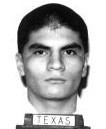
Jose Noey Martinez
Murderer Brian Kevin Rosenfeld
Murderer · USA · 1985
Brian Kevin Rosenfeld Brian Kevin Rosenfeld was sentenced to three concurrent l…
23 victims
Brian Kevin Rosenfeld
Murderer · USA · 1985
Brian Kevin Rosenfeld Brian Kevin Rosenfeld was sentenced to three concurrent l…
23 victims
 Russell Ellwood
Murderer · USA · 1991
Russell Ellwood was a former taxi driver. Authorities suspected him of killing…
20 victims
Russell Ellwood
Murderer · USA · 1991
Russell Ellwood was a former taxi driver. Authorities suspected him of killing…
20 victims
 Robert Martines Perez
Murderer · USA · 1994
Name: Robert Martines Perez · Other name used in proceedings: Robert Martinez P…
15 victims
Robert Martines Perez
Murderer · USA · 1994
Name: Robert Martines Perez · Other name used in proceedings: Robert Martinez P…
15 victims
 Billy Frank Vickers
Murderer · USA · 1993
Billy Frank Vickers Vickers was executed by lethal injection in Texas on Januar…
14 victims
Billy Frank Vickers
Murderer · USA · 1993
Billy Frank Vickers Vickers was executed by lethal injection in Texas on Januar…
14 victims
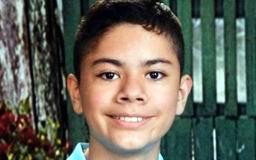 Jose Reyes
Homicide · USA · 2013
Jose Reyes was a 12-year-old seventh-grade student who carried out a school sho…
1 victim
Jose Reyes
Homicide · USA · 2013
Jose Reyes was a 12-year-old seventh-grade student who carried out a school sho…
1 victim
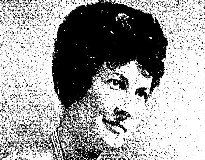 Kathryn Schoch
Mass murderer · USA · 1934
Kathryn Schoch was a trained nurse who killed members of the Dempsey family in…
6 victims
Kathryn Schoch
Mass murderer · USA · 1934
Kathryn Schoch was a trained nurse who killed members of the Dempsey family in…
6 victims
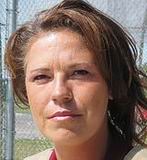 Sheena Eastburn
Homicide · USA · 1992
Sheena Eastburn was sentenced to life in prison without parole in 1995. Sheena…
1 victim
Sheena Eastburn
Homicide · USA · 1992
Sheena Eastburn was sentenced to life in prison without parole in 1995. Sheena…
1 victim
 Walter Kelbach
Spree killer · USA · 1966
Walter Kelbach was 28 years old. Myron Lance was 25 years old. Kelbach and Lanc…
6 victims
Walter Kelbach
Spree killer · USA · 1966
Walter Kelbach was 28 years old. Myron Lance was 25 years old. Kelbach and Lanc…
6 victims
 Crystal Wagner
Murderer · USA · 2005
Crystal Mae Wagner (also referred to as Crystal Wagner), 29, was accused of kil…
1 victim
Crystal Wagner
Murderer · USA · 2005
Crystal Mae Wagner (also referred to as Crystal Wagner), 29, was accused of kil…
1 victim
 Jamaal Howard
Murderer · USA · 2000
Name: Jamaal Howard · TDCJ Number: 999383 · Date of Birth: 02/08/1980 · Convict…
1 victim
Jamaal Howard
Murderer · USA · 2000
Name: Jamaal Howard · TDCJ Number: 999383 · Date of Birth: 02/08/1980 · Convict…
1 victim
- Gender
- male
- Country
- USA
- Location
- Hidalgo County, Texas, USA
- Date of birth
- December 31, 1976
- Age at first offence
- 19
- Characteristics
- rape, robbery
- Victim profile
- Esperanza Palomo, 68, and her blind granddaughter Amanda Polomo, 4
- Method of murder
- St abbing with knife
- Date(s) of murder
- February 19, 1995
- Years active
- 1995
- Date of arrest
- Next day
- Status
-
Sentenced to death
Sentenced to death on January 29, 1997
Case record: Ex Parte José Noey Martinez (Texas)
Court and procedural posture
José Noey Martinez was an applicant in an application for writ of habeas corpus in the Court of Criminal Appeals of Texas in Cause No. AP-75,086 EX PARTE JOSÉ NOEY MARTINEZ. The application was from the 370th District Court of Hidalgo County. Holcomb, J., delivered the opinion of the Court, in which Keller, P.J., Meyers, Price, and Cochran, J.J. joined. Womack, J. concurred. Hervey, J. filed a concurring opinion, in which Keller, P.J., Johnson, and Keasler, JJ. joined.
In 1996, Martinez was convicted of capital murder and sentenced to death.
On direct appeal, the conviction and sentence were affirmed. Martinez v. State, No. AP-72,704 (Tex. Crim. App. 1999) (not designated for publication).
In 1999, Martinez filed a writ of habeas corpus, claiming, inter alia, ineffective assistance of counsel at the punishment phase of trial.
Timeline
- 1996 — Applicant José Noey Martinez was convicted of capital murder and sentenced to death.
- 1999 — The Court of Criminal Appeals received an application for a writ of habeas corpus alleging ineffective assistance of counsel at the punishment phase of trial.
- 2003 — Appointed trial counsel filed affidavits after considerable delay.
- June 28, 2006 — The Court delivered the opinion denying relief.
The writ and claims raised
Martinez sought habeas relief, asserting ineffective assistance of counsel at the punishment phase of trial. The claims included:
- Counsel allegedly failed to investigate and present a statutorily recognized mitigating defense of temporary insanity resulting from drug intoxication.
- Counsel allegedly failed to conduct an adequate investigation of mitigating evidence showing that Martinez’s use of rohypnol, and possibly alcohol, cocaine, and marihuana, on the evening in question affected his mental condition at the time of the offense.
- Counsel allegedly failed to investigate and present evidence supporting a claim that the amount of rohypnol ingested caused him not to understand or appreciate the wrongfulness of the conduct at the time he committed the capital murder.
- Counsel allegedly failed to investigate and present evidence that Martinez was intoxicated on rohypnol at the time of the capital murder and that intoxication should mitigate against the imposition of a death sentence.
- Counsel allegedly failed to investigate and present evidence supporting a claim of heightened aggressive tendencies, or a rage reaction, from taking rohypnol on the night in question.
- Counsel allegedly failed to develop evidence concerning, and question witnesses about, the extent of Martinez’s intoxication on the night in question.
- Counsel allegedly failed to conduct an adequate investigation of mitigating evidence in the form of physical, emotional, and sexual abuse and neglect in Martinez’s background.
- Counsel allegedly failed to conduct sufficient investigation to locate evidence showing that Martinez and his brother had been sexually abused as children.
- Counsel allegedly located and presented only a small part of available evidence about Martinez’s family background and circumstances.
- Counsel allegedly located and presented only a small part of alleged evidence that Martinez had been the victim of severe physical and emotional abuse and neglect, as well as possible sexual abuse by his father and mother.
- Counsel allegedly did not contact witnesses who could testify or did not ask appropriate questions to discover that information.
- Counsel allegedly did not utilize witnesses who were allegedly available and willing to testify for Martinez.
- Counsel allegedly did not discover or present evidence that Martinez and his brother Brian had been physically beaten and suffered emotional abuse from their step-grandfather; that Harris County Child Protective Services had been involved for several years; and that Martinez’s mother had beaten Martinez and his brother and had been verbally abusive.
- Counsel allegedly did not substantiate the extent of the abuse; did not present testimony by relatives who had personally observed the abuse; and conducted an investigation and presented a case that did not uncover or present evidence of abuse inflicted by Martinez’s mother or present any evidence of alleged sexual abuse.
To resolve these issues, the trial court ordered affidavits. Appointed trial attorneys Ricardo Flores and Fela Olivarez filed affidavits in response to the designated issues.
After considerable delay, the affidavits were ultimately filed in 2003. The convicting court entered findings of fact and conclusions of law and recommended denying relief.
Upon review, the Court of Criminal Appeals was not satisfied that the affidavits of counsel were adequate to resolve the factual issues and ordered a second evidentiary hearing on Martinez’s Sixth Amendment claims. The convicting court heard live testimony from Martinez’s trial attorneys and considered additional affidavits from some family members and an investigator. The convicting court entered supplemental findings of fact and conclusions of law and again recommended denying relief.
The Court concluded that trial counsel did not render ineffective assistance and denied the relief sought.
The trial proper (capital murder evidence)
Offense timeline and background setting
In the early morning hours of February 19, 1995, Martinez broke into the home of Esperanza Palomo with intent to steal a TV and some stereo equipment.
Esperanza Palomo was 68 years old at the time of the offense. She was babysitting her blind five-year-old granddaughter, Amanda, while Amanda’s parents went out.
Earlier in the day, Amanda and her parents, Oscar and Patricia Palomo, visited and had lunch with Esperanza in her home. Later that evening, Oscar and Patricia went out for a night of dancing.
When Oscar and Patricia returned to Esperanza’s house, they knocked on the door, but no one answered. Oscar entered through a side window and discovered his mother’s and daughter’s bodies.
Both Esperanza and Amanda were lying in pools of blood and had been stabbed multiple times with a knife.
Esperanza had been raped. Esperanza’s night clothes were pushed up around her neck, and her underwear had been removed. Amanda had been wearing underwear, but they had also been removed.
Attempts at resuscitation and 911 call
In vain, the hysterical couple administered CPR to Amanda and called 911.
The Court later noted that the evidence showed Esperanza had been stabbed multiple times, but one wound cut through her aorta, and Esperanza likely died within thirty seconds of receiving this wound.
Martinez’s statements after the murders
Not more than one hour after the murders, Martinez told several friends, including his cousin Roberto Galvan, that he had killed two people. He repeatedly said to them, “I killed her; I can’t believe I killed them.”
Another acquaintance, Michelle Foley, testified that Martinez said he could not believe he had killed two people and that he wanted to go back and get the knife he left at the crime scene.
On his way to his father’s house, Martinez encountered his paternal aunt, Lisa Martinez, and told her he had killed two people. When Martinez arrived at his father’s house, he told his father and his father’s girlfriend that he had robbed and murdered two people.
His father called police after Martinez discarded the bloody clothing he was wearing and said he was going to return to the scene of the murders to dispose of evidence and retrieve his knife.
Martinez was apprehended on his way back to Esperanza’s home.
Once arrested, while en route to the sheriff’s department, Martinez indicated that he wanted to confess to the murders, saying that he “really f____d up this time” and “want[ed] to tell [the officer] everything . . . .”
Martinez later made oral and written statements to police, confessing to both murders.
Physical evidence and items recovered
Blood, hair, and semen samples identified Martinez as the perpetrator.
Police recovered several pieces of jewelry and a telephone identified as Esperanza’s from Martinez. Martinez’s fingerprint was found on the telephone.
Martinez’s written confession (details)
The confession was admitted before the jury. In his written confession, Martinez provided details of the offense.
Martinez stated that he was at his grandparents’ house before committing the offense. He explained that Esperanza’s house was located across the street and he went there with intent to rob her.
He stated that he broke in through the front door by cutting through the outer screen door, unlatching it, and shoving open the front door with his shoulder.
Once inside, he explained that Esperanza came toward him swinging a baseball bat. Martinez stabbed her, and she fell to the floor immediately.
Martinez stated that he then “got on top of her,” “pulled up her gown” “past her breast,” and “began to rape her.”
Martinez stated that initially Esperanza “wasn’t fighting me because we have been seeing each other for a while”; that he had “been with her earlier that afternoon about 2:00 p.m.”; that “[e]verytime I would go to her house, she wanted me to make love to her”; and that “[s]he is the type of lady that goes to bars and sleeps around with a lot of men.”
Martinez stated that he stabbed Esperanza several times.
After killing and raping Esperanza, Martinez heard Amanda “yelling and crying” from the bedroom. He then went into her room and climbed on top of her.
Martinez gave the following description in his confession:
I hit her once in the face and I thought she had fallen asleep. I then began to play with myself on top of the little girl. I played with myself until I came on top of the girl. I think I came on her stomach or on her blouse. After I came she began crying then I stabbed her several times. I didn’t want to stab her but I did because she kept crying. After I stabbed her I got my clothes, zipped up and left the house through the front door.
Martinez also stated in his confession that he had not been drinking or using drugs before committing the offense.
Writ proceedings: affidavits and evidentiary hearing
Trial counsel affidavits and delay
Appointed trial attorneys Roberto Flores and Fela Olivarez filed affidavits in response to the trial court’s designated issues.
Affidavit themes summarized by the Court
The Court described that while some averments were too conclusory to be useful, the following portions contributed to the resolution of Martinez’s Sixth Amendment claims.
Flores’s affidavit
Flores and Olivarez met with Martinez several times before trial and spent many hours reviewing voluminous inculpating evidence with him.
Flores stated he conferred with Martinez’s paternal relatives who lived in Hidalgo County, and Flores believed their testimony would have benefitted only the State.
Flores made three trips to Houston to confer with Martinez’s mother, step-father, and siblings. Flores stated that the family members were “unavailable” for the third scheduled meeting, and during the first two meetings they were “not very forthcoming with information about Mr. Martinez and his childhood.” Flores described the conferences as inconveniences to Martinez’s mother and stepfather; the family members “remained aloof” and were not interested in testifying unless “really necessary.”
Flores stated that “all [applicant’s family members] refused to appear as witnesses,” but that at the last minute Olivarez was able to convince Martinez’s mother (Alma Martinez) and his brother Brian to testify at punishment.
Flores stated he hired Dr. A.J. Alamia, Jr., Ph.D., “to assist in developing questions, issues, and insight concerning [applicant's] mental state at all times germain [sic] to the case.”
Flores stated Dr. Alamia provided direction, research, and insight into substance abuse issues raised in the case, and Flores questioned witnesses on the use, abuse, and effects of Rohypnol and assisted in developing those issues for trial.
After delay, Dr. Alamia filed an affidavit. Much of the affidavit was described as too conclusory to assist with the fact issues, but Dr. Alamia averred that when conducting a developmental history and assessment for abuse, the results yielded no indication that Martinez had been abused and that Martinez denied any history of sexual or physical abuse.
Dr. Alamia further averred that he followed up with Martinez’s family and concluded there was no data to substantiate abuse.
Following clinical tests, Dr. Alamia concluded Martinez’s thought process was coherent, logical, and relevant; Martinez had not had delusions or hallucinations; Martinez’s cognitive function was alert; Martinez was oriented to person, place, time, and situation; and Martinez had not been insane at the time of the capital murder.
Olivarez’s affidavit and hearing testimony
At the second remand hearing, Olivarez testified she was “second chair” counsel and had been licensed for two years by the time of trial. She stated her role was to take notes during witness interviews and at trial according to Flores’s wishes.
Olivarez recalled Flores took at least three trips to Houston to interview Martinez’s family and she did not accompany him on those visits.
Olivarez stated the only mitigation evidence she remembered reviewing was an expert report prepared by Dr. Alamia.
Olivarez testified she did not remember whether intoxication was a potential mitigation issue and did not do research on the effects of Rohypnol. She could not recall if lead counsel discussed his defensive theories with her. She reviewed Martinez’s school records but could not recall details and could not recall the names Ray Highfield or Erma Mitchell, who served as separate guardians to Martinez in 1990.
Olivarez stated that she did not interview witnesses and did not play a significant role in the trial.
Flores’s hearing testimony
Flores acknowledged Olivarez’s participation was “a learning aspect,” though Flores stated Olivarez convinced Martinez’s mother, who had been reluctant, to testify during the punishment phase.
Flores testified he interviewed Martinez’s mother and stepfather, who were “not very forthcoming” about Martinez and his childhood. Flores stated efforts were made to obtain school records but few records could be obtained.
Flores stated information was not readily available from any sources contacted about Martinez’s caretakers and Martinez’s family members were not cooperative.
As to defensive theories at punishment, Flores testified that Martinez’s young age was an issue and that diminished capacity was an issue. Flores testified he did not believe Martinez was entitled to a mitigation defense based on diminished capacity because intoxication did not cause “memory wipe,” noting Martinez recalled details and sought to recover evidence, particularly the knife.
Flores testified about possible emotional problems and family background problems but stated “there was not a lot of information on that.”
Flores testified he met with Martinez’s mother and stepfather in Houston at least twice; he stated investigator Xavier Guerra confirmed this. Flores said he could recall only details from the first meeting.
Flores told the family what Martinez had been charged with, informed them about other matters “of public record,” and obtained general information. Flores stated he was introduced briefly to some brothers but did not question them. He stated he could not locate his notes from the Houston interview.
Flores attempted to set up subsequent meetings while in Houston but each time the family declined, stating they had to go shopping or were not going to be home when Flores could meet them.
Flores stated he met with paternal relatives “in the Valley,” including a cousin, an aunt, and “some other relatives,” but he could not remember their names and could not find notes from those meetings. Flores stated he met with these relatives as a group in a conference room.
Flores also met briefly a few times with Martinez’s father and girlfriend. Martinez’s father, José Angel Martinez, III, could not provide much background because he had been in prison out of state most of that time. Flores stated Martinez lived with his father for less than a year before the offense.
Flores testified he and Olivarez considered and discussed sexual abuse but had no information about it. Flores stated that to investigate sexual abuse before testifying, he questioned Martinez about it, but Martinez did not admit sexual abuse. Flores stated he asked Dr. Alamia to ask Martinez about possible sexual abuse and Martinez did not disclose sexual or physical abuse to Dr. Alamia. Flores stated he asked Martinez’s father about sexual abuse and his father was not aware of any such history.
Flores testified he did not remember asking Martinez’s brother Brian about sexual abuse and that he spoke only briefly with Brian prior to Brian’s punishment phase testimony. Flores recalled asking Brian about “any sorts of problems” encountered in childhood, and Brian informed Flores of physical abuse but nothing about sexual abuse.
Flores stated he never had the opportunity to question Martinez’s mother about sexual abuse. He stated he only prepared her for testimony by meeting her briefly in the hallway before she testified.
Flores testified he telephoned Martinez’s stepbrother, Bjorn Mancias, two or three times to try to arrange a meeting, but Mancias was never able to meet.
Flores directed his investigator Xavier Guerra to contact relatives on a list Martinez provided, but Flores did not recall whether Guerra reached anyone.
Flores testified Guerra obtained some of Martinez’s school records, and those were the only records Flores had pertaining to Martinez before trial.
Flores testified he did not interview teachers or counselors and did not interview Martinez’s maternal grandmother, where Martinez had lived for five years during the period his mother had abandoned him and his brother Brian.
Standard of review for ineffective assistance
The Court applied Strickland v. Washington, requiring Martinez to demonstrate that counsel’s conduct “fell below an objective standard of reasonableness,” and that the incompetence caused prejudice. The Court also cited the quantum of evidence known to counsel in assessing reasonableness of investigation, referencing Wiggins v. Smith.
Claim I: Temporary insanity defense based on drug intoxication
Evidence at trial about substances and behavior
The Court noted trial testimony varied on how much mind-altering substances Martinez ingested before the murders.
A wide range of evidence admitted from various witnesses suggested Martinez consumed from one to eight doses of Rohypnol, and possibly also drank alcohol, smoked marihuana, and used cocaine. Rohypnol was described as strong and witnesses testified Martinez appeared “incoherent,” “high,” “tripping,” “freaking out,” and “looked crazy” after the murders.
In contrast, Martinez’s confession denied using drugs or alcohol on the night of the murders.
J. Thomas Payte, M.D., submitted by Martinez
Martinez supported his ineffective assistance argument by submitting an exhibit of a statement from J. Thomas Payte, M.D. The Court summarized Payte’s conclusions and quoted the key points, including that a defense based on temporary insanity resulting from drug intoxication would have been viable and would not have been novel.
The Court included additional quoted language from Payte’s statement, describing Rohypnol as a relatively powerful tranquilizer, the association of increasing intoxication with cognitive understanding and appreciation of right and wrong, and the “quite conceivable” possibility that Martinez was intoxicated to the extent he could not have appreciated wrongfulness. The Court also quoted that Rohypnol use and abuse were associated with blackouts and memory lapses.
Legal framework and Court’s conclusions
The Court stated that evidence of voluntary intoxication may serve to mitigate severity when the effect renders the defendant temporarily insane, and that to be entitled to a mitigating instruction based on voluntary intoxication it must be shown the person was unable to understand wrongfulness.
The Court reasoned counsel were not deficient for failing to present a temporary insanity mitigation case because, based on evidence at the guilt phase, Martinez was well aware his conduct was wrong. The Court cited that Martinez confessed immediately, repeatedly told friends he could not believe he committed the murders, and told the arresting officer he “really f____ed up this time.”
The Court also referenced behavior described by Roberto Galvan who saw Martinez about one hour before and one hour after the offense and did not describe incoherence, psychosis, or rage.
The Court addressed further that Payte opined Rohypnol could cause disinhibition, rage, aggression, suicidality, amnestic reactions, and cognitive disturbances and that this suggested a possibility of drug-induced disinhibition with rage and aggression as a contributory factor.
The Court concluded that even if Rohypnol could cause psychosis or rage, such effects would not support a temporary insanity mitigation defense because the test was whether the actor was aware of wrongfulness.
The Court also reasoned that trial evidence did not show a rage reaction or psychosis severe enough that Martinez could not understand wrongfulness. The Court described the offense as involving an intent to steal valuables and noted Esperanza died almost instantly from stabbing the neck, followed by rape.
The Court described the confession’s depiction of Martinez seeking out the blind child, punching her in the face, performing a sex act, and stabbing her because she was crying, concluding none of this suggested drug-induced rage preventing awareness of wrongfulness.
The Court also noted that at the writ hearing Flores testified he did not pursue an insanity mitigation defense because Martinez was able to recall details, was concerned about retrieving his knife and concealing evidence, and had not experienced “memory wipe.” Flores testified Dr. Alamia concluded Martinez had not been insane at the time.
The Court concluded Martinez failed to demonstrate the drugs caused a psychotic reaction so debilitating that he could not understand wrongfulness and thus was not entitled to a mitigating instruction.
The Court denied relief on the first Sixth Amendment claim.
Claim II: Failure to investigate physical, emotional, and sexual abuse
Punishment phase witnesses presented
At punishment, defense counsel presented two witnesses: Martinez’s mother Alma Martinez and his brother Brian Martinez.
The Court stated Alma had refused to testify initially but Olivarez convinced her to drive from Houston to Hidalgo County to testify at punishment.
The Court also stated that Alma brought her half-sister Elda Reyes to testify, but Flores chose not to call her because she smelled of alcohol.
Alma Martinez’s testimony summarized
Alma testified she abandoned Martinez and Brian shortly after divorcing their father, José Angel Martinez, III, whom she said was physically abusive to her.
The Court stated Martinez was about five years old when she left and that she did not return for five years while Martinez and Brian lived with their maternal grandparents. Alma testified she got involved with another abusive man and married him, and that, at the direction of this husband, she committed forgery, spent time in jail, and ultimately received probation.
After divorcing the second husband, Alma returned to retrieve Martinez and Brian and they lived together in Houston in a house next door to Alma’s mother and stepfather.
Alma testified she knew her mother and stepfather “abuse[d] my kids.” She stated that at the slightest provocation her stepfather “would kick my kids, grab the belt, swing them against the wall or use his fists.”
Alma testified she had to be on welfare because her mother forced her to quit her job and stay home with the kids.
Alma testified Martinez would run away from home and on one occasion he went to live with members of a church group for a month or two.
Alma testified Martinez’s father Angel had no contact except for one telephone call upon Angel’s release from prison and that Angel never paid child support.
State’s cross-examination and courtroom exchange
On cross-examination, the State asked Alma a series of questions about Alma’s own family and how she would feel if they had been murdered in the same way Martinez murdered Esperanza and Amanda.
During this line of questioning, Martinez blurted out: “Leave my mom alone, man.” Alma responded immediately: “Why did you do it[,] Noey?”
The jury was immediately excused. Alma was admonished “not to address any statements to the defendant in this case.”
When the jury returned, the State asked one question: “Should a thief, a rapist and a killer pay for their [sic] crime?” Alma responded: “Yes.”
On redirect, Flores did not ask Alma further questions and she was excused.
Brian Martinez’s testimony summarized
Trial counsel then called Brian.
Brian testified living with their grandparents was “terrible” because he and Martinez “always got beat.” Brian testified he still harbored “hate” for his mother for abandoning him and his brother with abusive grandparents.
Allegations in Martinez’s writ affidavits
Martinez attached affidavits of four relatives: Brian, an aunt, an uncle, and his stepbrother Bjorn Mancias. Martinez also attached affidavits by Rev. Ray Highfield and his wife Earlene.
Martinez’s affidavits alleged severe physical and emotional abuse by Alma and evidence of sexual abuse by Alma.
- Brian’s affidavit and allegations: The affidavits alleged Alma’s abuse of Martinez and Brian was as bad as their grandfather’s, described daily beatings, harsh verbal assaults, drug use in front of them, and kicking them out of the house. Bjorn Mancias stated Alma was an “atrocious mother” and that he was surprised the boys survived past the age of 10. Bjorn also averred that he suspected Martinez and his brothers were sexually abused by Alma.
- Elda Reyes affidavit: Elda Reyes stated Alma frequently beat Martinez and was verbally abusive. Reyes also averred Alma had sexually abused her and other family members and stated that if trial counsel had called her she would have testified.
- Raul Guanajuato affidavit: Raul Guanajuato averred Alma was extremely physically and verbally abusive to Martinez and that prior to the murders Martinez had always been non-violent. Guanajuato stated Flores never contacted him and that he would have testified to the facts in his affidavit.
- Ray Highfield and Earlene Highfield affidavits: Ray Highfield and Earlene stated Martinez came to live with them because Martinez’s mother “refused to take him back” after church services one day. Ray Highfield stated it was obvious Martinez had been abused; described the homes as “small, dirty, and inadequately furnished”; described seeing a cut on Martinez’s hand and that Martinez told him his mother had stabbed him; described Martinez as “badly in need of love and attention”; described it as “obvious that he had been neglected all of his life”; stated Martinez always wanted hugs; and stated Martinez mentioned being hungry when in his mother’s care. Both stated counsel did not contact them and that they would have testified at punishment. The Court also recited that the Highfields averred Martinez left their home to live with Erma Mitchell, but after about a month his mother wanted him back to continue receiving food stamps.
- Investigator affidavit: Martinez attached an affidavit by an investigator with some social work training. The investigator stated she interviewed Alma who admitted physically abusing Martinez as badly as abused by the grandfather. The investigator stated Brian admitted sexual abuse as a young child by their father and later by their mother, and that Brian suspected Martinez had been sexually abused as well. The investigator also averred Martinez admitted to her he had been sexually abused by Alma on a regular basis, sometimes at knife point or under threats.
Court’s assessment of deficient performance
The Court held trial counsel’s performance did not fall below an objective standard of reasonableness.
The Court reasoned that Alma and Brian did testify at punishment, with Alma appearing only at the last minute after urging. The Court stated counsel sought information repeatedly and that family members refused to cooperate until after punishment began, so counsel could not be held accountable for failing to elicit all the evidence under those circumstances.
The Court also noted the jury had before it evidence of harsh physical and emotional abuse through Alma and Brian’s testimony: Alma testified her stepfather beat the children and she abandoned them for five years; and Brian testified he and Martinez always got beat.
Regarding alleged sexual abuse not revealed until after sentence, the Court stated Flores testified Martinez denied sexual abuse during interviews and Dr. Alamia similarly concluded Martinez denied sexual abuse. The Court also stated Dr. Alamia’s clinical tests reflected Martinez had not been sexually abused.
The Court stated Flores testified he asked open-ended questions to Brian before Brian’s testimony, and Brian did not elaborate on extent. The Court also stated no family member averred based on personal knowledge that Martinez had been sexually abused. The Court concluded that the evidence could not have been admissible during the punishment phase because the allegations were based on speculation.
The Court further addressed that Martinez did not testify at punishment, and had he testified he would have been subject to cross-examination on gang affiliation and past acts of violence. The Court stated it appeared only Martinez could have testified about alleged sexual abuse.
The Court concluded counsel were not deficient and denied relief on the second claim.
Court’s assessment of prejudice
The Court additionally held that, even if counsel had been deficient, Martinez was not prejudiced. The Court cited Strickland’s requirement that counsel errors must deprive the defendant of a fair trial and reweigh aggravating evidence against total mitigating evidence, referencing Wiggins.
The Court described mitigating evidence as including harsh physical abuse by the grandfather and a long period of abandonment by the mother, and also noted Martinez was 18 at the time and had no prior criminal record.
The Court described aggravation evidence as extensive and included that the jury heard evidence Martinez planned to assassinate the President and Vice President and rape the First Lady and Chelsea Clinton.
The Court described the murder facts as heinous and referenced the confession depicting stabbing Esperanza, raping her, and then punching, performing a sex act on, and murdering Amanda because she was crying.
The Court concluded that even if additional unadmitted evidence of abuse had been presented and believed, there was no reasonable probability the result would have been different. The Court noted the jury had already heard some severe abuse evidence and that there was not a reasonable probability the unadmitted evidence tipped the scale.
The Court denied relief on the second Sixth Amendment claim.
Outcome
Relief was denied.
The opinion was delivered: JUNE 28, 2006.
Spotted an error, or have more information about this case?