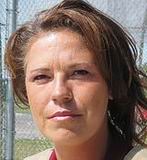
Sheena Eastburn
Homicide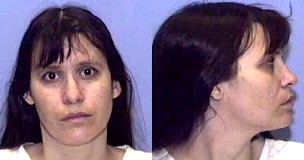 Andrea Yates
Homicide · USA · 2001
Andrea Pia Yates (born Andrea Pia Kennedy on July 2, 1964) was a former Houston…
5 victims
Andrea Yates
Homicide · USA · 2001
Andrea Pia Yates (born Andrea Pia Kennedy on July 2, 1964) was a former Houston…
5 victims
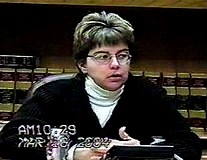 Coleen Thompson
Homicide · USA · 2002
Coleen Thompson was a former intensive care nurse at Shady Grove Adventist Hosp…
5 victims
Coleen Thompson
Homicide · USA · 2002
Coleen Thompson was a former intensive care nurse at Shady Grove Adventist Hosp…
5 victims
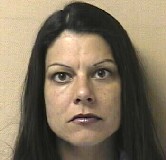 Melissa Marvin
Homicide · USA · 1999
Melissa Lynn Marvin was a 29-year-old waitress and amateur surfer at the time o…
4 victims
Melissa Marvin
Homicide · USA · 1999
Melissa Lynn Marvin was a 29-year-old waitress and amateur surfer at the time o…
4 victims
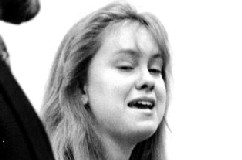 Brenda Wiley
Homicide · USA · 1990
Brenda Wiley was convicted in 1992 of fatally stabbing her mother, Bonnie Wiley…
2 victims
Brenda Wiley
Homicide · USA · 1990
Brenda Wiley was convicted in 1992 of fatally stabbing her mother, Bonnie Wiley…
2 victims
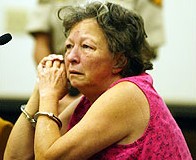 Carol Carr
Homicide · USA · 2002
Carol Carr was an American woman from the state of Georgia. She killed both of…
2 victims
Carol Carr
Homicide · USA · 2002
Carol Carr was an American woman from the state of Georgia. She killed both of…
2 victims
 Dionne Baugh
Murderer · USA · 1996
Dionne Baugh was a Jamaican native who lived in Atlanta, Georgia. After her div…
1 victim
Dionne Baugh
Murderer · USA · 1996
Dionne Baugh was a Jamaican native who lived in Atlanta, Georgia. After her div…
1 victim
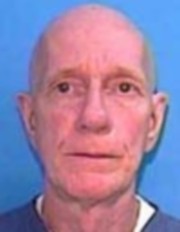 Robert Frederick Carr
Serial killer · USA · 1972
July 6, 2007 — Robert Frederick Carr died in prison after being admitted to a N…
4 victims
Robert Frederick Carr
Serial killer · USA · 1972
July 6, 2007 — Robert Frederick Carr died in prison after being admitted to a N…
4 victims
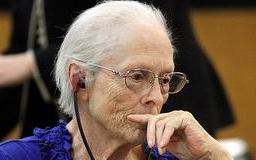 Alice Uden
Murderer · USA · 1974
Alice Uden was convicted of second-degree murder in Cheyenne, Wyoming, for kill…
1 victim
Alice Uden
Murderer · USA · 1974
Alice Uden was convicted of second-degree murder in Cheyenne, Wyoming, for kill…
1 victim
 Jeffery Lynn Williams
Murderer · USA · 1994
Jeffery Lynn Williams was convicted of capital murder for killing Barbara Jacks…
1 victim
Jeffery Lynn Williams
Murderer · USA · 1994
Jeffery Lynn Williams was convicted of capital murder for killing Barbara Jacks…
1 victim
- Gender
- female
- Country
- USA
- Location
- Rocky Comfort, McDonald County, Missouri, USA
- Date of birth
- September 30, 1975
- Age at first offence
- 17
- Characteristics
- juvenile (17), robbery
- Victim profile
- Tim Eastburn, 22 (her ex-husband)
- Method of murder
- Shooting
- Date(s) of murder
- November 19, 1992
- Years active
- 1992
- Date of arrest
- 3 days after
- Status
-
Life imprisonment
Sentenced to life in prison without parole in 1995
Case record: Sheena Eastburn
Status
Sheena Eastburn was sentenced to life in prison without parole in 1995.
Background
Sheena Renea Eastburn was convicted of murder in the first degree for the killing of her ex-husband, Tim Eastburn.
Tim Eastburn married Sheena Eastburn on November 15, 1990. The marriage was dissolved on September 17, 1992. The murder occurred two months later, on November 19, 1992.
Sheena Eastburn was 17 when she was found guilty of killing Tim Eastburn near Rocky Comfort in 1992. She was described as a southwest Missouri woman serving a life sentence for murder.
Sheena Eastburn lived at the Missouri Correctional Facility in Chillicothe after her conviction.
The offence
Tim Eastburn was shot to death in his home.
The evidence at trial supported that Tim Eastburn was residing alone in a house on route JJ, two and a half miles south of highway 76 in McDonald County. On November 17, 1992 (two days before the murder), Dennis Johnson, Terry Banks and Matt Myers arrived at Tim's house in an old black Ford pickup. Tim was not there. The trio broke into Tim's house through the back door and stole sundry items, one of which was a rifle resembling an “AK-47.”
On the night of November 19, 1992, the jury heard evidence about a plan involving Sheena Eastburn and the stolen rifle to kill Tim Eastburn through a kitchen window. Investigators determined that both Myers and Banks shot Tim Eastburn and that either shot would have been lethal.
The autopsy findings described that:
- One bullet entered “the left posterior shoulder,” passed through the spine, severed the spinal cord, and exited the right side of the neck. The wound caused instant paralysis from the neck down and would have been fatal.
- The second bullet entered Tim's head above the right ear and exited around the left ear, and was described as a “contact” wound, meaning the gun barrel “had been held tight against the skin.” This wound was instantly fatal.
The trial court’s record reflected that a jury found Appellant, Sheena Renea Eastburn, guilty of murder in the first degree, § 565.020, RSMo Cum.Supp.1992, and assessed punishment at imprisonment for life without eligibility for probation or parole.
Investigation
On November 19, 1992, a witness, William Finan, saw a pickup enter Tim’s driveway and later saw Tim arrive home. Finan wrote down the license number on the pickup and provided it to Tim and law enforcement.
Deputy Sheriff Mathis arrived at Tim’s house about 11:12 p.m. Mathis observed a broken window in the back of the house and footprints on the back porch steps. He also saw a spent shell casing on one step. He looked in through the front door and saw Tim on the floor and determined Tim was dead.
Miles Parks, described as a major case investigator for the Missouri State Highway Patrol, was called to the scene and arrived about an hour after Mathis. Parks observed that a straight line could be projected from the broken rear window across Tim’s body to a hole in the kitchen wall where a bullet was embedded. Parks concluded Tim had been shot with a “high-speed-velocity bullet,” probably from a rifle.
Appellant was taken to the Jasper County sheriff's office for questioning on November 20 and November 22, after Parks advised her of her “Miranda rights.”
Arrest / questioning
On November 20, Parks saw Appellant at the Joplin Police Department with her mother. Parks went there to advise Appellant that her ex-husband had been killed and to find out what she knew about it. Appellant screamed, fell to the floor, and cried briefly.
Appellant told Parks she had called Tim “earlier that afternoon” and Tim indicated he “had to make a run to Arkansas that evening.” Appellant also told Parks she had last seen Tim several days earlier at his residence, where she had shot an AK-47 he owned. Appellant stated she knew nothing about the murder at that time.
Later on November 20, Parks learned that Appellant’s mother informed the sheriff’s department in Pineville that Appellant was present when the murder occurred. Parks then went to the prosecutor’s office in Pineville, arriving about 2:30 p.m. Parks advised Appellant of her “Miranda rights.”
Appellant told Parks that when she phoned Tim the previous afternoon, Tim said his house had been burglarized two days earlier and his AK-47 had been stolen. Appellant said Tim stated a neighbor had gotten the license number from the pickup used in the burglary and that the number checked to Richard Myers of Webb City. Appellant said that when Tim told her that, she realized Terry Banks and Matt Myers had burglarized Tim’s home. Appellant stated Banks and Myers were present when she phoned Tim and that they overheard the conversation. She said the trio became frantic and decided they would “dump” the pickup.
Appellant revealed to Parks that the trio drove the pickup to “an old mining area” on the northeast side of Webb City and pushed it into “a strip pit, a large body of water.” From there, they walked to Edward Brickey’s residence and borrowed the Trans Am.
Appellant told Parks that she, Banks and Myers then went to a bar in Joplin, and thereafter she drove to Tim’s residence accompanied by Banks and Myers. Appellant said she exited the car at the driveway, and Banks and Myers drove a short distance south and parked.
Appellant told Parks she entered Tim’s residence through the front door, and she said Tim was inside alone. She said they began watching television and drank beer. Appellant said she asked Tim to take her for a motorcycle ride to get him out of the house; Tim refused because it was late and raining outside.
Appellant described that she and Tim went to the bedroom, where she saw his billfold on a dresser, then went to the kitchen. She said Tim leaned across the sink island and kissed her, and when he leaned back, the gun went off. Appellant told Parks Tim fell to the floor and she took his hand and talked briefly with him. She said Myers and Banks were on the back porch, with Banks yelling at Appellant to get Tim’s billfold. Appellant said she went to the bedroom, got the billfold, exited through the back door, and threw the billfold to Banks. She said Myers was holding the rifle and that she and Banks began running from the house. She said Myers went in to finish Tim.
Appellant said she heard one shot as the trio were running. She said the trio proceeded to the car on foot, put the rifle in the trunk, and entered the car, and that she drove from the scene. She told Parks they went to the trailer where she lived, changed clothes, then went to the Duenweg apartment where Myers and Banks resided. She said Myers got out there, and Appellant and Banks returned to a truck line where Appellant’s grandfather was employed. She said Appellant talked with her grandfather about twenty minutes. She said Appellant took a bath and washed blood from a sock she had been carrying.
On November 22 at the Jasper County sheriff’s office, Parks again advised Appellant of her “Miranda rights” and asked Appellant about a dog discovered during the crime scene search. Appellant told Parks Tim got the dog from the basement, and Parks questioned why Tim did not see Myers and Banks on the porch. Appellant then adjusted her account, saying Tim did not go to the back of the house but to the driveway side and called the dog. Appellant later acknowledged she saw Myers and Banks on the back porch with the rifle, and said she motioned to them with one finger, like “just give me one more minute.” Appellant said she reentered the house and positioned herself behind the kitchen sink when Tim was shot. Appellant told Parks she did not know Banks and Myers would shoot Tim. Appellant said she thought that if she could get Tim to take her for a motorcycle ride, Myers and Banks could put the rifle back in the house and “take the money or dope while they were inside.”
After questioning, Parks arranged for Appellant to accompany him to the murder scene on November 21, where Appellant reenacted her movements and repeated her account. A pathologist performed an autopsy on Tim’s body on the morning of November 21.
Trial
Charges and verdict
A jury found Sheena Renea Eastburn guilty of murder in the first degree, § 565.020, RSMo Cum.Supp.1992, and assessed punishment at imprisonment for life without eligibility for probation or parole. The trial court entered judgment per the verdict.
The prosecution did not seek the death penalty, and the only sentencing option described was life without parole.
Jurors deliberated an hour and 10 minutes before finding her guilty of first-degree murder. The jury assessed a sentence of life in prison without parole.
Participants and roles
Sheena Eastburn was represented at trial by a public defender and an assistant public defender. For convenience, the appellate opinion referred to them as “Defender” and “Assistant Defender,” respectively.
Voir dire dispute
During voir dire, Assistant Defender told the venire:
“Sheena Eastburn is presumed innocent unless and until you all believe that she's been proven guilty beyond a reasonable doubt. She doesn't have to take the stand, she doesn't have to testify. In fact, she doesn't have to put on any evidence at all, and I as her attorney or [Defender] as her attorney, we don't have to put on any evidence. Is there anybody who believes that we should put on some evidence?”
Two venire members responded in ways that later became part of the appeal discussions:
- “Venireman Woodworth: I do. [Assistant Defender]: ․ you're ․ Mr. Woodworth? Venireman Woodworth: Yeah. [Assistant Defender]: What do you believe, sir? Venireman Woodworth: Believe it should be some explained. ․ [Assistant Defender]: ․ Mr. Woodworth, are you expecting the defense to prove their [sic] innocence? Are you expecting us to prove Sheena Eastburn's innocence? Venireman Woodworth: Yeah. [Assistant Defender]: Okay. Anyone else agree with Mr. Woodworth? ․ [Assistant Defender]: ․ Ms. Royal, you're shaking your head? Venireman Royal: Yeah, I agree. [Assistant Defender]: You expect us to prove that she's innocent? Venireman Royal: Yeah.”
- During a later exchange, Assistant Defender asked about a bitter divorce and feelings. Venireman Royal stated: “I went through a real bad divorce.” When asked how she felt and whether she could set aside feelings, Venireman Royal said: “Just that I'd like to see him dead.” Assistant Defender treated the latter remark as resolved after further questioning, and Venireman Royal stated she could set aside feelings and listen to the evidence.
At the conclusion of voir dire, Assistant Defender challenged numerous members of the venire for cause, but lodged no challenge for cause against either Woodworth or Royal. Appellant used her peremptory challenges against other venire members. As a result, Woodworth and Royal served on the jury.
Hearsay objections and evidence summaries
Appellant appealed that the trial court erred in overruling hearsay objections to testimony of three State’s witnesses, William Finan, Melvin Eastburn, and Rhonda Daniels.
The challenged hearsay testimony included:
- Finan testified that Tim remarked: “My ex-wife has come to clean me out.”
- Melvin Eastburn testified, over hearsay objection, that after a phone call Tim said Appellant was “coming down tonight and that ․ she wanted to be alone ․ they was going to watch a couple movies.”
- Rhonda Daniels testified, over hearsay objection, that Tim said “Sheena had called and wanted him to be home alone,” and that Tim was going to take home two pieces of pie, and that he needed to get home because he thought maybe Sheena would be there after 9:00.
Appellant also gave testimony about her role in the events preceding the murder and at the scene.
Appellant’s testimony
Appellant testified that she met Banks for the first time in early November, 1992, at “Spookies Pool Hall” in Joplin and commenced a sexual relationship with him. She testified she made some photographs and put the name “Sheena Banks” on the film rolls. She described Myers as Banks’s “best friend.”
Appellant testified she knew nothing about the burglary of Tim’s home until her mother informed her by telephone on the afternoon of November 19. Appellant stated she immediately phoned Tim and testified:
“I remember telling him that I would be down and that, asked him about his break-in in his house․”
Appellant insisted she did not intend that Tim be shot and said Banks was “jealous” of Tim.
Sentencing
The jury assessed punishment at imprisonment for life without eligibility for probation or parole.
Sheena Eastburn’s sentence was described as life in prison without parole. The current status field indicated “Sentenced to life in prison without parole in 1995.”
Appeals
Missouri Supreme Court appeal
A Circuit Court of McDonald County decision to not grant a new trial to Sheena Eastburn was upheld in a unanimous decision by the Missouri Supreme Court.
Kent Gipson, Eastburn’s attorney, said the appeal was decided on a procedural issue, and that Eastburn had no grounds to take her case before the U.S. Supreme Court. The Missouri Supreme Court took no action on whether Eastburn would be impacted by a 2012 U.S. Supreme Court ruling that forbids a life sentence without parole for juveniles.
The Missouri Supreme Court heard oral arguments in Sheena Eastburn’s case on April 30 and issued the ruling on June 25, 2013.
Missouri Court of Appeals (Southern District, Division Two) consolidations
The Missouri Court of Appeals, Southern District, Division Two, consolidated appeals Nos. 20604 and 21163 for procedural handling, while addressing them separately.
The opinion described:
- “A jury found Appellant, Sheena Renea Eastburn, guilty of murder in the first degree, § 565.020, RSMo Cum.Supp.1992, and assessed punishment at imprisonment for life without eligibility for probation or parole.”
- Appellant appealed judgment in appeal 20604 and appealed the denial of post-conviction relief in appeal 21163.
Appeal 20604
Appellant’s first point claimed the trial court plainly erred in failing to sua sponte remove for cause venirepersons Woodworth and Royal. Appellant argued she was denied a jury of twelve unbiased and qualified jurors.
The appellate opinion held there was no basis for plain error relief and denied Appellant’s first point. It further denied her third point related to hearsay objections and affirmed the judgment. The opinion stated: “Judgment affirmed.”
Appeal 21163
In appeal 21163, Appellant’s sole point alleged ineffective assistance of counsel because counsel failed to move to strike venireperson Royal for cause. The appellate opinion affirmed the motion court’s denial of post-conviction relief and stated: “The order of the motion court is affirmed.”
Aftermath / later developments
Sheena Eastburn continued to serve her life sentence without parole and remained in prison at the Missouri Correctional Facility in Chillicothe per the later reporting.
Sheena Eastburn described her reaction to the verdict in the prison visiting room, including statements:
- “I really believed I was going to get second degree murder and I was accountable for that,” and “I was okay with that.”
- She said she was stunned when jurors found her guilty of first-degree murder, and she said: “All I could hear was my mother in the courtroom,” and “She was wailing.”
Her attorney, Kent Gipson, described her prison conduct and stated that maturity and education should be considered for parole.
Sheena Eastburn described her own perspective on incarceration, saying: “For somebody with a case like this, the prison is not really the prison. It’s always going to be inside. You will always be in prison. It does not matter whether you are free or locked up, I think you will always have that inside.”
Her statements about appeal and Tim Eastburn’s family were included in the later reporting, with Sheena saying: “Unlike for me, I can appeal the decisions to do things, Tim can not,” and then adding: “his family can not.”
Surviving members of Tim Eastburn’s family expressed opposition to reopening and maintaining that Sheena should remain in prison forever, including statements attributed to Leonard Eastburn and Tommy Eastburn, and statements attributed to Bobby Eastburn. The later reporting included the family’s statements that they believed she was evil and that she manipulated the situation to kill Tim.
In a “Postscript” section, the later reporting stated:
- The Missouri Supreme Court heard oral arguments on April 30 in Sheena Eastburn’s case.
- Like Sheena, gunman Terry Banks was sentenced to life in prison without parole, and federal and state Supreme Court rulings would not apply to Banks because he was over 18 at the time of the murder.
- Matt Myers, who fired a second shot, plead guilty to second degree murder and was sentenced to 67 years, and was currently eligible for parole.
Other details
Victim
Tim Eastburn was described as the victim of the murder.
Additional people named in the record
- Matt Myers
- Terry Banks
- Dennis “D.J.” Johnson
- Jonathan Pierce
- Don Schlessman
- Terrie Zornes
- Lorie Martinez-Howard
- Joseph Schoeberl
- Joseph Schoeberl was described as county prosecuting attorney at the time of the reported events regarding evidence.
- Frank Yankoviz
- Victor Head
- Alica Bleavins
- Lisa Blevins
- Jigs Eastburn
- Ellen (Inez) Eastburn
- Leonard Eastburn
- Tommy Eastburn
- Bobby Eastburn
- Susie Jones
- Richard Myers of Webb City
- Melvin Eastburn
- William Finan
- Edward Brickey
- Rhonda Daniels
- Rhonda Daniels was identified as a cafe employee.
- Rhonda Daniels’ testimony included Tim’s statements challenged at trial.
- Rhonda Daniels was part of the challenged hearsay testimony.
Quotes included from later interviews
The later reporting included several direct quotations from Sheena Eastburn and others, including:
- “I came to that realization a long time ago and I gave it to God and I got peace,” she told a reporter.
- “There was no reason for Tim to die,” Sheena says. “None.”
- “I was supposed to go down there and get him out of the house, then we were going rob him for drugs and money.”
- “I crawled to his side. He was laying there and he was bleeding. I grabbed a towel and a sock, and kept trying to stop the bleeding, but I couldn’t. There was nothing I could do. I tried everything I could do to save him.”
- “I told him I loved him and the last thing he said was: ‘Father forgive me for all my sins.’ Terry (Banks) grabbed me and took me out of the house. Terry fired the first shot. The second shot was by Matt.’”
- “I still thought that I might get out of prison someday,” Sheena says. “I didn't realize that life without parole actually meant life without parole.”
- “You never count on anything completely until it happens because you can't let yourself get your hopes too high and then be devastated all the time”
- “I am definitely guilty of second-degree murder,” Sheena said during a recent interview at the women’s prison in Chillicothe.
- “I have experienced sexual abuse all of my life. I have been raped before in a violent way. After you have been in that situation, you just learn it’s easier to let it go and not fight.”
- “It was consensual.”
- “I felt relieved that somebody finally believed me.”
- Leonard Eastburn said: “Because she's evil,” emphasizing the word.
Procedural and case-specific details from post-conviction proceedings
The appellate opinion described that Appellant filed a motion to vacate the judgment and sentence per Rule 29.15, with a motion court denying relief after an evidentiary hearing. Appellant appealed both the judgment and the denial order.
In the post-conviction proceedings, Assistant Defender testified at the evidentiary hearing and discussed memory and strategy regarding challenging venireperson Royal for cause.
The motion court found that Appellant failed to overcome the presumption that counsel’s conduct was reasonable trial strategy, and held that counsel’s failure to recall whether he had a strategic reason for not challenging Royal was not sufficient to overcome that presumption. The appellate opinion concluded those findings were not clearly erroneous.


Spotted an error, or have more information about this case?