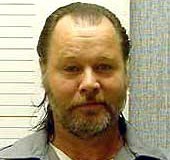
Bobby Joe Mayes
Murderer Russell Ellwood
Murderer · USA · 1991
Russell Ellwood was a former taxi driver. Authorities suspected him of killing…
20 victims
Russell Ellwood
Murderer · USA · 1991
Russell Ellwood was a former taxi driver. Authorities suspected him of killing…
20 victims
 Robert Martines Perez
Murderer · USA · 1994
Name: Robert Martines Perez · Other name used in proceedings: Robert Martinez P…
15 victims
Robert Martines Perez
Murderer · USA · 1994
Name: Robert Martines Perez · Other name used in proceedings: Robert Martinez P…
15 victims
 Billy Frank Vickers
Murderer · USA · 1993
Billy Frank Vickers Vickers was executed by lethal injection in Texas on Januar…
14 victims
Billy Frank Vickers
Murderer · USA · 1993
Billy Frank Vickers Vickers was executed by lethal injection in Texas on Januar…
14 victims
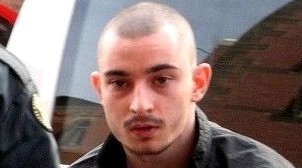 Gregory Despres
Homicide · Canada · 2005
July 1982 — Gregory Allan Despres was born in Minto, New Brunswick, Canada. · A…
2 victims
Gregory Despres
Homicide · Canada · 2005
July 1982 — Gregory Allan Despres was born in Minto, New Brunswick, Canada. · A…
2 victims
 Michael Ronning
Murderer · USA · 1986
Michael Ronning was an inmate in Arkansas serving life in prison without parole…
7 victims
Michael Ronning
Murderer · USA · 1986
Michael Ronning was an inmate in Arkansas serving life in prison without parole…
7 victims
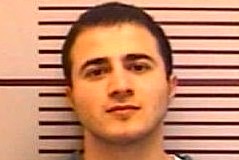 Alexander Pogosyan
Mass murderer · USA · 1998
Alexander Pogosyan was convicted murderer in the so-called Labor Day Massacre i…
5 victims
Alexander Pogosyan
Mass murderer · USA · 1998
Alexander Pogosyan was convicted murderer in the so-called Labor Day Massacre i…
5 victims
 Joanna McElrath
Murderer · USA · 2011
Joanna Lynn McElrath was sentenced to 25 years to life in prison for the first-…
1 victim
Joanna McElrath
Murderer · USA · 2011
Joanna Lynn McElrath was sentenced to 25 years to life in prison for the first-…
1 victim
 Ulf Olsson
Murderer · Sweden · 1989
Ulf Olsson (1951–), also known as Helénmannen (“the Helén man”) in Sweden, was…
2 victims
Ulf Olsson
Murderer · Sweden · 1989
Ulf Olsson (1951–), also known as Helénmannen (“the Helén man”) in Sweden, was…
2 victims
- Gender
- male
- Country
- USA
- Location
- Pulaski County, Missouri, USA
- Date of birth
- July 14, 1954
- Age at first offence
- 44
- Characteristics
- parricide, rape
- Victim profile
- His wife Sondra Mayes and his 14-year-old stepdaughter, Amanda
- Method of murder
- Stabbing with knife - Ligature strangulation
- Date(s) of murder
- August 10, 1998
- Years active
- 1998
- Date of arrest
- Same day
- Status
-
Sentenced to death
Sentenced to death on May 30, 2000
Case information
- Name: Bobby Joe Mayes
- Court: Supreme Court of Missouri (case number SC82743)
- Trial court / judge: Circuit Court of Pulaski County, Hon. Douglas E. Long, Jr.
- Appeal: 12/18/2001
- Disposition by Supreme Court of Missouri: AFFIRMED IN PART; REVERSED IN PART; REMANDED
Timeline
- August 6, 1998 — Bobby Joe Mayes talked briefly with acquaintance Michael James about financial difficulties and indicated he did not want to return home when his wife was there because they might get into a conflict; he also unsuccessfully sought Michael James’ help to buy a gun, allegedly to rob another man.
- August 7, 1998 — Bobby Joe Mayes signed the waiver of marital rights requested by Sondra in return for her promise to testify.
- August 10, 1998 — Sondra went to work at 8 a.m. as usual; Sondra told her coworker and friend Cora Wade that, even though Mayes had signed the waiver, she had not been able to work up the courage to tell him she still was not going to testify; Sondra did not return from her lunch break; Charles Noakes saw both Sondra’s and Mayes’ cars in the driveway at 12:15 p.m. and heard Mayes’ car start up and leave at about 1:15 p.m.; Cora called Sondra’s house at about 1:15 p.m. and no one answered; about 45 minutes later Duane Sutton, Sondra’s father, came by the house and knocked and called through the window for Sondra; around 4:20 p.m. Charles Noakes saw Mayes return home; shortly thereafter Mayes called 911 and said the person inside was hurt and not breathing; police discovered Sondra’s body in the master bedroom and later found Amanda’s partially clothed body on the floor next to her bed; Chief of Police Kirkman advised Mayes of Miranda rights and placed him under arrest.
- August 11, 1998 — Bobby Joe Mayes was scheduled to go to trial for committing statutory sodomy on his two minor daughters from a previous relationship.
- May 30, 2000 — Mayes was sentenced to death.
- 12/18/2001 — Supreme Court of Missouri appeal decision date for case SC82743.
Background
Bobby Joe Mayes was married to Sondra and lived with her and his 14-year-old stepdaughter, Amanda, in Houston, Missouri.
Mayes was scheduled to go to trial the next day, August 11, for committing statutory sodomy on his two minor daughters from a previous relationship. Mayes wanted Sondra and Amanda to testify for him, and they had been endorsed as defense witnesses.
Evidence was presented that the couple had financial and marital difficulties. Sondra told Mayes she would not testify unless he signed a document that purported to waive his right to contest Sondra’s ability to unilaterally convey the couple’s marital real property.
The offence
Mayes killed his wife, Sondra Mayes, and Sondra’s daughter, Amanda Perkins.
Victim and injuries described at trial
Sondra Mayes
- Her body was found in the master bedroom.
- She had been stabbed and died from blood loss.
- Her wounds included stabbing with a knife on her breasts and her left ear.
- The knife was also thrust into her back, lodged between her ribs and pulled laterally between the bones.
- It entered her chest cavity and punctured her left lung and blood vessels.
- She also had defensive-type lacerations on her hands and left forearm.
- Like her daughter, she died from exsanguination.
- Her body was found on her bedroom floor with blood splattered about the room on the bed, the floor, the table, and her body.
- A bloody t-shirt lying near her body contained blood stains that contained genetic material matching Sondra and a genetic component that did not match Mayes, Sondra, or Amanda.
Amanda Perkins
- Her body was found partially clothed on the floor next to her bed, with a blue comforter draped across the front of her body.
- She had been subdued by a blow to the head, draped over the edge of her bed, strangled and stabbed in the back approximately 21 times.
- She died of blood loss and a lack of oxygen.
- Experts testified that in the 15 minutes following the stabbings, Amanda lost about half of her total blood volume.
- She died of exsanguination and lack of oxygen due to aspiration of gastric contents into her lungs.
- Her panties were pulled down around her ankles.
- Medical witnesses testified that sperm consistent with Mayes’ DNA was found on the blood-stained bed sheet; some sperm appeared to be on top of the blood, indicating deposition after the stabbings.
- The abnormal size of her rectum was consistent with either sodomy or spasm caused by strangulation.
- She was strangled with a cord leaving a very pronounced ligature mark around her neck.
- The condition of her body indicated acts of sodomy based on expert medical opinion.
- Two aspects of her clothes tended to indicate she had been undressed while she was killed: she had been sloppily or hastily redressed; her shirt had multiple cuts compared with stab wounds.
- In response to the evidence presented, the Supreme Court of Missouri addressed the admission of evidence that Mayes sodomized Amanda.
Method and evidence at the scene
Evidence indicated the perpetrator cleaned up in the bathroom after the attacks. Police found a bloody fingerprint on the bathroom sink later positively identified as matching Mayes’ left ring finger. Police discovered a pair of men’s gray underwear with a bloodstain in a laundry basket and seized it and other items of evidence.
Investigation
Charles Noakes saw both Sondra and Bobby Mayes’ cars in the driveway at 12:15 p.m.; he heard Mayes’ car leave shortly after 1:15 p.m. due to a defective muffler sound.
At about 1:15 p.m., Cora called Sondra’s house and no one answered. Around 45 minutes later, Duane Sutton came by and knocked on the door and called through the window for Sondra; no one answered.
Officer Campbell arrived to find Mayes pacing back and forth in the driveway and rubbing his hands with a blue shop cloth. When asked what was wrong, Mayes said he did not know. Officer Campbell discovered Sondra’s body in the master bedroom.
When the next officer arrived and asked Mayes what was going on, Mayes threw up his arms and shouted, "I have an alibi, I have an alibi. I've been fishing for the last three and a half hours." Mayes was perspiring and described as “fidgety” and continued wiping and scrubbing his hands with the blue shop cloth.
Chief of Police Kirkman arrived. Mayes said he had last seen his wife at 7:00 a.m., that he had been fishing at "Flat Rock" or "White Rock," and that he talked to her on the telephone briefly when he returned home to make a sandwich before returning to fish at either "Flat" or "Duke." He continued massaging his hands, did not ask about his wife, and did not mention Amanda.
Chief Kirkman observed ligature marks on the back of Mayes’ hands.
After investigating Sondra’s murder for some time, police learned Amanda should have been home but had not been seen. Amanda’s partially clothed body was found on the floor next to her bed, with a blue comforter draped across the front and a pronounced ligature mark on her neck.
Chief Kirkman advised Mayes of Miranda rights and placed him under arrest. Police took Mayes to the Texas County jail, where he consented to a search of his person and the seizure of his clothing.
A doctor later found a laceration on Mayes’ right hand and constriction injuries on the backs of both hands consistent with the ligature mark on Amanda’s neck.
Arrest and statements
Mayes called 911 shortly after returning home around 4:20 p.m. When asked what was wrong, he said:
- "I don't know. I just come home and, I don't know. You just need to send somebody over here," and that someone was "hurt" and was not breathing.
Mayes refused to check for a pulse, stating:
- "I'm not going in there," but agreed not to touch anything and to flag down the ambulance.
Trial
Charges
Mayes was charged with two counts each of first-degree murder and armed criminal action.
Guilt phase evidence and verdict
During the guilt phase, the State presented detailed evidence about Mayes’ conduct at the scene and what the evidence showed about the manner of Sondra’s and Amanda’s deaths.
Amanda’s injuries included a blow to the head, strangulation with cord leaving a pronounced ligature mark, and approximately 21 stabbings in the back.
Experts testified about blood loss and death due to exsanguination and lack of oxygen due to aspiration of gastric contents into her lungs.
Medical witnesses testified about sperm consistent with Mayes’ DNA on the blood-stained bed sheet and that some sperm appeared to be on top of blood, indicating deposition after stabbings.
The State presented testimony of:
- Michael James (Mayes’ acquaintance) about Mayes asking where he could purchase a gun four days prior to the murders, seeking help to buy a gun allegedly to rob someone, and that the conversation ended without a gun being procured.
- Charles Noakes about seeing cars and hearing Mayes’ car leave.
- Cora Wade about Sondra’s statements regarding refusing to testify despite signing the waiver.
- David Cook, who shared a cell with Mayes for several days and testified that Mayes admitted killing Sondra and Amanda, explained how he had done so, and told him about the family’s financial, marital, and legal problems.
On cross-examination, Mayes impeached Cook by showing Cook had pending second-degree burglary and felony escape charges that were reduced after Cook agreed to testify.
Mayes presented expert testimony that no hairs foreign to the bodies of the two victims or Mayes were uncovered.
Mayes called Fred Martin (who was to represent him in his sexual assault trial). Martin testified that Sondra and Amanda were scheduled to be witnesses for the defense in that case and that, as far as he knew, as of the day of the murders they were still intending to testify.
The jury returned guilty verdicts on all four counts after deliberating for less than two hours.
Because Mayes did not testify, at his request the court instructed the jury in accordance with Missouri Approved Instruction-Criminal, Third Edition (MAI-CR3d) 308.14, stating:
- "Under the law, the defendant has the right not to testify. No presumption of guilt may be raised and no inference of any kind may be drawn from the fact that the defendant did not testify."
Penalty phase
The penalty phase used the same jury.
The State submitted multiple statutory aggravators, including:
- Mayes’ prior history of sexual abuse,
- his prior convictions,
- depravity of mind,
- that each murder was part of a multiple homicide,
- and that the victims were killed due to their status as witnesses in a pending prosecution.
To support aggravators dealing with prior sexual abuse and prior convictions, the State presented evidence of Mayes’ history of sexual assault, including:
- In 1984, Mayes attacked and tried to rape a 14-year-old roommate of one of his acquaintances.
- He also sexually assaulted and exposed himself to a 9-year-old girl while visiting with her mother.
In all, the State presented evidence of prior convictions including:
- first-degree sexual abuse,
- second-degree robbery,
- second-degree burglary,
- first-degree sexual abuse,
- indecent or immoral practices with another,
- and escape in the second degree.
Mitigation evidence
Mayes presented mitigation testimony from Dr. Nelda Ferguson, a psychologist. She diagnosed Mayes with behavioral and learning problems and a severe personality disorder and impulse control disorders. Ferguson offered her opinion, to a reasonable degree of psychological certainty, that due to these disorders Mayes was influenced by extreme mental or emotional disturbance at the time he killed his wife and stepdaughter. Ferguson also testified that his disorders could be controlled with medication if he was in a structured environment such as prison.
Mayes did not testify in the penalty phase.
Counsel requested the jury be instructed not to draw an adverse inference as to punishment from Mayes’ failure to testify. Defense counsel argued that the guilt-phase instruction only addressed guilt and that the jury might infer it could use failure to testify in the penalty phase unless instructed otherwise. The State objected that the instruction would be duplicative, and the trial court refused to give it. The State later conceded on appeal that this ruling was error.
The jury recommended death on each count of first-degree murder and life imprisonment on each count of armed criminal action. The court sentenced Mayes in accordance with the jury’s recommendation.
Appeals
The case reached the Supreme Court of Missouri in appeal SC82743.
Issues addressed by the Supreme Court of Missouri
The Supreme Court of Missouri addressed multiple points of alleged error, and its rulings included:
- A juror’s inconsistent answer between voir dire and a jury questionnaire did not require a new trial, reasoning that no manifest injustice occurred and the questions were slightly different.
- The court admitted testimony that Mayes asked about buying a gun shortly before the murders; the prosecutor did not ask why Mayes wanted it because Mayes had successfully moved to preclude such testimony; Mayes could not complain of error he requested.
- The court did not err by refusing to re-open voir dire once it ruled the prison informant could testify about the sexual nature of the charges pending at the time of the murders; the defense made a strategic choice to refrain from asking jurors about reactions to allegations of sexual misconduct.
- The court permitted evidence of Mayes’ previous crimes being sexual in nature while excluding evidence that the two prior victims were Mayes’ children; the sexual-nature evidence was admitted to help establish motive.
- The court properly limited cross-examination of the prison informant regarding motive to lie.
- The jury was instructed adequately about the prison informant’s credibility and no special instruction about lack of reliability was necessary under normal Missouri practice.
- Mayes was not prejudiced by admission of evidence that he sodomized Amanda.
- The court did not err in admitting three graphic photographs.
- Prosecutor closing-argument comments characterizing a verdict less than first-degree murder as an “insult” to Sondra and Amanda did not warrant a mistrial.
- Admission of evidence that Mayes and Sondra argued on several occasions prior to the murders and that his employer had “let him go” did not amount to plain error.
- The Sixth Amendment did not prevent police from conducting, outside the presence of counsel, a medical examination of the lacerations on Mayes’ hands after his arrest at the crime scene.
- The court erred in refusing, during the penalty phase, to instruct the jury that Mayes’ continued choice not to testify could not be used against him in considering punishment; the death sentence for each first-degree murder conviction was reversed and the case remanded for retrial of the penalty phase.
- The Supreme Court could not review Mayes’ claim of prosecutor misconduct and misleading during cross-examination of his only mitigating witness because Mayes failed to raise the issue below and the relied-upon document was not in the record; the state did not concede accuracy.
- The Supreme Court did not decide whether the trial court erroneously applied juror-qualification standards to venireperson Morgan.
- The court did not abuse its discretion admitting evidence of Mayes’ prior convictions for first-degree sexual abuse and second-degree robbery because the determination whether they were “serious assaultive” was a question of law for the court.
- The “multiple homicide” statutory aggravator, section 565.032.2(2), RSMo 1994, was not unconstitutionally vague.
Supreme Court disposition
- The Supreme Court of Missouri affirmed the judgment of guilt and reversed in part the death penalty sentences, remanding for a retrial limited to the penalty phase.
- The Supreme Court stated that, in all other respects, the judgment was affirmed.
Outcome
- Direct appeal result: AFFIRMED IN PART; REVERSED IN PART; REMANDED
- Specific consequence described: The death sentence for each first-degree murder conviction was reversed and the case remanded for a retrial of the penalty phase.
Other details
Names of people described in the case
- Sondra Mayes — wife; found stabbed in the master bedroom; victim.
- Amanda Perkins — stepdaughter; partially clothed body found next to her bed; victim.
- Duane Sutton — Sondra’s father; came to the house and knocked; called through the window.
- Charles Noakes — neighbor; saw cars and observed Mayes returning.
- Cora Wade — Sondra’s coworker and friend; testified to Sondra’s statements.
- Michael James — acquaintance of Mayes; testified about Mayes’ request to buy a gun and related conversations.
- Officer Campbell — officer who arrived at the scene and discovered Sondra’s body.
- Chief of Police Kirkman — advised Mayes of Miranda rights and placed him under arrest; observed ligature marks.
- Fred Martin — Mayes’ attorney in his pending trial; testified about Sondra and Amanda being scheduled to testify.
- David Cook — prison informant; shared a cell with Mayes and testified about Mayes’ admissions.
- Dr. Nelda Ferguson — psychologist; provided mitigation testimony.
- Alice Rouse — jury foreperson; issue of nondisclosure raised on appeal.
- Laura Denvir Stith, Judge — opinion author.
- Hon. Douglas E. Long, Jr. — trial judge referenced for the appeal from Circuit Court of Pulaski County.
Explicit verbatim statements included
- "I don't know. You just need to send somebody over here,"
- "hurt"
- "I'm not going in there,"
- "I have an alibi, I have an alibi. I've been fishing for the last three and a half hours."
- "Flat Rock" or "White Rock,"
- "Flat" or "Duke."
Sentence and recommendations described
- Jury recommendation: death on each count of first-degree murder; life imprisonment on each count of armed criminal action.
- Court sentence: death for each murder count and life in prison for each armed criminal action count, with the death sentences reversed on appeal and remand for penalty-phase retrial.
Spotted an error, or have more information about this case?