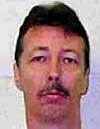
Michael Ronning
Murderer Brian Kevin Rosenfeld
Murderer · USA · 1985
Brian Kevin Rosenfeld Brian Kevin Rosenfeld was sentenced to three concurrent l…
23 victims
Brian Kevin Rosenfeld
Murderer · USA · 1985
Brian Kevin Rosenfeld Brian Kevin Rosenfeld was sentenced to three concurrent l…
23 victims
 Yahweh ben Yahweh
Murderer · USA · 1980
Yahweh ben Yahweh was born and legally named Hulon Mitchell Jr. (October 27, 19…
23 victims
Yahweh ben Yahweh
Murderer · USA · 1980
Yahweh ben Yahweh was born and legally named Hulon Mitchell Jr. (October 27, 19…
23 victims
 Russell Ellwood
Murderer · USA · 1991
Russell Ellwood was a former taxi driver. Authorities suspected him of killing…
20 victims
Russell Ellwood
Murderer · USA · 1991
Russell Ellwood was a former taxi driver. Authorities suspected him of killing…
20 victims
 Frederick Williams
Mass murderer · USA · 2000
Frederick Williams was an off-duty firefighter who killed his wife and set fire…
4 victims
Frederick Williams
Mass murderer · USA · 2000
Frederick Williams was an off-duty firefighter who killed his wife and set fire…
4 victims
 Michelle Hall
Murderer · USA · 2008
Michelle Hall was a Coweta County woman. Her husband was John Britt Hall. The c…
1 victim
Michelle Hall
Murderer · USA · 2008
Michelle Hall was a Coweta County woman. Her husband was John Britt Hall. The c…
1 victim
 Carherine Thompson
Murderer · USA · 1990
Carherine Thompson was a widow whose husband, Melvin Thompson, was killed in We…
1 victim
Carherine Thompson
Murderer · USA · 1990
Carherine Thompson was a widow whose husband, Melvin Thompson, was killed in We…
1 victim
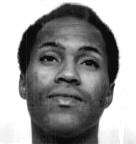 James Edward Smith
Murderer · USA · 1983
James Edward Smith (age 37) was executed in Texas by lethal injection on June 2…
1 victim
James Edward Smith
Murderer · USA · 1983
James Edward Smith (age 37) was executed in Texas by lethal injection on June 2…
1 victim
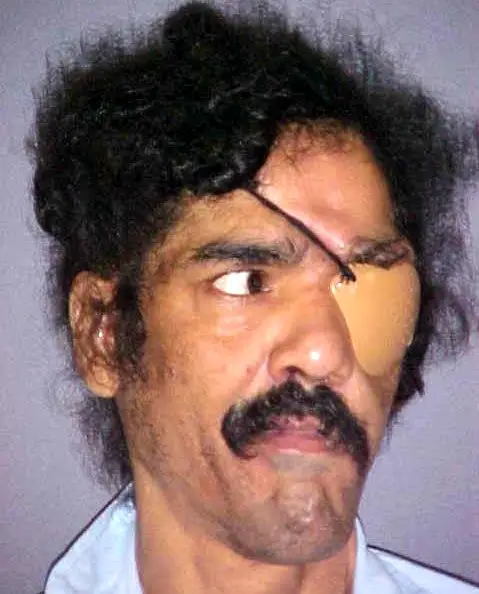 Garry Thomas Allen
Murderer · USA · 1986
Garry Thomas Allen was convicted in Oklahoma County of murder in the first degr…
1 victim
Garry Thomas Allen
Murderer · USA · 1986
Garry Thomas Allen was convicted in Oklahoma County of murder in the first degr…
1 victim
- Gender
- male
- Country
- USA
- Location
- Arkansas/Michigan/Texas/Florida, USA
- Date of birth
- 1957
- Age at first offence
- 29
- Characteristics
- rape, drug addict, history of mental illness
- Victim profile
- Diana Lynn Hanley, 19
- Method of murder
- St abbing with knife
- Date(s) of murder
- 1 982 - 1986
- Years active
- 1986
- Date of arrest
- —
- Status
-
Life imprisonment
Sentenced to life in prison without parole in Arkansas for the 1986 capital murder of Diana Lynn Hanley
Case overview
Michael Ronning was an inmate in Arkansas serving life in prison without parole for a capital murder conviction involving the abduction and stabbing of Diana Lynn Hanley, 19, of Jonesboro, Arkansas. He was described as a convicted serial killer and as having admitted to additional killings in other jurisdictions, though authorities had not charged him in those other homicides.
Status and legal outcome
Ronning was convicted in August 1986 of capital murder in Arkansas for the abduction-stabbing two years earlier of Diana Lynn Hanley, 19, of Jonesboro, Arkansas. He was sentenced to life in prison without parole.
The offence (Arkansas conviction)
Ronning was convicted of capital murder for killing Diana Lynn Hanley.
- Hanley was abducted and stabbed.
- Hanley was found under trash in a ditch.
- The victim, Diana Lynn Hanley, was 19 years old and was from Jonesboro, Arkansas.
- Hanley was reported missing from her home in January 1984.
- Her body was found 13 days later, buried beneath trash along a rural drainage ditch.
Investigation (Florida case; body found in Ocala National Forest)
Investigators suspected that Ronning may know something about a body found in 1984 in the Ocala National Forest near Umatilla, Florida.
- The case involved a woman whose name was not known to investigators for 21 years, whose body was found near Lake Dorr north of Umatilla.
- The victim was described as having reddish brown hair and weighing about 100 pounds.
- The victim’s clothing included a black T-shirt with “Here Comes Trouble” on the front and a nightshirt with “Have You Kissed Your Child Tonite?”
- Lake County investigators suspected an admitted serial killer serving life in an Arkansas prison may know something about the case, but Ronning would not talk to police.
- Investigators thought Ronning may fear being convicted of capital murder in Florida, where he could face the death penalty.
A break in the Florida case came when Dateline NBC did a story about Ronning in February 2002.
- In the Dateline research, producers found a traffic ticket issued April 17, 1984, to Ronning by Umatilla police for not having a valid drivers license.
- The show alerted Lake detectives about the findings and asked if they had any unsolved homicides.
- Ronning and his wife, Victoria, lived in a mobile-home park off Golden Gem Drive in Umatilla for about a year.
- A few years earlier, Lake investigators spoke with Ronning’s wife, who told them she was not aware of any killing.
- She also told investigators that it was not unusual for Ronning to announce one day that they had to move.
- Adams handled the case and did not discuss evidence, including any DNA found at the scene.
The Florida case date tied to the discovery:
- The case went back to April 18, 1984, when a man found the woman’s remains in the Lake Dorr recreation area in the national forest.
- The woman had been dead for two to four weeks.
- Animals had scattered her remains.
Lake County detectives and prosecutors planned to meet within a few months to decide next steps.
- Lake County sheriff’s Sgt. Ken Adams said:
“We want to open doors to find out who she is.”
- Ken Adams also said:
“Maybe we can make closure to her family possible once we find out her name.”
Brad King, state attorney whose office oversaw prosecutions in Lake County, said he did not discuss any plea negotiations with open cases.
Investigation (Texas cold cases; Bedford discovery link)
Ronning was suspected in Texas cold cases involving the deaths of Annette Melia and Melissa Jackson, with authorities seeking information that only the killer would know.
- The letter written by Dateline producer Shane Bishop stated Ronning killed Annette Melia, 20, in Arlington in September 1982.
- Melia’s remains were found in 1985 by hunters outside Bedford.
- The letter stated that Ronning also killed Melissa Jackson, 16, who disappeared from a Grand Prairie apartment building on Aug. 12, 1983.
- Jackson’s remains were found in 1986 about 800 yards from where the other body was found.
- Texas detectives wanted to talk to Ronning about the death of 20-year-old Annette Melia.
- Authorities also wanted to talk to Ronning about Melissa Jackson, 16.
One Texas official said no DNA evidence was available for the two Texas cases because only skeletal remains were found.
- Flory said that because only skeletal remains were found in the two Texas cases, there was no DNA evidence available to trace.
Bedford investigators said they were unable to link Ronning to the crimes by more than circumstantial evidence.
- Bedford Police Chief David Flory, who said he was chief of detectives in the Fort Worth suburb at the time of the slayings, supported a waiver of the death penalty if it would draw a confession from Ronning.
- Flory said:
“With that guarantee, we think we could get him to confess ... and we could clear these cases,”
- Flory also said:
“Otherwise, we're never going to clear them. I'd like to give the families some peace of mind. This guy's in prison for the rest of his life. What's there to lose?”
- Flory also said:
“This guy's in prison for the rest of his life. What's there to lose?”
Flory also believed Ronning wanted the requested guarantee as a condition of talking to police about unsolved cases.
- Flory said:
“It would not be unethical or unusual to do this,”
- Flory said:
“There are all kinds of deals done all the time to solve crimes. There's no issue of public safety here, just clearing these crimes. ... It's about doing the right thing.”
The Tarrant County criminal district attorney’s office was informed about the letter.
- Tarrant County Criminal District Attorney Tim Curry received a copy of the letter and was unavailable for comment.
- Assistant Criminal District Attorney Alan Levy said he had seen the letter and that the matter was under investigation.
- Levy said:
“It's not the governor's decision as to whether or not to waive the death penalty — it's the prosecutor's,”
- Levy also said:
“It's an unusual letter. ... We're checking to see whether the evidence is still here, and we'll be talking with the investigators on the case.”
Tarrant County assistant district attorney Robert Foran said:
“It would be premature, however, to discuss the specifics.”
Arrest and custody details
Ronning was incarcerated at the Tucker prison near Pine Bluff, Arkansas, serving a life sentence without parole for the Arkansas murder.
People involved
Michael Ronning
Michael Ronning was the Arkansas convict serving life without parole for a capital murder conviction.
Victims
- Diana Lynn Hanley, 19 (Jonesboro, Arkansas): abducted and stabbed; missing reported in January 1984; body found 13 days later buried beneath trash along a rural drainage ditch.
- Annette Melia, 20: killed in Arlington in September 1982; remains found in 1985 outside Bedford.
- Melissa Jackson, 16: disappeared from a Grand Prairie apartment building on Aug. 12, 1983; body found in 1986 in woods outside Bedford about 800 yards from where Melia’s body was found.
- The unidentified woman whose remains were found in the Ocala National Forest near Umatilla, Florida in 1984: described with reddish brown hair and weighing about 100 pounds; wearing a black T-shirt with “Here Comes Trouble” and a nightshirt with “Have You Kissed Your Child Tonite?”
Family members
- Victoria (Ronning’s wife): lived with Ronning in a mobile-home park off Golden Gem Drive in Umatilla; told investigators she was not aware of any killing and that it was not unusual for Ronning to announce they had to move.
Dateline NBC and officials
- Shane Bishop: described as a Dateline NBC producer for 12 years; wrote a letter to the governors of Texas and Florida seeking a no-death-penalty guarantee for Ronning in exchange for discussions helpful to solving cold cases.
- Rick Perry: governor of Texas; received a letter from Bishop and responded that it was not the governor’s call.
- Jeb Bush: governor of Florida; received a letter from Bishop and whose office had no comment.
- Kathy Walt: Perry’s spokeswoman; stated the governor would not direct an investigation or determine trial strategy on punishment.
- Jenny Tartikoff: NBC spokeswoman in New York; said Bishop wrote the letter on his own, not on behalf of the network.
- Russell Schweiss: Bush’s spokesman; said the governor was not going to get involved.
- Tim Curry: Tarrant County criminal district attorney; unavailable for comment.
- Alan Levy: assistant criminal district attorney; said the matter was under investigation and that it was the prosecutor’s decision whether to waive the death penalty.
- Robert Foran: Tarrant County assistant district attorney; said it would be premature to discuss the specifics.
- Brad King: state attorney whose office oversaw prosecutions in Lake County; did not discuss any plea negotiations with open cases.
- Ken Adams: Lake County sheriff’s Sgt.; planned to open doors to find out who the Florida victim was and sought closure for the family.
- David Flory: Bedford Police Chief; supported a waiver of the death penalty if it would draw a confession.
- Joe Newman: now-retired Battle Creek police captain who investigated and helped identify Ronning as a suspect in the Michigan slaying; described Ronning’s earlier stated reluctance to act in a state with capital punishment.
- John Engler: Michigan governor referenced in Bishop’s letter as signing an agreement in 1996 regarding Ronning’s transfer in exchange for details.
Other referenced individuals
- Thomas Cress: imprisoned in Michigan since 1985 for one of the slayings in Michigan; later had his appeal overturned for a new trial by the Michigan Supreme Court; Ronning’s confession was cited as related to Cress’s possible new trial in 2006; Cress was imprisoned in Michigan for killing 17-year-old Patricia Rosansky.
- Patricia Rosansky: 17-year-old killed in a 1983 murder described in the 2006 update.
- Debbie Fox: sister of an Arlington woman, Annette Melia, who spoke about supporting leniency for Ronning’s death penalty waiver.
- Marilyn Melia: Annette Melia’s mother; spoke about being torn over recent news.
Procedural and communication actions (letter; offers regarding death penalty)
Shane Bishop wrote to Gov. Rick Perry and Gov. Jeb Bush asking them to guarantee that the death penalty would not be pursued against Ronning in exchange for him considering meetings and discussing cold cases.
Bishop’s letter date and content details:
- Bishop sent the letter on Nov. 29.
- The letter offered to help solve cold cases in Texas and Florida if the governors would “guarantee not to pursue the death penalty.”
- Bishop’s letter included the statement:
“Why am I writing you to beg you take up this effort? Because it's the right thing to do,”
- Bishop wrote:
“But I am certain Dateline NBC would give substantial coverage to the solving of these three cold case murders tied to a serial killer, and the essential roles played by the Governors of Texas and Florida.”
- Bishop wrote:
“I am asking you and your elected prosecutors to guarantee not to pursue the death penalty against the man whom I am convinced is responsible.”
- Bishop explained the need for guarantees:
“Because it's the right thing to do,” “He has made it clear to me that he will not consider such meetings [with detectives] without signed guarantees from the governors of Texas and Florida.”
- The guarantees were described as taking the issue of the death penalty off the table:
“These guarantees are solely to take the issue of the death penalty off the table.”
- Bishop also wrote:
“He has made it clear to me that he will not even consider such meetings without signed guarantees from the governors of Texas and Florida.”
- Bishop wrote about his interviews and ongoing study of Ronning:
“For five years, I have written letters to Mr. Ronning, asking him to do the right thing: to see the detectives, and to tell them the truth about the murders in Florida and Texas,”
- Bishop also wrote:
Governor responses and handling:
- Perry’s spokeswoman Kathy Walt said:
“It would be improper for the governor to try to direct an investigation or determine a trial strategy on punishment,”
- Walt said the letter was being forwarded for further investigation:
“We are forwarding the letter to local authorities, the (Department of Public Safety) and the Texas Rangers for further investigation.”
- Bush’s office had no comment.
- Bush spokesman Russell Schweiss said:
“Anything affecting sentencing would have to be negotiated with the prosecutor and whatever other state attorneys that would be involved. There's not anything that the governor could have a hand in,”
Dateline network representation:
- NBC spokesperson said Bishop wrote the letter on his own, not on behalf of the network.
- Jenny Tartikoff said:
“Bishop wrote the letter on his own, not on behalf of the network.”
- A Dateline spokeswoman said Bishop was not representing the show when he penned the letter.
- The spokeswoman Jenny Tartikoff also said:
“Given that Mr. Bishop's actions are in violation of NBC News policy, appropriate action has been taken,”
- The spokeswoman said she would not say how he might have been disciplined.
Victim identification and closure efforts (Florida)
Investigators aimed to learn the Florida victim’s identity.
- Ken Adams said they wanted to open doors to find out who she was and make closure possible once her name was found.
The traffic ticket and Dateline research were described as the basis for bringing Ronning into the investigation.
Michigan-related admissions and sentencing history referenced in the letters and reports
Bishop’s letter referenced a 1996 agreement with Michigan.
- Bishop noted that in 1996 Michigan Gov. John Engler signed an agreement allowing Ronning to serve his remaining sentence in a Michigan prison if Ronning provided details on unsolved slayings of three young women in Battle Creek in the early 1980s while living there.
- Bishop wrote that Ronning passed a polygraph and “gave statements in which he admitted committing the murders” in Michigan.
- Bishop wrote that Ronning was never charged.
- Bishop wrote that prosecutors labeled him a liar and sent him back to prison in Arkansas:
“prosecutors "labeled him a liar and sent (him) back to serve out the rest of his life sentence in Arkansas," Bishop wrote.”
- Thomas Cress was referenced as being imprisoned in Michigan since 1985 for one of the slayings.
- A 2006 update described that the Michigan Supreme Court overturned Cress’s appeal for a new trial based in part on Ronning’s confession.
Aftermath and subsequent legal activity (2006 new trial update for Cress)
A court update described Thomas Cress as being closer to a new trial.
- In 2006, a district court ruled Cress’s lawyers didn’t have grounds for a new trial, but a federal judge disagreed and Cress’s lawyers filed an appeal.
- The appeal was based on a confession from serial killer Michael Ronning who admitted to murders in Arkansas, Texas, and Michigan.
- Ronning said he, and not Cress, killed Rosansky.
- DNA evidence could have helped Cress’s appeal, but it had been destroyed by the prosecutor’s office in 1992.
The 2006 update stated:
- Thomas Cress had been imprisoned in Michigan for more than 20 years for killing 17-year-old Patricia Rosansky.
- The case described as “April 3, 2006” involved a district court ruling and federal judge decision, followed by an appeal filed on a Friday.
- The update identified that a district court ruling did not provide grounds for a new trial and that a federal judge disagreed, leading to the appeal.
Additional statements from individuals about the requested death-penalty waiver
Debbie Fox’s comments:
- Debbie Fox, of Fort Worth, spoke about supporting leniency from the death penalty if Ronning admitted her sister’s slaying.
- Debbie Fox said:
“I always knew something would happen and that we would know something,”
- Debbie Fox added:
“It has taken a long time, but hopefully we will know.”
- Debbie Fox said:
“I could tell from that interview that he was guilty,” Fox said. “It wasn't what he said, it was what he didn't say when he was asked about my sister's death.”
Marilyn Melia’s comments:
- Marilyn Melia, Annette Melia’s mother, said:
“In my eyes, there is not enough torture for a person like that,”
- Marilyn Melia also said:
“No one has the right to take someone's life.”
Joe Newman’s comments:
- Joe Newman said he remembered Ronning’s earlier statement about avoiding states with capital punishment:
“Back when we talked to him, I remember he said, 'I wasn't going to do anything in a state that had capital punishment because I don't want to die.'"
Relationship to the Texas and Florida cases (refusal to meet; conditions for talking)
Ronning refused to meet with Florida detectives at the time investigators sought to link him to the Ocala National Forest case.
- Ronning refused to meet with Florida detectives when his name emerged in connection with the traffic ticket lead.
Ronning also refused to meet with Texas authorities, with Flory describing that Texas investigators had been unable to link him by more than circumstantial evidence.
- Flory said Ronning refused to meet with Texas authorities.
- Bishop’s letter quoted an assertion about Ronning:
“He said he liked 'to be near' the bodies, a common trait of serial killers,” according to Bishop’s letter.
Bishop’s letter required signed guarantees from the governors of Texas and Florida as a condition for Ronning to consider meetings with detectives.
- Bishop wrote:
- Bishop wrote:
Summary of admissions and charging status across jurisdictions
Ronning was serving life without parole for the Arkansas capital murder of Diana Lynn Hanley.
- Ronning admitted committing a total of seven murders as described by Bishop in the letter.
- Authorities had not charged Ronning in the other referenced homicides in Florida and Texas.
Prosecutors had not charged Ronning in the Florida and Texas killings discussed as cold cases.
- Authorities planned to investigate and decide whether they could locate evidence and pursue next steps.
In Michigan, Ronning was not charged after his polygraph and statements in Bishop’s description, and the materials referenced as prosecutors later labeled him a liar and returned him to serve the rest of his life sentence in Arkansas.
- The 2006 update described Ronning’s confession being used as part of the basis for Cress’s appeal for a new trial.

Spotted an error, or have more information about this case?