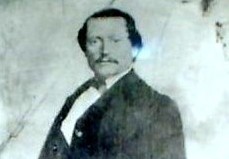
John "Jack" McCall
Murderer John Wesley Hardin
Murderer · USA · 1867
John Wesley (Wes) Hardin (1853-1895) was an American outlaw, gunfighter, and co…
42 victims
John Wesley Hardin
Murderer · USA · 1867
John Wesley (Wes) Hardin (1853-1895) was an American outlaw, gunfighter, and co…
42 victims
 Henry Newton Brown
Murderer · USA · 1870
Henry Newton Brown — 19th century gunman; orphan; raised by relatives in Rolla,…
6 victims
Henry Newton Brown
Murderer · USA · 1870
Henry Newton Brown — 19th century gunman; orphan; raised by relatives in Rolla,…
6 victims
 Joseph LaPage
Murderer · USA · 1874
Joseph LaPage was described as a French-Canadian trapper who donned a bearskin…
2 victims
Joseph LaPage
Murderer · USA · 1874
Joseph LaPage was described as a French-Canadian trapper who donned a bearskin…
2 victims
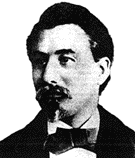 Louis Wagner
Murderer · USA · 1873
Louis Wagner had lived on Smuttynose Island with six Norwegian immigrants: Mare…
2 victims
Louis Wagner
Murderer · USA · 1873
Louis Wagner had lived on Smuttynose Island with six Norwegian immigrants: Mare…
2 victims
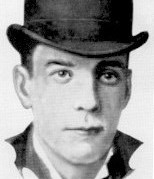 Marion Hedgepeth
Murderer · USA · 1870
Name: Marion Hedgepeth · Also known as: “Handsome Bandit,” “Debonair Bandit,” “…
2 victims
Marion Hedgepeth
Murderer · USA · 1870
Name: Marion Hedgepeth · Also known as: “Handsome Bandit,” “Debonair Bandit,” “…
2 victims
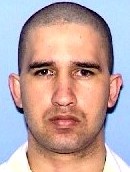 Edgardo Rafael Cubas
Murderer · USA · 2002
Edgardo Rafael Cubas (also spelled Edgardo Rafael Cuba and Edgardo Rafael Cubas…
4 victims
Edgardo Rafael Cubas
Murderer · USA · 2002
Edgardo Rafael Cubas (also spelled Edgardo Rafael Cuba and Edgardo Rafael Cubas…
4 victims
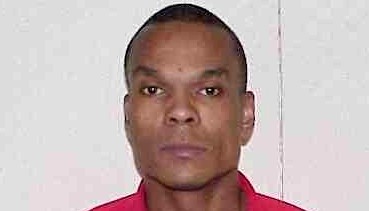 Victor Dewayne Taylor
Murderer · USA · 1984
Victor Dewayne Taylor was sentenced to death on May 23, 1986. He was convicted…
2 victims
Victor Dewayne Taylor
Murderer · USA · 1984
Victor Dewayne Taylor was sentenced to death on May 23, 1986. He was convicted…
2 victims
 Lucia de Berk
Miscarriage of Justice · Netherlands · 1997
Lucia de Berk, often called Lucia de B or Lucy de B, was a Dutch licenced paedi…
0 victims
Lucia de Berk
Miscarriage of Justice · Netherlands · 1997
Lucia de Berk, often called Lucia de B or Lucy de B, was a Dutch licenced paedi…
0 victims
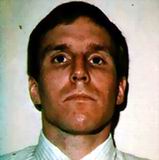 Michael Swango
Serial killer · USA · 1981
Michael Swango (Joseph Michael Swango) was a physician and American serial kill…
60 victims
Michael Swango
Serial killer · USA · 1981
Michael Swango (Joseph Michael Swango) was a physician and American serial kill…
60 victims
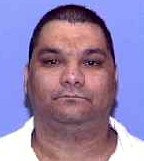 Samuel Bustamante
Murderer · USA · 1998
Samuel Bustamante was convicted of capital murder and sentenced to death for th…
2 victims
Samuel Bustamante
Murderer · USA · 1998
Samuel Bustamante was convicted of capital murder and sentenced to death for th…
2 victims
- Gender
- male
- Country
- USA
- Location
- Deadwood, South Dakota, USA
- Date of birth
- 1852
- Age at first offence
- 24
- Characteristics
- revenge
- Victim profile
- James "Wild Bill" Hickok, 39 (figure in the American Old West)
- Method of murder
- Shooting ( .45-caliber revolver)
- Date(s) of murder
- August 2, 1876
- Years active
- 1876
- Date of arrest
- August 29, 1876
- Status
-
Executed
Executed by hanging in Yankton on March 1, 1877
Case name and identity
John "Jack" McCall (also known as "Crooked Nose Jack" or "Broken Nose Jack") was born in 1852 or 1853 in Jefferson County, Kentucky. He died March 1, 1877, in Yankton, Dakota Territory.
Background
McCall was raised in Kentucky with three sisters, and he drifted westwards becoming a buffalo hunter. By 1876, he was living in a gold mining camp called Deadwood, South Dakota, under the alias of Bill Sutherland.
After his death, it was determined that McCall had, in fact, never even had a brother.
The offence
McCall was the killer of James "Wild Bill" Hickok. He shot Hickok from behind.
On August 2, 1876, in the Nuttal & Mann's #10 Saloon in Deadwood, McCall shot Hickok in the back of the head with a double-action .45-caliber revolver, shouting "Take that!" Hickok, on that day, had sat with his back to the door while engaged in a game of poker, whereas he normally sat in a corner to protect his back.
McCall’s killing was apparently over McCall's drunken resentment of an act of generosity by Hickok. Hickok had offered McCall money to buy breakfast after McCall had lost it all playing poker the previous day.
McCall claimed that the killing was retribution for Hickok having previously killed McCall's brother in Abilene, Kansas. As later determined, McCall never even had a brother.
Investigation and arrest
McCall fled town to Wyoming after the Deadwood trial. In Wyoming, he habitually bragged at length about the details of how he had killed Hickok in a fair gunfight.
Authorities in Wyoming refused to recognize the result of McCall's first trial. They refused on the grounds that Deadwood had been in Indian Territory at the time and contended that McCall was liable to be tried again.
On August 29, 1876, McCall was arrested in Laramie, Wyoming. He was brought to Yankton, South Dakota for trial.
Trial
First trial (Deadwood)
After McCall was found by a large crowd following the shooting, the mining camp assembled a miners’ court at McDaniel's Theater (also described as the McDaniels/Langrishe Theater). Local miners and businessmen convened a trial. Because the City of Deadwood had no legal jurisdiction, they went about appointing a defense attorney, prosecutor, and judge and began McCall's trial for murder.
McCall claimed he had shot Wild Bill in revenge for killing his brother back in Abilene, Kansas, and he maintained that he would do it all over again given the chance.
In less than two hours, the jury returned a “not guilty” verdict. The Black Hills Pioneer editorialized: "Should it ever be our misfortune to kill a man ... we would simply ask that our trial may take place in some of the mining camps of these hills."
McCall was hanged about Deadwood for several days until a man called California Joe strongly suggested the air might be bad for McCall's health. McCall then headed to Wyoming believing he’d escaped punishment for his crime and bragging about having killed the famous Wild Bill Hickok.
Less than a month later, the trial held in Deadwood was found to have had no legal basis, because Deadwood was located in Indian Territory and the jury was irregular.
Second trial (Yankton)
After his August 29, 1876 arrest and transfer to Yankton, the second trial began on December 4, 1876. It ended with a guilty finding on December 6, 1876.
Lorenzo Butler Hickok traveled from Illinois to attend the trial of his brother's murderer.
McCall was found guilty on December 6, 1876.
Sentencing and execution
On March 1, 1877, Jack McCall was marched up the platform where he kneeled with a priest with his arms and legs tied. When he stood up, the black hood was drawn over his head.
McCall asked the marshal for just one more moment of prayer. After that, the noose was placed around his neck.
McCall allegedly said, "Draw it tighter, Marshal."
At 10:10 a.m., the trap was sprung and McCall was hanged. He was the first to be legally executed in Dakota Territory.
Outcome
McCall was acquitted after the first trial by a jury that returned a “not guilty” verdict.
McCall was later convicted on the second trial and was executed by hanging in Yankton on March 1, 1877.
Aftermath
Burial and exhumation
McCall was buried in the southwest corner of Yankton’s Catholic cemetery. In 1881, when the cemetery was moved to make room for the Territorial Insane Hospital, his body was exhumed and it was discovered that he had been buried with the noose still around his neck.
His remains were reburied in an unmarked grave in the Yankton Cemetery, and the exact location was lost over time; his remains are unknown today.
Later references and portrayals
McCall's killing of Hickok plays a part in the HBO television series Deadwood.
McCall was portrayed by Garret Dillahunt.
Trivia
McCall was the first person executed in South Dakota.
McCall's killing of Hickok gave rise to the phrase "the coward Jack McCall."
Spotted an error, or have more information about this case?