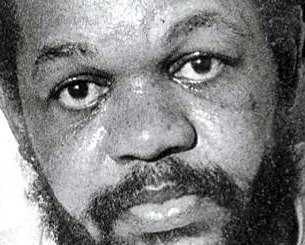
Wilbert Lee Evans
Murderer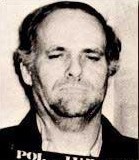 Ervil LeBaron
Murderer · USA · 1972
Ervil Morrell LeBaron (1925 to August 16, 1981) was the leader of a polygamous…
35 victims
Ervil LeBaron
Murderer · USA · 1972
Ervil Morrell LeBaron (1925 to August 16, 1981) was the leader of a polygamous…
35 victims
 Brian Kevin Rosenfeld
Murderer · USA · 1985
Brian Kevin Rosenfeld Brian Kevin Rosenfeld was sentenced to three concurrent l…
23 victims
Brian Kevin Rosenfeld
Murderer · USA · 1985
Brian Kevin Rosenfeld Brian Kevin Rosenfeld was sentenced to three concurrent l…
23 victims
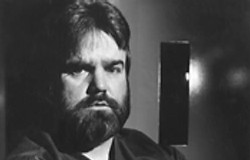 Marvin Gray
Murderer · USA · 1975
Marvin Gray was convicted killer who claimed responsibility for 23 slayings and…
23 victims
Marvin Gray
Murderer · USA · 1975
Marvin Gray was convicted killer who claimed responsibility for 23 slayings and…
23 victims
 Yahweh ben Yahweh
Murderer · USA · 1980
Yahweh ben Yahweh was born and legally named Hulon Mitchell Jr. (October 27, 19…
23 victims
Yahweh ben Yahweh
Murderer · USA · 1980
Yahweh ben Yahweh was born and legally named Hulon Mitchell Jr. (October 27, 19…
23 victims
 Russell Ellwood
Murderer · USA · 1991
Russell Ellwood was a former taxi driver. Authorities suspected him of killing…
20 victims
Russell Ellwood
Murderer · USA · 1991
Russell Ellwood was a former taxi driver. Authorities suspected him of killing…
20 victims
 Richard Lee Beavers
Murderer · USA · 1986
Richard Lee Beavers (age 38 (31)) — defendant; executed by lethal injection in…
1 victim
Richard Lee Beavers
Murderer · USA · 1986
Richard Lee Beavers (age 38 (31)) — defendant; executed by lethal injection in…
1 victim
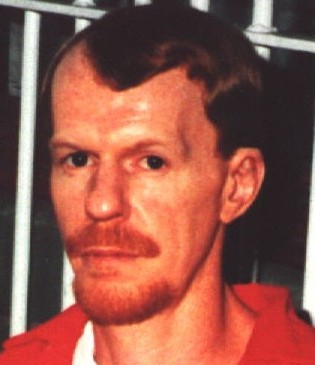 Keith Canaan
Murderer · USA · 1985
Keith Canaan was a white male. He was identified as Keith Canaan, Keith B. Cana…
1 victim
Keith Canaan
Murderer · USA · 1985
Keith Canaan was a white male. He was identified as Keith Canaan, Keith B. Cana…
1 victim
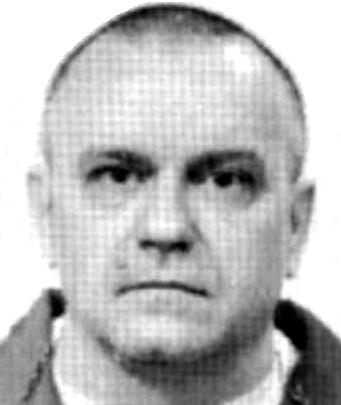 James Lowery
Murderer · USA · 1979
Defendant: James (Jim) Lowery · Age: 54 · Race: white · Status: Executed by let…
2 victims
James Lowery
Murderer · USA · 1979
Defendant: James (Jim) Lowery · Age: 54 · Race: white · Status: Executed by let…
2 victims
- Gender
- male
- Country
- USA
- Location
- Alexandria City, Virginia, USA
- Date of birth
- ???
- Characteristics
- escape attempt, police officer
- Victim profile
- William Truesdale, 47 ( Alexandria City sheriff's deputy )
- Method of murder
- Shooting ( Officer's handgun)
- Date(s) of murder
- January 27, 1981
- Years active
- 1981
- Date of arrest
- —
- Status
-
Executed
Executed by electrocution in Virginia on October 17, 1990
Name
Wilbert Lee Evans
Status / sentence
Wilbert Lee Evans was sentenced to die for shooting Deputy Sheriff William Truesdale to death on Jan. 27, 1981.
Evans was executed by electrocution in Virginia on October 17, 1990.
Timeline
- January 27, 1981 — Wilbert Lee Evans shot and killed Deputy Sheriff William Truesdale while attempting to escape from state custody; Truesdale was escorting Evans, then a North Carolina prisoner, to Alexandria, Virginia where Truesdale was to testify for the Commonwealth of Virginia.
- April 1981 — Evans was convicted of capital murder and sentenced to death in the Circuit Court of Alexandria, Virginia.
- June 1, 1981 — Evans was sentenced to death.
- December 4, 1981 — The Supreme Court of Virginia affirmed Evans’s conviction and death sentence.
- March 22, 1982 — The United States Supreme Court denied Evans’s petition for a writ of certiorari.
- April 9, 1982 — Evans filed a petition for a writ of habeas corpus in Alexandria Circuit Court.
- April 12, 1983 — The Commonwealth formally confessed error in Evans’s sentencing proceedings and acknowledged that Evans’s death sentence should be vacated because erroneous evidence of his prior convictions had been admitted at trial.
- March 28, 1983 — Virginia enacted emergency legislation amending procedures for trial by jury in capital cases to permit capital resentencing by a newly impaneled jury where a prior death sentence was vacated due to sentencing errors.
- October 12, 1983 — The court determined that resentencing under the amended statute could proceed; the court impaneled a new jury.
- February 1984 — A new jury resentenced Evans to death.
- March 7, 1984 — The trial court imposed the death penalty following resentencing.
- May 31, 1984 — Six death row inmates attempted an escape at Mecklenburg Correctional Center, taking hostage 12 prison guards and 2 female nurses; Evans took decisive steps to calm the riot, saving lives of several hostages, and preventing the rape of one nurse.
- May 19, 1986 — The circuit court dismissed Evans’s third amended petition for a writ of habeas corpus in Alexandria Circuit Court.
- August 23, 1990 — Evans filed a petition for appeal with the Virginia Supreme Court; the Virginia Supreme Court denied Evans’s petition for appeal.
- October 5, 1990 — Evans filed a habeas petition in federal district court for the Eastern District of Virginia; the district court granted a stay of execution.
- October 16, 1990 — The United States Court of Appeals, Fourth Circuit vacated the stay and denied relief; the stay was vacated.
- October 17, 1990 — The United States Supreme Court denied the application for a stay of execution; Evans was executed by electrocution in Virginia.
- October 17, 1990 — Certiorari to the United States Court of Appeals for the Fourth Circuit was denied.
The offence
On January 27, 1981, Wilbert Lee Evans shot and killed Deputy Sheriff William Truesdale while attempting to escape from state custody. Truesdale was escorting Evans, then a North Carolina prisoner, to Alexandria, Virginia where Truesdale was to testify as a witness for the Commonwealth of Virginia.
Evans had pretended to be a willing witness for the Commonwealth but planned to engineer an escape during his transportation from North Carolina to Virginia. The plan included an intent to kill anyone who attempted to prevent his escape; Evans acted on this intent by killing Deputy Truesdale.
During the escape, Evans grabbed Truesdale’s gun and shot him. Evans attempted to flee but was apprehended shortly thereafter.
Investigation / apprehension
Evans was on a brief flight of freedom, running around the Old Town area of the city while leading to pursuit by an officer.
When an officer in pursuit attempted to arrest Evans, the escapee pointed the gun he had taken from Truesdale at the approaching officer.
The gun jammed, and Evans was quickly arrested thereafter.
Trial
Original capital murder conviction and sentencing
Evans was convicted of capital murder in April 1981.
At the sentencing hearing, the State urged the jury to recommend the death sentence based on Evans’s “future dangerousness.”
To prove future dangerousness, the State relied principally upon records of seven purported out-of-state convictions. The prosecutor later admitted he knew, at the time he introduced the records into evidence, that two of them were false.
One of the seven “convictions,” for assault on an officer with a deadly weapon, had been dismissed on appeal.
Another, for engaging in an affray with a deadly weapon, had been vacated on appeal; Evans had been reconvicted in a trial de novo, and the conviction for one crime was counted as two convictions.
After considering Evans’s prior “history,” the jury determined there was a probability Evans would commit criminal acts of violence that would constitute a continuing serious threat to society, and it recommended the death penalty based solely upon its finding of future dangerousness.
Evans was sentenced to death on June 1, 1981.
Appeal and denial of certiorari (direct appeal)
The Supreme Court of Virginia affirmed Evans’s conviction and death sentence.
The Supreme Court of the United States denied certiorari.
Sentencing (resentencing)
Confessed error and vacating the death sentence
On April 12, 1983, the Commonwealth confessed error in Evans’s sentencing proceedings and acknowledged that Evans’s death sentence should be vacated because erroneous evidence of his prior convictions had been admitted at trial.
The circuit court vacated Evans’s death sentence and directed a hearing to determine whether Evans should be resentenced by a new jury or have his sentence reduced to a life term.
Resentencing by new jury
The circuit court determined that resentencing under the amended statute could proceed, and the court impaneled a new jury.
A new jury recommended the death penalty based upon a finding of Evans’s “future dangerousness.”
On March 7, 1984, the trial court imposed the death penalty, and the Virginia Supreme Court affirmed the sentence.
The United States Supreme Court denied certiorari.
Supreme Court filings and holdings
United States Supreme Court denial of certiorari (April 15, 1985)
Wilbert Lee EVANS v. VIRGINIA, 471 U.S. 1025 (1985) On April 15, 1985, the petition for a writ of certiorari was denied.
Justice MARSHALL dissented and continued to adhere to his view that the death penalty was cruel and unusual punishment forbidden by the Eighth and Fourteenth Amendments, stating that he would vacate the judgment insofar as it left undisturbed the death sentence imposed in this case. Justice Marshall also wrote that the death sentence hinged on future dangerousness and that the State relied on records of seven purported out-of-state convictions, two of which the prosecutor later admitted were false.
Justice Marshall wrote:
"At a hearing to consider the propriety of resentencing Evans, the prosecutor at Evans' trial admitted that he knew the evidence that he introduced at the sentencing hearing was false. The judge then ordered a new sentencing hearing. A new jury recommended the death penalty, and petitioner was again sentenced to death."
Supreme Court stay application denied (October 17, 1990)
Wilbert Lee EVANS v. RAYMOND MUNCY, Warden, et al., No. 90-5958 On October 17, 1990, the application for stay of execution of sentence of death presented to the Chief Justice was denied, and the petition for writ of certiorari to the United States Court of Appeals for the Fourth Circuit was denied.
Justice MARSHALL dissented and argued that Evans faced an imminent execution that even the State of Virginia appeared to concede was indefensible in light of undisputed facts, stating:
"This Court's approval of the death penalty has turned on the premise that given sufficient procedural safeguards the death penalty may be administered fairly and reliably."
Justice Marshall described the Mecklenburg uprising and wrote that Evans took decisive steps to calm the riot, saving the lives of several hostages, and preventing the rape of one of the nurses.
Justice Marshall included verbatim statements from witnesses presented in the record. Officer Ricardo Holmes was quoted as saying:
"Don't hurt anybody and everything will be allright."
Justice Marshall further quoted Officer Holmes:
"It was very clear to me that [Evans] was trying to keep [the escaping inmates] calm and prevent them from getting out of control . . . . Based upon what I saw and heard, it is my firm opinion that if any of the escaping inmates had tried to harm us, Evans would have come to our aid. It is my belief that had it not been for Evans, I might not be here today."
Justice Marshall described Officer Prince Thomas as stating Evans interceded to prevent the rape of Nurse Ethyl Barksdale.
Justice Marshall described Officer Harold Crutchfield as stating:
"It is . . . my firm belief that if Evans had not been present during the escape, things may have blown up and people may have been harmed."
Justice Marshall described Evans unsuccessfully trying to free the guards by trying to force open the closet door and free the guards.
Appeals (federal habeas and other appellate review)
United States Court of Appeals, Fourth Circuit (August 2, 1989)
Wilbert Lee Evans, Petitioner-appellant, v. Charles Thompson, Superintendent, Respondent-appellee, 881 F.2d 117 The Court of Appeals affirmed the district court.
The Court of Appeals held that following a confession of error by the prosecution, Evans was resentenced to death by a new jury. The Court of Appeals addressed Evans’s contention that his resentencing was barred by the Ex Post Facto Clause, the Equal Protection Clause, and the Due Process Clause, along with other claims including denial of the right to confront and cross-examine witnesses and improper jury instructions, and ineffective assistance of counsel.
The Court of Appeals rejected the claims and affirmed the judgment of the district court.
United States Court of Appeals, Fourth Circuit (October 16, 1990)
Wilbert Lee Evans, Petitioner-appellee, v. Raymond Muncy; Edward Murray; Virginia Department Of Corrections; Attorney General of the Commonwealth of Virginia, Respondents-appellants Before ERVIN, Chief Judge, and HALL and WILKINSON, Circuit Judges, and DOUMAR, United States District Judge for the Eastern District of Virginia, sitting by designation, the Court of Appeals reversed the judgment of the district court and vacated the stay of execution.
The Court of Appeals described the January 27, 1981 killing, the June 1981 conviction and death sentence, the March 22, 1982 certiorari denial, the April 12, 1983 Commonwealth confession of error, the impaneling of a new jury, and the March 7, 1984 imposition of death after resentencing.
The Court of Appeals also described post-sentencing conduct at Mecklenburg Correctional Center on May 31, 1984 and Evans’s contention that this behavior called into question the jury’s “future dangerousness” finding. The Court of Appeals vacated the stay.
United States Supreme Court (certiorari denial and denial of stay)
The United States Supreme Court denied the application for stay of execution and denied the petition for certiorari on October 17, 1990.
Execution
Evans was executed in Virginia by electrocution on October 17, 1990.
On the day of execution in October 1990, Evans stuffed into his pocket a copy of a U.S. Supreme Court justice’s plea to spare his life, said goodbye to his lawyers, and walked to the death chamber.
During execution, when the first 55-second jolt of electricity hit Evans, blood flowed from under the leather death mask, streamed down his chin, and soaked his shirt. Bloody froth bubbled on his lower lip. Officials said the chair worked fine and that Evans just had a nosebleed when he lunged against the mask.
The autopsy concluded that Evans suffered a bloody nose after the voltage surge elevated his high blood pressure.
Evans continued to moan before a second jolt of electricity was applied.
Victim
Deputy Sheriff William Truesdale was shot and killed with his own weapon while transporting prisoners from court back to the jail.
Deputy Truesdale was returning Evans to the jail after a hearing in the adjacent courthouse.
Deputy Truesdale was survived by his wife and three children.
Other facts and details
Prosecutorial errors and use of prior convictions
The State urged the jury to recommend death based on “future dangerousness.”
During sentencing, the prosecutor used records showing seven prior convictions, including assault on a police officer, to support future dangerousness.
Documents showed the prosecution relied on convictions that were not real in the way presented. The Commonwealth’s Attorney John Kloch argued for death, and William Truesdale was identified as the deputy killed in the offense.
A former staff attorney for the Virginia Capital Representation Resource Center, William H. Wright Jr., stated that Evans’s “criminal record looked two times as bad as it really was.”
Evans’s appeals lawyer, Jonathan Shapiro, learned that three of the “convictions” were actually one because of computer error, and Shapiro learned additional flaws about admissibility and representation.
Shapiro found a memo from Kloch’s assistant dated two months before trial explaining flaws, which Shapiro described as “the smoking gun.”
Shapiro told the attorney general’s office and awaited admission of error.
In February 1984, a new jury resentenced Evans to death.
Mecklenburg Correctional Center escape and Evans’s role
On May 31, 1984, when Evans was an inmate in Mecklenburg Correctional Center, Evans protected 12 guards and two nurses from a half-dozen knife-wielding inmates during the breakout.
Several Mecklenburg guards said they owed their lives to Evans.
Evans did not join the escapees; his lawyers contended that he intervened to save guards and nurses from harm.
One letter hand-delivered to the Governor’s office this afternoon included excerpts of statements from guards and nurses that Evans protected them during the escape. One nurse said he stopped two inmates from molesting her. Inmates who escaped were not still at large; three had been executed and the other three remained on death row.
Clemency
Evans’s clemency plea went to then-Gov. L. Douglas Wilder.
In the end, Wilder declined clemency for Evans. A national campaign for a retrial for Joe Giarratano was described as making it difficult politically for Wilder to consider clemency for Evans. The narrative also stated that Giarratano’s supporters included Amnesty International and columnist James J. Kilpatrick, and it stated Giarratano received the nod while Evans’s execution proceeded.
Names (roles as described)
- Wilbert Lee Evans — defendant; inmate executed
- Deputy Sheriff William Truesdale — victim
- William Truesdale — deputy sheriff; Alexandria Sheriff’s Office
- Jonathan Shapiro — appeals lawyer for Evans
- John Kloch — Alexandria Commonwealth’s Attorney
- Charles Robb — then-Gov. who signed emergency legislation on March 28, 1983
- L. Douglas Wilder — then-Gov. who declined clemency
- Justice Thurgood Marshall — dissenting Justice in United States Supreme Court matters regarding Evans
- Officer Ricardo Holmes — quoted as hostage taken during the May 31, 1984 uprising
- Officer Prince Thomas — quoted as describing preventing rape of a nurse
- Officer Harold Crutchfield — quoted as describing Evans’s presence during the escape
- Nurse Ethyl Barksdale — nurse described as targeted for rape during the uprising
- William H. Wright Jr. — former staff attorney for the Virginia Capital Representation Resource Center
- Willie Lloyd Turner — described as another Virginia death row inmate involved in the Mecklenburg uprising
- Joe Giarratano — described as a person whose retrial campaign affected clemency politics for Wilder
- James J. Kilpatrick — columnist named among Giarratano’s defenders
- Amnesty International — named among Giarratano’s defenders

Spotted an error, or have more information about this case?