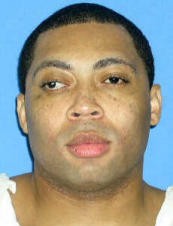
Daroyce Mosley
Mass murderer Gameel Al-Batouti
Mass murderer · USA · 1999
Gameel Al-Batouti (also rendered “Gamil ElBatouty” or “El Batouty” in U.S. offi…
216 victims
Gameel Al-Batouti
Mass murderer · USA · 1999
Gameel Al-Batouti (also rendered “Gamil ElBatouty” or “El Batouty” in U.S. offi…
216 victims
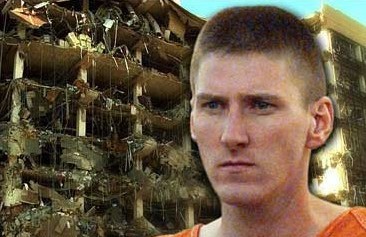 Timothy McVeigh
Mass murderer · USA · 1995
Timothy James McVeigh (April 23, 1968 – June 11, 2001) was a United States Army…
168 victims
Timothy McVeigh
Mass murderer · USA · 1995
Timothy James McVeigh (April 23, 1968 – June 11, 2001) was a United States Army…
168 victims
 Julio Gonzalez
Mass murderer · USA · 1990
Julio Gonzalez was sentenced to 174 twenty-five-year sentences (a total of 4,35…
87 victims
Julio Gonzalez
Mass murderer · USA · 1990
Julio Gonzalez was sentenced to 174 twenty-five-year sentences (a total of 4,35…
87 victims
 David Burke
Mass murderer · USA · 1987
David Augustus Burke (May 18, 1952–December 7, 1987) was an employee of USAir,…
43 victims
David Burke
Mass murderer · USA · 1987
David Augustus Burke (May 18, 1952–December 7, 1987) was an employee of USAir,…
43 victims
 George Jo Hennard
Mass murderer · USA · 1991
George Jo Hennard carried out a mass killing at a Luby’s Cafeteria in Killeen,…
23 victims
George Jo Hennard
Mass murderer · USA · 1991
George Jo Hennard carried out a mass killing at a Luby’s Cafeteria in Killeen,…
23 victims
 James Huberty
Mass murderer · USA · 1984
James Oliver Huberty was a 41-year-old unemployed security guard. He was born i…
21 victims
James Huberty
Mass murderer · USA · 1984
James Oliver Huberty was a 41-year-old unemployed security guard. He was born i…
21 victims
 Elijah Joubert
Murderer · USA · 2003
Elijah Joubert was convicted of capital murder in October 2004 and was sentence…
2 victims
Elijah Joubert
Murderer · USA · 2003
Elijah Joubert was convicted of capital murder in October 2004 and was sentence…
2 victims
 Michael Benge
Murderer · USA · 1993
Michael Benge (male, white) was convicted in Butler County of aggravated murder…
1 victim
Michael Benge
Murderer · USA · 1993
Michael Benge (male, white) was convicted in Butler County of aggravated murder…
1 victim
 Ralph Cecil Feltrop
Murderer · USA · 1997
Ralph Cecil Feltrop was convicted of first-degree murder in the Circuit Court o…
1 victim
Ralph Cecil Feltrop
Murderer · USA · 1997
Ralph Cecil Feltrop was convicted of first-degree murder in the Circuit Court o…
1 victim
 Cyrano Marks
Mass murderer · USA · 1999
Cyrano Marks committed suicide by shooting himself the same day after shooting…
6 victims
Cyrano Marks
Mass murderer · USA · 1999
Cyrano Marks committed suicide by shooting himself the same day after shooting…
6 victims
 Tomohiro Kato
Mass murderer · Japan · 2008
Tomohiro Katō was held in custody and was in prison awaiting trial. Tomohiro Ka…
7 victims
Tomohiro Kato
Mass murderer · Japan · 2008
Tomohiro Katō was held in custody and was in prison awaiting trial. Tomohiro Ka…
7 victims
- Gender
- male
- Country
- USA
- Location
- Gregg County, Texas, USA
- Date of birth
- October 16, 1974
- Age at first offence
- 20
- Characteristics
- armed robbery, robbery
- Victim profile
- Patricia Colter, Duane Colter, Alvin Waller, and Luva Congleton (lounge customers)
- Method of murder
- Shooting
- Date(s) of murder
- July 21, 1994
- Years active
- 1994
- Date of arrest
- —
- Status
-
Executed
Executed by lethal injection in Texas on August 28, 2007
Case information
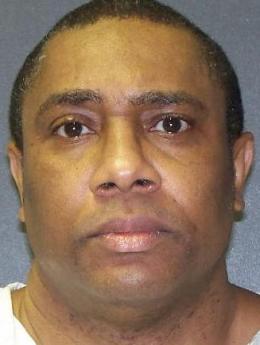
DaRoyce Lamont Mosley was convicted of capital murder for the death of Patricia Colter during the offense of robbery of Sandra Cash. He was sentenced to death and was executed by lethal injection in Texas on August 28, 2007.
Timeline
- July 21, 1994 — Wearing ski masks and brandishing handguns, DaRoyce Lamont Mosley and his uncle, Ray Don Mosley, entered Katie’s Lounge in Kilgore, Texas at 11:45 p.m. Night waitress Sandra Cash was closing up for the evening. Ray Don demanded money, shot Cash twice, and DaRoyce Mosley shot four customers, who all died. Cash called 9-1-1 and survived, but was permanently paralyzed from the chest down.
- August 4, 1994 — A Gregg County grand jury indicted DaRoyce Mosley for the capital murder of Patricia Colter committed during the offense of robbery of Sandra Cash.
- July 22, 1994 — The police received several tips and arrested appellant separately; Mosley was later arrested based on information received from Smith.
- October 28, 1995 — A jury found Mosley guilty of capital murder.
- October 30, 1995 — Following a separate punishment hearing, Mosley was sentenced to death.
- October 9, 1997 — Mosley filed an application for writ of habeas corpus with the state trial court.
- October 28, 1997 — The jury returned a guilty verdict, and the penalty phase began the same day.
- November 3, 1995 — The jury returned a death sentence.
- December 14, 1998 — Mosley filed a supplemental application for writ of habeas corpus with the trial court.
- March 15, 1999 — An evidentiary hearing was held in the state trial court.
- January 10, 2000 — The U.S. Supreme Court denied Mosley’s petition for certiorari review of the state habeas judgment.
- April 19, 1999 — The U.S. Supreme Court denied Mosley’s petition for certiorari review of the direct appeal judgment.
- March 31, 2003 — The federal district court granted the state’s motion for summary judgment and denied Mosley the relief requested in his federal habeas petition.
- June 20, 2003 — The federal district court granted Mosley a certificate of appealability with regard to three of his claims, but denied COA on the rest of his claims.
- July 24, 2003 — Mosley filed an application for additional certificate of appealability with the 5th U.S. Circuit Court of Appeals.
- September 8, 2003 — The 5th Circuit Court denied Mosley’s request for additional COA.
- May 17, 2004 — The 5th Circuit Court issued an opinion affirming the judgment of the district court on the three issues considered on appeal.
- June 18, 2004 — The 5th Circuit Court denied Mosley’s petition for rehearing by the full court.
- September 16, 2004 — Mosley petitioned the U.S. Supreme Court for a writ of certiorari.
- February 22, 2005 — The Supreme Court denied Mosley’s petition for certiorari.
- May 18, 2007 — The trial court issued an order setting Mosley’s execution date for August 28, 2007.
- August 28, 2007 — Mosley was executed by lethal injection in Texas.
Background
DaRoyce Lamont Mosley was described as a Black male with black hair, brown eyes, a height of 06' 02", and a weight of 211 lb. He had 12 years of education and worked as a laborer.
Texas Department of Criminal Justice information indicated that Mosley did not have a prior criminal record before this offense was committed.
Mosley’s prior prison record was listed as none.
Mosley’s co-defendants included Ray Donald Mosley (his uncle) and a 16-year-old juvenile.
The Texas Attorney General media advisory announced that DaRoyce Mosley was scheduled to be executed after 6 p.m. on Tuesday, August 28, 2007. In the same media advisory, it stated that Mosley was found guilty of the 1994 capital murder of Patricia Colter and sentenced to death.
In the execution reporting, Mosley was described as 32. He was described as the 22nd Texas inmate executed that year, and the first of three to die on consecutive evenings.
The offence
Entry to Katie’s Lounge
At approximately 11:45 p.m. on July 21, 1994, Wearing ski masks and brandishing handguns, DaRoyce Mosley and his uncle, Ray Don Mosley, entered Katies’ Lounge in Kilgore, Texas, as night waitress Sandra Cash was closing up for the evening.
Robbery and shootings
Ray Don was described as the first to burst through the door and approached Cash demanding the money. Cash slid a box containing money toward Ray Don. Ray Don shot Cash twice. Cash slid the box containing $308; she was shot in the wrist and then shot in the stomach. She survived and called 9-1-1.
DaRoyce Mosley shot the four customers present: Patricia Colter, Duane Colter, Alvin Waller, and Luva Congleton. All four customers died. The jury evidence described:
- Patricia and Duane Colter each died from a single gunshot wound to the back of the head.
- Congleton died from a gunshot wound to the back of the head, with the bullet exiting and not recovered at autopsy.
- Waller received three gunshot wounds—two to the head and one to the thigh—and any one of the three wounds would have been fatal.
Cash had nine holes in her body from approximately three to four bullets, with two recovered at the hospital, and a third bullet recovered from behind the bar where Cash was shot.
After the crime
After the crime, both Mosleys and a juvenile went to Christopher “Kaboo” Smith’s home. DaRoyce Mosley divided the money evenly between himself, Ray Don, the juvenile, and Kaboo, with each receiving $77.
The next day, Mosley bought a new car and picked up his brother, Kaboo, and the juvenile. Police pulled Mosley over and arrested the juvenile. Police were initially unaware of Mosley’s involvement in the robbery and killings at the lounge.
Amount taken
Evidence described that Cash’s receipts included about $308 in cash and that the money was divided such that each person received seventy-seven dollars.
Investigation and police contact
Tips and arrests
On the next day, police received several tips about the crime and arrested Mosley and others separately on July 22, 1994.
One lead was from Ricky Wheat, who lived across the street from Katie’s Lounge. He informed police that Ray Don and DaRoyce Mosley and Marcus Smith were talking with him outside his residence on the night of the murder, and that Ray Don had a gun. Ricky Wheat testified that Ray Don stated there was some money in the area and that he had to have it. Ricky Wheat later testified that Ray Don returned and stated he had shot someone over at Katie’s Lounge and needed a ride.
Another lead was from Christopher “Kaboo” Smith, Mosley’s best friend and Marcus’s cousin. Kaboo told police that on the evening of the murders he saw Mosley with a gun and that Mosley claimed he got the gun from Stanley Rossum, a neighbor. Kaboo later stated that appellant returned and said, “We did it.”
Voluntary visit to police station and statements
On July 22, 1994, after pulling over Mosley to arrest Marcus, the police asked Mosley if he would voluntarily go to the police station to answer some questions. Mosley agreed. Initially, Mosley stated that he had no involvement in the robbery and murders.
Later that evening, Mosley was arrested based on information received from Marcus Smith. When informed he was under arrest, Mosley cried out:
“Oh what have I done. I've ruined my life. I'm going to spend the rest of my life in jail.”
After the arrest, Mosley confessed and made multiple statements. In one statement, he admitted to shooting two of the people at Katie’s Lounge. In another statement, he insisted he had been present but denied shooting anyone. He also informed police that he wore a ski mask or toboggan and threw it in the woods near Ricky Wheat’s residence, and that a glove was found near the toboggan. He admitted wearing the glove during the robbery. Officers advised that tests could be run on the glove to determine whether the person wearing it had fired a gun.
In his final statement, Mosley described the shootings including that Ray Don told him to kill the victims and that when Ray Don pointed the gun at him, he shot a lady at the table, shot a man near the bar area, shot a lady under the pool table twice in the head and then shot her again, and shot three times at another man approaching with a pool stick.
Trial
Indictment and guilty verdict
A Gregg County grand jury indicted DaRoyce Mosley for capital murder of Patricia Colter committed during the offense of robbery of Sandra Cash.
A jury found Mosley guilty of capital murder.
The direct appeal described the appellate context: the appellant was convicted in October 1995 of capital murder under Tex. Penal Code § 19.03(a)(2). The trial judge sentenced him to death pursuant to the jury’s answers to special issues.
Prosecutorial argument issue (trial court reviewed)
During the State’s argument, the record included the following exchanges:
[PROSECUTOR]: There is only one route to the truth. It is by traveling on the main road. That will take you to your proper destination. But you must stay on the main road. The defense has attempted to get you off the main road, to divert you. They don't want you to stay on the main road because they know where that will take you.
[DEFENSE COUNSEL]: Your Honor, I'll object to this improper comment on counsel and object to counsel testifying.
COURT: Overruled.
[PROSECUTOR]: They want you to take a side road, a series of side roads, rabbit trails, and a rabbit trail that will lead you to a dead-end. The truth is not there.
The direct appeal later addressed whether these comments were inappropriate.
Victim-related character and impact evidence
The direct appeal addressed evidence concerning the good character of victims and victim character evidence versus victim impact evidence. The appeal stated that the evidence admitted by the trial court included testimony from:
- Helen Wrag, Luva Congleton’s niece.
- Tricia Kappan regarding Patricia Colter, Duane Colter, and Alvin Waller.
Helen Wrag’s testimony included the following:
“...was a happy person. She liked people. Q. Did she ever meet a stranger? A. No sir. Q. Was that part of her personality that she did well with people? A. Yes sir, she had people that ask for her [waitress] station.”
Tricia Kappan’s testimony included the following:
“Well, Mamma and Daddy still loved each other, but it was — they were like best friends. And when Mamma met Duane, Mamma was his whole life. And they just-they were just all friends. Daddy lived in a trailer behind my mother’s house. He was going through a tough time and needed a place to go. And so my mother had a travel trailer behind her house, and he stayed there. And a lot of the time, he just slept in the extra bedroom at the other end of the trailer where Mamma and Duane were. They were just all really good friends. And they hardly went anywhere without each other. They just were all very close. Duane was a very special person to me. I was sixteen. I was already grown. But when my mother met him and introduced us, I was kind of shocked and everything, but the more I was around him, the more you just- you just couldn't help but just love him to death. He was just so sweet. He was like a big kid, you know. He was just great. My mother was my sole supporter. She had been through so much in her life that I felt like anything that she was going to have to go through, that I was going to be there with her and I could go through it with her. There was some times, you know, when we would move away and my brother would stay with Grandmother, but I couldn't stand it. I was always afraid, you know, something might happen to her or she wouldn't be strong enough to pull through something. I was just a kid, but I would think, you know, if I was there, I could help her through it; I could pull her through. And then whenever I got married, it was like I just wanted to prove to her that I was a big girl and I could take care of myself and she need not spend all of her money on me. She was always buying things for everybody. I would just think if she wouldn't buy stuff for everybody else, she could buy it for herself. But I always thought I would be there to take care of her and she would be there to take care of me. And she was my right arm. She was my backbone.”
Future dangerousness expert excluded
The direct appeal included a discussion of point of error 109, addressing exclusion of testimony from defense expert Dr. Jedlika regarding future dangerousness. An offer of proof described items that Dr. Jedlika would have testified, including recidivism statistics and the claim that violence tends to decrease with age. The appeal stated that Dr. Jedlika did not offer testimony concerning any characteristics peculiar to appellant.
Death sentence
The direct appeal stated that, pursuant to jury findings on special issues, the trial judge sentenced Mosley to death.
Sentencing
Mosley’s punishment hearing resulted in a death sentence. The direct appeal described the procedure under Texas Code of Criminal Procedure Article 37.071.
Appeals
Direct appeal to Texas Court of Criminal Appeals
On July 1, 1998, the Texas Court of Criminal Appeals affirmed Mosley’s conviction and sentence.
The direct appeal record included a case citation for Mosley v. State, 983 S.W.2d 249 (Tex. Crim. App. 1998) (direct appeal). The court’s holdings included that:
- Evidence supported the conviction.
- Equal protection clause was not violated by method of selection of grand jury foreman.
- Disqualification of trial judge was not warranted.
- Prosecutor’s allegedly inappropriate statements during closing argument were harmless.
- Victim character evidence was admissible.
The direct appeal affirmed.
U.S. Supreme Court certiorari on direct appeal
On April 19, 1999, the U.S.
State habeas proceedings
Mosley filed an application for writ of habeas corpus with the state trial court on October 9, 1997. Mosley filed a supplemental application for writ of habeas corpus with the trial court on December 14, 1998. An evidentiary hearing was held on March 15, 1999. On June 30, 1999, the Texas Court of Criminal Appeals declined to follow the trial court’s recommendation and denied Mosley’s first state habeas application and dismissed Mosley’s supplemental application as an abuse of the writ.
U.S. Supreme Court certiorari on state habeas judgment
On January 10, 2000, the U.S.
Federal habeas proceedings
Mosley filed a federal petition for writ of habeas corpus in federal district court on June 30, 2000. On March 31, 2003, the federal district court granted the state’s motion for summary judgment and denied Mosley the relief requested. On June 20, 2003, the federal district court granted Mosley a certificate of appealability with regard to three of his claims, and denied COA on the rest. On September 8, 2003, the 5th Circuit denied Mosley’s request for additional COA. On May 17, 2004, the 5th Circuit issued an opinion affirming the judgment of the district court on the three issues considered on appeal. On June 18, 2004, the 5th Circuit denied Mosley’s petition for rehearing by the full court. On February 22, 2005, the Supreme Court denied Mosley’s petition for certiorari.
The federal habeas appeal included the decision in Mosley v. Dretke, 370 F.3d 467 (5th Cir. 2004), in which the court affirmed the denial of habeas relief.
Aftermath
Mosley’s execution was carried out by lethal injection in Texas on August 28, 2007.
In the execution reporting, Mosley made a brief final statement. The record included:
“I will see you when you get there,” he told witnesses, including his mother and sister.
He also told witnesses:
“Keep your heads up. To all the fellows on the row, the same thing. Keep your head up and continue to fight.”
He expressed love again as the lethal drugs began flowing and said:
“I can taste it.”
He was pronounced dead at 10:57 p.m. The execution reporting stated that his mother and sister cried and sobbed as he died.
Spotted an error, or have more information about this case?