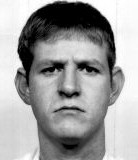
William Kitchens
Murderer Brian Kevin Rosenfeld
Murderer · USA · 1985
Brian Kevin Rosenfeld Brian Kevin Rosenfeld was sentenced to three concurrent l…
23 victims
Brian Kevin Rosenfeld
Murderer · USA · 1985
Brian Kevin Rosenfeld Brian Kevin Rosenfeld was sentenced to three concurrent l…
23 victims
 Yahweh ben Yahweh
Murderer · USA · 1980
Yahweh ben Yahweh was born and legally named Hulon Mitchell Jr. (October 27, 19…
23 victims
Yahweh ben Yahweh
Murderer · USA · 1980
Yahweh ben Yahweh was born and legally named Hulon Mitchell Jr. (October 27, 19…
23 victims
 Russell Ellwood
Murderer · USA · 1991
Russell Ellwood was a former taxi driver. Authorities suspected him of killing…
20 victims
Russell Ellwood
Murderer · USA · 1991
Russell Ellwood was a former taxi driver. Authorities suspected him of killing…
20 victims
 Leonard Drane
Murderer · USA · 1990
Leonard Maurice Drane was convicted in a capital case involving the killing of…
1 victim
Leonard Drane
Murderer · USA · 1990
Leonard Maurice Drane was convicted in a capital case involving the killing of…
1 victim
 Peter James Wilson
Murderer · USA · 2010
Peter James Wilson was 29 years old. He was from Abbotsford, B.C., and had both…
1 victim
Peter James Wilson
Murderer · USA · 2010
Peter James Wilson was 29 years old. He was from Abbotsford, B.C., and had both…
1 victim
 John Patler
Murderer · USA · 1967
John Patler (formerly Yanacki Patsalos) John Patler, formerly Yanacki Patsalos,…
1 victim
John Patler
Murderer · USA · 1967
John Patler (formerly Yanacki Patsalos) John Patler, formerly Yanacki Patsalos,…
1 victim
 George Kayer
Murderer · USA · 1994
Defendant: George Kayer · Defendant race: Caucasian · Victim: Delbert L. Haas ·…
1 victim
George Kayer
Murderer · USA · 1994
Defendant: George Kayer · Defendant race: Caucasian · Victim: Delbert L. Haas ·…
1 victim
- Gender
- male
- Country
- USA
- Location
- Taylor County, Texas, USA
- Date of birth
- April 27, 1963
- Age at first offence
- 23
- Characteristics
- kidnapping, rape
- Victim profile
- Patricia Leann Webb (female, 25)
- Method of murder
- Shooting (.22-caliber pistol)
- Date(s) of murder
- May 17, 1986
- Years active
- 1986
- Date of arrest
- Next day
- Status
-
Executed
Executed by lethal injection in Texas on May 9, 2000
Case record: William Kitchens
Background
William Joseph Kitchens was convicted of the capital murder of Patricia Webb and was executed in Texas on May 9, 2000.
Patricia Webb was 25 years old.
The evidence and testimony described that Kitchens and Webb met at an Abilene Texas bar earlier on May 16, 1986, when Kitchens joined a group of women at an office party that had moved to night clubs, including the Silver Bullet saloon.
The offence
On the evening of May 16, 1986, 25-year-old Patricia Webb attended an office party with several other women, then went with other women to two night clubs. They later went to the Silver Bullet saloon.
At the Silver Bullet saloon, William Joseph Kitchens appeared friendly and danced with several of the women, including Patricia Webb. The women did not observe evidence that Kitchens and Webb had “paired off” or otherwise appeared to be developing a relationship. The last they saw of Webb was her waving goodbye and saying she was going to drive Kitchens home in her Pontiac Fiero.
During the trial proceedings described in the record, Kitchens admitted that he decided to kill Patricia Webb at the motel. He also admitted “may have” forced the victim to take him out to the secluded wooded area where she was killed, and he admitted telling an officer that he opened her car door and yanked her out of the car by her hair, grabbed her by the throat, and led her into a wooded area where he shot her.
Kitchens’ explanation was that he was drunk at the time and believed he was doing these things to his wife. During the punishment phase, Kitchens admitted the conduct described above but provided an explanation based on intoxication and mistaken belief about his wife.
The record also described that Webb was raped. Tests revealed sperm was found on Webb’s body. The autopsy revealed that Webb was beaten and strangled and finally shot in the eye from a distance of 6–8 inches, and that strangulation was an additional cause of death. The autopsy findings also described bruising on both sides of her face, lips, chin, neck, the back of her head, and the right side of her chest, with bleeding from two areas of the scalp. The record stated that the bruising on the right side of the face was caused by a blunt object with an edge. The record also stated that Webb was found fully clothed except for one shoe, which was never recovered. Her purse contained no money or credit cards, and the internal compartments of the wallet in the purse had been torn.
The record described that Kitchens stole Webb’s car, money, credit cards, and checkbook.
Investigation
Blanchard, Oklahoma police followed a speeding car onto a dirt road; the car got stuck in a ditch and was abandoned. The car belonged to Webb.
Officers eventually located Kitchens at his parents’ house and arrested him. After Kitchens was taken to jail, officers returned to his parents’ home and obtained permission to search for the pistol. Kitchens’ mother gave police the gun, a .22 caliber revolver.
Kitchens gave a written confession to killing Webb. In his confession and statements described in the record, Kitchens stated that he met the victim in Abilene, went back to his motel with her and had sexual intercourse, and then drove her to a dark, wooded road. Though he did not remember everything, he told officers he remembered shooting the victim in the head in the woods. The record further described that Kitchens told Abilene officers that he knew she was dead because he had shot her in the head, and he gave detailed directions that allowed Abilene officers to locate Webb’s body and purse at locations outside of town.
Kitchens directed officers to the body of Webb, and the record described that an autopsy revealed the injuries described above. Officers from Abilene then went to Oklahoma and obtained another statement from Kitchens in which he stated that he had killed the victim and then drove her car from Abilene to Fort Worth and then to Oklahoma.
A shirt found near the wrecked Fiero in Oklahoma contained blood that matched Webb’s blood type.
The record stated that a .22 pistol was located and described as the murder weapon.
Arrest
Kitchens was arrested in Oklahoma at his parents’ house.
Before his arrest, after people at a party told him to hide the gun from police, Kitchens said, “I ain't scared of them,” and “I'll use the gun on them. I'll use it on you all.” The record described that Kitchens said he used his shirt to wipe his fingerprints off the car.
The record also described that Kitchens was not wearing a shirt and had a gun when he returned to the party after the car wreck and abandonment.
Trial
Kitchens was charged by indictment in June 1989 in the 350th District Court of Taylor County, Texas, with the capital murder of Patricia Webb, committed during the course of kidnapping, robbery, and/or aggravated sexual assault.
Kitchens was tried before a jury upon a plea of guilty to murder but not guilty to capital murder. The jury found him guilty of the capital offense on August 28, 1986.
Following a separate punishment hearing, the trial court assessed Kitchens’ punishment at death.
During the punishment phase of trial, the State introduced evidence of Kitchens’ prior history and also introduced the testimony of a woman whom Kitchens had raped in Oklahoma in 1985. That woman reported that Kitchens slapped and strangled her to the point of nearly passing out, and that he threatened to kill her. The same woman reported that she had seen Kitchens start a fight with someone once and also throw another woman down some stairs.
The record stated that the State also introduced evidence reflecting additional previous convictions for concealing stolen property and driving while intoxicated (two convictions).
The record described that the State introduced evidence that Kitchens previously was convicted of assault with a dangerous weapon. That prior incident was described as Kitchens firing a .22 caliber pellet rifle at officers who had surrounded his house in 1982; Kitchens resisted arrest and possessed two shotguns, a rifle, and the .22 pellet rifle at the time. The record stated that Kitchens told one of the officers that he would have killed someone if there had not been so many of them, and that he threatened to kill one of the officers in the future.
The record also described comments from a federal judge at a later stage, discussing that Kitchens admitted battering and shooting Webb in the head but denied raping and robbing her.
The record stated that at the trial, Kitchens admitted to battering and shooting Webb in the head but denied raping and robbing the 25-year-old wife of an Abilene firefighter.
The record described that the jury took 15 minutes to decide the death penalty.
Sentencing
After the separate punishment hearing, the trial court assessed Kitchens’ punishment at death.
Appeals
Kitchens appealed his conviction and sentence to the Texas Court of Criminal Appeals. The Texas Court of Criminal Appeals affirmed the conviction and sentence on October 30, 1991, and denied rehearing on December 4, 1991.
The United States Supreme Court denied Kitchens’ petition for writ of certiorari on June 1, 1992.
Kitchens filed an application for a state writ of habeas corpus with the convicting court on February 4, 1993. After a two-day evidentiary hearing, the Court of Criminal Appeals denied habeas relief on November 27, 1996.
In September 1997, Kitchens filed a federal petition for writ of habeas corpus in the United States District Court for the Northern District of Texas, Abilene Division. The district court denied relief on November 26, 1997, and later denied Kitchens permission to appeal.
On August 10, 1998, the United States Court of Appeals for the Fifth Circuit granted Kitchens permission to appeal two issues. On September 28, 1999, after full briefing and oral argument, the Fifth Circuit affirmed the district court’s denial of relief.
The record stated that Kitchens did not file a petition for writ of certiorari to the United States Supreme Court.
The record also included a federal judge action described as dismissing 25 points of alleged errors and clearing the way for execution. It stated that U.S. District Judge Sam Cummings dismissed each alleged error in a 28-page ruling and that the ruling was significant in light of new federal law. The record included the statement that Kitchens’ court-appointed attorneys had recommended he plead guilty to murder without a plea bargain, and that the defense’s challenges included claims about ineffective counsel and investigation of mitigation. The record also included the judge’s cited wording and reasoning:
“Given that the Kitchens' household produced no other anti-social personalities,” Cummings wrote, “(defense) counsel could reasonably decide that a jury would not give mitigating weight to testimony about his family background.” “Contrary to Kitchens' assertions,” Cummings wrote, “it is not unusual for a capital murder defendant to plead guilty in order to gain credibility with jurors on other issues. “More importantly,” Cummings notes, “in the absence of a guilty plea, the jury would still have found that Kitchens intentionally killed the victim.”
Outcome
Kitchens was executed by lethal injection in Texas on May 9, 2000.
At his execution, Kitchens told the victim’s family: “I want you to know that Patty was always faithful to you, that I forced her for everything that she did, and I am sorry.”
The record described that Kitchens turned to his own friends and family and said, “I love you all. You all take care, I'm so sorry.” It also stated that he prayed, asking God to forgive him “for the despicable things I've done.” After concluding the prayer, he turned to his own friends and family. The record stated that he uttered a slight wheeze and slipped into unconsciousness and was pronounced dead at 6:22 p.m., 11 minutes after the lethal drugs were administered.
In making a brief statement, the record described Kitchens’ words:
“I don't know how to tell you, there's no way to express my sorrow,” he said, “I hope you can find the peace the Lord has given me. I can't change it. I'm sorry, I can't replace your loss.”
Other details
A timeline of dated events described in the record:
Timeline
- August 28, 1986 — A jury found Kitchens guilty of the capital offense.
- June 1989 — Kitchens was charged by indictment in the 350th District Court of Taylor County, Texas, with the capital murder of Patricia Webb.
- October 30, 1991 — The Texas Court of Criminal Appeals affirmed the conviction and sentence.
- December 4, 1991 — Rehearing was denied by the Texas Court of Criminal Appeals.
- June 1, 1992 — The United States Supreme Court denied Kitchens’ petition for writ of certiorari.
- February 4, 1993 — Kitchens filed an application for a state writ of habeas corpus with the convicting court.
- November 27, 1996 — The Court of Criminal Appeals denied habeas relief.
- November 26, 1997 — The district court denied federal habeas relief.
- August 10, 1998 — The Fifth Circuit granted permission to appeal two issues.
- September 28, 1999 — The Fifth Circuit affirmed the district court’s denial of relief.
- May 9, 2000 — Kitchens was executed by lethal injection in Texas.
The record also described an execution-delay event and the scheduling context:
- A federal judge postponed Kitchens’ execution date next month. Kitchens had been scheduled to die July 24.
- The record described that no new execution date had been set at that time.
The record included additional background about Kitchens:
- The record described that Kitchens was from Blanchard, Oklahoma, and left Oklahoma in 1986 to stay briefly with a brother in Dallas, then began hitchhiking west, hoping to get to California.
- The record stated Kitchens was an 8th-grade dropout who worked in construction and as a painter.
- The record described that in 1994, Kitchens used 2 old saw blades to cut his way out of his death row cell and then hit a guard who discovered him in the head with a piece of pipe before he was subdued.
- The record stated Kitchens’ friends in prison knew him as “Red” because of the color of his hair.
- The record stated Kitchens had said he was smoking dope at age 13 and by the time he was 18 he was hooked on methamphetamines and alcohol.
- The record quoted Kitchens: “I liked it and the attention I got,” and stated he said, “I wish I could change things. I've done what put me in this position. I just accept it and try to learn from it and go on.”
The record included a statement Kitchens made from death row:
“My punishment has been spending every day in this prison,” he said from death row. “I'm already free inside... I'm more at peace with myself now than I've ever been. Sometimes I look at the calendar, and the days are moving too slow.”
The record included testimony described about Kitchens’ interactions and threats during police pursuit and at a party:
- It stated that the shirt found on a barbed-wire fence had dried blood stains.
- It stated that when people told him to hide the gun from police, he said, “I ain't scared of them,” and “I'll use the gun on them. I'll use it on you all.”
- It stated he used his shirt to wipe his fingerprints off the car.
The record stated details about Webb’s vehicle and recovered items:
- Webb’s car was abandoned after it got stuck in a ditch.
- Several of Webb’s credit cards, her checkbook, and her driver’s license were found in the car.
- Webb’s body was found fully clothed except for one shoe that was never recovered.
The record also referenced additional factual details in the procedural history and legal process, including earlier denials and the absence of a further petition, and it included quotations from the federal judge about counsel and mitigation weight.
Spotted an error, or have more information about this case?