Gerald McGivern
Murderer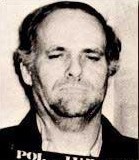 Ervil LeBaron
Murderer · USA · 1972
Ervil Morrell LeBaron (1925 to August 16, 1981) was the leader of a polygamous…
35 victims
Ervil LeBaron
Murderer · USA · 1972
Ervil Morrell LeBaron (1925 to August 16, 1981) was the leader of a polygamous…
35 victims
 Marvin Gray
Murderer · USA · 1975
Marvin Gray was convicted killer who claimed responsibility for 23 slayings and…
23 victims
Marvin Gray
Murderer · USA · 1975
Marvin Gray was convicted killer who claimed responsibility for 23 slayings and…
23 victims
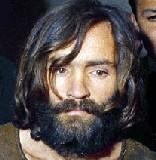 Charles Manson
Murderer · USA · 1969
Charles Milles Manson (born November 12, 1934) was an American criminal and mus…
9 victims
Charles Manson
Murderer · USA · 1969
Charles Milles Manson (born November 12, 1934) was an American criminal and mus…
9 victims
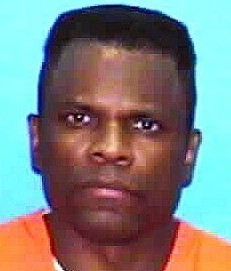 John Errol Ferguson
Murderer · USA · 1977
John Errol Ferguson was sentenced to death and was executed by lethal injection…
8 victims
John Errol Ferguson
Murderer · USA · 1977
John Errol Ferguson was sentenced to death and was executed by lethal injection…
8 victims
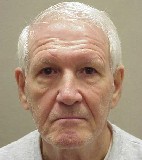 Robert Reldan
Murderer · USA · 1974
Name: Robert Reldan Robert Reldan was sentenced to life in prison on two counts…
8 victims
Robert Reldan
Murderer · USA · 1974
Name: Robert Reldan Robert Reldan was sentenced to life in prison on two counts…
8 victims
 Lakhvir Singh
Murderer · United Kingdom · 2009
Defendant: Lakhvir Singh Known alias/nickname: "The Curry Killer" Method used:…
1 victim
Lakhvir Singh
Murderer · United Kingdom · 2009
Defendant: Lakhvir Singh Known alias/nickname: "The Curry Killer" Method used:…
1 victim
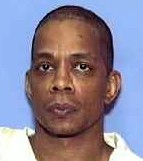 Anthony Bartee
Murderer · USA · 1996
Anthony Bartee (TDCJ Number: 999282) Bartee was born on 08/57. He was received…
1 victim
Anthony Bartee
Murderer · USA · 1996
Anthony Bartee (TDCJ Number: 999282) Bartee was born on 08/57. He was received…
1 victim
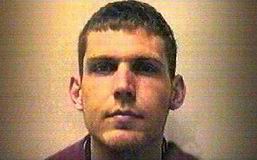 Andrew Aston
Murderer · United Kingdom · 2001
Andrew Aston was born 22 November 1972 in Birmingham, England. He attacked elde…
2 victims
Andrew Aston
Murderer · United Kingdom · 2001
Andrew Aston was born 22 November 1972 in Birmingham, England. He attacked elde…
2 victims
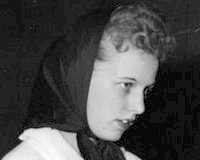 Penny Bjorkland
Murderer · USA · 1959
Rosemarie Diane “Penny” Bjorkland (1941-?) — defendant; US murderer who killed…
1 victim
Penny Bjorkland
Murderer · USA · 1959
Rosemarie Diane “Penny” Bjorkland (1941-?) — defendant; US murderer who killed…
1 victim
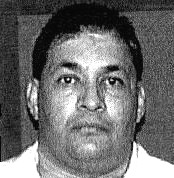 Joe Fedelfido Gonzales
Murderer · USA · 1992
September 18, 1996 — Joe Fedelfido Gonzales was executed by lethal injection in…
1 victim
Joe Fedelfido Gonzales
Murderer · USA · 1992
September 18, 1996 — Joe Fedelfido Gonzales was executed by lethal injection in…
1 victim
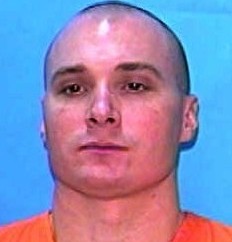 Jack Sliney
Murderer · USA · 1992
Jack Sliney was sentenced to death on February 14, 1994. Sliney was sentenced a…
1 victim
Jack Sliney
Murderer · USA · 1992
Jack Sliney was sentenced to death on February 14, 1994. Sliney was sentenced a…
1 victim
- Gender
- male
- Country
- USA
- Location
- Ulster County, New York, USA
- Date of birth
- October 26, 1944
- Age at first offence
- 24
- Characteristics
- robbery, escape attempt, drugs
- Victim profile
- Deputy Sheriff William Fitzgerald
- Method of murder
- Shooting
- Date(s) of murder
- September 13, 1968
- Years active
- 1968
- Date of arrest
- Same day
- Status
-
Died in custody
Released on March 17, 1989, after 22 years in prison; died of cancer in Albany Medical Hospital on November 19, 2001
Case identification
Gerald “Gary” McGivern (October 26, 1944 – November 19, 2001) was a felon found guilty in 1967 of the armed robbery of a gas station in Pelham Manor, New York, during which two police officers were wounded. Gerald “Gary” McGivern was tried with his partner in the robbery, Charles Culhane, and was sentenced to ten to twenty years in state prison.
Background
McGivern was born in Manhattan, the son of Gertrude Burke and Thomas McGivern, who were both born and raised in Belfast, Northern Ireland. He attended Catholic schools and served in the United States Navy. He lived with his family in the Throgs Neck section of the Bronx.
McGivern’s first serious brush with the law was for marijuana possession in the Bronx.
The offence
McGivern, Culhane and a third convict, Robert Bowerman, were being transported by two deputies, from Auburn State Prison to a court hearing in White Plains. During a rest stop along the New York State Thruway, a deputy's gun was seized in an attempted escape.
During the struggle inside the police car, a deputy and Bowerman were shot to death. Culhane and McGivern contended that Bowerman acted alone in the escape attempt, and that Bowerman killed the deputy.
McGivern and Culhane were indicted for felony murder, with attempted escape in the second degree as the underlying felony.
Investigation
The Ulster County Legislature passed a resolution on June 3, 1971 (Resolution 129) “that the office of the Ulster County Attorney be empowered to conduct a detailed legal investigation of the facts surrounding this crime to determine if there is sufficient grounds for instituting a negligence action against Westchester County, the Westchester County Sheriff and the State of New York for its statutory obligation.”
Ulster County’s legislators expected to be reimbursed for the cost of prosecuting the case, a crime which occurred within Ulster’s borders on the Thruway. Ulster County’s attempt to recoup damages was unsuccessful.
Following the incident, the police did not conduct fingerprint tests on the weapons or other forensic tests which might have strengthened one eyewitness version of the account over the other.
In the investigation following the incident, the juries in the Culhane-McGivern trials considered two versions of eyewitness testimony.
Arrest and transport details
On September 13, 1968, McGivern, Culhane and a third prisoner Robert Bowerman left Auburn prison with two deputies for a court hearing ordered by Westchester County Judge John C. Marbach. Marbach acted on Culhane’s coram nobis application to determine the validity of Culhane’s claim of improper sentencing in the Pelham Manor case. He approved a hearing on the matter.
Westchester County Sheriff Daniel F. McMahon sent two of his deputies—Joseph Singer and William Fitzgerald—to Auburn to pick up the three prisoners and deliver them to court in White Plains. McMahon was the former Public Safety Commissioner of Yonkers and a former chief of the criminal division of the office of the United States Attorney in New York. He had been elected Westchester’s county sheriff the previous January in 1968.
Robert Bowerman, a jailhouse lawyer at Auburn, prepared the coram nobis application for Culhane. Bowerman had a history of escape attempts. Although he claimed in the legal papers to have personal knowledge of Culhane’s case, Bowerman had never been arrested in Westchester County and had no association with the 1967 robbery case.
An assistant for the Westchester County DA’s office, B. Anthony Morosco, formally opposed Bowerman attending the hearing.
The five men left Auburn Prison on the morning of September 13 in a 1967 blue Chevrolet owned by Deputy Fitzgerald. It was not equipped with a security screen between the front and back seats. All five men dressed in plainclothes. The vehicle headed south on the New York State Thruway.
On three occasions before lunch, Robert Bowerman requested that the deputies stop while he urinated along the side of the road. The deputies allowed Bowerman to leave the vehicle.
When the Chevrolet passed through Ulster County on the Thruway in the early afternoon, Robert Bowerman asked the deputies to stop the vehicle again.
Deputy Sheriff William Fitzgerald and the prisoner Robert Bowerman were shot to death inside the car at Milepost 67.4.
Culhane and McGivern maintained it was a solo escape attempt by Bowerman who was responsible for killing Deputy Fitzgerald. The surviving deputy Joseph Singer claimed McGivern shot Fitzgerald and that the escape attempt involved all three prisoners.
Timeline
- December 1966 — Charles Culhane was Culhane’s codefendant in a robbery of a gas station in Pelham, New York.
- 1967 — McGivern was found guilty of the armed robbery of a gas station in Pelham Manor, New York, during which two police officers were wounded.
- 1969 — The first trial ended in a hung jury.
- 1970 — A second trial resulted in convictions and death sentences.
- September 13, 1968 — McGivern, Culhane and Robert Bowerman left Auburn prison with two deputies for a court hearing ordered by Westchester County Judge John C. Marbach; Deputy Sheriff William Fitzgerald and prisoner Robert Bowerman were shot to death inside the car at Milepost 67.4.
- June 3, 1971 — The Ulster County Legislature passed Resolution 129 for a detailed legal investigation.
- October 23, 1973 — The New York State Court of Appeals unanimously overturned the convictions and death sentences.
- March 1975 — The third trial ended in convictions and sentences of 25 years to life.
- 1979 — McGivern took and passed two polygraph tests regarding his involvement in the crime.
- 1983 — Mario Cuomo was elected governor of New York State.
- December 31, 1985 — Mario Cuomo granted clemency to McGivern.
- 1988 — The parole board granted McGivern parole three years after clemency.
- March 17, 1989 — McGivern was released after 22 years in prison.
- June 13, 1994 — McGivern was arrested for drug possession, a parole violation, and he was returned to prison.
- November 19, 2001 — McGivern died of cancer in Albany Medical Hospital.
Trial
First trial (Kingston, New York)
The first trial in Kingston, New York in 1969 ended in a hung jury.
“Editorials of the Air” were the trademark of a Kingston radio station managed by Harry Thayer, the son of the former commissioner of corrections of the State of New York, Dr. Walter N. Thayer Jr., who served the state from 1931 to 1936. Harry Thayer broadcast controversial editorials on the air during all three Culhane-McGivern trials in Ulster County.
Following the hung jury in 1969, Harry Thayer publicly admonished the jurors on the air for not returning a verdict, calling it an example of “Lace Panty Justice,” a term meaning “soft on crime”.
Second trial (1970)
In the second trial in 1970, a jury found the defendants guilty. Harry Thayer advocated for the death penalty on the air. The defendants were sentenced to death and sent to death row at Green Haven Correctional Facility across the Hudson River from Ulster County, where they remained in the death house for 33 months.
Defense attorneys filed an appeal brief citing negligence in the case investigation, inconsistencies in the testimony of Singer, the prosecution’s main witness, negative pretrial publicity, an unfair jury selection process, and denials of motions for a change of venue.
Overturning on appeal (October 1973)
In October 1973 the New York State Court of Appeals unanimously overturned the convictions and death sentences, saying that four jurors who had shown a bias in favor of conviction should have been excused.
The decision also noted that “Singer’s testimony. . .was inconsistent as to certain particulars” and “... the prosecutor’s evidence --taken in the context of this particular trial-- presented substantial questions of credibility for the jury’s consideration.” (October 23, 1973 decision, 33 N.Y. 2nd at 95 and n.1).
The Court ordered a new trial.
Third trial (March 1975)
The third trial, in March 1975, ended in convictions and sentences of 25 years to life.
The third trial conviction was upheld on appeal. Dissent highlighted the judge’s unfair charge to the jury and the suppression of Robert Bowerman’s prior history of escape attempts.
The Culhane-McGivern Defense Fund was sponsored by the folk singer Pete Seeger, the poet Allen Ginsberg and the political commentator William F. Buckley Jr.
Appeals attempting to overturn the third trial conviction were filed by attorneys Michael Tigar, William Kunstler, Karen Peters, John Mage and John Privitera.
Sentencing
McGivern was sentenced to ten to twenty years in state prison in connection with the 1967 armed robbery of a gas station in Pelham Manor, New York, during which two police officers were wounded.
After the second trial, the defendants were sentenced to death and sent to death row at Green Haven Correctional Facility, where they remained in the death house for 33 months.
After the third trial, McGivern and Culhane were found guilty of felony murder and sentenced to 25 years to life.
Appeals
In October 1973, the New York State Court of Appeals unanimously overturned the convictions and death sentences and ordered a new trial due to juror bias and questions about credibility, including inconsistencies in Singer’s testimony and substantial questions about the prosecutor’s evidence.
The third trial conviction was upheld on appeal, though dissent was noted regarding the judge’s charge and suppression of Bowerman’s prior history of escape attempts.
Clemency and parole
Lieutenant Governor Mario Cuomo formally recommended that New York Governor Hugh Carey commute McGivern’s sentence. The district attorney of Ulster County, Michael Kavanagh, publicly opposed the clemency recommendation throughout its lifetime. Governor Carey declined to act on the recommendation.
Mario Cuomo, a Democrat, was elected governor of New York State in 1983. During his twelve years in office, he granted a total of 33 clemencies.
On December 31, 1985 he granted clemency to McGivern, an act that brought a firestorm of criticism from Republicans at state and national levels as well as from law enforcement personnel.
The parole board granted McGivern parole three years later, and he was released on March 17, 1989, after 22 years in prison.
McGivern took and passed two polygraph tests in 1979 regarding his involvement in the crime. The tests were administered by Charles Jones, a member of the Case Review Committee of the American Polygraph Association and Lincoln Zonn, who had had his own company and polygraph institute for the previous 30 years. Zonn’s clients included the U.S. government and many law enforcement agencies.
A group of religious leaders including the Green Haven prison chaplain presented a petition seeking clemency for McGivern.
McGivern’s and Culhane’s paths diverged: they were sent to different prisons, McGivern to the Green Haven Correctional Facility and Culhane to the Attica Correctional Facility, and they pursued different paths to gaining release.
Aftermath
On June 13, 1994 McGivern was arrested for drug possession, a parole violation, and he was returned to prison.
McGivern died of cancer in Albany Medical Hospital on November 19, 2001.
Other details
McGivern chose to go to trial instead of accepting a plea bargain of five years in the case involving the armed robbery of a gas station in Pelham, New York in December 1966.
Sing Sing prison was McGivern's first destination and then upstate to Auburn Prison.
McGivern left for Auburn Prison where he left for White Plains, New York, Westchester's county seat, on September 13, 1968 to appear as a witness in a court hearing for Culhane.
The jury deliberated considered two versions of eyewitness testimony.
The controversy surrounding the grant of executive clemency included news coverage and controversy.
The sequence of what happened next became the source of considerable dispute over the next three decades in three trials, numerous appeals, the polygraph tests McGivern passed, news coverage and controversy surrounding the grant of executive clemency.
Spotted an error, or have more information about this case?