Michael McGloin
Murderer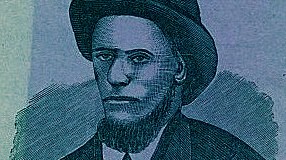 Joseph LaPage
Murderer · USA · 1874
Joseph LaPage was described as a French-Canadian trapper who donned a bearskin…
2 victims
Joseph LaPage
Murderer · USA · 1874
Joseph LaPage was described as a French-Canadian trapper who donned a bearskin…
2 victims
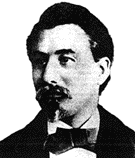 Louis Wagner
Murderer · USA · 1873
Louis Wagner had lived on Smuttynose Island with six Norwegian immigrants: Mare…
2 victims
Louis Wagner
Murderer · USA · 1873
Louis Wagner had lived on Smuttynose Island with six Norwegian immigrants: Mare…
2 victims
 Carlyle Harris
Murderer · USA · 1891
Carlyle Harris was executed by electrocution at Sing Sing Prison on May 7, 1893…
1 victim
Carlyle Harris
Murderer · USA · 1891
Carlyle Harris was executed by electrocution at Sing Sing Prison on May 7, 1893…
1 victim
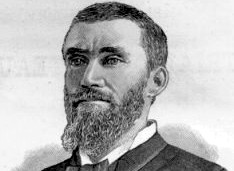 Charles Guiteau
Murderer · USA · 1881
Charles Julius Guiteau (September 8, 1841 – June 30, 1882) was an American lawy…
1 victim
Charles Guiteau
Murderer · USA · 1881
Charles Julius Guiteau (September 8, 1841 – June 30, 1882) was an American lawy…
1 victim
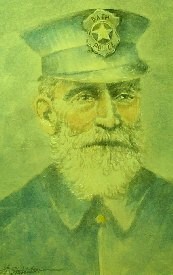 Daniel Wilkinson
Murderer · USA · 1883
Daniel Wilkinson (c. 1845 – November 21, 1885) was the last person to be execut…
1 victim
Daniel Wilkinson
Murderer · USA · 1883
Daniel Wilkinson (c. 1845 – November 21, 1885) was the last person to be execut…
1 victim
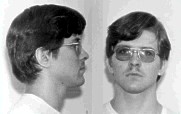 James Dean Clark
Mass murderer · USA · 1977
James Dean Clark was a ranch hand and later a death-row prisoner in Arizona. He…
4 victims
James Dean Clark
Mass murderer · USA · 1977
James Dean Clark was a ranch hand and later a death-row prisoner in Arizona. He…
4 victims
 Frances Kidder
Murderer · United Kingdom · 1867
Frances Kidder (c. 1843 – 2 April 1868) was executed by hanging in front of Mai…
1 victim
Frances Kidder
Murderer · United Kingdom · 1867
Frances Kidder (c. 1843 – 2 April 1868) was executed by hanging in front of Mai…
1 victim
 Daniel Anthony Basile
Murderer · USA · 1992
Daniel Anthony Basile was convicted of first degree murder and sentenced to dea…
1 victim
Daniel Anthony Basile
Murderer · USA · 1992
Daniel Anthony Basile was convicted of first degree murder and sentenced to dea…
1 victim
 Penny Boudreau
Murderer · Canada · 2008
Twelve-year-old Karissa Boudreau was reported missing from Bridgewater on Janua…
1 victim
Penny Boudreau
Murderer · Canada · 2008
Twelve-year-old Karissa Boudreau was reported missing from Bridgewater on Janua…
1 victim
 Angela Simpson
Murderer · USA · 2009
Angela Simpson — defendant · Terry Neely — victim; 46 years old · Edward McFarl…
1 victim
Angela Simpson
Murderer · USA · 2009
Angela Simpson — defendant · Terry Neely — victim; 46 years old · Edward McFarl…
1 victim
- Gender
- male
- Country
- USA
- Location
- New York City, New York, USA
- Date of birth
- 1862
- Age at first offence
- 19
- Characteristics
- gang, police officer, torture
- Victim profile
- Louis Hanier (tavern owner)
- Method of murder
- Shooting (38. caliber pistol)
- Date(s) of murder
- December 29, 1881
- Years active
- 1881
- Date of arrest
- —
- Status
-
Executed
Executed by hanging in The Tombs on March 8, 1883
Case details
Michael McGloin (1862 – March 8, 1883) was a 19th century criminal and leader of the Whyos, a New York City street gang. He was an early member of the Whyos and rose to become leader of the gang by the late 1870s.
Background
McGloin continued the tactics of his predecessors “Dandy” Jim Dolan, Piker Ryan and others of the previous decade. During the last years of the 1870s, McGloin terrorized New York’s Westside, particularly Hell’s Kitchen.
The offence
On the night of December 29, 1881, four members of the Whyos (presumably including McGloin) entered a local Hell’s Kitchen tavern owned by Louis Hanier.
As one of the men asked to change a $10 bill, another man suddenly became ill and tried to get behind the bar. The men were asked to leave, and there was no further incident until around midnight when Hanier closed the bar and went upstairs to bed.
Sometime around 2:00 am, Hanier’s wife reported hearing noises coming from downstairs.
When Hanier attempted to investigate, he was shot and killed by an unidentified gunman.
Investigation
The investigation was led by NYPD police superintendent Inspector Thomas F. Byrnes.
Police were able to trace the murder weapon, a 38. caliber pistol, to a pawn shop on Ninth Avenue, which had previously been owned by McGloin.
Attempts to gain further evidence against McGloin, including assigning a woman to live with the 19 year old gang leader in the hopes of gaining a confession, proved fruitless. Further attempts proved inconclusive.
Arrest
Byrnes, accompanied by Captain Williams and six other officers, raided the Whyos headquarters.
On January 31, 1882, gang members Thomas Moran, Frederick Banfield, and Robert Morrisey were arrested.
Trial
McGloin, convinced that the other members would testify against him, admitted to breaking into the tavern and killing Hanier. He claimed self-defense, believing Hanier was armed.
On March 1, McGloin was tried alongside Moran and Morrisey.
After eleven minutes of discussion among the jury, McGloin was convicted by the General Sessions of first degree murder.
McGloin was sentenced to death.
Moran and Morrisey received eight years imprisonment for burglary.
Appeals and stay
Despite being granted a stay of execution after several pleas for appeal, McGloin was hanged in The Tombs on March 8, 1883.
Outcome
McGloin was executed by hanging in The Tombs on March 8, 1883.
Other details
Names mentioned:
- Michael McGloin (1862 – March 8, 1883), leader of the Whyos
- “Dandy” Jim Dolan, predecessor
- Piker Ryan, predecessor
- Thomas F. Byrnes, NYPD police superintendent Inspector who led the investigation
- Louis Hanier, tavern owner; shot and killed
- Hanier’s wife, who reported hearing noises coming from downstairs
- Thomas Moran, arrested January 31, 1882; convicted trial co-defendant
- Frederick Banfield, arrested January 31, 1882
- Robert Morrisey, arrested January 31, 1882; convicted trial co-defendant
- Captain Williams, who accompanied Byrnes during the raid
- McGloin, described as 19 year old gang leader in the investigation attempts
Weapon:
- a 38. caliber pistol
Places mentioned:
- Hell’s Kitchen tavern owned by Louis Hanier
- New York’s Westside
- Hell’s Kitchen
- Ninth Avenue (pawn shop)
- The Tombs
Reference works mentioned:
- Asbury, Herbert. The Gangs of New York. New York: Alfred A. Knoff, 1926.
- Sifakis, Carl. The Encyclopedia of American Crime. New York: Facts On File Inc., 1982.
- Barton, George. True Exploits of Famous Detectives (True Stories of Celebrated Crimes). New York: McKinley Stone & MacKensie, 1909.
- Carey, Arthur A. Memoirs of a Murder Man. Garden City, New York: Doubleday, Doran and Co., 1930.
Spotted an error, or have more information about this case?