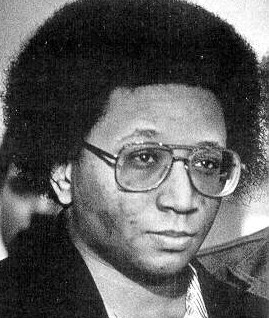
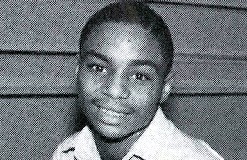
Wayne Williams
Serial killer? Tommy Lynn Sells
Serial killer? · USA · 1980
Tommy Lynn Sells was a white male. He was 35 at the time of the offence and 36…
13 victims
Tommy Lynn Sells
Serial killer? · USA · 1980
Tommy Lynn Sells was a white male. He was 35 at the time of the offence and 36…
13 victims
 Jerry Frank Townsend
Serial killer? · USA · 1973
Jerry Frank Townsend was sentenced to seven concurrent life sentences in 1980.…
6 victims
Jerry Frank Townsend
Serial killer? · USA · 1973
Jerry Frank Townsend was sentenced to seven concurrent life sentences in 1980.…
6 victims
 Major Morris
Serial killer? · USA · 1972
Major Morris was a male with the motive listed as sex. He was described as a “l…
6 victims
Major Morris
Serial killer? · USA · 1972
Major Morris was a male with the motive listed as sex. He was described as a “l…
6 victims
 Warren Leslie Forrest
Serial killer? · USA · 1974
Warren Leslie Forrest was described as 25 years old, 5’9” tall, 155 lbs, with l…
6 victims
Warren Leslie Forrest
Serial killer? · USA · 1974
Warren Leslie Forrest was described as 25 years old, 5’9” tall, 155 lbs, with l…
6 victims
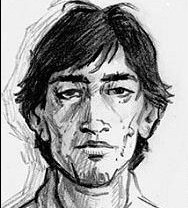 Erno Soto
Serial killer? · USA · 1972
Erno Soto was found incompetent for trial and was committed to a mental institu…
4 victims
Erno Soto
Serial killer? · USA · 1972
Erno Soto was found incompetent for trial and was committed to a mental institu…
4 victims
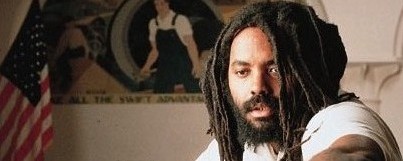 Mumia Abu-Jamal
Murderer · USA · 1981
Mumia Abu-Jamal (also known as Wesley Cook) was a journalist and political acti…
1 victim
Mumia Abu-Jamal
Murderer · USA · 1981
Mumia Abu-Jamal (also known as Wesley Cook) was a journalist and political acti…
1 victim
 Romina Tejerina
Murderer · Argentina · 2003
Romina Tejerina was born in 1985 in San Pedro, Jujuy Province. She was sentence…
1 victim
Romina Tejerina
Murderer · Argentina · 2003
Romina Tejerina was born in 1985 in San Pedro, Jujuy Province. She was sentence…
1 victim
 Shelley Casterline
Murderer · USA · 2013
Shelley Casterline was 41 when she pleaded guilty to second-degree murder. Baro…
1 victim
Shelley Casterline
Murderer · USA · 2013
Shelley Casterline was 41 when she pleaded guilty to second-degree murder. Baro…
1 victim
 Mark Duane Edwards
Murderer · USA · 2002
Mark Duane Edwards Jr., 24, was convicted for killing Larry A. Bobish, Sr., 50,…
3 victims
Mark Duane Edwards
Murderer · USA · 2002
Mark Duane Edwards Jr., 24, was convicted for killing Larry A. Bobish, Sr., 50,…
3 victims
 William Dwane Bell
Murderer · New Zealand · 2001
William Dwane Bell (born 1978) was a convicted murderer in New Zealand. Bell wa…
3 victims
William Dwane Bell
Murderer · New Zealand · 2001
William Dwane Bell (born 1978) was a convicted murderer in New Zealand. Bell wa…
3 victims
- Gender
- male
- Country
- USA
- Location
- Atlanta, Fulton County, Georgia, USA
- Date of birth
- May 27, 1958
- Age at first offence
- 21
- Characteristics
- child killer
- Victim profile
- Nathaniel Cater, 28 / Jimmy Ray Payne, 21 / Police attributed these deaths to Williams (closed cases): Alfred Evans, 13 / Yusef Bell, 9 / Eric Middlebrooks, 14 / Christopher Richardson, 12 / Aaron Wyche, 10 / Anthony Carter, 9 / Earl Terrell, 11 / Clifford Jones, 13 / Charles Stephens, 12 / Aaron Jackson, 9 / Patrick Rogers, 16 / Lubie Geter, 14 / Terry Pue, 15 / Patrick Baltazar, 11 / Curtis Walker, 13 / Jo Jo Bell, 15 / Timothy Hill, 13 / Eddie Duncan, 21 / Larry Rogers, 20 / Michael McIntosh, 23 / John Porter, 28 / William Barrett, 17
- Method of murder
- Strangulation - Suffocation
- Date(s) of murder
- 1979 - 1981
- Years active
- 1979–1981
- Date of arrest
- June 21, 1981
- Status
-
Life imprisonment
Sentenced to two consecutive terms of life imprisonment on February 27, 1982
Case record: Wayne Williams
Status
Wayne Bertram Williams was sentenced to two consecutive terms of life imprisonment on February 27, 1982.
Background
Wayne Bertram Williams was born May 27, 1958, in Atlanta. He was raised in Atlanta’s Dixie Hills neighborhood, from which many of the Atlanta Child Murders victims later disappeared.
Williams ran an amateur radio station from his parents’ house and was well-known in the area for scouting local musicians, particularly teenagers. He had a reputation as a liar who invented impressive stories about himself. Rumours said he was gay, but this was never proven in the account.
He was identified as the key suspect in the Atlanta Child Murders, which occurred between 1979 and 1981. The murders became known locally as the “missing and murdered children case.” Over the period covered, a minimum of twenty-eight African-American children, adolescents and adults were killed.
He had one encounter with the law prior to becoming a murder suspect: in 1976, he was arrested (but never convicted) for impersonating a police officer.
Williams was an aspiring DJ. In his late teens he worked for a radio station and appeared in [Jet] magazine alongside his employer Benjamin Hooks. Williams attended Georgia State University for one year before dropping out, and he graduated from Fredrick Douglas High School with an honors degree.
Williams was described as a failed music promoter and freelance photographer. He lived with his parents and spent money supporting his entrepreneurial ventures. The account described him as a pathological liar and a person who experimented with electronics and marketed his station, promoted local musical talent, and recorded the works of boys he believed had promise.
The account also stated that Williams had an “uncanny ability to impersonate a police officer,” referencing his 1976 arrest for impersonation and unauthorized use of a vehicle, where the vehicle allegedly had red lights beneath the grille and flashing blue dashboard lights.
The offence
Atlanta Child Murders (missing and murdered children case)
The series was described as taking place from the summer of 1979 until the spring of 1981 in Atlanta, Georgia, United States. The victims described in this account were mostly African-American children, adolescents and adults. Most victims were described as asphyxiated.
The account listed early disappearances and deaths in the series:
- In the summer of 1979, Edward Hope Smith (14) and Alfred Evans (14) disappeared four days apart; both bodies were found on July 28. Their deaths were described as the beginning of the series.
- Milton Harvey (14) disappeared on September 4, 1979 while traveling to the bank to pay a credit card bill for his mother; his body was later recovered.
- On October 21, 1979, Yusuf Bell (9) disappeared after going to a store to buy snuff for a neighbor; a witness said she saw Yusuf getting into a blue car before he disappeared. His body was found on November 8, 1979 in the abandoned E.P. Johnson elementary school, and the account stated he had been strangled.
- Angel Lenair (12) disappeared March 4, 1980 and was found 6 days later; the account stated she was strangled, tied to a tree, and possibly sexually assaulted.
- Jeffery Mathis (10) disappeared on March 11, 1980 while on an errand for his mother.
- Eric Middlebrooks (14) disappeared May 18, 1980; his body was found the next day.
- Chris Richardson (12) went missing on June 9, 1980 on his way to a local pool.
- On June 22 and June 23, Latonya Wilson (7) and Aaron Wyche (10) went missing.
- The account described additional killings in July 1980 involving Anthony Carter (9) and Earl Terell (11).
- Between August and November 1980, five more killings took place, described as part of a continuing wave of disappearances and murders.
- The account stated there were no known victims in December.
- In January 1981, Lubie Geter (14) disappeared and his body was found on February 5.
- Terry Pue (15) also went missing in January, and an anonymous caller told police where to find his body.
- In February, two murders occurred, described as believed linked to the others.
- In March, four Atlanta-linked murders occurred, including Eddie Duncan, the first adult victim, described as being added to the list.
- In April, Larry Rogers (20), adult ex-convict John Porter, and Jimmy Ray Payne (age 21 or 22 depending on variant in the account) were described as being murdered.
- After William Barrett went missing on May 16, 1981, his body was found close to his home.
- The last victim added to the list was Nathaniel Cater (27).
Victim list provided in the account
The account provided “Known child victims” with ages and dates of disappearance:
- Edward Smith — 14 — July 21, 1979
- Alfred Evans — 13 — July 25, 1979
- Milton Harvey — 14 — September 4, 1979
- Yusef Bell — 9 — October 21, 1979
- Angel Lenair — 12 — March 4, 1980
- Jeffery Mathis — 10 — March 11, 1980
- Eric Middlebrooks — 14 — May 18, 1980
- Chris Richardson — 12 — June 9, 1980
- Latonya Wilson — 7 — June 22, 1980
- Aaron Wyche — 10 — June 23, 1980
- Anthony Carter — 9 — July 6, 1980
- Earl Terell — 11 — July 30, 1980
- Clifford Jones — 13 — August 20, 1980
- Darren Glass — 10 — September 14, 1980
- Charles Stephens — 12 — October 9, 1980
- Aaron Jackson — 9 — November 1, 1980
- Patrick Rogers — 16 — November 10, 1980
- Lubie Geter — 14 — January 3, 1981
- Terry Pue — 15 — January 22, 1981
- Patrick Baltazar — 11 — February 6, 1981
- Curtis Walker — 15 — February 19, 1981
- Joseph Bell — 15 — March 2, 1981
- Timothy Hill — 13 — March 13, 1981
Investigation
On November 5, 1980, United States Attorney General Benjamin R. Civiletti directed the FBI to participate in the investigation of missing and murdered children in the Atlanta, Georgia, area. The FBI conducted an independent investigation and collaborated with a local law enforcement task force for additional manpower, guidance and technical assistance.
Investigation milestones described in the account included:
- Williams became a suspect in May 1981.
- His car was spotted above a loud splash heard in the river by a stake-out team.
- Williams was stopped, questioned, and claimed he was going out of town to audition a young singer.
- Police reported the alibi fell apart after they found that the address and phone number he gave did not exist.
- Three days later, the nude body of 27-year-old Nathaniel Cater turned up in the river.
- The medical examiner ruled Cater had died of “probable” asphyxia in one version of the account, and in a separate description “probable asphyxia” was also documented; the account stated an authoritative statement about strangling was not made.
- Police theorized Williams had killed Cater and thrown him off the bridge.
- Suspicion increased after Williams failed a polygraph test and after hairs and fibers on one of the victims’ bodies were found consistent with those from Williams’ home, car, and dog.
- People working in Williams’ studio told police they had seen him with scratches on his face and arms around the time of the murders, which police thought could have been inflicted by victims during a struggle.
- Williams held a press conference outside his parents’ home, proclaiming his innocence.
- In a stated timeline, an officer’s splash hearing on May 22, 1981 at the James Jackson Parkway/south Cobb Drive bridge led to a stop of a station wagon driven by Williams.
- Two days later, the account stated the naked body of Nathaniel Cater (27) was found floating downriver just a few miles from the bridge where Williams had stopped his car.
The account also described an FBI-private profile approach, stating the killer would dump the next victim into a body of water to remove evidence, and that some victims had already been put in the river.
A named investigator, Chet Dettlinger, created a map of victims’ locations and described geographic parameters connecting the victims to Memorial Drive and 11 major streets.
The account included additional allegations and investigative developments, including:
- Claims that bodies and evidence were misidentified and crime scenes destroyed, and that authorities kept or changed information in ways that caused conflicts.
- Community organisations and activities aimed at preventing further murders, including the Committee to Stop Children’s Murders (STOP), formed by mothers Camille Bell, Willie Mae Mathis and Venus Taylor and Reverend Earl Carroll.
Arrest
Williams was arrested on June 21, 1981 for the murders of Cater and 29-year-old Jimmy Payne in one portion of the account, and for the murders of Nathaniel Cater and Jimmy Ray Payne in another.
The account described the specific stop as happening on May 22, 1981 after officers heard a splash and monitored a white 1970 Chevrolet station wagon. It described that Williams was 23 years old at the time of the stop, and that the vehicle belonged to his parents. The account stated Williams said he was on his way to audition a woman named Cheryl Johnson as a singer, and that police did not find a record of Cheryl Johnson or Williams’ appointment.
After the arrest, a grand jury indicted Williams for first-degree murder in the deaths of Nathaniel Cater and Jimmy Ray Payne. The trial date was set for early 1982.
Trial
Jury selection and trial start
Jury selection began on December 28, 1981 and lasted six days.
The trial officially began on January 6, 1982, with Judge Clarence Cooper presiding.
The account described a jury composed of nine women and three men, with eight African-Americans and four Caucasians, and that the jurors were sequestered.
Charges and evidence at trial
The prosecution’s case relied on circumstantial evidence:
- The account stated that prosecutors matched 19 different sources of fibers from Williams’ environment (including his bedspread, bathroom, gloves, clothes, carpets, dog and an unusual tri-lobal carpet fiber) to victims.
- It described eyewitness testimony placing Williams with victims, blood stains from victims matching blood in Williams’ car, and testimony that he was a pedophile attracted to young black boys.
- Williams’ character and credibility were addressed through evidence and testimony about his behaviour and alleged statements.
The account described controversy around admissibility and use of additional homicides beyond the two for which Williams was charged, including testimony linking Williams to other murders “other than the two he is charged with,” and a ruling by Judge Clarence Cooper on evidence linking him to murders other than the two charged.
Williams took the stand and the account stated he became angry and combative during a single instance, alienating the jury. It stated that “Williams never recovered from the single outburst.”
The account described additional contested points, including:
- Prosecution reliance on fiber analysis between victims and “pattern-murder” cases.
- Claims that jurors were not informed of some matters and that there were gaps in prosecution evidence.
- Descriptions of debates about whether fibers were rare, and about transfer mechanisms.
- Claims that no hair or fibers from victims were found in Williams’ house or car.
- Claims that bloodstains found in the station wagon were said to match blood of victims William Barrett and John Porter, with controversy about dating of blood droplets.
The account also described witness testimony and evidence concerning alibis, including that Williams’ claimed locations around the time of the bridge incident were checked and found inconsistent, and that officials said they could find no Cheryl Johnson or Spanish Trace Apartments.
Timeline of trial-related dates (as provided)
The account included these trial date milestones:
- December 28, 1981 — Trial began for Wayne Williams.
- January 4, 1982 — Jury selection completed.
- January 6, 1982 — District Attorney Lewis Slaton began opening arguments.
- January 8, 1982 — First witnesses were called.
- January 19, 1982 — Controversial fiber evidence introduced by Lewis Slaton in the Wayne Williams trial was ruled admissible by Judge Clarence Cooper.
- January 25, 1982 — Judge Clarence Cooper allowed testimony linking Wayne Williams to murders other than the two he was charged with.
- February 4, 1982 — Fulton County District Attorney Lewis Slaton rested in the case.
- February 24, 1982 — Following almost two months of trial, the defense rested.
- February 27, 1982 — Wayne Williams found guilty in the Atlanta child murders.
Sentencing
On February 27, 1982, the jury found Wayne Bertram Williams guilty of two murders: the account states these were the murders of Nathaniel Cater and Jimmy Ray Payne.
He was then sentenced to two consecutive terms of life imprisonment in the Georgia state prison at Reidsville.
Appeals
The account described that Williams’ conviction has been disputed and that appeals were filed.
It stated that courts rejected all appeals filed on behalf of Wayne Williams. It also described that a draft opinion by Justice Richard Bell in the Georgia Supreme Court was voted down and rewritten, and that a majority opinion to uphold the conviction came out under Bell’s name in December 1983.
The account provided language from Benjamin Weiser, describing that a divided Georgia Supreme Court ruled a judge wrongly dismissed two claims raised by Wayne Williams in a bid for a new trial in slayings of two Atlanta blacks, and that the ruling sent the case back to Judge Hal Craig to rule on Williams’ claims including prosecutorial misconduct and ineffective representation. The account also described that Justice George Smith, another dissenter, did not change his vote.
The account further described litigation involving a habeas corpus petition in federal court:
- A federal judge, U.S. District Judge Beverly Martin of Atlanta, rejected Williams’ appeal in a 251-page order dated February 11, 2006, turning away all claims in his petition for habeas corpus.
Outcome
Wayne Bertram Williams was found guilty on February 27, 1982 on two counts of murder in the Fulton County Superior Court in Atlanta, Georgia, and he received two consecutive life terms.
The account also described that after conviction, Atlanta police declared an additional 23 of 30 “List” cases solved. It further stated that authorities in Fulton County considered their related murder cases closed with Williams’ arrest and trial, while remaining cases under DeKalb County jurisdiction were treated as reopened by the DeKalb County Police Chief in 2005.
Aftermath
Reopening and later investigative developments
The account described reopening steps:
- On May 6, 2005, DeKalb County Police Chief Louis Graham ordered the reopening of murder cases of four boys killed between February and May 1981 that were attributed to Williams.
- The account also stated DeKalb County finally closed its case after finding no new evidence.
- On August 6, 2005, the account stated it was revealed that Charles T. Sanders, a white supremacist affiliated with the Ku Klux Klan, once praised the crimes in secretly recorded conversations.
- The account stated that Sanders told an informant for the Georgia Bureau of Investigation that the killer had “wiped out a thousand future generations of niggers.”
- The account stated police dropped the probe after seven weeks when Sanders and two brothers passed lie detector tests.
- It stated the case was closed again on July 21, 2006.
- It stated that the DeKalb County Police dropped its reinvestigation on June 21, 2006.
- It quoted Acting Chief Nick Marinelli after Graham’s replacement, stating: “We dredged up what we had, and nothing has panned out, so until something does or additional evidence comes our way, or there's forensic feedback from existing evidence, we will continue to pursue the [other] cold cases that are [with]in our reach.”
DNA testing developments
The account described further post-conviction legal activity involving DNA testing:
- On January 29, 2007, attorneys for the State of Georgia agreed to allow DNA testing of the dog hair used to help convict Williams.
- Williams’ lawyer, Jack Martin, asked a Fulton County Superior Court judge to allow DNA tests on canine and human hair and blood, stating the results might help Williams win a new trial.
- On June 26, 2007, the DNA test results were published, and they failed to exonerate Williams.
- The account stated defense lawyers called the test results inconclusive, and it quoted Dr. Elizabeth Wictum of the UC Davis laboratory, saying: “fairly significant,” and that they “don’t conclusively point to Williams' dog as the source of the hair”, because the lab could only test for mitochondrial DNA, which cannot be shown to be unique to one dog.
Additional prosecution-adjacent points mentioned in the account
The account described:
- Atlanta officials criticized film adaptations for distorting facts and said the films contained fictional elements despite claims of being based on fact.
- Musicians performed concerts to honor victims and provide benefits, and it listed performers including Frank Sinatra and Sammy Davis Jr.
- The Jacksons performed on July 22, 1981 at the Atlanta Omni Coliseum during their Triumph Tour raising $100,000 for the Atlanta Children’s Foundation in response to kidnappings and murders. It stated that Wayne Williams’s father, a media photographer in Atlanta at the time, could be seen on stage with Frank Sinatra.
Timeline
- July 21, 1979 — Edward Hope Smith (14) was last seen.
- July 25, 1979 — Alfred Evans (13) was last seen.
- July 28, 1979 — Police found the remains of Edward Hope Smith and Alfred Evans.
- September 4, 1979 — Milton Harvey (14) disappeared while on an errand for his mother; his bike was found a week later.
- October 21, 1979 — Yusef Bell (9) disappeared.
- November 8, 1979 — Yusef Bell’s body was found.
- March 4, 1980 — Angel Lenair (12) disappeared.
- March 11, 1980 — Jeffrey Mathis (10) disappeared.
- March 13, 1981 — Timothy Hill (13) disappeared.
- May 18, 1980 — Eric Middlebrooks (14) vanished; his body was found the next day.
- June 9, 1980 — Chris Richardson (12) was reported missing.
- June 22, 1980 — Latonya Wilson (7) was abducted.
- June 23, 1980 — Aaron Wyche (10) was added to the list.
- July 6, 1980 — Anthony Carter (9) vanished while playing near his home.
- July 30, 1980 — Earl Terrell (11) disappeared.
- August 20, 1980 — Clifford Jones (13) was strangled.
- September 14, 1980 — Darren Glass (10) disappeared.
- October 9, 1980 — Charles Stephens (12) was reported missing.
- January 3, 1981 — Lubie Geter (14) was strangled.
- January 22, 1981 — Terry Pue (15) was last reported missing.
- February 6, 1981 — Patrick Baltazar (11) disappeared.
- February 19, 1981 — Curtis Walker (15) disappeared.
- March 2, 1981 — Joseph Bell (15) disappeared.
- May 22, 1981 — Police heard a splash at the James Jackson Parkway/south Cobb Drive bridge and stopped a station wagon driven by Wayne Williams.
- May 24, 1981 — Nathaniel Cater’s body (27) was discovered downstream.
- June 21, 1981 — Wayne Williams was arrested.
- July 22, 1981 — The Jacksons performed at the Atlanta Omni Coliseum, raising $100,000 for the Atlanta Children’s Foundation.
- December 28, 1981 — Trial began for Wayne Williams; jury selection timeline also started earlier.
- January 6, 1982 — Trial began with Judge Clarence Cooper presiding; opening arguments were later described as beginning in the first week of January.
- February 27, 1982 — Wayne Williams was found guilty and sentenced to two consecutive life terms.
- May 6, 2005 — DeKalb County Police Chief Louis Graham ordered the reopening of murder cases of four boys killed between February and May 1981.
- August 6, 2005 — Charles T. Sanders’ secretly recorded praise of the crimes was revealed; the account includes Sanders’ quoted statement: “wiped out a thousand future generations of niggers.”
- July 21, 2006 — The case was again closed.
- June 21, 2006 — The DeKalb County Police dropped its reinvestigation.
- February 11, 2006 — A federal judge rejected Williams’ habeas corpus appeal.
- January 29, 2007 — Attorneys for the State of Georgia agreed to allow DNA testing of dog hair.
- June 26, 2007 — DNA test results were published and failed to exonerate Williams.
Other details
People mentioned
The account named the following individuals in relation to the case and events:
- Wayne Bertram Williams
- Benjamin R. Civiletti (United States Attorney General)
- Judge Clarence Cooper (presiding at trial)
- District Attorney Lewis Slaton
- Fulton County Superior Court
- Georgia state prison at Reidsville
- DeKalb County Police Chief Louis Graham
- Acting Chief Nick Marinelli
- Justice Richard Bell (Georgia Supreme Court)
- Judge Hal Craig
- Jack Mallard (prosecutor, named in the appeal coverage)
- Beverly Martin (U.S. District Judge)
- Michael Lee Jackson (lawyer, named in appeal coverage)
- Jack Martin (Williams’ lawyer; requested DNA testing)
- Dr. Elizabeth Wictum (UC Davis laboratory director; quoted about mitochondrial DNA)
- John E. Douglas (former FBI profiler)
- Chet Dettlinger (investigator and creator of a map)
- Jeffery Mathis, Nathaniel Cater, Jimmy Ray Payne, and other victims listed in the account
- Charles T. Sanders (white supremacist affiliated with the Ku Klux Klan)
- FBI Agent Greg Gilliland
- Officers Freddie Jacobs and Bob Campbell (named in the bridge staking-out description)
- Carl Holden (named in the account as a veteran officer on watch at the liquor store)
- Other figures in the account included:
- John E. Douglas
- Bernard Headley
- Ray Innis / Roy Innis (Congress of Racial Equality leader)
- Maynard Jackson (Atlanta mayor)
- George Busbee (Georgia Governor)
Quotation preserved verbatim from the account
Charles T. Sanders told an informant for the Georgia Bureau of Investigation in the 1981 recording that the killer had "wiped out a thousand future generations of niggers."
Nick Marinelli was quoted as saying: “We dredged up what we had, and nothing has panned out, so until something does or additional evidence comes our way, or there's forensic feedback from existing evidence, we will continue to pursue the [other] cold cases that are [with]in our reach.”
Dr. Elizabeth Wictum told The Associated Press that while the results were “fairly significant,” they "don't conclusively point to Williams' dog as the source of the hair", because the lab could test only for mitochondrial DNA.
Media and documentation in the account
The account described:
- ABC News 20/20 coverage in 1980 involving Stanhope Gould and Bill Lichtenstein, and a producer Steve Tello and correspondent Bob Sirkin.
- A film titled The Atlanta Child Murders released in 1985 starring Calvin Lewis, Morgan Freeman, James Earl Jones, Rip Torn, Jason Robards, Martin Sheen, and Bill Paxton.
- Showtime released a drama film titled Who Killed Atlanta's Children?
- On June 10, 2010, CNN broadcast a documentary The Atlanta Child Murders with real interviews by Soledad O’Brien, inviting viewers to vote on whether Williams was "guilty," "innocent" — or the case was "not proven," with the account giving polling results: 68.6 percent "guilty", 4.3 percent "innocent," and 27.1 percent "not proven."
Spotted an error, or have more information about this case?