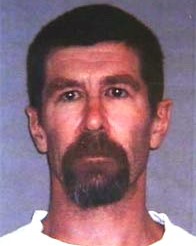
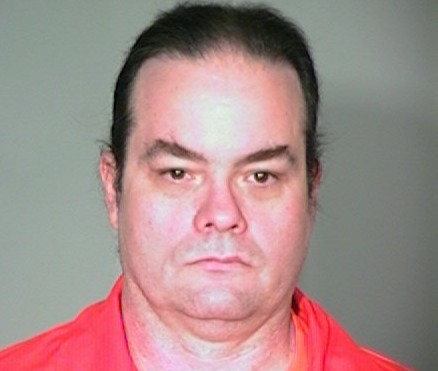
Richard Lee McNair
Murderer Brian Kevin Rosenfeld
Murderer · USA · 1985
Brian Kevin Rosenfeld Brian Kevin Rosenfeld was sentenced to three concurrent l…
23 victims
Brian Kevin Rosenfeld
Murderer · USA · 1985
Brian Kevin Rosenfeld Brian Kevin Rosenfeld was sentenced to three concurrent l…
23 victims
 Yahweh ben Yahweh
Murderer · USA · 1980
Yahweh ben Yahweh was born and legally named Hulon Mitchell Jr. (October 27, 19…
23 victims
Yahweh ben Yahweh
Murderer · USA · 1980
Yahweh ben Yahweh was born and legally named Hulon Mitchell Jr. (October 27, 19…
23 victims
 Russell Ellwood
Murderer · USA · 1991
Russell Ellwood was a former taxi driver. Authorities suspected him of killing…
20 victims
Russell Ellwood
Murderer · USA · 1991
Russell Ellwood was a former taxi driver. Authorities suspected him of killing…
20 victims
 Lamont Reese
Murderer · USA · 1999
Lamont D. “Mont” Reese was a 28-year-old black male. He was scheduled to be exe…
3 victims
Lamont Reese
Murderer · USA · 1999
Lamont D. “Mont” Reese was a 28-year-old black male. He was scheduled to be exe…
3 victims
 Dewayne Michael Carey
Murderer · USA · 1995
Defendant: Dewayne Michael Carey, who was sentenced to death on December 16, 19…
1 victim
Dewayne Michael Carey
Murderer · USA · 1995
Defendant: Dewayne Michael Carey, who was sentenced to death on December 16, 19…
1 victim
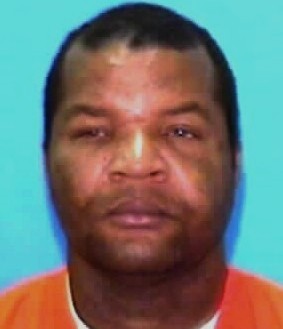 Harry Butler
Murderer · 1997
03/13/97 — Date of offense: Harry Butler was convicted and sentenced to death f…
1 victim
Harry Butler
Murderer · 1997
03/13/97 — Date of offense: Harry Butler was convicted and sentenced to death f…
1 victim
 Ivo Colon
Murderer · USA · 1998
Ivo Colon was convicted of capital felony murder and murder in connection with…
1 victim
Ivo Colon
Murderer · USA · 1998
Ivo Colon was convicted of capital felony murder and murder in connection with…
1 victim
 Pamela Moss
Murderer · USA · 1996
Pamela Moss was convicted in connection with the March 13, 2012 murder of Doug…
2 victims
Pamela Moss
Murderer · USA · 1996
Pamela Moss was convicted in connection with the March 13, 2012 murder of Doug…
2 victims
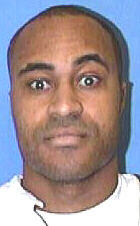 Demarco McCullum
Murderer · USA · 1994
Demarco Markeith McCullum was executed by lethal injection in Texas on November…
1 victim
Demarco McCullum
Murderer · USA · 1994
Demarco Markeith McCullum was executed by lethal injection in Texas on November…
1 victim
- Gender
- male
- Country
- USA
- Location
- North Dakota, USA
- Date of birth
- December 9, 1958
- Age at first offence
- 29
- Characteristics
- escape, fugitive
- Victim profile
- A truck driver
- Method of murder
- ???
- Date(s) of murder
- November 1987
- Years active
- 1987
- Date of arrest
- —
- Status
-
Life imprisonment
Sentenced to life in prison in 1988
Case record: Richard Lee McNair
Background
Richard Lee McNair was born December 9, 1958, in Duncan, Oklahoma. He was serving two life sentences for murder, attempted murder, and burglary stemming from crimes committed in North Dakota while he was a sergeant posted at the nearby Minot Air Force Base.
McNair was transferred to the Atlantic Institution, a federal maximum security penitentiary while waiting for extradition to the United States.
McNair (inmate ID # 13829-045) was incarcerated in Administrative Maximum (ADX) facility in Florence, Colorado.
The offence
McNair was convicted and sentenced to three life sentences for murder, attempted murder, and burglary stemming from a botched robbery attempt in 1987 at a grain elevator near Minot, North Dakota.
During the robbery and murder, another man was shot four times, but survived.
McNair later pled guilty to the crime involving the murder of the truck driver, Jerry Theis. McNair’s sentence for the murder of Jerry Theis was the maximum sentence—life—and he was sent to the North Dakota State Penitentiary in Bismarck.
Investigation
Federal officials said McNair escaped by burying himself under mail bags and escaping from a mail processing facility.
United States Marshals Service said the escape from custody in April 2006 was McNair’s third escape from custody since he was convicted in 1987.
Deputy U.S. Marshal Glenn Belgard and other investigators created an escape pod they said McNair built himself. Investigators thought the escape involved time spent constructing the contraption, and they believed McNair had help inside the walls from others to pull off the daring escape.
Investigators said McNair put himself within a pile of repaired mailbags. They said the “package” was wrapped in shrink wrap on a pallet where it was forklifted away to be delivered to a nearby warehouse, and that once inside the unguarded warehouse McNair walked through the unsecured area to freedom after busting out of the “special delivery.”
Investigators believed McNair enclosed himself in a confined area and waited for three hours inside the contraption with the help of a breathing tube in scorching hot Louisiana weather. Investigators said workers later went to lunch and McNair cut himself out of the pod and ran away to freedom.
Police and investigators also described how McNair was stopped during the escape period and convinced the officer to let him go.
Arrest and recapture history
McNair was recaptured by the Royal Canadian Mounted Police on October 25, 2007, on a rural road near Campbellton, New Brunswick after he was stopped while driving a stolen vehicle. He was transferred to the Atlantic Institution while waiting for extradition.
Escape and events during the April 2006 fugitive period
Timeline
- April 5, 2006 — McNair escaped a federal maximum-security prison facility in Pollock, Louisiana; he was stopped on railroad tracks in Ball, Louisiana by police officer Carl Bordelon.
- April 5, 2006 — “America’s Most Wanted” highlighted McNair’s case, prompting approximately 50 reports to the Royal Canadian Mounted Police (RCMP) in Western Canada.
- April 13, 2006 — The U.S. Marshals named McNair to their 15 Most Wanted list.
- April 15 (postmarked) — McNair’s mother received a piece of mail from her son that was postmarked from Corpus Christi, Texas.
- April 19, 2006 — U.S. Marshals and Brownsville-area jurisdictions set up a road block on the Queen Isabella Island Bridge.
- April 28, 2006 — RCMP confronted a man in a stolen car who matched McNair’s description; the man ran away and eluded capture; RCMP later said fingerprints and a digital camera with photos were found in the car.
McNair escaped in April 2006 from a federal maximum-security prison facility in Pollock, Louisiana. Federal officials said he escaped by burying himself under mail bags and escaping from a mail processing facility.
The escape from the prison was McNair’s third escape from custody since he was convicted in 1987. His other escapes included one from a North Dakota county jail in 1988, and another in 1992 from a penitentiary there.
Hours after his escape from Pollock, McNair was stopped on a railroad track in Ball, Louisiana by police officer Carl Bordelon. McNair had no identification and matched the escaped-prisoner profile that had been sent to Ball police. McNair successfully convinced Bordelon that he was jogging and in town to help on a roofing project. The incident was captured on a video camera mounted in Bordelon’s patrol car.
McNair proceeded to give Officer Bordelon aliases and changed his story. He gave the alias of Robert Jones. When asked again five minutes later, he gave a different alias, Jimmy Jones. McNair laughed and joked with the officer. The officer got a matching description of the inmate while McNair appeared collected and calm. Within 10 minutes McNair was back to “jogging.”
On April 5, 2006, the television show “America’s Most Wanted” highlighted McNair’s case, prompting approximately 50 reports to the RCMP in Western Canada that the fugitive had been seen north of the border. Tips led police to two confirmed sightings in Canada in connection with that period: shopping at a Wal-Mart and checking out a video at a Blockbuster in Penticton, British Columbia.
On April 28, 2006, according to RCMP, police confronted a man in a stolen car who matched McNair’s description. He spoke to officers for a moment before running away and eluding capture. Authorities examined the car and found McNair’s fingerprints and a digital camera with photos he had taken, including a few self-portraits. Police said it appeared as though McNair was taking self-portraits to make a fake ID, possibly a phony passport. Tips continued to be reported to the RCMP.
In connection with McNair’s suspected sightings, one of the police officers in Penticton had been watching “America’s Most Wanted” and saw Richard McNair’s face on television, leading the officer to believe McNair looked like the man in the stolen car, but more proof was needed. RCMP stated that forensic evidence confirmed the match after crime scene technicians found a major clue—a digital camera loaded with pictures of the driver—and compared the pictures to pictures of McNair from AMW.com.
After McNair’s inclusion on the U.S. Most Wanted list, U.S. Marshals set up a temporary McNair command post in southern Texas after his mother received the mail postmarked from Corpus Christi, Texas on April 15. Marshals did not confirm many sightings in the area. U.S. Marshals and several Brownsville-area jurisdictions set up a road block on the Queen Isabella Island Bridge on Wednesday, April 19, but there was no sign of McNair. Police did not think McNair was headed to Mexico, and they said he may not have even been in south Texas and instead could have given the letter to someone else to mail. They stressed that McNair liked to “ride the rails” and could be anywhere.
Previous escapes and other custody incidents
McNair escaped custody in April 2006 from the federal maximum-security prison facility in Pollock, Louisiana. His other escapes included:
- a Ward County jail escape in 1988, where they said he removed two cinderblocks in his jail cell and tied together his bed sheets, but deputies noticed the anomalies and busted him before he could shimmy to freedom;
- an additional incident at the Ward County jail in 1988 described as one escape lasting a few hours and a later foiled attempt;
- a North Dakota State Penitentiary escape in October 1992 by clawing his way to freedom through a ventilation duct, with him remaining on the loose for ten months until he was picked up in July 1993 in Grand Island, Nebraska, after which the North Dakota detention system asked him to be transferred to the federal system and he was kept there since his recapture in 1993.
McNair’s 1987 crime led to his conviction and life sentence, and the record described repeated attempts to escape thereafter.
Court outcome and imprisonment status
McNair was sentenced to three life sentences for murder, attempted murder, and burglary. His status was “Sentenced to life in prison in 1988,” and he was serving those life sentences.
Other details
The record described McNair as known for his ability to escape and elude capture.
Police described him as extremely dangerous and skilled in martial arts, and warned he should not be approached. Marshals said he had a tell-tale identifier and that he used phrases including “yeah, yeah, yeah,” “yep, yep, yep,” and “nope, nope, nope” in conversation.
Investigators said that when he escaped in 1992, McNair dyed his hair blond and let it grow out. Investigators believed he had hopped trains to get around the country.
Authorities said they were interested in any unsolved crimes where vehicles, food, weapons, cash and/or toiletries had been taken, and they said he had a history of carjacking and burglaries.
The record stated that McNair’s other escapes included one from a North Dakota county jail in 1988 and his 1992 escape from a penitentiary in North Dakota.
A separate description in the record stated that McNair escaped a federal penitentiary in Pollock, La. on April 5, 2006, and that he convinced a Ball, La. police officer he was “Robert Jones” and “Jimmy Jones” out for a 12 mile jog from a hotel to a roofing job. The record also stated that the dashboard cam was rolling for the encounter.
Spotted an error, or have more information about this case?