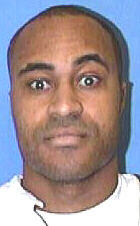
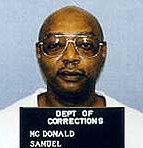
Demarco McCullum
Murderer Brian Kevin Rosenfeld
Murderer · USA · 1985
Brian Kevin Rosenfeld Brian Kevin Rosenfeld was sentenced to three concurrent l…
23 victims
Brian Kevin Rosenfeld
Murderer · USA · 1985
Brian Kevin Rosenfeld Brian Kevin Rosenfeld was sentenced to three concurrent l…
23 victims
 Russell Ellwood
Murderer · USA · 1991
Russell Ellwood was a former taxi driver. Authorities suspected him of killing…
20 victims
Russell Ellwood
Murderer · USA · 1991
Russell Ellwood was a former taxi driver. Authorities suspected him of killing…
20 victims
 Robert Martines Perez
Murderer · USA · 1994
Name: Robert Martines Perez · Other name used in proceedings: Robert Martinez P…
15 victims
Robert Martines Perez
Murderer · USA · 1994
Name: Robert Martines Perez · Other name used in proceedings: Robert Martinez P…
15 victims
 Billy Frank Vickers
Murderer · USA · 1993
Billy Frank Vickers Vickers was executed by lethal injection in Texas on Januar…
14 victims
Billy Frank Vickers
Murderer · USA · 1993
Billy Frank Vickers Vickers was executed by lethal injection in Texas on Januar…
14 victims
 Michelle Byrom
Murderer · USA · 1999
Name: Michelle Byrom · Offender data (as stated): White; age 43 at crime (DOB 1…
1 victim
Michelle Byrom
Murderer · USA · 1999
Name: Michelle Byrom · Offender data (as stated): White; age 43 at crime (DOB 1…
1 victim
 John Glenn Roe
Murderer · USA · 1984
John Glenn Roe was executed by lethal injection in Ohio on February 3, 2004. ·…
1 victim
John Glenn Roe
Murderer · USA · 1984
John Glenn Roe was executed by lethal injection in Ohio on February 3, 2004. ·…
1 victim
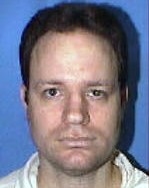 Robert Lookingbill
Murderer · USA · 1984
12:30 to 1:30 a.m. on December 5, 1989 — Robert Andrew Lookingbill knocked on t…
3 victims
Robert Lookingbill
Murderer · USA · 1984
12:30 to 1:30 a.m. on December 5, 1989 — Robert Andrew Lookingbill knocked on t…
3 victims
- Gender
- male
- Country
- USA
- Location
- Harris County, Texas, USA
- Date of birth
- October 2, 1974
- Age at first offence
- 20
- Characteristics
- kidnapping, robbery
- Victim profile
- Michael J. Burzinski, 29 (gay man)
- Method of murder
- Shooting
- Date(s) of murder
- July 30, 1994
- Years active
- 1994
- Date of arrest
- August 16, 1994
- Status
-
Executed
Executed by lethal injection in Texas on November 9, 2004
Case record: Demarco McCullum
Status / outcome
Demarco Markeith McCullum was executed by lethal injection in Texas on November 9, 2004.
Timeline
- June 18, 1994 — McCullum shot Ryan Lonergan while Lonergan was attempting to get cash from a drive-thru ATM machine in the Houston area.
- July 29, 1994 — Michael Burzinski was last seen leaving Heaven, a nightclub in the gay section of Houston.
- July 30, 1994 — McCullum and three other teenaged boys attacked and kidnapped Michael Burzinski in the parking lot of a Montrose area night club; they used Burzinski’s bank card to steal $400; they drove him to a secluded area and shot him in the head.
- August 6, 1994 — Michael Burzinski was buried in his hometown.
- August 8, 1994 — McCullum participated in the kidnapping and robbery of Ty Selcer; they robbed Ty’s brother, Travis Selcer; Ty Selcer was taken to a remote location and tied to a telephone pole; McCullum punched Selcer in the face before leaving him tied to the telephone pole.
- August 11, 1994 — McCullum and his cohorts robbed Ramona Wesling and Daniel Raymond Bowen, a Liberty County constable; Bowen was beaten with golf clubs by McCullum’s companions while McCullum held Wesling at bay; Wesling was thrown into a trash dumpster injuring her back; both victims’ money and ATM cards were stolen, and Bowen’s pickup truck was stolen.
- August 16, 1994 — A Harris County grand jury indicted McCullum for the capital murder of Michael Burzinski.
- Late 1994 — McCullum was arrested the day he was supposed to leave for Tyler Junior College.
- November 30, 1995 — A jury found McCullum guilty of capital murder and he was sentenced to death.
- March 18, 1998 — The Texas Court of Criminal Appeals affirmed McCullum’s conviction and sentence.
- December 22, 1998 — McCullum filed an application for writ of habeas corpus in the state trial court.
- June 26, 2002 — The Texas Court of Criminal Appeals denied habeas relief.
- November 26, 2002 — McCullum filed a petition for writ of habeas corpus in a Houston U.S. district court.
- June 9, 2003 — The federal district court denied habeas relief.
- February 22, 2004 — The U.S. 5th Circuit Court of Appeals denied McCullum permission to appeal.
- May 24, 2004 — McCullum petitioned the U.S. Supreme Court for certiorari review.
- May 27, 2004 — The Supreme Court dismissed McCullum’s petition as untimely.
- June 22, 2004 — The trial court entered an order setting the execution date for November 9, 2004.
- November 9, 2004 — McCullum was executed by lethal injection and pronounced dead at 6:17 p.m. CST.
Background
McCullum graduated from Aldine High School in 1994. He was described as the starting quarterback and as having won a football scholarship to Tyler Junior College. He was voted “Mr. Aldine” by his classmates and was admired by teachers and coaches for courteous, respectful behavior. He was described as friendly and sociable, and as responsible students who attended class regularly and earned average grades.
Police evidence linked McCullum to a summer-long crime spree that began because he needed money to buy clothes for college. McCullum did not have prior felony convictions described in the provided material, and he was described as having no prior exposure to the criminal justice system.
McCullum grew up in Seminary, Miss., a town of 400 north of Hattiesburg, and moved to Houston in 1990.
The offence
Motivation and targeting
McCullum and three other teenaged boys decided to rob someone because he believed he needed money to buy clothes for school and because he believed homosexuals “had money and were easy targets” and/or “always carry a lot of cash.” They approached a victim outside a Montrose-area gay club.
Victim: Michael Burzinski (29)
Michael Burzinski was last seen leaving Heaven, a nightclub in the gay section of Houston. He was approached in the parking lot of a Montrose area night club. McCullum began talking to Burzinski and then attacked him, striking him four or five times in the face with the handle of a pistol.
Burzinski was forced into the back seat of his own car and taken away with McCullum driving. The group robbed Burzinski of his money and his ATM card, and they used his bank card to steal $400.
Burzinski pleaded for his life. McCullum insisted that he had to be killed. When asked why, McCullum responded that Burzinski had to die because he knew their names. McCullum then said everyone’s name aloud, including his own. Burzinski was driven to a secluded area and was shot in the back of the head. His car was later found burned near the neighborhood of the suspects; the car was also described as found later on Dolly Wright in the Acres Homes area, and as abandoned and torched three blocks from where one of his attackers lived.
McCullum made a statement to police: he said he shot Burzinski “because that is what everybody said I should do.”
Police characterized Burzinski as openly homosexual, and described that he was not a known drug user. In the absence of any other known motive, they said they were not discounting the possibility that it was a hate crime.
Co-defendants and their roles
Terrance Perro, Decedrick Gainous, and Christopher Lewis were McCullum’s co-defendants described in the provided material. Perro and Gainous and Lewis were described as high school football teammates.
Perro was described as pleading no contest to aggravated robbery with a deadly weapon. Gainous was described as convicted of capital murder and serving a life sentence. Lewis was described as pleading no contest to aggravated robbery with a deadly weapon and being sentenced to 15 years in prison, with subsequent parole described in the provided material.
Other offences in the summer spree (as tied in the provided material)
Shooting: Ryan Lonergan
On June 18, 1994, McCullum shot Ryan Lonergan while Lonergan was attempting to get cash from a drive-thru ATM machine in the Houston area. Lonergan survived and was paralyzed by the gunshot wound to his back.
Kidnapping and robbery: Ty Selcer and Travis Selcer
On August 8, 1994, McCullum participated in the kidnaping and robbery of Ty Selcer. McCullum robbed Selcer of his car at gunpoint in front of Selcer’s Harris County home and took him to a bank where he was forced to withdraw money from his banking account.
Afterward, Selcer was returned to his home so McCullum and his cohorts could steal Selcer’s personal belongings. They also robbed Ty’s brother, Travis Selcer, at gunpoint and tied him up while making their escape, taking Ty Selcer along with them.
Ty Selcer was taken to a remote location and tied to a telephone pole. McCullum wanted to kill Selcer, but his colleagues convinced him otherwise. McCullum punched Selcer in the face before leaving him tied to the telephone pole.
Robbery and assault: Daniel Raymond Bowen and Ramona Wesling
On August 11, 1994, McCullum and his cohorts robbed Ramona Wesling and Daniel Raymond Bowen, a Liberty County constable. Bowen was savagely beaten with golf clubs by McCullum’s companions while McCullum held Wesling at bay.
Wesling had a close view of McCullum during this episode. McCullum and his colleagues stole both victims’ money and ATM cards and stole Bowen’s pickup truck.
McCullum threw Wesling in a trash dumpster, injuring her back, and left.
Arrest details described
McCullum, then 19, was arrested on the day he was supposed to leave for Tyler Junior College. Gainous was arrested the Monday after the murder at the Aldine High campus where he had gone to see a friend. The other three suspects were arrested at their homes early Tuesday and brought in to talk with homicide detectives.
Investigation and evidence described
Harris County Sheriff’s Department homicide detectives interviewed the suspects after the abduction, robbery and killing of Burzinski. One of the boys told detectives that the attack made him feel sick, and another said it made him feel bad. When they asked McCullum how he felt, he said, “I feel like a judge.”
McCullum told police that the group decided to rob someone in the Montrose area of Houston because he believed homosexuals “always carry a lot of cash” and were easy to rob.
A reward posted for information prompted a tip to a Crimestoppers phone line that led to McCullum’s arrest.
Arrest
McCullum was arrested at the time described as the day he was supposed to leave for Tyler Junior College.
Trial
Charges and conviction
A Harris County grand jury indicted McCullum for the capital murder of Michael Burzinski.
A jury found McCullum guilty of capital murder and he was sentenced to death.
Direct evidence and trial testimony described
McCullum directed the group to drive to a secluded area so that he could kill the victim. When questioned by his friends about why the victim had to die, McCullum responded that he must die because he knew their names; he then shouted the name of each member of the group, including his own.
The victim pleaded for his life and McCullum shot him in the back of the head.
McCullum was described as being identified by his friends as the gunman, while Lewis, Gainous and Perro were described as seeming remorseful to homicide detectives.
Sentencing
The jury in McCullum’s capital murder case was described as stating whether there was a probability that the defendant would pose a future threat to society. The provided material states that McCullum was sentenced to death based on a notion that he would continue to be a future threat to society in or out of prison.
Appeals
McCullum pursued state habeas relief and federal habeas relief. The provided material lists:
- March 18, 1998 — the Texas Court of Criminal Appeals affirmed the conviction and sentence.
- December 22, 1998 — application for writ of habeas corpus in state trial court.
- November 26, 2002 — petition for writ of habeas corpus in a Houston U.S. district court.
- February 22, 2004 — the U.S. 5th Circuit Court of Appeals denied permission to appeal.
- May 24, 2004 — petitioned the U.S.
- May 27, 2004 — the Supreme Court dismissed the petition as untimely.
The case citation provided was McCullum v. Dretke, 89 Fed.Appx. 888 (5th Cir. 2004) (Habeas).
A holding described in the provided material stated:
- refusal to give a jury instruction regarding parole ineligibility did not violate due process rights;
- McCullum was procedurally barred from arguing that the trial court erred by failing to define word society;
- McCullum was procedurally barred from arguing that Texas’s capital sentencing system was unconstitutional as applied;
- sufficient evidence supported the jury finding that McCullum constituted a future threat to society. The certificate of appealability was denied.
Clemency and parole
The Texas Board of Pardons and Paroles denied McCullum’s request for clemency and refused to commute his sentence to life or grant a reprieve.
The federal and state appeals were described in the provided material as exhausted.
Final statement and last meal
McCullum’s last meal was described as: “a cheeseburger, french fries, apple pie, three Cokes and five mint sticks.”
McCullum’s final words were: “I just wanted to say to all of those that have supported me over the years that I appreciate it and I love you. And I just want to tell my Mom that I love her and I will see her in heaven.”
He was given lethal injection and was pronounced dead at 6:17 p.m. CST.
Other details
The provided material described that Burzinski was buried in his hometown on Aug. 6. Burzinski’s parents were described as seeing their youngest child buried and later as expressing relief after the arrests.
A quote attributed to Ed Burzinski, Michael Burzinski’s father, said: “We owe the detectives a giant debt of gratitude for solving this so quickly. We're tremendously relieved they're off the streets.”
A quote attributed to Kay Burzinski, Burzinski’s mother, said: “I'm sure he was nervous. I'm sure he was afraid and possibly it gave him a slight taste of what our Michael went through 10 years ago.”
A quote attributed to Kay Burzinski said: “I don't want to say the word 'closure,' because a person never really experiences closure when you especially lose a child like this to violence,”
“Demarco McCullum viciously murdered our son. He was found guilty by the jury. He was sentenced to death. He went through all the processes of appeals... “
“I feel terrible about what happened.”
A quote attributed to Tommy LeFon said: “He seemed to be two different people,” and: “When he was around people at church and at school, he was a good kid. When away from those kinds of influences, he wasn't.”
A quote attributed to David Schulman said: “He engaged in some very bad behavior, according to the jury that convicted him, but that doesn't necessarily mean he will be dangerous the rest of his life,”
“None of us benefit by his execution. All of us benefit by him being sentenced to prison for the rest of his life.”
A quote attributed to McCullum from death row said: “I just want to let my mom know I love her and I will see her in heaven.”
The provided material included a quote attributed to McCullum defending his actions: “I'm not denying I was the shooter, but they said I shot him at close range,”
A quote attributed to McCullum said: “I shot at Mike, but I was about six feet away.”
“When you look at the trial, I know I'm (on death row) because I'm a continued threat. I never made any excuses for robbery or that man losing his life. I mean, get me for what I've done, but don't pile up other stories.”
“There's life after here,”
Spotted an error, or have more information about this case?