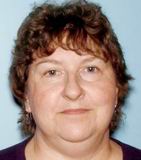
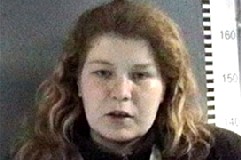
Pamela Moss
Murderer Megan Huntsman
Murderer · USA · 1996
Megan Huntsman was 40 at sentencing. She was a mother of three children who wer…
6 victims
Megan Huntsman
Murderer · USA · 1996
Megan Huntsman was 40 at sentencing. She was a mother of three children who wer…
6 victims
 Angela Johnson
Murderer · USA · 1993
Angela Jane Johnson was convicted in federal court of aiding and abetting the m…
5 victims
Angela Johnson
Murderer · USA · 1993
Angela Jane Johnson was convicted in federal court of aiding and abetting the m…
5 victims
 Catherine May Wood
Murderer · USA · 1987
Catherine May Wood was an American caregiver who worked at the Alpine Manor Nur…
5 victims
Catherine May Wood
Murderer · USA · 1987
Catherine May Wood was an American caregiver who worked at the Alpine Manor Nur…
5 victims
 Michele Kalina
Murderer · USA · 1996
Michele Kalina pleaded guilty to murder for one of five infants she initially w…
5 victims
Michele Kalina
Murderer · USA · 1996
Michele Kalina pleaded guilty to murder for one of five infants she initially w…
5 victims
 Tiffany Hall
Murderer · USA · 2006
Tiffany Hall was 24 when she was charged in September 2006. She later entered a…
5 victims
Tiffany Hall
Murderer · USA · 2006
Tiffany Hall was 24 when she was charged in September 2006. She later entered a…
5 victims
 Amy Bishop
Murderer · USA · 1986
Amy Bishop — biology professor and perpetrator · James Anderson — Bishop’s husb…
4 victims
Amy Bishop
Murderer · USA · 1986
Amy Bishop — biology professor and perpetrator · James Anderson — Bishop’s husb…
4 victims
 Paul Steven Haigh
Serial killer · Australia · 1978
Paul Steven Haigh was an Australian serial killer. · 1978 — After being paroled…
7 victims
Paul Steven Haigh
Serial killer · Australia · 1978
Paul Steven Haigh was an Australian serial killer. · 1978 — After being paroled…
7 victims
 Brett Hartman
Murderer · USA · 1997
Brett Hartman Brett Hartman’s trial counsel consulted Dr. Siddall for the mitig…
1 victim
Brett Hartman
Murderer · USA · 1997
Brett Hartman Brett Hartman’s trial counsel consulted Dr. Siddall for the mitig…
1 victim
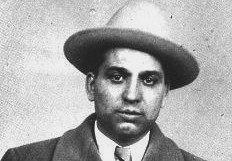 Harry Maione
Murderer · USA · 1937
Harry “Happy” Maione (1908 – February 19, 1942) was a New York mobster who serv…
12 victims
Harry Maione
Murderer · USA · 1937
Harry “Happy” Maione (1908 – February 19, 1942) was a New York mobster who serv…
12 victims
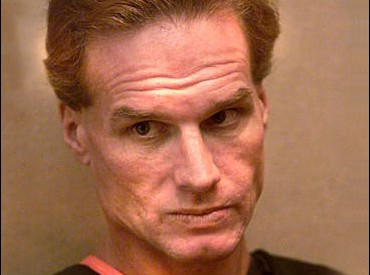 Gary Lee Sampson
Murderer · USA · 2001
Gary Lee Sampson (born 1959) was a convicted murderer in Massachusetts, United…
3 victims
Gary Lee Sampson
Murderer · USA · 2001
Gary Lee Sampson (born 1959) was a convicted murderer in Massachusetts, United…
3 victims
 Marie Dean Arrington
Murderer · USA · 1964
Marie Dean Arrington (born August 8, 1933) was an American criminal. She was al…
2 victims
Marie Dean Arrington
Murderer · USA · 1964
Marie Dean Arrington (born August 8, 1933) was an American criminal. She was al…
2 victims
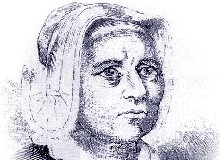 Hélène Jégado
Serial killer · France · 1833
Hélène Jégado (1803–1852) was a French domestic servant and poisoner. She was e…
23 victims
Hélène Jégado
Serial killer · France · 1833
Hélène Jégado (1803–1852) was a French domestic servant and poisoner. She was e…
23 victims
- Gender
- female
- Country
- USA
- Location
- Bibb County/Jones County, Georgia, USA
- Date of birth
- 1957
- Age at first offence
- 39
- Characteristics
- parricide, history of mental illness
- Victim profile
- Barbara Sherman Frye, 64 (her mother) / William Douglas Coker, 67
- Method of murder
- Poisoning / Bludgeoning with a hammer
- Date(s) of murder
- February 16, 1996 / March 13, 2012
- Years active
- 1996–2012
- Date of arrest
- March 20, 2012
- Status
-
Imprisoned
Sentenced to life in prison without parole on August 28, 2013; released on July 27, 2005; sentenced to 10 years in prison on December 27, 1997.
Overview
Pamela Moss was convicted in connection with the March 13, 2012 murder of Doug Coker. She was sentenced to 10 years in prison on December 27, 1997, released on July 27, 2005, and later received a life sentence without parole on August 28, 2013.
People
- Pamela Moss (55) — defendant.
- Doug Coker / William Douglas Coker Sr. (67) — victim and Henry County businessman.
- Judy Coker — Doug Coker’s wife; she made a statement in court at sentencing.
- Franklin J. Hogue — Moss’s lawyer.
- Anthony Levitas — psychologist hired by the defense; testified about dissociative identity disorder and alternate personalities.
- Darcy Shores — psychologist at Central State Hospital; testified about her evaluation and findings.
- Trent Brown — Bibb County Superior Court judge who addressed Moss before sentencing.
- Fred Bright — District Attorney advocating a life without parole sentence.
- Keagan Waystack — prosecutor.
- Caroline — alternate personality described by Levitas.
- Carol — alternate personality named and discussed by Levitas.
- Carol Holland — Moss’s sister; testified about calls from Moss to Coker’s phone.
- Earl Humphries — Jones County Sheriff’s Office captain; testified about cellphone logs and calls.
- Jamey Jones — Bibb County investigator; testified about investigative findings at Moss’s home.
- Kenneth Gleaton — Jones County investigator; testified about the crime scene and physical evidence.
- Dean Watson — Henry County police investigator who testified about interviews and cellphone records.
- Melissa Sims — GBI medical examiner; testified about the cause of death.
- Bib County investigator Jamey Jones and Jones County investigator Kenneth Gleaton — described the crime scene and the body’s discovery.
- Brian Bowles — one of Coker’s employees; testified about phone contact attempts after Coker was already dead.
- Walter Duncan — a Tennessee man who knew Moss for 26 years; testified about meeting her and their relationship.
- Buddy Welch — spokesman for the Coker family.
- Bry prosecutor — not specified by name beyond Keagan Waystack and others above.
Timeline
- March 13, 2012 — Doug Coker met with Pamela Moss and later disappeared; Moss called Coker’s phone and the cellphone call pattern began.
- March 14, 2012 — investigators later arranged a meeting with Moss after reviewing the McDonald’s video; Moss had communications and actions described during the investigation.
- March 15, 2012 — investigative testimony described purchases by Moss after Coker’s disappearance and a significant spike in gas usage beginning about 7 p.m.
- March 18, 2012 — Coker’s body was discovered underneath the porch of Moss’s home in the River North subdivision; Moss’s body was found covered by plastic and shingles, with lime spread on it.
- March 19, 2012 — Moss told her sister she wanted to be alone after spending a weekend with teenagers; she was taken after a drug overdose.
- June 8, 2012 — Pamela Carole Moss was officially indicted by a Jones County Grand Jury.
- November 1997 — Moss was charged in a Bibb County murder case relating to her mother’s death and pleaded guilty to involuntary manslaughter; she served seven years in prison and three years on parole.
- December 27, 1997 — Moss was sentenced to 10 years in prison.
- July 27, 2005 — Moss was released.
- March 18, 2012 (charged days later) — Moss was charged with Coker’s murder days after Coker’s body was found.
- August 25, 2013 — Moss’s trial was scheduled to begin Monday in Jones County Superior Court.
- August 26, 2013 — testimony and opening statements were discussed as the trial proceeded.
- August 27, 2013 — gory crime-scene details were described during the second day of trial.
- August 28, 2013 — testimony continued, including Levitas and Shores.
- August 29, 2013 — jurors found Moss guilty and sentencing followed, resulting in life without parole.
The offence
Doug Coker was killed on or about March 13, 2012. Authorities testified that he was struck in the head at least five times with a hammer, with the death described as caused by blunt force trauma.
Prosecutors described Moss as striking Coker in the head with a hammer multiple times in her living room before stashing his body. The body was found underneath the porch of Moss’s home in the River North subdivision, just across the Jones County line from north Macon.
Victim information
- was 67 years old.
- He was described as a Henry County businessman who had a real estate rental business.
Investigation
Investigators described searching Moss’s home after Coker’s disappearance. They found strong odors of natural gas and a decomposing body. Under the porch, investigators found a body covered by a black tarp with roofing shingles and lime spread on it. Investigators identified the body as Coker based on the clothing reported as worn on the day he went missing.
Physical evidence and crime scene testimony
During testimony:
- Investigators described a large blood stain in the living-room area, with paint poured over it to cover up and a plastic sheet covering it.
- Investigators displayed evidence including a jar containing a piece of Coker’s skull, blood-stained candles, a tub, matches, and a 16-inch claw hammer from Moss’s house.
- Investigators described finding multiple blood stains inside Moss’s house; testimony stated 228 separate blood stains.
- Investigators found burned matches in the kitchen sink and described a natural gas powered living room fireplace being turned on when investigators arrived.
- A natural gas meter reader salesman testified records showed a “significant spike” in gas usage beginning on March 15 at about 7 p.m. and continuing until early morning hours of March 19, consistent with the timeframe investigators were at the house.
- Investigators found bottles of bleach inside Moss’s house and bags of lime, and testified that a different type of lime is often used in farming applications to reduce odors.
- Receipts showed purchases at a Tom Hill Sr. Boulevard Kroger, including yellow kitchen gloves, plastic storage containers, a tub of chicken salad, and bleach.
- Investigators found a large plastic tub beside Coker’s body containing bloodied gloves, plastic sheeting, trash bags, and “easy move pads” described as devices sold on TV to move large furniture.
- Investigators found an envelope with three checks written out to Coker by Moss, including two for $85,000 (the amount Moss owed Coker) and a third check for $80,000.
- A Henry County detective testified Moss had already paid Coker $5,000 of the money she owed.
Arrest and custody
Pamela Moss was picked up from Wayne County Hospital and booked into the Jones County Law Enforcement Center about 6 p.m. on March 21, 2012. Investigators described her as being in the hospital due to an alleged suicide attempt, where she was found during the search.
Trial
Charges and plea
Moss faced murder charges relating to Coker’s death, and authorities said there were two counts of murder that “merge into each other.” She was also charged with felony murder in the indictment context.
Insanity defense and mental health evidence
Moss’s lawyer, Franklin J. Hogue, argued that Moss should be found not guilty by reason of insanity based on dissociative identity disorder (multiple personality disorder) and a “delusional compulsion” theory.
Anthony Levitas testified:
- He had diagnosed Moss with dissociative identity disorder this summer after testing.
- He testified that earlier diagnoses matched the same diagnosis and that records reflected as many as five alternate personalities.
- Levitas met “Caroline” and described what Caroline said she experienced.
- Levitas testified about voice changes and mannerisms with different personalities.
- Levitas testified about childhood trauma as a typical manifestation in dissociative identity disorder.
- Levitas testified about sexual abuse at age 12 and that Moss remembered being molested at an even younger age, but was unsure when.
- Levitas testified that Caroline told him “Pam was gone,” heard screaming, was on the floor, and saw a man standing over her holding something that looked like a curtain rod; she felt threatened, “She hit him. She didn’t know with what. ... She said she saw blood.”
Hogue argued that the defense did not dispute Moss killed Coker, but questioned whether she was insane or mentally ill at the time of the killing. Hogue compared the situation to a circus elephant example and made arguments about accountability.
“I have an unhealthy client,” Hogue told the jury. “She is not well.”
“The elephant is being held accountable in the wrong way. ... It didn’t choose to kill a human being. It just did what elephants do,” Hogue said.
“Some people are like that too. They just act ... they don’t weigh options or choose right from wrong. They don’t know the difference sometimes.”
“The elephant is being held accountable in the wrong way. ... It didn’t choose to kill a human being. It just did what elephants do.”
Hogue also told jurors regarding the “Caroline’s version” and “delusion”:
“But that’s what a delusion is,” Hogue said.
Hogue said he did not instruct Moss to tell Levitas a certain story and did not instruct Levitas what to ask Moss:
“Did she say those things to him? He didn’t come in here and make that up,” Hogue said.
Darcy Shores testified:
- She evaluated Moss and said she did not have enough information to diagnose Moss as having multiple personalities.
- Shores testified she saw evidence Moss knows the difference between right and wrong.
- Shores said there was no evidence Moss acted under a delusion when she killed Coker.
“According to her, she didn’t kill anybody,” Shores said.
Shores described that someone who covers up a crime such as cleaning a house or hiding a body knows the difference between right and wrong, and typically someone acting under delusions would not flee from a crime scene or police because they think they were right.
“They think they were right,” Shores said.
Shores also testified that after reviewing records and hospital records from a drug overdose days after the killing, she found no evidence Moss had a problem associated with dissociative identity disorder since she stopped receiving treatment in 2003. She also testified no problems were reported while Moss was held at the Jones County jail.
Shores testified Moss had a college degree in psychology, started a master’s degree in psychology, worked for a time at a psychology practice, and administered IQ tests.
Moss waived her right to testify and waived her right to be present during the trial for a second day in a row.
Evidence presented: cellphone records and interviews
Cellphone log testimony came from Jones County Sheriff’s Office Capt. Earl Humphries. He testified about calls placed to and from Moss’s cellphone on March 13, 2012, and that the calls started at 11:05 a.m. on March 13, 2012, when Coker called Moss.
Humphries testified:
- Moss called the front gate at River North at 11:09 a.m.
- Around 15 minutes later, Coker called Moss again.
- Between 11:37 a.m. and noon, Moss called her sister, Carol Holland, three times.
- Holland testified Tuesday she spoke with Coker on Moss’s phone during two of the calls; Holland said the line went dead during the second call.
- Humphries said “We believe during the second phone call is when Mr. Coker was attacked and struck with the hammer,” Wednesday.
Moss called Coker’s cellphone twice that afternoon after Coker was already dead:
- The first call at 12:54 p.m.
- The second call at 4:28 p.m.
Humphries also testified about phone efforts to arrange pickup from Spalding County Hospital and that Coker’s cellphone called his employee Brian Bowles at 1:47 p.m. Bowles testified:
“I just heard a little shuffling ... and then it hung up,” Bowles said.
Humphries testified Coker’s cellphone called his wife at 1:49 p.m. and 2:10 p.m.
- The first call lasted nine seconds and the second lasted a second.
- At 2:16 p.m., the phone was used to call Coker’s voicemail.
- Cellphone records showed Coker’s phone last “pinged” on a tower in Smarr, in Monroe County.
- The phone was never recovered.
Dean Watson testified about Moss giving multiple stories about her contact with Coker and she said:
“I have no idea where Mr. Coker is,” Moss said during the interview.
In the recording of the interview, Moss told Watson she was forgetful and often couldn’t recall “detailed stuff.”
Humphries testified Coker signed in saying he was going to meet Moss at 11:16 a.m. March 13.
Witness testimony about actions and timeline
Carol Holland testified about the calls on Moss’s phone and what Moss had said prior to meeting with Coker at McDonald’s. She testified Moss called her sister at 11:37 a.m. on the day Doug Coker disappeared. Moss had spoken with Holland about her concern that Coker might not be “legit.”
A security guard who manned the front gate at River North testified that Coker signed in at 11:16 a.m. March 13.
Walter Duncan testified about knowing Moss and meeting her in Atlanta on March 14 for a business meeting the following day. He said they had been romantically involved in the past and were dating again in 2012. Duncan testified nothing appeared to be awry until a Henry County detective called Moss on the morning of March 15.
Holland testified she picked Moss up after Moss asked for a ride home from Spalding County Hospital. Investigators testified Moss left her car at Wal-Mart in Hinesville and rode to Jesup with Holland, staying at her home for the weekend. Holland testified Moss seemed “very distraught” when Holland picked her up. Holland testified Moss went to Holland’s ex-husband’s home after he’d gone to work, and that a deputy came looking for Moss. Holland admitted she lied when she said she hadn’t seen her sister.
Holland testified a family member found Moss on the floor of the ex-husband’s house suffering from a drug overdose and Moss was taken by ambulance.
Sentencing arguments
After the jury found Moss guilty, District Attorney Fred Bright advocated life without parole. The judge addressed Moss and found her “intelligent, manipulating and calculating.”
“This court finds you to be intelligent, manipulating and calculating. ... It’s due to your greed and utter disregard for human life that brings us here today.”
The judge sentenced Moss to life without the possibility of parole.
In closing argument and sentencing-phase statements:
- Hogue argued that striking Coker’s head five times with a hammer was not in dispute.
- Hogue argued the issue was insanity or mental illness at the time of the killing.
- Waystack reminded jurors of arguments about “delusional compulsion,” including a reference to Monday’s opening statement by Hogue.
- Bright argued against not guilty by reason of insanity and said:
“It’s garbage. It’s not justice. It’s wrong.”
Bright also argued that evidence showed Moss knew what she was doing, citing luring Coker to her home, cleaning up the crime scene and hiding from police.
“I do say, how convenient,” Bright said.
Bright said he initially wanted to seek the death penalty but the case was not eligible for capital punishment, and he referenced Georgia aggravating circumstances including a prior murder conviction.
During sentencing, Bright introduced evidence that Moss served eight years in prison after pleading guilty to involuntary manslaughter in her mother’s 1996 poisoning death.
Verdict and outcome
Jurors found Moss guilty of Doug Coker’s March 13, 2012 murder after deliberating for about 30 minutes. Jurors set aside other options of not guilty by reason of insanity and guilty but mentally ill. Moss was sentenced to life without the possibility of parole on August 28, 2013.
Other details
Prior conviction and related background
Moss had previously been convicted after pleading guilty to involuntary manslaughter in her mother’s 1996 fatal poisoning, and she served eight years in prison. Hogue also stated that Moss pleaded guilty to involuntary manslaughter after being charged with murder in the death of her mother, Barbara Sherman Frye, 64, and served seven years in prison and three years on parole.
Indication of earlier mental illness
Hogue and Levitas presented dissociative identity disorder as the basis of an insanity defense, and Levitas testified that Moss reported sexual abuse at age 12.
Trial participation
Family statement at sentencing
Judy Coker addressed Moss in court at sentencing and made statements including:
“I think you are evil and that is the only way God would let this happen,” Coker said.
She also stated her husband “did not deserve to be murdered,” and said she would never hear him call her “sweet pea” or “baby cakes,” and that he’d never cheer on the Atlanta Falcons.

Spotted an error, or have more information about this case?